
Choosing a Garden Sprayer for Feeds, Weedkiller and Washing Down
Pump, pressure and knapsack sprayers explained, with the nozzle choices, tank sizes and sensible safety habits that make spraying less messy and much more effective.
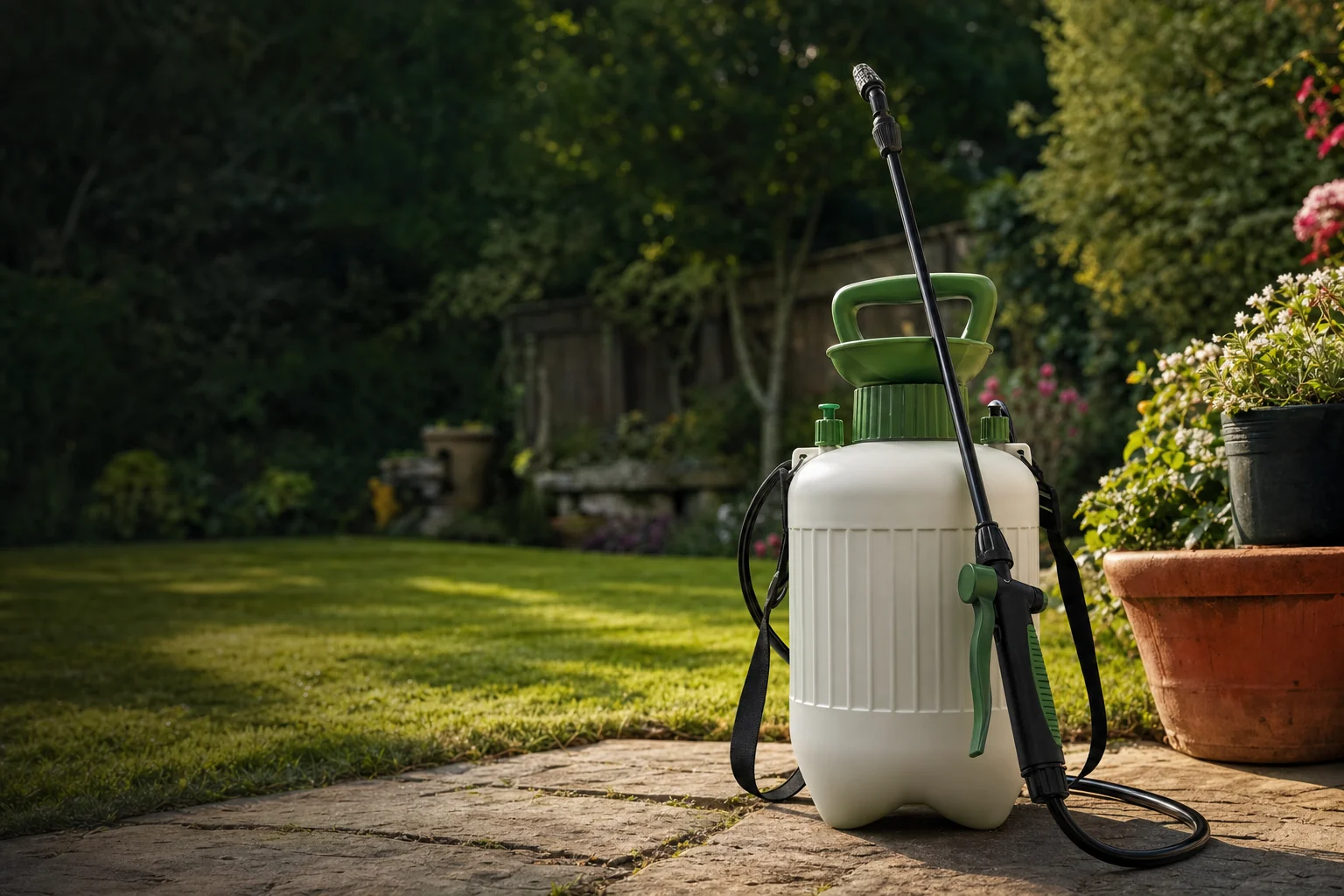
Why Your One Battered Sprayer Is Letting You Down
By late September, the garden is slowing down in places and carrying on at full speed in others. The roses may be fading, but path weeds have spotted the gap in your attention. Greenhouse staging still benefits from a rinse before winter. Containers can need an occasional liquid feed whilst the last tomatoes and chillies finish their run. Then there is the inevitable patch of algae on the paving which has somehow become much more noticeable now that the sun is sitting lower.
This is usually when the average garden sprayer emerges from behind the shed. It is often a slightly battered plastic thing with a nozzle that has been twisted, dropped, overtightened and left outside at least once. It has probably sprayed tomato feed, moss treatment, patio cleaner and weedkiller. Nobody is entirely sure what is in it now. The trigger sticks. The measuring marks are cloudy. The lid has a faint aroma of chemical regret.
It is tempting to treat a sprayer as a very simple bit of kit. Add liquid, pump, point, squeeze. In truth, the right sprayer makes a surprising difference to how evenly you feed plants, how accurately you tackle weeds and how much time you spend trudging back to the tap or shed. More importantly, the wrong shared sprayer can create a genuinely expensive mistake.
The main issue is herbicide contamination. A sprayer used for glyphosate or another systemic weedkiller should not then be casually repurposed for foliar feeding roses, tomatoes, sweet peas or anything else you would rather keep alive. Traces can remain in the tank, hose, seals and lance. The amount may be tiny. The outcome, unfortunately, can be rather large.
The two-sprayer rule
For most gardens, the best upgrade is not necessarily a larger or more elaborate sprayer. It is owning two clearly labelled ones: one permanently reserved for weedkiller, and one for feeds, plant protection products and general washing down. A strip of bright tape around the weedkiller sprayer is cheap insurance, especially when more than one person gardens.
There are three broad families to understand. Handheld pump sprayers suit quick, small jobs. Compression or pressure sprayers are the useful middle ground for ordinary gardens, giving you a decent amount of spray without carrying a tank on your back. Knapsack sprayers are built for larger areas and repeat work, with the tank supported by a harness whilst you pump from the side.
Battery-powered sprayers sit alongside those categories rather than replacing them altogether. They are particularly appealing if pumping aggravates a wrist, shoulder or back, or if you routinely spray a large allotment, orchard, lawn or collection of greenhouse crops. They bring convenience, but also batteries, charging and more weight to think about.
At this point in the UK gardening year, a sprayer is most useful for selective path-weed treatment on a still, dry day; gentle cleaning of greenhouse shelving and pots; and washing equipment before it goes into winter storage. Avoid spraying feed or weedkiller when rain is imminent, when foliage is wet, or when wind can carry droplets into neighbouring borders.
A good sprayer should feel boring in the best possible way. It should hold enough liquid for the job, keep pressure predictably, produce the sort of pattern the task needs and not leak down your sleeve. Once those basics are right, spraying becomes much less of a chore. You spend your time looking at plants rather than wrestling a reluctant pump and wondering why one side of the path is soaking wet.
Three Sprayer Families Explained: Pump, Pressure and Knapsack
The names are confusing because almost every garden sprayer involves some pumping and some pressure. What matters is when you pump, how much liquid you carry and whether the sprayer is designed for a ten-minute job beside the patio or a long walk around a substantial plot.
Handheld pump sprayers: quick jobs, close control
A small handheld pump sprayer is the one you reach for when there is a clear, contained task in front of you: feeding a batch of patio plants, dampening compost, rinsing a bench, treating a few weeds in a crack or spraying a small number of roses. They are light, portable and not remotely intimidating. That last point matters if you want a tool you will actually use rather than admire from a shelf.
The Chapin 20004 is a useful example of the type. It holds 3.8 litres, weighs about 0.9kg empty and has a 86cm reinforced hose. One fill is intended to cover around 70 square metres when broadcast spraying, which gives some sense of the scale. It is a sensible format for a small garden rather than a large lawn or a long run of allotment paths.
Handheld sprayers are not the same as a simple trigger bottle. They use a hand pump to build pressure in the tank, then release the liquid through a hose and wand. As pressure drops, you stop and pump again. That is perfectly manageable for short spells, but it becomes tiresome if you need to cover many beds or repeatedly work above shoulder height.
The advantage is control. You are usually close to the target. You can move around a pot, turn a leaf over or direct a narrow stream at a stubborn bit of dirt. The limitation is capacity, followed closely by arm fatigue. A compact sprayer is wonderful right up until you have tried to wash every greenhouse shelf with it.
Compression pressure sprayers: the useful all-rounder
For many UK gardens, a pressure sprayer is the practical sweet spot. You fill it, screw on the lid, pump the handle to build pressure, then spray until the pressure gradually drops. The pump is done before the spray work begins, so one hand can hold the lance and the other can get on with moving foliage, lifting a leaf or keeping a gate from swinging shut at the worst possible moment.
Hozelock's Standard Pressure Sprayer range illustrates the format neatly. It is available in 5-litre, 7-litre and 10-litre tanks, with usable capacities of 3.5 litres, 5 litres and 8 litres respectively. That gap between the tank's total size and its usable fill is deliberate: air space is needed for compression. Filling a pressure sprayer right to the brim is not a clever shortcut. It merely removes the space required to make it work.
The 5-litre Hozelock Standard Pressure Sprayer is commonly around £25–£30 and is the sort of size that suits regular domestic work. It is big enough to make lawn feed, border spraying and greenhouse washing feel worthwhile, but not so large that a full tank becomes awkward for an ordinary circuit of the garden. It also makes a perfectly sensible dedicated weedkiller unit.
The chief attraction is rhythm. Pump it up, set your nozzle, spray steadily, then stop to repressurise when the pattern begins to weaken. There is no need to keep one hand constantly pumping whilst trying to achieve even coverage. For foliage feeding and general cleaning, that calmer rhythm usually produces a more even result.
Knapsack sprayers: for distance, volume and repeat work
A knapsack sprayer is worn on the back with shoulder straps, and usually supported by a waist belt and chest strap. The tank stays on your body whilst a side lever maintains pressure. It is a more serious tool, but not just for professional growers. If you have a big garden, a long driveway, an allotment, an orchard or a lot of hard surfaces to manage, it can be far less tiring than carrying a pressure sprayer in one hand all afternoon.
The Field King 190328 Professional Backpack Sprayer is a good illustration of why knapsack models cost and do more. Its large capacity lets you cover a much larger area between refills. It can reach up to 150 PSI, but its pressure regulator can maintain a low continuous pressure for herbicide application. That steadier low-pressure delivery is important. Weedkiller generally needs accurate placement, not a furious cloud of droplets making a break for the hydrangeas.
It also uses an internal pump arrangement intended to keep the operator's back and clothing dry, and has adjustable padded straps, a waist belt and chest cinch. These are not glamorous details, but after half an hour they become extremely glamorous indeed. The Field King has Viton seals that can be changed without tools, a built-in agitator for wettable powders, a removable in-line filter and a lockable comfort-grip trigger.
| Sprayer family | Best suited to | What it does well | Where it becomes frustrating |
|---|---|---|---|
| Handheld pump | Small patios, containers, greenhouse shelves and isolated weeds | Lightweight handling and close-up control | Frequent refills and repeated pumping on larger jobs |
| Pressure sprayer | Typical gardens, borders, paths, lawns and routine washing down | Useful capacity with pre-pumped, hands-free spraying | Pressure falls over time and the tank still needs carrying |
| Knapsack | Large gardens, allotments, long paths and repeated application work | High capacity, balanced carrying and continuous pumping | Bulkier to store and unnecessarily elaborate for a few pots |
Pressure consistency matters more than brute force
For feeding and weedkiller, a repeatable spray pattern is usually more useful than the highest possible pressure. High pressure can create finer droplets, which are more vulnerable to drift.
Wand and hose length change the job
A longer lance can make it easier to reach the centre of beds, the back of greenhouse staging and low weeds without kneeling or leaning into a border.
Choose the tool for the most frequent task
If you only occasionally wash paving but often apply weedkiller to paths, prioritise a controllable weedkiller setup. You can rinse a bench with many things; you cannot safely improvise accurate herbicide application.
Sizing It Right: Matching Tank Capacity to Your Garden
Tank size is not a competition. The biggest sprayer is not automatically the best one, just as the largest wheelbarrow is not necessarily the one you want to drag through a narrow side passage. The right capacity is the amount you can use comfortably, safely and before the mixed product has been sitting around long enough to become a nuisance.
There is also the matter of weight. Water weighs roughly one kilogram per litre, and a tank that sounds manageable when empty becomes a different proposition once it is full. If you have ever carried a 10-litre watering can around a garden, you already understand the basic physics. A backpack distributes that load better than a hand-carried sprayer, but it does not make the water disappear.
One litre: the windowsill and greenhouse specialist
A 1-litre sprayer is a small, tidy tool for specific jobs. The Hozelock Spraymist holds 1 litre and is often around £8. Its adjustable nozzle moves from a fine mist to a firmer spray, which makes it useful for dampening seedlings, misting houseplants, applying a foliar feed to a modest collection of plants or rinsing a few small pots.
It is not a realistic choice for a lawn, a full border or a serious patio-cleaning session. Nor is it an ideal weedkiller sprayer unless the task is very limited and the unit is permanently reserved for that purpose. Small capacity means lots of refilling, and a short handheld format often encourages you to work very close to the target. That can be good for precision, but it can also be awkward when weeds are growing under a hedge or behind a water butt.
About four to five litres: the small-garden workhorse
In the next size up, a handheld sprayer becomes genuinely useful around a garden. The Chapin 20004's 3.8-litre tank gives a reasonable amount of working liquid without making the unit cumbersome. Its wide, funnel-style opening is helpful when you are trying to pour a diluted feed in without splashing it down the outside of the tank. A translucent tank is equally helpful. Guessing how much solution remains by shaking the sprayer is not a refined gardening technique.
The Vivosun 1.35-gallon tank holds about 5.1 litres. It has a 56cm wand, a shoulder strap and a slightly weighted base to reduce tipping when you put it down. That last feature sounds modest until you have knocked a full sprayer over in the middle of a job. A stable base is especially welcome when using a sprayer for washing greenhouse staging, where there are usually trays, labels, pots and at least one item you did not mean to soak.
Five to ten litres: the sensible domestic pressure-sprayer range
A 5-litre pressure sprayer is a strong starting point for most gardeners who want one general-purpose unit for feed, fungicide, washing down and other non-herbicide jobs. It gives enough capacity to work around a border or greenhouse without stopping every few minutes, while remaining manageable when full.
The 7-litre and 10-litre Hozelock Standard Pressure Sprayers offer usable fills of 5 litres and 8 litres. They make sense if your garden has a lot of hard surface, a sizeable lawn treatment routine or several growing areas. The right choice is often determined by access. If you need to climb steps, squeeze between raised beds or repeatedly lift the sprayer over low walls, a smaller unit may prove more pleasant in daily use.
Do not overlook storage, either. A 10-litre unit needs a place where it can stand upright, dry and out of strong sunlight. Empty it fully before winter, leave the lid loose only once it is clean and dry, and keep the lance where it cannot get bent beneath a pile of tools. A damaged lance is one of those annoyances that turns up precisely when you have mixed a batch of spray.
Fifteen litres and beyond: where a knapsack earns its keep
A large-capacity knapsack sprayer (such as the Field King 190328, rated at 4 gallons) is not a casual purchase for a balcony gardener, but it can be liberating on a larger plot. Instead of returning to a bucket or tap after every short run, you can work a whole section at a time. That is useful for larger-scale feeding, carefully targeted herbicide application along paths, and repeated treatment where maintaining an even pace improves coverage.
The caveat is simple: be honest about your body and your terrain. A full backpack needs fitting properly, with shoulder straps adjusted, the waist belt secured and the chest strap doing its share. It is better to make two comfortable trips than one heroic one, especially on wet grass or uneven ground. Gardening contains enough opportunities for accidental theatre without adding a poorly balanced chemical tank to the programme.
Size for a normal session, not a fantasy one
Think about the job you actually do on an ordinary Saturday morning. If you tend to treat a few paths, feed pots and rinse the greenhouse, a 5-litre pressure sprayer may be ideal. If you regularly cover long runs of ground, a knapsack is more likely to save effort than a succession of refills.
Nozzle Deep-Dive: The Tip That Makes or Breaks Your Application
The tank gets all the attention because it is the large bit you can see. The nozzle, however, decides how the liquid leaves the sprayer. It determines whether you get a focused jet, a broad band, a fine mist or a pattern that is somewhere between the lot. Choose the wrong one and even a very good sprayer becomes less accurate than it ought to be.
Before discussing nozzle types, it is worth saying the dull but important thing: always use the nozzle and dilution specified on the product label. A weedkiller, feed or cleaning product is formulated for a particular application rate. More spray is not better spray. It can waste product, damage foliage, increase runoff and make drift much more likely.
Flat fan nozzles: the weedkiller favourite
A flat fan nozzle produces a broad, flattened ribbon of droplets. This is the pattern generally preferred for weedkiller because it lays down an even band across a defined area. You can keep the nozzle at a consistent height and walk at a steady pace, covering path edges or strips of weeds without creating an unnecessary fog around them.
The Field King 190328's boom setup uses a flat-fan pattern for accurate band application. Combined with its regulated 1.7 bar pressure for herbicides, this offers much better control than simply twisting a general nozzle to its broadest setting and hoping for the best. It is especially useful where weeds are close to lawn edges, gravel paths or planted borders.
For spot treatment, work slowly and keep the nozzle low. You are not trying to wash the weed off the planet. You are trying to wet the target leaves evenly without runoff. A still morning or evening, when rain is not expected and bees are less active around flowering plants, is usually a better moment than a bright, breezy afternoon.
Cone and swirl nozzles: coverage for foliage
Cone or swirl nozzles produce a circular spray pattern, often with finer droplets. They are useful when you need to coat foliage more thoroughly, such as applying a suitable foliar feed or plant protection product according to its label. A fine pattern can reach leaf surfaces evenly, including the undersides if you take the time to lift and turn stems gently.
The drawback is drift. Fine droplets are easily carried sideways on a breeze, and they can settle where they were not invited. That makes a cone nozzle a poor choice for glyphosate in a mixed border. One careless gust can turn a tidy weedkiller job into a small mystery involving curled leaves several days later.
For autumn use, cone settings are most relevant in a greenhouse or sheltered area, where you can ventilate well and control where the spray lands. Keep greenhouse doors open where appropriate, protect nearby plants from overspray, and never treat a spray session as an excuse to drench everything in sight. Good coverage is not the same as dripping leaves.
Adjustable twist nozzles: flexible, but not always precise
Adjustable nozzles are common because they are convenient. Turn the front one way and you get a narrow jet. Turn it the other and it opens into a broader spray or mist. The Hozelock Spraymist and Chapin 20004 both use adjustable nozzle arrangements, which makes them useful for varied household gardening jobs.
For washing down pots, rinsing light soil from greenhouse staging or directing a stream into an awkward corner, that flexibility is genuinely handy. You can move from mist to firmer spray without changing fittings. For exact herbicide application, though, an adjustable nozzle is usually less repeatable than a dedicated tip. It can be difficult to recreate precisely the same pattern once it has been moved.
Use flat fan for controlled weedkiller work
A broad, low-drift ribbon helps put herbicide onto the weed rather than onto the plants beside it.
Use cone or swirl for foliar coverage
A fine pattern can coat leaves effectively, but only in calm conditions and well away from plants that should not be sprayed.
Use a jet for rinsing, not deep cleaning
A garden sprayer can shift loose debris and rinse surfaces. It is not a substitute for a pressure washer when grime has properly taken hold.
Wind is the nozzle's silent accomplice. If you can feel a breeze moving leaves, postpone fine-spray weedkiller work. Wait for calm conditions, keep the nozzle close to the target and use the lowest practical pressure for the product and pattern you need.
Model Face-Off: Six Sprayers Across Everyday Garden Tasks
A sprayer does not need to excel at every conceivable job. In fact, the more honestly you match it to the task, the happier you are likely to be with it. The six options below represent different sizes and formats: the compact Hozelock Spraymist, the Hozelock Standard Pressure Sprayer, the Chapin 20004, the Vivosun 1.35-gallon tank sprayer, the Field King 190328 knapsack and the PetraTools HD2000-S battery sprayer.
This is not a race to crown one universal winner. There is no such thing. A 1-litre handheld mist sprayer and a 15.1-litre professional knapsack are solving completely different problems. The useful question is which one makes your regular garden jobs safer, simpler and more consistent.
| Task | Most suitable format | Why it fits | Less suitable choice |
|---|---|---|---|
| Foliar feeding roses or container plants | Hozelock Spraymist or 5-litre pressure sprayer | Fine mist capability and easy handling around foliage | A large knapsack for just a few pots |
| Spot weedkiller on paving cracks | Dedicated pressure sprayer or Field King with flat fan | Controlled pattern, accurate placement and suitable pressure management | A shared feed sprayer or fine cone mist |
| Rinsing greenhouse staging | Vivosun 5.1-litre or a 5-litre pressure sprayer | Useful volume without excessive bulk; jet setting for loose debris | A 1-litre mist sprayer for a full greenhouse |
| Large path network or allotment work | Field King knapsack | Back-carried load, continuous pumping and long working sessions | Repeatedly refilling a small handheld sprayer |
| Weekly routine spraying over a larger area | PetraTools HD2000-S battery sprayer | Battery power avoids constant manual pumping | A compact hand sprayer if the job runs for a long time |
Task one: liquid feeding roses and ornamental plants
For foliar feeding, a fine, even mist is usually the aim. You want enough coverage to coat the intended leaf surfaces according to the feed label, not so much that droplets run down stems and collect in the soil. The 1-litre Hozelock Spraymist is the tidy option for a small run of pots or a few greenhouse plants. It is easy to lift, easy to carry and its adjustable nozzle can move from mist to firmer spray.
For a larger rose border or more extensive container collection, the 5-litre Hozelock Standard Pressure Sprayer is the more practical format. Its pre-pressurised operation lets you maintain a steadier rhythm whilst moving from plant to plant. That is a quiet advantage: when the spray output is predictable, you are less likely to overdo the first few plants and underdo the last few because your arm is getting tired.
The Chapin 20004 can also suit this role for a modest garden. Its 3.8-litre capacity and lightweight empty weight make it easy to handle. Just expect to stop and restore pressure as you work. On a small job, that is inconsequential. On a long sweep around a garden, it becomes another interruption between you and a cup of tea.
Task two: spot weedkiller on paths and hard surfaces
This is where dedicated equipment and nozzle control become central. A pressure sprayer used only for weedkiller is a sound choice for the ordinary garden. It has enough capacity for paths, gravel edges and isolated paving weeds, while remaining small enough to manoeuvre around gates, steps and parked pots.
For larger areas, the Field King 190328's regulated low-pressure herbicide setting and flat-fan application arrangement are meaningful advantages. Its ability to maintain low continuous pressure is designed for controlled herbicide delivery rather than aggressive blasting. The padded harness and side lever also make it possible to keep working without repeatedly stopping to pump a hand-carried tank.
A budget sprayer with only an adjustable twist nozzle can still treat individual weeds, but it demands more care. Keep the spray pattern narrow enough for the target, avoid working in wind and never assume that a broad mist is somehow more efficient. It is more likely to be more adventurous.
Task three: washing down patio furniture, pots and greenhouse staging
A garden sprayer is useful for rinsing light debris, wetting surfaces before scrubbing and shifting the dust, compost and dried soil that collect in a greenhouse over summer. A firmer jet setting is helpful here. The Vivosun's 56cm wand gives practical reach for staging and low surfaces, and its weighted base is a welcome touch when you set it down between sections.
There is a limit, though. Even a well-pumped sprayer cannot replace the impact of a pressure washer on ingrained grime, old algae or deeply dirty paving. Use it for rinsing and lighter cleaning rather than expecting a transformation worthy of a television advert. Gardening tools are allowed to have boundaries.
Task four: regular work across a large plot
Where spraying is a weekly routine rather than an occasional job, battery power becomes appealing. The PetraTools HD2000-S holds about 7.6 litres and uses a 12V rechargeable battery. It provides just over two hours of intermittent use, enough for many residential treatment sessions, with pressure between 60–80 PSI. Its brass adjustable nozzle can be set for mist or stream, and it comes with two nozzles.
It is worth recognising the trade-off. A battery sprayer removes the repeated manual pumping, but battery weight means it is not automatically lighter than a manual unit. Its padded shoulder straps and waist belt help distribute the load, and the manufacturer describes its 5.8kg loaded weight as allowing around 30 minutes of spraying before taking a break. Battery replacement is generally needed after three to five years depending on use and storage.
The Weedkiller Contamination Problem: Why a Dedicated Sprayer Is Non-Negotiable
If you only take one message from this guide, make it this: keep one sprayer for weedkiller and do not use it for anything else. Label it clearly. Store it separately if possible. Do not lend it to a helpful relative without explaining exactly what it is for. There are few gardening shortcuts that are so likely to lead to sorrow.
Glyphosate and other systemic weedkillers can leave residues inside a sprayer. They can cling to the tank, seals, hose, trigger assembly and lance. Rinsing immediately after use is still essential; it protects the sprayer and is good basic practice. But rinsing does not make a shared sprayer a sensible choice for applying plant feed to valuable crops.
The damage from contamination can look baffling at first. Leaves may curl, growth may become stunted, new shoots may look distorted, or a plant may simply lose momentum and fail to recover. Tomatoes, sweet peas and other sensitive plants are precisely the sort of things gardeners tend to notice and care about. Losing them because a feed sprayer once held herbicide is an especially frustrating kind of avoidable mishap.
There is a persistent idea that a thorough triple rinse solves the issue completely. It does not change the basic recommendation from BASIS-registered advisers: use dedicated herbicide application equipment. Triple rinsing is good cleaning practice after using a product. It is not a permission slip to turn a weedkiller sprayer into a rose-feed sprayer next week.
What a dedicated weedkiller sprayer gives you
- Far less risk of accidental herbicide residue reaching desirable plants.
- A consistent nozzle setup for paths, paving cracks and targeted weed treatment.
- Clearer mixing habits, because the tank has one defined job.
- Less temptation to "make do" when you are in a hurry.
What sharing one sprayer can cost
- Contaminated feed applied to plants you intended to nurture.
- More time spent cleaning, second-guessing and trying to remember previous contents.
- Increased risk of using an unsuitable nozzle or application pattern.
- Potential loss of a season's tomatoes, sweet peas or ornamental plants.
There is also a practical argument for two units. It means you can leave your weedkiller sprayer set up with the nozzle and markings that suit its job, whilst your general-purpose sprayer can remain clean for foliar feeds, fungicides, washing down and other tasks. The second sprayer does not need to be fancy. The 5-litre Hozelock Standard Pressure Sprayer is around £25–£30, which is a small price beside the time and expense invested in a productive greenhouse or carefully planted border.
Make the distinction visible. Permanent marker on the tank is fine. A bold label is better. A band of coloured tape around the handle and lance is better still. If the weedkiller sprayer lives in a shed shared by several people, keep it in its own spot and make the rule obvious. The aim is not to turn gardening into a laboratory. It is simply to remove a very predictable source of error.
A simple storage habit that prevents mistakes
Store the weedkiller sprayer empty, cleaned after use and clearly labelled, but keep it physically separate from feed and cleaning equipment. When you reach for it next spring, there should be no moment of uncertainty about what it has contained.
Battery-Powered Sprayers: Freedom from Pumping on Large Plots
Battery sprayers make immediate sense the moment you have tried to maintain pressure manually for a long session. You no longer have to pause every few minutes, pump up the tank and begin again. The pump runs electrically, so the spray pattern can remain more consistent as you work. For anyone with reduced grip strength, shoulder trouble or simply a strong dislike of repetitive pumping, that is not a luxury. It is a meaningful improvement.
They are best viewed as a step up for regular use rather than a compulsory upgrade for everybody. If you spray a handful of pots once a fortnight, a compact manual sprayer remains the simpler tool. If you manage an allotment, a substantial garden, repeated lawn treatments or a large number of greenhouse plants, the convenience begins to justify the extra complexity.
PetraTools HD2000-S: a domestic battery upgrade
The PetraTools HD2000-S holds about 7.6 litres and has a rechargeable 12V battery with a charger supplied. It offers just over two hours of intermittent use, which can cover many residential spraying sessions without a recharge. Its working pressure is 4.1–5.5 bar (60–80 PSI), and the four-foot hose gives around 1.2 metres of reach between tank and wand.
A brass adjustable nozzle is a welcome feature because brass is generally more robust than a basic plastic tip. The sprayer comes with two nozzles, allowing a choice between a more diffuse mist and a directed stream. It also has padded shoulder straps and a waist belt, which matter because the battery adds weight compared with a simple manual sprayer.
The HD2000-S has a 4.7-star rating from more than 1,100 reviews, with 85% of reviewers giving it five stars. It is a good example of the category for gardeners who have outgrown a manual pump sprayer but do not necessarily need a professional-scale backpack machine.
PetraTools HD4000: bigger capacity for longer sessions
The HD4000 takes the format into knapsack territory with a 15.1-litre capacity. Its quoted running time is six to eight hours from a single charge, and it comes with six nozzle types. That makes it suited to large gardens, long spraying sessions and situations where stopping to recharge would be irritating or impractical.
The extra capacity has obvious benefits, but the same sensible questions apply. Can you wear and move with a full tank comfortably? Are your paths level enough? Do you need that much mixed solution at once? For a genuinely large plot, the answer may be yes. For a suburban garden with a small lawn and a compact greenhouse, it may be more kit than necessary.
EGO Power+ BSP3500: high-pressure professional capability
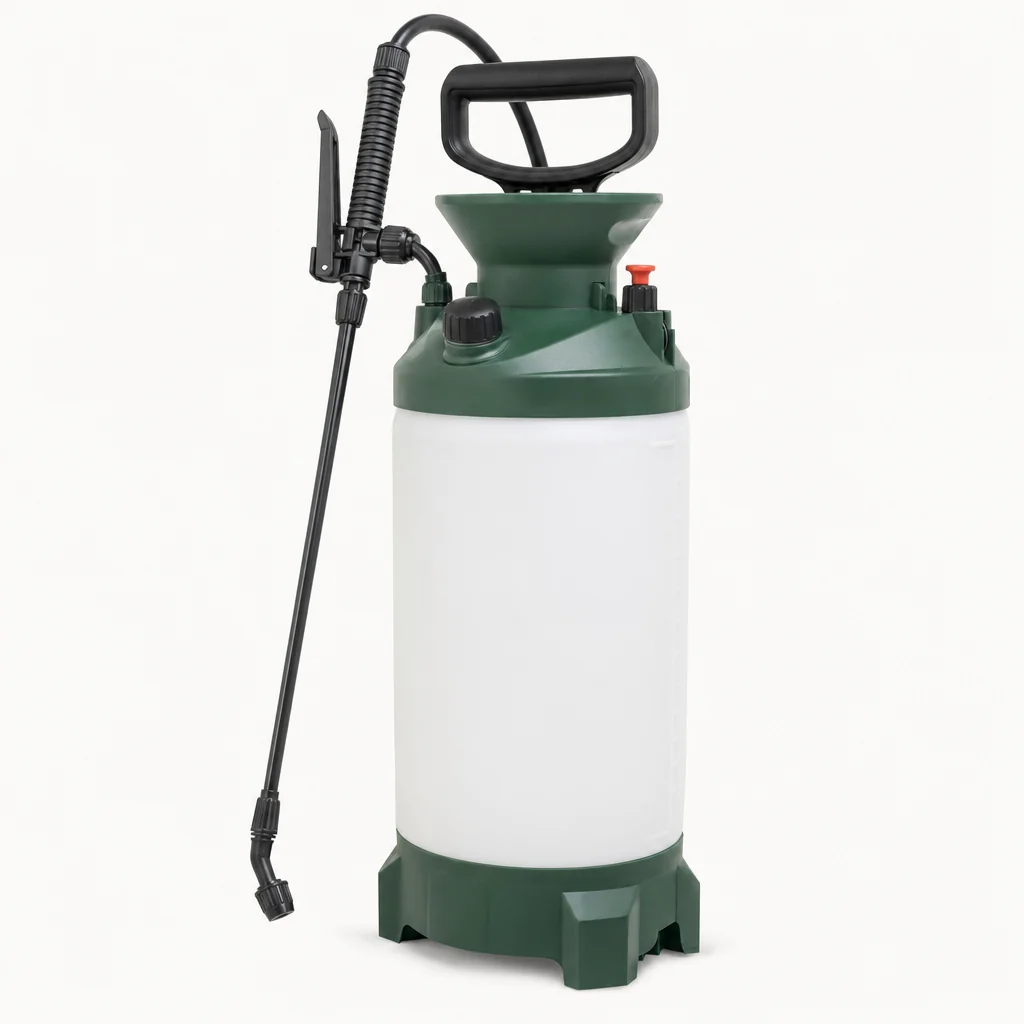
The EGO Power+ BSP3500 reaches up to 350 PSI, making it the highest-pressure option in this group. It is aimed at professional use, where more demanding applications and longer working schedules can justify a more powerful system.
That headline pressure should not distract from the fundamental rule of spraying: use only the pressure and nozzle pattern appropriate for the task and product. More pressure is not an automatic advantage for herbicide around a mixed garden. In fact, it can create finer droplets and greater drift risk if used carelessly. Power is useful when it is controlled.
Battery care is part of ownership. Charge the unit as directed, avoid leaving batteries in extremes of cold or heat, and do not put the whole setup away wet at the end of the season. The HD2000-S battery typically needs replacement after three to five years, depending on how it is used and stored. That is not a reason to avoid the category; it is simply a reminder that cordless convenience comes with a consumable component.
Mixing, Spraying and Cleaning: Good Habits That Matter More Than Brand
The best sprayer in the world cannot rescue careless technique. Fortunately, good spraying habits are not complicated. They are mainly about reading labels, mixing only what you need, choosing calm weather and keeping your equipment clean and dedicated to its job.
Mix with a plan
Read the product label before adding anything to the tank. It should tell you the correct dilution, the plants or surfaces it can be used on, weather conditions to avoid, protective measures and the recommended application method. Never rely on a half-remembered ratio from last season. Bottles have labels for a reason, and garden chemicals are not a place for improvisation.
Add some water first if the product instructions allow it, then measure the product carefully and top up to the required volume. This helps mixing and reduces the chance of concentrated liquid sitting in one corner of the tank. Fit the lid securely, agitate only as directed and check the nozzle is set appropriately before you walk into the border.
Mix only the amount you expect to use. Leaving diluted products in a sprayer for days is rarely useful. It increases the risk of confusion, may affect performance and turns a simple job into something you need to label, remember and store safely. A little planning avoids all of that.
Spray in the right conditions
Still, dry weather is your friend. Wind causes drift, rain can wash products away and hot bright sun can make some treatments harder on plants. In late September and through autumn, the problem is often dew or intermittent showers rather than scorching heat. Wait until foliage is dry, watch the forecast and allow enough dry time for the product label's instructions.
Keep the nozzle close to the target and move at a steady pace. For weedkiller, direct spray at the leaves of the weed rather than flooding the surrounding soil. For feeds, apply evenly and stop before leaves are dripping. For washing down, work from top to bottom so you are not immediately re-soiling the section you have just cleaned. Revolutionary? No. Helpful? Very.
Clean the right way after every session
Once you have finished, use up the solution in accordance with the product label rather than tipping leftovers down a drain or onto a random patch of ground. Empty the sprayer fully. Rinse it promptly and run clean water through the hose, trigger and nozzle. Remove the nozzle if appropriate and clean it gently. Do not attack it with a pin or nail, which can damage the opening and alter the spray pattern.
For a weedkiller-only sprayer, this cleaning is still important. It prevents blocked nozzles, protects seals and makes the next job more reliable. The difference is that you are not then assuming the sprayer has become safe for feeds. It remains a weedkiller sprayer. That clarity is the whole point.
Wear suitable protective clothing for the product being used, keep children and pets away from the area, and follow the label's instructions on re-entry and safe use. A garden sprayer is a useful tool, but it is not a toy and it should never be left pressurised or full of product.
Common Questions About Garden Sprayers
No. Keep a dedicated weedkiller sprayer. Herbicide residues can remain in internal parts, and even small amounts can harm sensitive plants. Rinsing is essential maintenance, but it does not make shared use a good idea.
For many gardens, yes. A 5-litre pressure sprayer is a practical middle ground for paths, borders, greenhouse jobs and routine plant care. If you routinely work over a large area, a knapsack model may save time and refilling.
A flat fan nozzle is generally the best choice for controlled weedkiller application because it creates a wide, even band with lower drift potential than a fine cone mist. Always follow the weedkiller label and spray only in calm conditions.
Not for deep cleaning. A sprayer is useful for rinsing greenhouse staging, dampening surfaces before scrubbing, washing loose compost from pots and shifting light debris. It does not have the cleaning power of a pressure washer on ingrained grime or algae.
Replace it if it is blocked beyond sensible cleaning, damaged, leaking or producing an uneven pattern. A worn nozzle can alter coverage and increase the chance of drift, which matters particularly with herbicides.
They are most worthwhile for large areas, regular spraying schedules or gardeners who find repeated manual pumping uncomfortable. For occasional small jobs, a straightforward pressure sprayer remains simpler and entirely effective.
Which Garden Sprayer Should You Choose?
The easiest way to choose is to start with the job you do most often, then buy a second, dedicated weedkiller sprayer before buying any clever extras. It is a less glamorous answer than a single do-everything machine, but it is the answer most likely to protect your plants and make routine work pleasantly uncomplicated.
Small patio or greenhouse gardener
Choose a 1-litre mist sprayer for close-up plant care, plus a separate small unit if you need herbicide for paving cracks.
Typical UK garden
A 5-litre pressure sprayer is the most versatile all-round format for feeds, cleaning and routine garden care. Keep another one for weedkiller.
Large garden or allotment
Consider a knapsack or battery-powered sprayer for capacity, comfort and consistent spraying across longer sessions.
For compact jobs, the Hozelock Spraymist is a useful little tool that will earn its place in a greenhouse or by the back door. For most households wanting a serious step up, the Hozelock Standard Pressure Sprayer in 5 litres is the sensible all-round format. It is large enough to make garden work efficient without becoming unwieldy.
The Chapin 20004 and Vivosun 1.35-gallon models occupy the useful small-to-medium handheld space. They suit gardeners who prefer a portable tank for contained tasks and do not need a backpack. The Field King 190328 is the more capable choice where area, repetition and controlled herbicide application demand a proper knapsack setup. The PetraTools HD2000-S makes sense when manual pumping is the main irritation you want to remove.
GardenScout verdict
Buy for the work you do most often, not the grandest task you can imagine doing one day. A 5-litre pressure sprayer is the sensible heart of many gardens; a knapsack earns its place on larger plots; and a small handheld unit remains invaluable for pots and greenhouse jobs. Whatever format you choose, reserve one sprayer for weedkiller alone. That single habit is more valuable than any nozzle, battery or extra litre of capacity.