The short answer
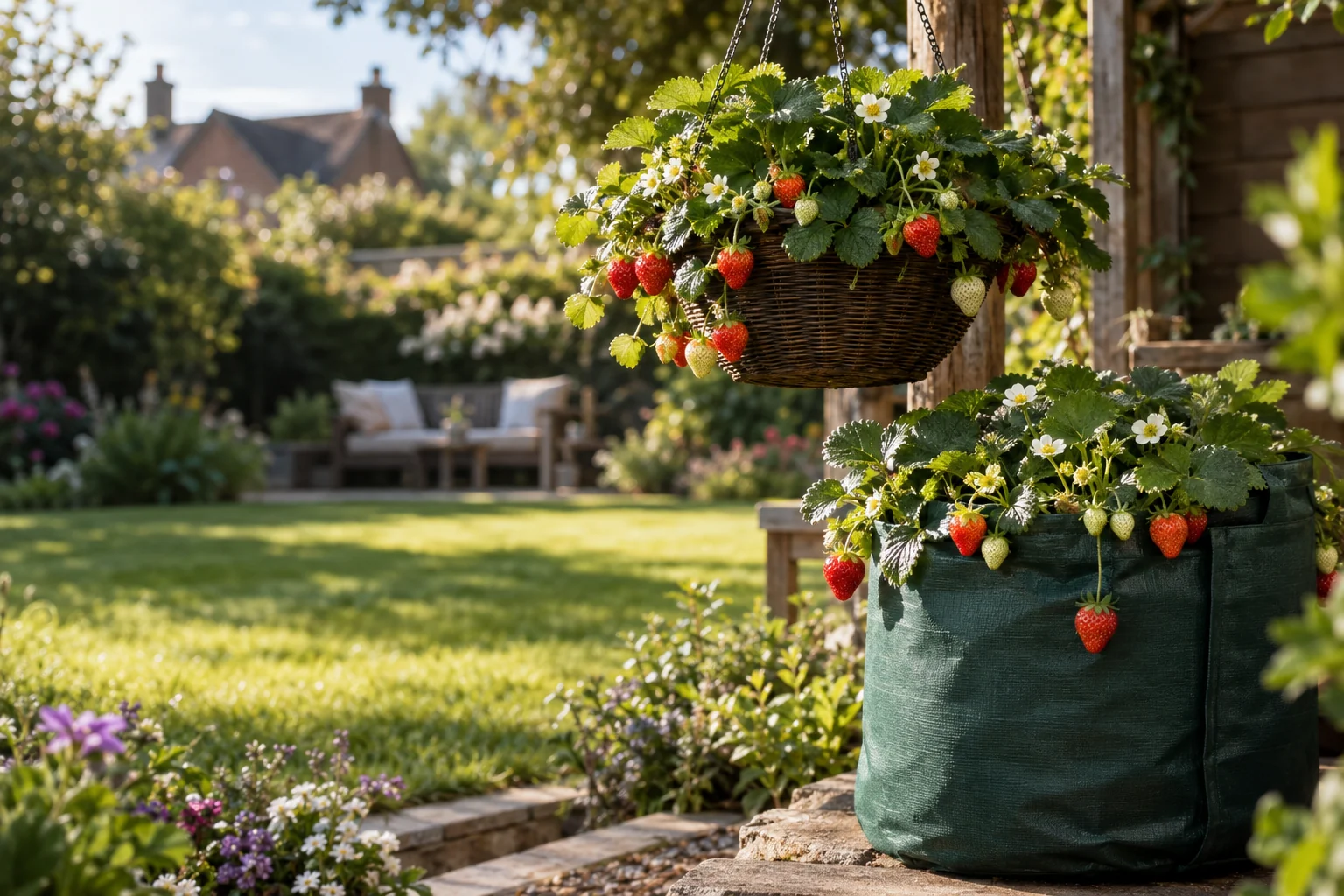
Plant three strawberries in a 35 cm hanging basket or a standard grow bag in a sunny spot, keeping each crown level with the compost surface. Plant in November or in April and May. Water when the top 2–3 cm of compost is dry, daily in warm spells, and feed with tomato fertiliser once flowering starts.
When to do it
Now: November is a good time to plant strawberry plants.

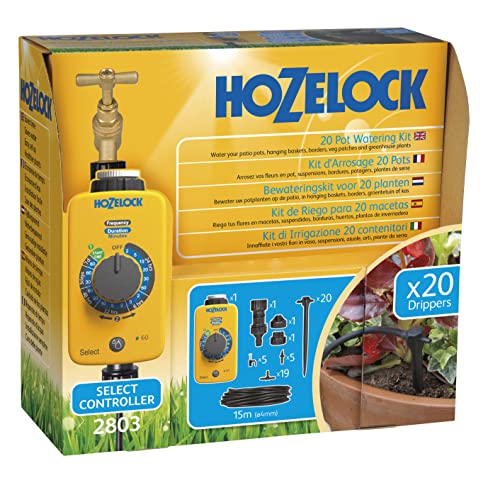
This automates the regular watering that hanging baskets and grow bags need, with drippers positioned near the strawberry plants. It is especially useful when several containers make daily hand-watering easy to miss.
Check price on Amazon
A good pair of secateurs makes it easier to remove unwanted runners and tidy damaged or spent growth without wrestling with stems by hand. They are useful for the pruning and runner-management jobs covered in this guide.
Check price on AmazonWe link to the exact model on Amazon UK. Prices change often, so check the live price before you buy. As an Amazon Associate we earn from qualifying purchases.
Why hanging baskets and grow bags are such a smart way to grow strawberries in the UK
Strawberries are generous plants, but they do have an unfortunate habit of presenting their best fruit directly to the nearest slug. A berry can look immaculate at breakfast and resemble a small crime scene by teatime. Growing them off the ground changes that rather dramatically.
Hanging baskets and grow bags are not a novelty method reserved for glossy catalogues. They are a sensible answer to three very ordinary British gardening problems: limited room, tired or heavy garden soil, and creatures that regard a ripe strawberry as a personal invitation. A basket can live by a back door, outside a kitchen window or on a sunny wall. A grow bag can sit along the edge of a patio, on a balcony where the load is suitable, or on a strip of paving which would otherwise support only a forgotten pot and a surprisingly determined weed.
The first advantage is height. Berries no longer rest in wet soil, get splashed with mud or lie hidden beneath a tangle of leaves. Slugs and snails are not impossible to find in an elevated container, particularly if foliage touches a wall or neighbouring pot, but the usual ground-level assault is greatly reduced. That alone makes the method worth considering if you have ever checked a strawberry bed with the optimism of a child opening a birthday present and the result of a customs inspection.
There is also better air movement. Botrytis, often called grey mould, thrives when leaves and fruit stay damp in still conditions. A basket that can catch a breeze dries more quickly after rain. Raised grow bags offer a similar benefit if they are not pushed into a dark, cramped corner. This is not a magic shield against disease, but it does remove one of the things fungal problems like best: damp congestion.
The real small-space advantage
Containers let you place strawberries in the brightest patch rather than accepting wherever a conventional bed happens to be. A few hours of direct sun can be the difference between fruit that is merely red and fruit that tastes like an actual strawberry.
Harvesting is easier too. You can inspect fruit at waist or chest height instead of kneeling on wet grass, which is a modest luxury until you have tried it. It also means children can help pick without trampling the planting area, and you are more likely to spot a berry at precisely the right moment rather than discovering it a week later wearing a coat of grey fluff.
Container growing does ask more of you in one important area: water. Soil in the ground has depth, shade and a large reserve of moisture. Compost in a suspended basket has none of those comforts. It can dry quickly, particularly in a warm spell or a windy position. The answer is not to avoid baskets; it is to build a sensible routine around them. Once that is in place, strawberries are among the most rewarding edible crops for a patio garden.
What to do now, in November: this is a useful month for planting bare-root runners, refreshing an existing container and deciding where next year's fruit will sit. Keep newly planted baskets and bags moist but not sodden, and move them away from an exposed wind tunnel if winter weather is severe.
Choosing your container: hanging baskets versus grow bags
There is no single best container. There is only the one that fits your space, how often you are around to water, and whether you want a compact display or a more productive row of plants. Both hanging baskets and grow bags can produce excellent fruit. Their habits, however, are different enough that it pays to choose deliberately.
A hanging basket is the obvious choice for a doorstep, small courtyard or balcony. It makes a feature of the plant as well as the fruit: leaves spill over the rim, flowers show well, and runners can create a gently cascading effect if you allow them to develop. Standard 30 cm baskets generally suit one or two strawberry plants. Move up to a 35 cm basket and three plants can sit comfortably without becoming a crowded little committee.
Do not be tempted to cram in more simply because the plants look small at purchase. The roots soon claim the compost, and crowded crowns hold damp foliage against one another. That is a fine recipe for smaller fruit and a more difficult watering job. A basket planted slightly generously at the beginning usually becomes properly full by summer.
Grow bags are less theatrical but often easier to manage. A standard UK grow bag is typically around 90 cm by 30 cm by 10 cm and can support three strawberry plants. It sits low, but it can be raised onto a suitable bench, staging or low support to bring fruit up from the ground. Specialist strawberry grow bags have planting pockets along their sides as well as planting space at the top, allowing six to 12 plants in one vertical unit.
That greater capacity is useful on a patio, but it comes with a warning. Every plant still needs enough compost, water and feeding. Pocket bags dry from the outside in and can be awkward to wet evenly. They are brilliant when you can reach every pocket and inspect them regularly. They are much less brilliant if they are hung high on a fence and forgotten until July.
| Feature | Hanging basket | Standard grow bag | Specialist pocket bag |
|---|---|---|---|
| Best use | Doorsteps, walls and compact patios | Patio edges and raised supports | Vertical growing where floor space is tight |
| Typical planting capacity | 1–2 plants in 30 cm; 3 in 35 cm | 3 plants | 6–12 plants |
| Watering behaviour | Dries fastest, especially in wind | More even moisture than a basket | Individual pockets can dry unevenly |
| Harvest access | Excellent at standing height | Good when raised | Good, but inspect every pocket |
| Visual impact | High: flowers and fruit can cascade | Practical and productive | Useful vertical display |
If you are starting from scratch, I would favour a 35 cm basket with three plants for a small, sunny space where you pass every day. You will see when it needs water. For a family wanting a steadier supply, a grow bag planted with three plants is usually more forgiving. It does not dry quite as fast, and there is less chance that a missed watering turns the entire crop into a lesson in regret.
There are many generic strawberry bags available. Nutley's Hanging Strawberry Flower Bag has been listed at £7.75, while generic hanging strawberry growbag planters have been sold in packs of two for £7.50. The important thing is not the branding on the packet but whether the container can drain freely, can be supported safely when wet, and can be reached easily with a watering can.
Support matters: compost and water are heavy together. Check hooks, brackets, railings and wall fixings before planting, rather than when a fully watered basket is already swinging in the breeze.
The best strawberry varieties for containers
Container growing concentrates everything: roots, moisture, nutrients and your attention. The variety therefore matters more than it might in a generous garden bed. You want a plant that fruits well in restricted compost, stays manageable and suits the way you hope to harvest.
There are two useful groups to understand. June-bearing strawberries produce a main flush of fruit in early summer. They are the traditional, all-at-once sort: excellent if you want enough berries for bowls, jam or a very good week of breakfasts. Perpetual, or everbearing, strawberries crop over a longer period, generally from June into October. They are ideal for picking little and often from a container near the kitchen.
'Albion', 'Flamenco' and 'Mara des Bois' are perennial favourites for longer container harvests. Their lower runner production means more energy can go into flowering and fruiting, which is a practical virtue when compost volume is limited. They suit grow bags especially well because the plants remain focused rather than trying to colonise the patio.
'Mara des Bois' is particularly worth growing if flavour is the aim. The fruits are not there merely to look cheery in a photograph; they have the aromatic, sweet character many people remember from garden strawberries. In a hanging basket beside a warm wall, a few ripe berries can be remarkably fragrant.
For a big early-season crop, look towards June-bearers. 'Cambridge Favourite' is a long-standing UK classic, a heavy cropper and an RHS Award of Garden Merit holder. 'Honeoye' is early and vigorous. 'Elsanta' is the commercial standard and is known for excellent flavour. These are useful choices if you want a concentrated crop rather than a trickle of berries across the season.
For fruit over a long season
Choose perpetual types such as 'Albion', 'Flamenco' or 'Mara des Bois'. They are well suited to regular picking from June through to October.
For a substantial early crop
Choose June-bearers such as 'Cambridge Favourite', 'Honeoye' or 'Elsanta' where a fuller summer harvest is the priority.
For less runner management
Perpetual types are often the tidier choice in containers because they generally devote less energy to producing runners.
You can mix varieties if you like, but do it with a purpose. A June-bearer and a perpetual variety together can extend the picking season, though the basket will not look perfectly uniform and each plant may want slightly different attention. That is not a gardening crime. It is simply worth labelling them so you know which plant is behaving as expected and which one is attempting a small revolution.
Choose for your routine, not just the label
If you visit the container every morning and enjoy picking a few berries, perpetual strawberries are hard to beat. If you would rather have a larger crop for a weekend of puddings, June-bearers make more sense.
Compost, drainage and the mix that makes container strawberries easier
Strawberries do not need mysterious compost alchemy. They do, however, need a medium that can hold moisture without becoming airless and can drain without drying into a brick. That balance is the entire game in a basket or grow bag.
They prefer a slightly acidic growing medium, around pH 5.5 to 6.5. Standard multipurpose compost generally sits at pH 6.0 to 6.5, which makes it a perfectly sensible starting point. There is no need to complicate things by adding acidic ingredients just because strawberries happen to like a modestly acidic root zone. More ingredients are not automatically more expertise. Sometimes they are simply more bags in the shed.
What matters is structure. Ordinary grow bag compost can compact, especially after repeated watering. It can lose its open texture after around six weeks and may become difficult to re-wet if it dries thoroughly. Water then runs down the sides or through a crack, whilst the root ball remains dry in the middle. Anyone who has watered a basket for five minutes only to find it dry again by lunch will recognise the problem.
For baskets, a useful working mix is 60% peat-free multipurpose compost, 20% perlite and 20% fine bark or coir. The compost carries nutrients and moisture. Perlite keeps air around the roots and improves drainage. Fine bark or coir helps retain moisture while maintaining an open texture. Mix it thoroughly before planting rather than layering materials in the basket, where they will behave less evenly.
For grow bags, you can use the existing compost as a base, but it is worth making sure drainage holes are clear and adding extra structure where practical. A grow bag should never stand in a tray of water for days. Strawberries appreciate steady moisture; they do not appreciate permanently wet roots.
Avoid the false economy of dry compost: if a bag has been left open and has become dusty or water-repellent, rehydrate it gradually before planting. Add water a little at a time and mix until it is evenly damp, not saturated.
A coir liner in a wire basket is attractive and traditional, but it does not retain much water on its own. Line it carefully and make sure the compost sits snugly against it. If you are planting through the sides for a full, cascading display, do so sparingly. Every side-planted strawberry increases the watering demand, and a basket with more holes than compost can become a very pretty but short-lived experiment.
Do not bury stones or broken pots in the bottom of containers as a supposed drainage layer. The roots need compost volume more than they need rubble. Good drainage comes from an open mix and proper drainage holes, not from sacrificing rooting space to a miniature archaeological site.
Planting strawberries step by step without killing the crown
Planting is straightforward, but there is one non-negotiable detail: the crown must sit at, or just above, the surface of the compost. The crown is the short, central part of the plant where leaves and roots meet. Bury it and it may rot. Leave the roots sitting proud and the plant can dry out or fail to establish. This is strawberry planting's Goldilocks rule: not too deep, not too high.
In early November, bare-root runners can still be planted for fruiting the following summer. They will use the quieter months to establish roots, then wake quickly in spring. If you are reading this in spring, April and May are also good planting months for first-year fruiting, although that first crop is usually lighter. Cold-stored runners can be planted from May to July for a late-season crop in the same year, which is handy for replacing a failed plant or filling a bare spot without waiting until the following spring.
Planting a hanging basket
- Choose a basket with secure support and drainage. If it is a wire basket, fit a coir liner neatly so the compost will not wash through gaps.
- Fill the basket about halfway with your prepared compost mix.
- Set out the plants before committing. Keep them around 10–15 cm apart and make sure the crowns will not press against the rim.
- Make a hole wide enough for each root system. Spread roots naturally rather than folding them into a tight knot.
- Position each crown at the compost surface or a fraction above it. Never bury the crown beneath compost.
- Fill around the roots, firming gently with fingertips. You are settling compost, not laying a patio.
- Water in with around 500 ml per plant, applying it slowly enough for the compost to absorb it.
For a 35 cm basket holding three plants, put one plant near the centre and the other two towards opposite edges. That gives each plant room to develop and leaves space for fruit to hang clear of the compost. In a 30 cm basket, one strong plant will often outperform two plants forced into competition. There is no prize for the fullest basket in May if it is exhausted by July.
Planting a standard grow bag
Lay the bag where it will grow before cutting it open. Once planted and watered, it is awkward to move. Make drainage holes in the underside if they are not already present, and use three evenly spaced planting holes along the top. Gently tease out tightly circling roots before planting. Again, keep the crown level with the surface and water each plant carefully after planting.
With a pocket grow bag, begin with the lower pockets and work upwards. Support the bag while filling, and add compost in stages so it reaches around each root ball. Do not simply fill from the top and hope compost finds its way into every pocket; it rarely does evenly. Once planted, water slowly from the top and then check the lower pockets separately, because they may receive less moisture than you expect.
Planting-day checklist
- Use healthy plants with firm crowns and fresh-looking roots.
- Place containers in sun before planting, not after they are too heavy to move.
- Keep crowns at compost level.
- Water slowly and thoroughly after planting.
- Label varieties, particularly if you are mixing June-bearing and perpetual plants.
- Check that hanging containers are stable and drainage holes are open.
In the first couple of weeks, remove flowers from very small or stressed new plants if they appear. It feels slightly mean, I know. But establishing a stronger root system first can give you a better plant and better cropping later. A strawberry that is trying to root, flower and recover from being planted all at once may achieve all three rather half-heartedly.
Watering and feeding: the routine that keeps plants producing
The difference between a cheerful basket of strawberries and a sulking one is usually water. Not fancy equipment. Not gardening folklore. Water, applied often enough and evenly enough.
Hanging baskets are the most demanding containers. In a typical UK summer, expect to water daily during warm or dry spells. In overcast conditions, every two or three days may be enough. Weather is only half the story, though. Wind, a warm wall, a roof overhang, the thickness of the liner and the size of the plants all affect how quickly compost dries. The plant gets the final vote.
Use the finger test rather than watering by the calendar. Push a finger 2–3 cm into the compost. If it is dry at that depth, water immediately. If it is still moist, check again in 12 hours. This simple habit is far more useful than following a rigid schedule, because it tells you what is happening below the surface rather than what the weather app promised.
A 35 cm basket needs approximately 1–1.5 litres at each watering session. A 90 cm grow bag needs about 2–3 litres. Apply water slowly, preferably in two passes a few minutes apart if compost is dry. The first pass starts re-wetting it; the second is more likely to reach the root zone. A fast torrent often escapes through the nearest hole and gives a misleading impression of generosity.
Morning is the easiest watering habit to keep
Watering early gives leaves time to dry and lets plants face a warm day with a full reserve. If a basket is flagging badly in late afternoon, water then as well; a thirsty strawberry does not need a lecture about timing.
Once plants are actively growing and starting to flower, feed regularly with a tomato-type fertiliser according to the product label. Strawberries in containers have only what you provide. The aim is to support flowering and fruiting without pushing the plant into masses of soft leafy growth. More feed is not better. A plant with abundant leaves but disappointing flowers is often telling you it has had more nitrogen than it required.
Keep water off fruit where possible, especially once berries are colouring. Water the compost at the base, not the leaves and fruit. It is not the end of the world if rain gets them wet — this is Britain, after all — but prolonged moisture and poor air flow are exactly the conditions that encourage grey mould.
During a hot spell, check baskets twice daily. One check in the morning and one in the late afternoon may seem fussy, but a hanging basket can go from fine to bone dry very quickly. Grow bags are more forgiving, though pocket bags deserve extra attention because the exposed side pockets can dry before the top looks remotely thirsty.
Do not confuse wilt with overwatering: both thirsty and waterlogged plants can look limp. Feel the compost before reacting. Dry compost needs water; wet, stale compost needs better drainage and a little patience.
Runners, pruning and what to do after harvest
One reason strawberries feel like good value in a small garden is that they can make more plants. Runners are the long stems sent out by many varieties, with baby plants forming along them. In a bed, they wander across the soil looking for somewhere to root. In a hanging basket, they drape down in a rather charming way. Whether you keep them depends on your priority.
If you want the best fruit crop from a container, remove most runners as soon as you see them. They take energy that could otherwise support flowers and fruit. This is particularly important in a small basket, where the original plant has limited compost and cannot afford to finance an entire offspring programme.
If you want more plants, select one or two strong runners from a healthy mother plant and remove the rest. Place a small pot of compost beneath the baby plant and pin or hold the plantlet against the surface so it can root. Keep the little pot moist. Once it has formed a decent root system, cut the runner joining it to the parent. You then have a new strawberry plant ready for another basket, grow bag or a gift to somebody who will hopefully return the favour in cake.
Perpetual varieties generally make fewer runners than June-bearers. That is useful if your chief aim is a long season of fruit, but it means you may need to be more selective if propagation is part of the plan. June-bearers are often more enthusiastic at producing runners, sometimes to the point where they appear to have forgotten their original job.
After the main harvest, remove old, damaged or diseased leaves and clear away any fallen fruit. Do not strip the whole plant bare. It still needs healthy foliage to feed itself. Tidying improves air movement and makes it easier to see pests, new flowers and runners.
Winter care for baskets and grow bags
In November, strawberries are slowing down rather than finished. They are hardy plants, but their roots are more exposed in a container than in open ground. Move hanging baskets into a sheltered position if possible, especially away from harsh wind. Do not allow the compost to dry out completely over winter, but water much less often than in summer. Cold, wet compost is a bigger risk than a modestly dry root zone at this time of year.
Remove rotting fruit, dead leaves and any obvious debris from the surface. This small clean-up removes hiding places for pests and limits disease carry-over. If you have a grow bag on bare paving, raising it slightly can help excess water drain away. Just make sure the support is stable. A grow bag sliding off improvised staging in January is not the sort of garden drama anyone needs.
For bigger berries
Remove most runners promptly, especially in a basket or a small grow bag.
For free new plants
Root one or two strong runners into small pots and cut them free only after they have established.
For a healthier winter
Clear dead material, shelter containers from severe exposure and avoid waterlogging.
Pest and disease management: keeping berries slug-free, mould-free and bird-proof
The great joy of container strawberries is that they solve the most irritating pest problem before it begins. Elevation means slug and snail damage is reduced almost entirely compared with fruit sitting at ground level. There may still be the occasional determined climber, particularly where leaves touch a wall, a railing or another pot, but it is nothing like the regular overnight raids seen in a traditional strawberry bed.
That said, strawberries in baskets are not invisible to the rest of the garden. Aphids, vine weevil, red spider mite and birds all deserve a place on your inspection list. The trick is to notice problems early. A container is compact, which means you can examine every plant in minutes. This is one of its underrated advantages.
What elevation helps with
- Fruit is much less likely to lie on damp soil.
- Slug and snail damage is greatly reduced.
- Better air movement can reduce the conditions that encourage botrytis.
- You can inspect fruit and foliage without crouching through a bed.
What elevation does not solve
- Birds can still see ripe fruit perfectly well.
- Aphids can arrive on fresh growth.
- Hot, dry positions can encourage red spider mite.
- Vine weevil larvae can still damage roots in compost.
Aphids, including greenfly and blackfly, usually gather on soft new growth and on the undersides of leaves. From April onwards, inspect plants weekly. A small colony can often be removed by rubbing it off gently or spraying it with water. If numbers build, an insecticidal soap spray can help. Ladybird larvae offer a biological-control option. Neem oil solution is another option sometimes used by gardeners — check the product label for the correct dilution rate.
Whichever route you choose, spray carefully and follow the product instructions. Avoid treating open flowers when pollinators are active. Strawberries need pollination to form full, properly shaped fruit, and it would be rather self-defeating to deal with aphids whilst discouraging the insects that make the berries possible.
Vine weevil is more troublesome in containers because the larvae feed on roots. Adult weevils notch leaf edges, but that cosmetic damage is not usually the main issue. A plant that suddenly wilts despite moist compost, or can be lifted with a poor root system, deserves closer inspection. Remove affected plants and check the compost around the roots for creamy white larvae with brown heads. Good hygiene, fresh compost when replanting and regular inspection are your strongest practical defences.
Red spider mite is most likely in hot, dry weather. Look for pale stippling on leaves, fine webbing and plants that seem dull or dusty. Keeping plants adequately watered and giving them some humidity around the foliage can help prevent a severe problem, but do not create permanently wet leaves. Remove heavily affected foliage and avoid allowing baskets to bake against a hot wall without enough water.
Birds are perhaps the clearest sign that your strawberries are good. Netting can protect fruit, but use it carefully so birds cannot become trapped. A lightweight framework or purpose-made cover which keeps netting away from the plants is safer than draping loose material directly over them. In a hanging basket, positioning can help too: a spot close to regular household activity is often less inviting to birds than an isolated corner of the garden.
Botrytis, or grey mould, appears as soft, brown patches which develop grey fuzzy growth. Remove affected fruit immediately and dispose of it rather than leaving it on the compost. Pick ripe berries frequently, thin overly dense foliage if necessary, and water at the base. Do not let overripe berries linger because they are an open invitation for mould to spread.
The five-minute weekly check: look under leaves for aphids, feel compost moisture, remove old fruit, check crowns are visible, and inspect supports. This tiny routine prevents most container strawberry problems becoming a larger job.
Harvesting for flavour, and avoiding the common mistakes
Strawberries do not improve in sweetness after picking, so wait until the berry is fully coloured before harvesting. Pick in the cool part of the day if you can, and take the fruit with a short piece of stem attached rather than tugging hard at the berry itself. This keeps the fruit in better condition and avoids damaging nearby flowers.
Harvest regularly. During the peak season, that may mean every day or two. A ripe strawberry hidden beneath a leaf soon becomes an overripe strawberry, then a mouldy strawberry, then a source of trouble for its neighbours. There is no shortage of gardening tasks, but picking a warm berry directly into a bowl is not one of the more arduous ones.
Small or misshapen fruit is not always a sign that you have done something wrong. Cool weather during flowering, uneven pollination, drought stress and an over-crowded root zone can all play a part. Look for patterns rather than blaming a single berry. If every fruit is small and plants are pale, think about feeding, watering and whether too many plants are sharing too little compost.
Yes, strawberries are perennial. The basket will still need winter care, shelter from severe exposure and occasional watering so the compost does not become completely dry. Fruit comes during the growing season, not all year, but the plants can remain in their containers from year to year.
Check for drought, insufficient feeding, poor pollination and overcrowding. Make sure the basket is in good sun, water consistently, feed during active growth and avoid using so many plants that each has very little root room.
Leave them only if you want new plants or enjoy the cascading appearance. For the strongest crop from the parent plant, remove most runners and allow it to put its energy into fruit.
It can work well if the balcony receives enough sun and can safely support the weight of wet compost, plants and water. Make sure water can drain without causing a problem below, and choose a position you can reach easily for regular checks.
Keep productive, healthy plants whilst they are cropping well, but use runners to renew your stock rather than relying indefinitely on tired old plants. Refreshing plants and compost periodically is one of the simplest ways to maintain good harvests.
The biggest mistakes are wonderfully predictable: planting too deeply, overfilling containers, letting baskets dry out, overfeeding, and ignoring runners until the plant has become a complicated green octopus. None is fatal if caught early. Strawberries are forgiving enough to reward modest improvements quickly.
A simple seasonal plan for sweet strawberries in small spaces
Container strawberries are at their best when you think a season ahead. This does not mean drawing up a clipboard-heavy management programme. It simply means doing the right small job at the right time.
Now, through November: plant bare-root runners if you have them, tidy existing containers, remove diseased material and make sure drainage is working. Place baskets somewhere sheltered but bright. Water only when compost begins to dry rather than on a summer schedule.
Late winter and early spring: check crowns, remove dead foliage and refresh the upper compost where practical. As growth restarts, begin checking moisture more regularly. Come April and May, plant new container strawberries for first-year fruiting if you did not plant in autumn.
From late spring into summer: water consistently, feed during active growth, inspect for aphids and pick ripe fruit frequently. Remove runners unless you want to make new plants. In warm spells, baskets may need daily watering and sometimes two checks a day.
After the main crop: tidy plants, remove spoiled fruit, select a few runners if you want replacements, and keep watering whilst plants remain active. Perpetual varieties can continue producing well into autumn, so do not pack everything away simply because June has passed.
The GardenScout verdict
For gardeners short of soil, short of space or simply tired of sharing every strawberry with slugs, hanging baskets and grow bags are one of the most satisfying ways to grow fruit. Choose a sunny spot, avoid overcrowding, keep compost evenly moist and treat the crown with respect. Do that, and a handful of plants can provide months of flowers, fresh berries and enough runners to start the whole cheerful business again next year.
Kit that makes this easier
A few tools that help with the jobs above. We link to the exact model on Amazon UK.
HOZELOCK
This automates the regular watering that hanging baskets and grow bags need, with drippers positioned near the strawberry plants. It is especially useful when several containers make daily hand-watering easy to miss.
Check today's price: HOZELOCK on Amazon UK
FELCO Secateurs
A good pair of secateurs makes it easier to remove unwanted runners and tidy damaged or spent growth without wrestling with stems by hand. They are useful for the pruning and runner-management jobs covered in this guide.

- HOZELOCKBest for regular wateringView on Amazon
- FELCO SecateursBest for runner managementView on Amazon
Buying for a gardener? See our gifts for vegetable growers, checked on Amazon every day.