
How to Grow Blueberries in Pots With Ericaceous Compost
The container-grown blueberry formula is wonderfully simple: keep the roots acidic, keep the compost evenly moist with rainwater, and grow more than one suitable variety if you have room.
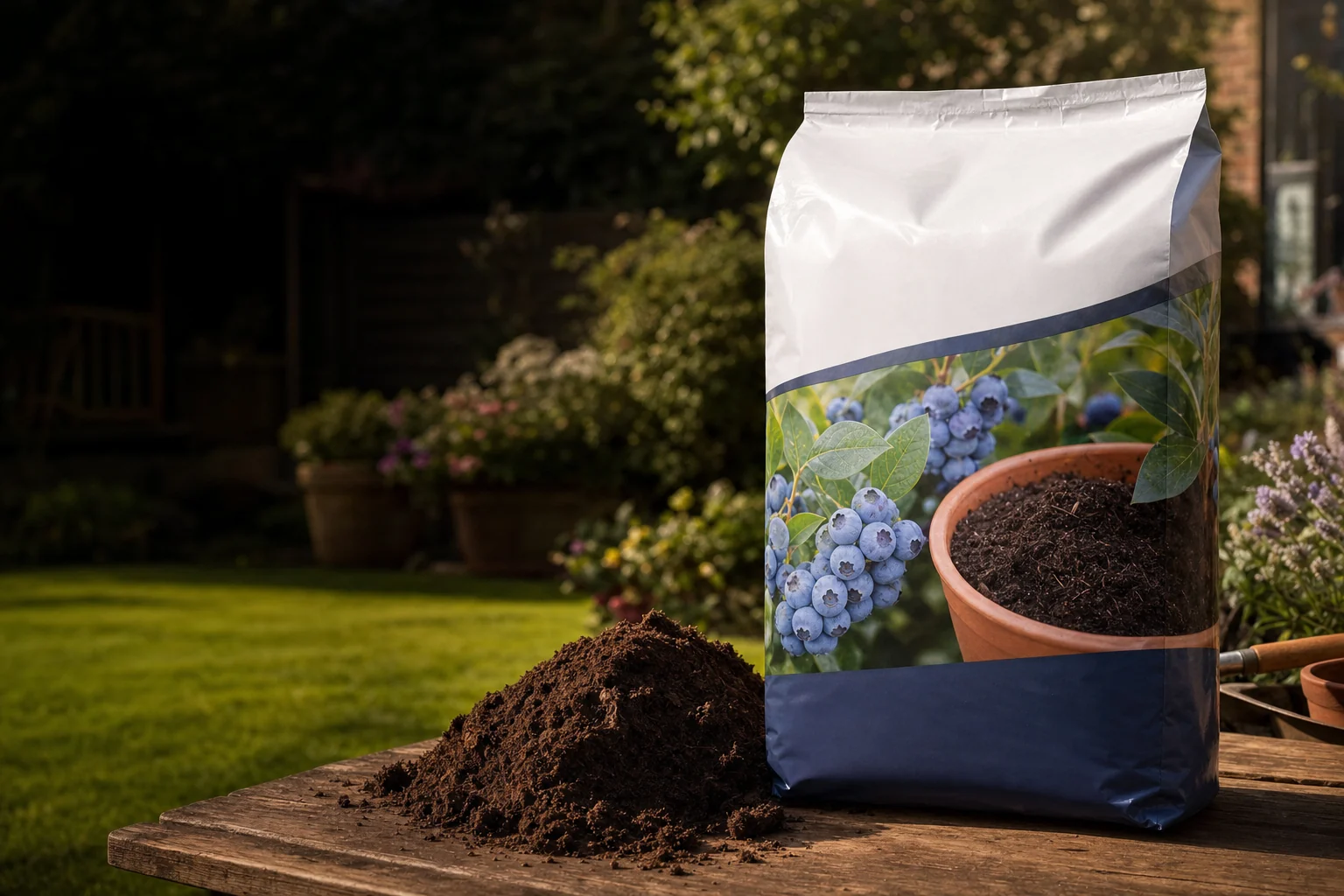
Why Blueberries in Pots Are Britain's Most Rewarding Container Crop
In mid-September, blueberry plants are often looking quietly pleased with themselves. The fruit may be finished, the leaves may be beginning to colour, and the whole shrub has that settled, woody look that says it has earned a rest. This is a very good moment to plan a pot-grown blueberry project. There is less pressure than there is in spring, when every garden centre bench seems to be shouting at you and you come home with three unrelated plants because they looked lonely.
Blueberries suit container growing for a rather useful reason: the thing they need most is the thing many gardens cannot naturally provide. They are acid-loving shrubs. A great many British soils are not especially acidic, and some are positively enthusiastic about being alkaline. Blueberries planted directly into unsuitable ground can spend years looking vaguely offended: pale leaves, weak growth, little fruit, plenty of disappointment.
A pot lets you sidestep that argument entirely. You create a separate root zone using ericaceous compost, place it where the plant will receive plenty of light, and control what reaches its roots. It is one of the clearest examples of container growing solving a real gardening problem rather than simply making the patio look busier.
The other advantage is that blueberry bushes earn their footprint. In spring there are neat flowers. In summer there is fruit. In autumn the foliage can turn richly coloured. In winter, the bare stems still have a tidy little shrub shape. Even when it is doing nothing much, it rarely looks like a pot you have forgotten to deal with.
There are three habits that make the difference between a blueberry that merely survives and one that becomes a reliable yearly crop. First, use genuinely ericaceous compost rather than hoping ordinary multipurpose compost will muddle through. Second, make rainwater your default water source wherever possible. Third, grow two different, compatible blueberry varieties so pollinating insects can move pollen between them while they flower.
The short version
Blueberries are not difficult in the fussy, diva-like sense. They are simply specific. Give them an acidic growing medium, avoid steadily diluting that acidity with hard tap water, and let two flowering varieties keep each other company. The rest is patient, ordinary garden care.
That last point matters. A single blueberry can fruit, so it is easy to assume that one plant is all you need. But a pair usually makes more sense if you can accommodate it. You get a more reliable pollination set-up, a longer picking season if the varieties ripen at slightly different times, and a little protection against the inevitable off-year. Also, two pots look deliberate. One pot can look like a blueberry has been put in temporary accommodation and is waiting for a solicitor.
Know Your Numbers: The Acid Soil Science Behind Blueberry Success
Ericaceous simply means suited to acid-loving plants. The word gets used so often on compost bags that it can sound like a style choice, a bit like "heritage" or "cottage garden". It is not. For blueberries, acidity affects whether their roots can actually access the nutrients around them.
Soil acidity is described using the pH scale. The lower the pH, the more acidic the growing medium; the higher it is, the more alkaline. The scale is logarithmic, which is the important bit people understandably skip when they are standing in the rain holding a bag of compost. A small movement on the scale represents a substantial chemical change, not a tiny nudge. For a blueberry root system, that change can determine whether essential nutrients stay available or become difficult to absorb.
When the compost becomes too alkaline, the plant may still be sitting in apparently rich material and yet begin to struggle. Iron and manganese are among the nutrients that become less available under alkaline conditions. The classic warning sign is chlorosis: leaves become yellow whilst the veins remain greener. It is tempting to respond by adding general fertiliser. That often makes the situation messier, because the issue is not necessarily that the pot lacks feed. The issue is that the blueberry cannot properly take up what is already there.
This is why the phrase "acid-loving" is more useful than it first appears. Blueberries are adapted to a particular root environment. You are not trying to force a woodland shrub to behave like a hungry tomato plant. You are trying to maintain the conditions in which it has evolved to function.
Why ordinary compost is a poor long-term shortcut
Ordinary multipurpose compost is designed to serve a broad church: bedding plants, herbs, annual flowers, young vegetables and whatever else you need to pot up on a Sunday afternoon. That versatility is useful, but it is not the same thing as being right for blueberries. A blueberry can be planted in ordinary compost and look acceptable for a little while. That is not proof the compost is suitable. It is simply proof that plants are remarkably polite before they complain.
Ericaceous compost begins closer to the conditions blueberry roots prefer. It is the sensible baseline, not an optional extra. A bag labelled for rhododendrons, azaleas, camellias and other acid-loving plants is usually a useful clue that you are in the right part of the compost aisle.
If a blueberry develops yellowing foliage, do not immediately assume it needs more food. Check the watering routine, the compost type and drainage first. Correcting the root environment is more useful than repeatedly adding products to a stressed plant.
A simple soil pH testing kit can be a helpful diagnostic tool, especially if you are reviving an older blueberry pot or have been using tap water for a long time. It will not run the garden for you, thankfully, but it can tell you whether the container has drifted away from the acidic conditions you intended to create. Test the compost rather than guessing from the label on the original bag. Compost changes with use, watering and time.
Do not confuse acidic compost with waterlogged compost. Blueberries enjoy consistent moisture, but their roots still need air. A dense, exhausted container mix that remains sodden can cause just as much trouble as a dry one. The target is a springy, organic medium that holds moisture whilst allowing excess water to leave the pot. Think damp woodland floor, not abandoned bucket behind the shed.
Choosing Your Champions: Blueberry Varieties for UK Pots
Choosing blueberry varieties is where a little planning pays off handsomely. You are not just choosing flavour, fruit size or the prettiest label photograph. You are choosing flowering partners. If two plants are going to cross-pollinate, they must be different cultivars and their flowering periods need to overlap.
Blueberries are often described as self-fertile, and that can be true in a practical sense: a solitary plant may form fruit. But self-fertile does not mean self-sufficient in the way gardeners usually hope it does. Growing two compatible varieties encourages better pollination when insects are active, and can result in a more generous and dependable harvest. The flowers are small and rather understated, but they are a proper meeting place for pollinators.
For containers in Britain, highbush blueberries are generally the most useful group to start with. They are familiar garden blueberries, selected for fruit production and suitable shrub growth. Within that broad group, look for varieties described as compact, patio-friendly or suitable for containers. Read the plant label for the eventual habit rather than buying solely on the promise of enormous fruit. A vigorous plant can be a wonderful thing in open ground and an exhausting thing in a pot.
Rabbiteye blueberries are another group you may encounter, but they are generally less forgiving of colder conditions. Unless you garden in a particularly mild place and understand the plant's needs, highbush varieties are the easier route for most UK patios, courtyards and gardens.
| What to compare | Compact highbush | More vigorous highbush | Rabbiteye type |
|---|---|---|---|
| Best fit | Patios, balconies and small gardens | Large containers with more room around them | Milder gardens with suitable conditions |
| Container suitability | Usually the easiest choice | Possible, but needs more management | Less straightforward for many UK gardens |
| Buying priority | Compact habit and overlapping bloom | Compatible flowering partner | Cold tolerance and local suitability |
| Useful pairing strategy | Pair with a different compact cultivar | Pair with another overlapping highbush | Pair only with a compatible flowering type |
A good way to shop is to decide on your pair before you buy either plant. Check the flowering information on both labels. You are looking for a shared window, not two plants that happen to be blueberry-shaped. If one begins flowering when the other has already finished, they will not do much for each other beyond improving the view.
Do not accidentally buy twins
Two plants of the same cultivar can make a pleasing matching pair, but they do not give you the cross-pollination advantage of two different cultivars. If you already own one blueberry, take a photo of the label or write the variety name down before shopping. Nursery labels have a remarkable ability to vanish just when you need them. Usually under a pot. Sometimes in another postcode.
It is also worth thinking about harvest timing. A pair with slightly staggered ripening can make picking feel leisurely rather than frantic. You will still need to beat birds to some of the fruit, because they regard blueberry planning as a useful service you have provided for them, but at least you are less likely to have every berry ripening at once.
Choose a partnership, not two random pots
The strongest container set-up is two distinct blueberry cultivars with overlapping flowering periods, each suited to life in a pot. Put them near one another, keep their care routine consistent, and let bees and other insects handle the introductions.
If you only have space for one pot, grow one blueberry rather than abandoning the idea altogether. A healthy single plant can still be enjoyable. Just set expectations properly. You are choosing a compact fruit shrub with possible crops, not installing an industrial berry operation beside the recycling bins.
Container Command: Pot Size, Material and Drainage
The pot is not merely a decorative jacket for the nursery container. It is the blueberry's entire territory. Every root, every drop of water and every scrap of nutrition has to work within that small universe, so choose the final container with more care than you might give a seasonal petunia.
Young blueberries can begin in a sensibly sized container, then move into a larger one as their root system develops. Established plants eventually need a generous permanent pot with enough compost to buffer them against quick drying and sudden temperature changes. A tiny container can make a blueberry look neatly proportioned in the garden centre, but it also leaves very little room for moisture and roots once summer arrives.
The material matters because it changes how frequently you need to water. Terracotta looks lovely and allows the root zone to breathe, but it loses moisture quickly. That can be useful in a very wet spot, but it means you must be more attentive during warm or windy weather. Glazed ceramic holds moisture more readily and can look smart, although it is heavy and may need frost protection depending on its construction.
Plastic pots are light, practical and moisture-retentive. They are not always the romantic choice, but blueberries do not care whether their home matches the garden furniture. A good-quality plastic container can be especially handy on balconies where weight matters. Fabric grow bags offer strong aeration and can reduce root circling, although they dry faster than solid-sided pots and need placing somewhere stable.
Drainage holes are non-negotiable
A blueberry pot must allow surplus water to escape. A saucer can catch drips, but do not leave the container sitting in standing water for long periods.
Moisture retention is your friend
Choose a container with enough compost volume that it does not swing from soaked to bone-dry after a single bright day.
Place pots before filling them
Once filled with damp compost and a shrub, a large pot becomes surprisingly committed to its location. Test the position first.
Protect roots from extremes
Containers expose roots more than open ground does. Grouping pots or moving them against a sheltered wall can soften difficult weather.
There is an old habit of placing broken crocks in the bottom of pots. A thin layer of coarse material can help keep drainage holes clear, but it is not a magic drainage system. The bigger priority is a container with proper holes and a well-structured compost mix throughout. Do not create a deep layer of rubble at the base and assume the blueberry will be grateful. It needs rooting room.
Lift containers onto pot feet, bricks or another stable support if water tends to collect beneath them. This helps drainage holes work and avoids the permanently damp, green patio ring that appears whenever a pot has decided to become part of the paving.
Mixing the Perfect Ericaceous Blend
Pure ericaceous compost is a sound starting point, but a blueberry container benefits from a mixture that stays open and resilient rather than collapsing into a dense, soggy mass. Bagged compost is not a permanent ecosystem. Over time, organic material breaks down, watering settles it, and roots occupy space. A little structure built in at planting makes life easier later.
Start with peat-free ericaceous compost. Peat-free products have improved hugely, although they can behave differently from one brand to another. Some hold water readily; some dry faster than you expect; some feel fibrous and springy; others are finer. None of that is automatically good or bad. It simply means you should pay attention during the first season rather than assuming every bag behaves exactly like the previous one.
To improve drainage and long-term texture, mix in fine composted pine bark. Pine bark is particularly useful for an acid-loving planting because it helps create an open, woodland-like texture without turning the pot into a pile of sticks. Add horticultural grit sparingly for extra drainage and to reduce compaction. Avoid builders' sand, random gravel from the drive and mystery material left in an old bucket. Gardening has enough surprises without introducing unknown aggregates into a blueberry's lunch.
Mix the ingredients thoroughly before filling the pot. Do not layer them like a trifle. Roots need a consistent growing medium, not separate floors of contrasting texture. Moisten the mix with rainwater as you work if it is very dry, then fill the pot loosely. Firm it gently around the root ball after planting, but do not ram it down. Blueberry roots are fine and shallow; they appreciate a firm home, not a concrete bunker.
What a good mix does
- Supports an acidic root environment.
- Holds moisture without staying airless.
- Leaves room for fine roots to explore.
- Stays easier to re-wet after dry weather.
What causes trouble
- Dense compost with poor drainage.
- Ordinary alkaline-growing media.
- Mixes that dry out rapidly in wind.
- Reusing exhausted compost without refreshing it.
Mulch the finished surface with pine bark. It looks neat, slows evaporation and helps protect the upper roots from drying. Keep the mulch away from the stems themselves so that the base of the plant is not constantly damp. When you water, check that it is soaking into the compost rather than running off the bark and down the outside of the pot. If the surface has become dry and reluctant, water slowly in stages.
Every so often, especially after a growing season, inspect the pot. Has the compost level sunk? Is the plant sitting too low? Is the surface densely matted with roots? Top up with fresh ericaceous compost where needed, removing old mulch first. You do not need to disturb the whole root system for the sake of tidiness, but you do need to maintain the conditions that made the pot successful in the first place.
The Rainwater Imperative: Why Your Watering Can Matters
If there is one routine that separates a thriving container blueberry from a slowly fading one, it is watering with rainwater. Ericaceous compost begins acidic. Hard tap water can gradually work against that acidity. In many parts of the UK, tap water contains dissolved minerals that make it alkaline or hard, and repeated use can nudge a container away from the conditions blueberries prefer.
This is frustrating because tap water is usually perfectly good for people, vegetables, bedding plants and plenty of other garden favourites. Blueberries are simply more particular. They are not being difficult to impress you. Their roots are adapted to acid conditions, and regular alkaline water is a quiet but persistent change to the chemistry around those roots.
A water butt is therefore not an optional bit of green-garden decoration for blueberry growers. It is a practical part of the growing system. Position one where it can collect from a downpipe if possible, use a lid or cover to keep debris out, and keep a watering can nearby so the routine is easy. The best solution is almost always the one you will actually use on a wet Wednesday evening.
Water deeply enough that the whole root ball receives moisture, then allow excess water to drain away. Shallow splashes encourage roots to linger near the surface, where they are more vulnerable to drying out. A slow soak is better. In warm weather, pots may need checking often. In cool, wet weather, they may need very little from you at all. The correct schedule is not a date on the calendar; it is the condition of the compost.
Push a finger beneath the mulch and into the compost before watering. If it feels dry below the surface, water. If it is still damp, wait. This is gloriously low-tech and more useful than watering by habit. A blueberry in a pot can suffer from drought and from waterlogging, often in the same month, because British weather enjoys variety.
Make rainwater the default, not the emergency option
Do not save rainwater only for a heatwave. Use it consistently for blueberries from planting onward. The benefit is cumulative: you are helping the compost retain the acidic character that made it suitable in the first place.
What if you only have tap water?
Do not give up on blueberries if rainwater collection is currently impossible. Grow the plants in ericaceous compost, pay close attention to foliage colour and refresh the top of the pot regularly with fresh ericaceous material. A small water butt, even one used mainly for a pair of blueberry pots, can be a worthwhile future improvement.
What I would not do is treat tap water as irrelevant because the compost bag said "ericaceous" on the front. The bag describes the starting conditions. Watering determines much of what happens afterwards. A pot is a closed system compared with open soil, which is both its strength and its weakness. You control it. You also have to maintain it.
Try to avoid letting containers dry out completely. Very dry peat-free compost can sometimes repel water at first, with the water slipping down the sides of the pot rather than wetting the root ball. If that happens, water slowly, pause, then water again. A brief soak from the base can also help rehydrate the compost, provided you then allow it to drain freely.
Feed the Acid Lovers: Fertilising Through the Seasons
Blueberries are not greedy feeders. This is good news if you have ever watched a courgette demand daily attention like a small, leafy landlord. The aim is steady, healthy growth rather than forcing a soft rush of foliage that the plant cannot properly support.
Use a fertiliser specifically intended for ericaceous or acid-loving plants, following the product instructions carefully. These feeds are formulated with the needs of acid-loving shrubs in mind. General fertilisers, standard tomato feed and whatever happens to be nearest the shed door are not sensible substitutes. The wrong feed can undermine the acidic growing conditions you have worked to create.
Feed during the active growing period, then ease off as the season turns and the plant prepares for dormancy. In autumn, especially now, the priority is not to push lush new growth. The shrub needs to settle, harden and move towards winter in good condition. Feeding late simply because the container looks a bit bare is rarely helpful.
Spring is for support, not excess
As growth begins, an acid-loving plant feed can support foliage, roots and flower development. Apply with restraint and follow the label.
Summer is for observation
Maintain even moisture, watch leaf colour and avoid assuming every poor-looking leaf needs another dose of fertiliser.
Autumn is for settling down
Refresh mulch, remove fallen debris and concentrate on rainwater and good drainage rather than encouraging tender new growth.
Winter is for quiet checks
Protect containers from difficult weather, ensure drainage holes remain clear and resist the urge to fuss with a dormant shrub.
Yellow leaves can result from alkaline conditions, root stress or poor drainage as well as lack of feed. If you fertilise repeatedly without correcting the cause, the plant may become more stressed rather than less.
Controlled-release feeds can simplify the routine, whilst liquid feeds are useful where you want to respond carefully during active growth. Neither is automatically superior. Choose the approach you are most likely to use correctly. A modest, consistent routine beats dramatic intervention every time.
Planting, Pruning and the Patient Wait: A Growth Roadmap
Autumn is one of the best times to prepare or plant pot-grown blueberries, provided the weather is not harsh and the compost is not frozen or waterlogged. The roots can settle while the top growth is resting, and the plant is ready to wake into its new home when spring arrives. Spring is also a sensible planting season, particularly for container-grown plants, but autumn has a calm practicality that I rather like.
Before planting, choose the final position. Blueberries enjoy sun, although a little shelter from harsh wind is helpful. Place the pot where you can reach it with a watering can and where you will notice it. A plant hidden at the far end of the garden is much less likely to receive timely rainwater in a dry spell, no matter how good your intentions were in March.
- Fill the container partway with your prepared ericaceous compost blend.
- Water the blueberry's root ball with rainwater before planting so it is evenly moist.
- Set the plant at the same soil level it occupied in its nursery pot.
- Backfill with the compost blend and firm gently around the roots.
- Water slowly with rainwater until the compost is evenly moist.
- Add a bark mulch over the surface, keeping it clear of the stems.
- Place the second variety nearby if you are growing a pollinating pair.
For the first growing season after planting, establishment matters more than fruit. It can feel slightly cruel to remove flowers or developing fruit from a young plant, but you are helping it direct energy into roots and sturdy framework growth. A well-established shrub is far more likely to reward your patience later. Gardening is full of delayed gratification, which is a polite phrase for "you will need to wait".
Pruning without panic
Young blueberries need very little pruning beyond removing damaged, dead or crossing growth. The goal is not to sculpt them into little lollipops. Let them develop a balanced framework. As plants mature, remove older, less productive wood gradually to encourage vigorous replacement shoots and allow light into the centre of the bush.
Pruning is best approached with a cup of tea and a little restraint. Stand back first. Look for dead, weak, rubbing or congested branches. Make clean cuts with sharp secateurs. If you find yourself holding a branch and thinking, "Perhaps I should just take all of it," put the secateurs down for a moment. Blueberries usually respond better to thoughtful thinning than to an overenthusiastic haircut.
Bird protection becomes important once berries begin colouring. Netting can work, but make sure it is installed securely and checked regularly so wildlife cannot become tangled. A fruit cage or physical barrier may be more convenient in some gardens. If your blueberry is on a balcony, you may have fewer bird problems than a suburban garden, although local blackbirds are perfectly capable of finding a high-rise buffet.
Balcony gardeners
Choose compact varieties in lightweight containers, prioritise rainwater storage and make sure the position receives good light.
New fruit growers
Start with two compatible plants, good ericaceous compost and one simple watering routine. Do not overcomplicate it.
Alkaline-soil gardens
Containers are the straightforward answer. They let you create the acidic environment your garden soil may not offer.
Common Blueberry Questions, Answered
It is much better to start with ericaceous compost. Feed supports a plant, but it does not replace the need for an acidic root environment. Begin correctly and you will have fewer problems to diagnose later.
You can grow one, and it may produce fruit. But two different compatible varieties with overlapping flowering periods usually offer better pollination and a more reliable harvest. If space permits, it is the stronger plan.
Yellowing can point to chlorosis, often linked with compost that has become insufficiently acidic. It can also reflect root stress, overwatering, drought or exhausted compost. Check the whole growing set-up rather than immediately adding more fertiliser.
Yes, but protect the roots from severe exposure where necessary. Make sure the pot drains freely, raise it slightly from cold wet ground and move it to a more sheltered place if your garden is especially exposed.
Check drainage, continue using rainwater when needed, refresh bark mulch and plan any new planting or repotting while the weather remains kind. Avoid pushing tender growth with late feeding. This is a season for roots, preparation and quiet maintenance.
The GardenScout verdict
Blueberries in pots are one of the best ways to grow useful fruit where the garden soil is not naturally acidic. Treat the container as a carefully managed habitat: use ericaceous compost, build in drainage, water with rainwater and pair two compatible varieties. Get those fundamentals right and you will have a handsome shrub that earns its keep through every season.