The Most Amazing Things You Can Grow in Pots – Even Without a Proper Garden
Fruit trees, potatoes, flowers, beans and fresh salad: a realistic UK container-growing guide for balconies, patios, yards and determined windowsills.
Container Gardening in the UK: What's Actually Possible in 2024
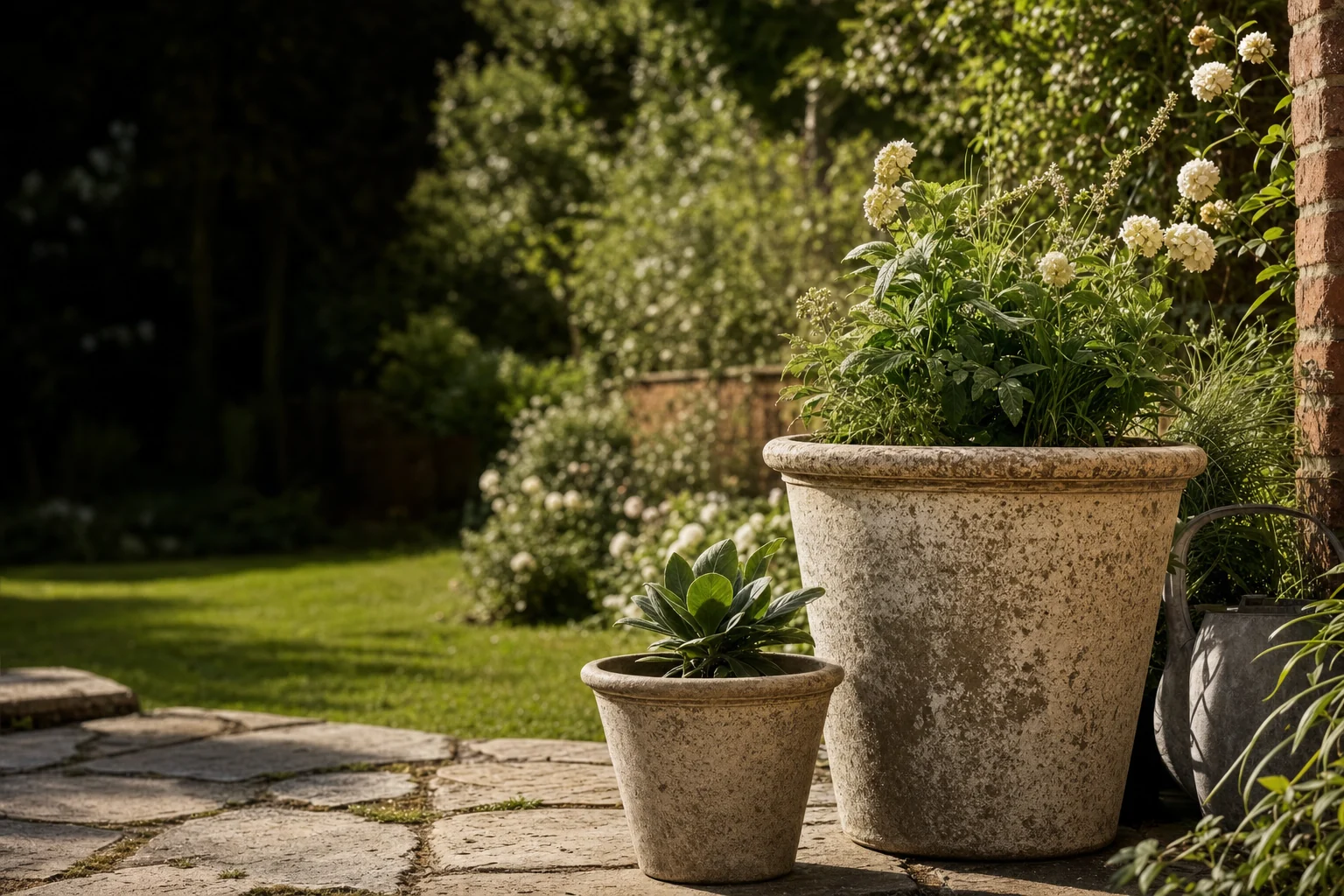
Small-space gardening has a habit of being underestimated. People see a balcony, a strip of paving or one sunny doorstep and assume it is only useful for a chair, perhaps a decorative olive tree, and the odd mug of tea. That is selling it rather short. A pot is not a consolation prize for gardeners without borders. It is a controlled little patch of soil, positioned exactly where you need it, and it can do rather remarkable things.
That matters in Britain. Approximately 5 million UK households have no garden at all, whilst a further 12 million have only a small patio, balcony or yard. For a huge number of people, growing in containers is not a niche technique. It is the practical default. The RHS reported a 38% increase in container vegetable growing between 2020 and 2022, and interest has remained high, with demand continuing for patio and container varieties from seed suppliers including Thompson & Morgan and Suttons.
The good news is that the list of crops that genuinely work in pots is much longer than the usual "herbs, a cherry tomato and some rather sad lettuce". With enough root room, steady watering and the right variety, you can grow apples, cherries, peaches, potatoes, carrots, climbing beans, courgettes, dahlias and regular bowls of salad. Not theoretical, aspirational gardening either. Proper harvesting, proper meals, proper bunches of flowers on the kitchen table.
There are limits, of course. A container dries faster than open ground. It has a finite food supply. A large plant in a very small pot will eventually behave like a large person on a tiny stool: uncomfortable, unstable and liable to cause a scene. But containers also remove several classic British gardening headaches. You avoid compacted soil, much of the battle with stones, and the awkward discovery that your "sunny border" is actually a damp root-filled corner where nothing has flourished since 1998.
The useful change in mindset
Think in litres, depth, drainage and sunlight rather than in square metres. One generous pot can be more productive than a disappointing patch of ground. The key is choosing crops that suit its volume rather than asking every plant to make do with a decorative-sized container.
This guide is deliberately ambitious, but not silly about it. You will not turn a north-facing windowsill into a commercial orchard. You can, however, make a meaningful amount of food and flowers in places that would otherwise be empty. The most successful container gardens are not packed with every possible crop. They are built around a few things you enjoy eating, picking or looking at, then cared for consistently.
Start with light, not a shopping list. Fruiting plants such as tomatoes, peppers, beans, peaches and dahlias need the best sun you can offer. Leafy salads and some herbs are more forgiving, particularly once summer temperatures rise. Watch the space for a day before committing the biggest containers to it.
The Spec Sheet: What You Actually Need Before You Start
Container gardening becomes much easier once you stop treating pots as interchangeable. A 20cm pot and a 50cm pot may both look like "a planter", but to a root system they are entirely different homes. Most poor results come down to a mismatch between plant and container rather than bad luck, bad seed or an inexplicable curse placed on your courgettes.
For most vegetables, 30cm is the sensible minimum pot diameter. That works for compact beans, herbs, salads and some carrots. Fruiting crops need more: allow at least 45cm for tomatoes and peppers, where a larger compost volume buffers the roots from heat, drought and nutritional swings. Dwarf fruit trees need 60cm or more as they mature, although exceptionally dwarfing apple rootstocks can begin in smaller containers.
Depth matters just as much. Salads can grow in 25cm of compost, while root vegetables need around 35cm if you want room for a worthwhile crop. Tomatoes and peppers benefit from at least 45cm. Fruit trees need a minimum of 50cm depth, alongside enough width and weight to keep them upright when they are carrying foliage, fruit and a lively British breeze.
Compost is not merely filler. A standard 40-litre bag of multipurpose compost fills a 35cm pot, which is a useful reality check before buying a row of handsome empty containers. For long-term planting, the RHS advises John Innes No.2 as a minimum for perennials and John Innes No.3 for fruiting crops. The heavier loam-based compost has stronger nutrient buffering over a season, which means less dramatic boom-and-bust behaviour when weather or watering becomes inconsistent.
Drainage is non-negotiable. Containers need drainage holes covering around 10–15% of the base area. In UK conditions, waterlogging is cited by the RHS as the leading cause of container crop failure. That is not because gardeners are foolish; it is because a wet April, a blocked hole and a decorative outer pot without an escape route can turn a healthy root zone into a small swamp very quickly.
Drain first, decorate second
Check every pot has open holes before filling it. If you use an ornamental outer container, make sure excess water can leave it rather than pooling invisibly beneath the nursery pot.
Position is part of the equipment
Once a large pot is full and watered, moving it is a task best avoided. Put the container where it will receive suitable light before you add compost, canes and a plant with ideas above its station.
Make tall crops stable
Beans, sweet peas and young fruit trees need solid support. A pot can be deep enough for roots yet still too light to resist wind if it is narrow or allowed to dry out.
The biggest upgrade is usually a bigger pot
If a crop struggled last year, resist the urge to blame the variety immediately. Increase the container volume first. More compost gives a plant more even moisture, more available nutrients and a wider margin for the odd missed watering. It is not glamorous. It works.
Fruit Trees in Pots: Yes, You Really Can Grow an Apple on a Balcony
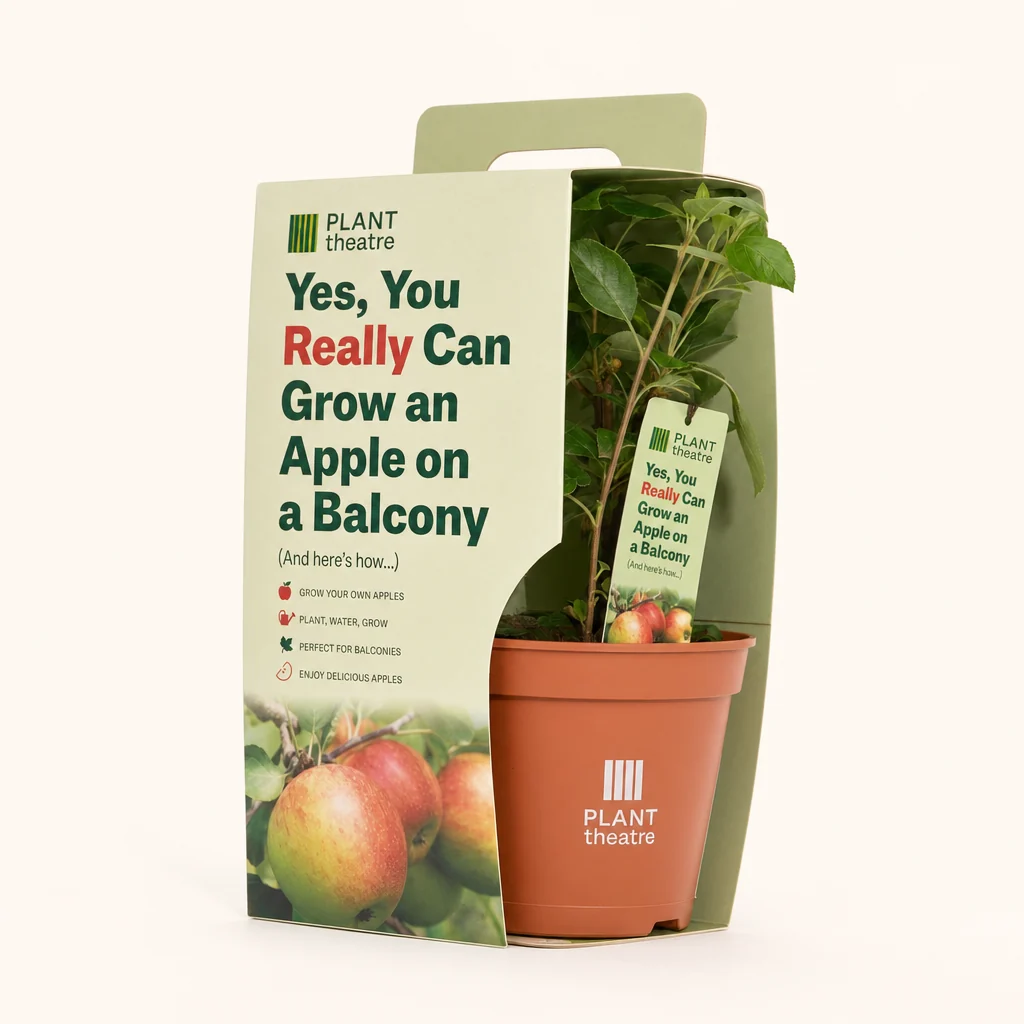
Fruit trees are where container gardening starts to feel faintly ridiculous in the best possible way. An apple tree on a balcony sounds like one of those brochure promises involving suspiciously clean decking and no slugs. Yet the rootstock system makes it entirely achievable. The variety provides the fruit; the rootstock largely controls the tree's vigour and final size. Choose the rootstock properly and a tree that would normally take over a garden can stay compact enough for a large pot.
For apples, M27 is extremely dwarfing. Trees generally reach around 1.2–1.5m and can suit a 50cm pot. M9 is very dwarfing rather than extremely dwarfing, with trees reaching approximately 1.8–2.4m, and suits a 60cm pot. Both are available through specialist fruit suppliers and RHS plant centres. For plums and gages, Pixy is the useful compact rootstock to look for.
That distinction is worth understanding before you buy. A tree described as "patio" may be compact because it is naturally narrow, because it is grafted onto a dwarfing rootstock, or both. Those are not interchangeable descriptions. Ask what rootstock it is on and how much compost volume it will need when mature. A young tree in a small nursery pot is a temporary arrangement, not its long-term lifestyle.
'Ballerina' columnar apples
Columnar apples are designed to grow upright with very little side spread. They can work in pots as small as 30cm diameter, making them especially interesting where width is scarce but vertical space is available.
'Terracotta' peach
This patio-bred peach is selected for container growing and its tolerance of a UK summer. Give it the sunniest, most sheltered position available; peaches are not plants for the gloomy end of the yard.
'Stella' self-fertile cherry
A self-fertile variety matters when there is only room for one tree. 'Stella' removes the need to provide a second compatible cherry solely for pollination.
'Inka' patio plum
A patio plum offers another route into container fruit growing, particularly where you want a compact tree rather than an apple-shaped experiment in horticultural architecture.
Dwarf trees are not maintenance-free. They need watering in dry weather, feeding during the growing season and occasional root attention as they become established. Because the pot contains the root system, it cannot forage beyond its boundaries when the compost is dry or depleted. Mulching the surface helps conserve moisture, and a stable pot in a sheltered position prevents the miserable spectacle of an apple tree lying sideways after an enthusiastic gust.
The reward can be very real. RHS trials at Wisley found that dwarf apple trees on M27 rootstock, grown in 45-litre containers, produced an average of 3–5kg of fruit per tree each year once established. "Once established" is doing important work there: expect this from around years two to three onward, not necessarily in the first season after purchase. Still, that is a very respectable harvest from a compact tree in a container.
One-tree rule: if you only have space for a single fruit tree, self-fertility is more than a nice extra. It can be the difference between a flowering ornamental and a tree that actually produces fruit.
Root Vegetables in Containers: Carrots, Parsnips, and the Surprising Potato Bag
Root vegetables have a slightly unfair reputation for being difficult in pots. In reality, carrots can be easier in containers than in a typical heavy or stony garden soil. They want a deep, loose run of compost with no stones and no hardpan. Give them that and they have far less reason to fork, twist or emerge looking like they have been involved in a small underground argument.
For carrots, 30cm is the minimum useful depth. Choose shorter-rooted Chantenay types if your container is shallower; their roots are typically 10–12cm long and suit more modest pots. Nantes types are better where you can offer 35cm or more. Sow directly from March to June and expect harvests in around 12–16 weeks. Direct sowing matters because carrot roots do not enjoy being moved. There is no prize for nursing them indoors first, however tempting it may be on a wet March afternoon.
Use a container that is both deep and wide enough to sow a decent block rather than a forlorn little row. Keep compost evenly moist while seedlings establish, then thin carefully so the remaining roots have space to develop. Carrots grown in a sheltered yard may need particular vigilance for watering in warm spells, because a pot can dry thoroughly while the weather still feels merely pleasant to humans.
| Container crop | Useful container guide | Good variety direction | Typical timing |
|---|---|---|---|
| Carrots | 30cm depth minimum; 35cm+ for Nantes types | Chantenay for shorter roots; Nantes for deeper containers | Sow March–June; harvest in roughly 12–16 weeks |
| New potatoes | Dedicated potato bag, typically 35–40 litres and around 35cm diameter | 'Swift' or 'Charlotte' | Harvest after the crop has developed underground |
| Parsnips | Choose a deep, obstruction-free container | Select according to the depth you can provide | Direct sow rather than transplant |
Potato bags are the great gateway crop for people who do not quite believe container growing can be productive. You plant a few seed potatoes, water them, gradually add compost as shoots grow, and eventually tip out the bag to find actual potatoes. It remains deeply satisfying, even after you know perfectly well how plants work.
Gardeners' World container trials found dedicated potato grow bags produced an average of 1.5–2.5kg of new potatoes per bag. Bags are typically 35–40 litres and about 35cm in diameter. 'Swift' and 'Charlotte' are strong container choices. The yield will not supply every roast dinner for the year, but it is plenty for several fresh meals, and the flavour of newly lifted potatoes makes even the washing-up feel less offensive.
Why bags work so well for potatoes
The compost stays loose, harvest is straightforward and there is no digging through a border hoping you have found every tuber. The downside is simple: a densely planted bag is thirsty. Let it dry out repeatedly and both yield and potato size will suffer.
Climbing Beans, Courgettes, and Squash: Big Plants, Small Footprint
Some plants look far too vigorous for a pot. Courgettes sprawl. Beans climb with the enthusiasm of a teenager discovering ladders. Squash seems to regard every available surface as a personal challenge. Yet big-looking plants can be perfectly manageable in containers when you select compact varieties, give them enough compost and use vertical space properly.
Climbing French beans are the obvious place to start. A 30cm-diameter pot that is at least 30cm deep is sufficient for a small planting. Sow two or three seeds per 30cm pot in May, after the risk of frost has passed, and train them up a 1.8m cane wigwam. 'Cobra' and 'Blue Lake' both hold RHS AGM status and are dependable names to look for.
Each climbing French bean plant can produce around 300–500g of beans over an eight-to-ten-week cropping period. That is enough to make the case for beans in a very small space, especially because picking regularly encourages more pods. The plant's footprint at ground level stays compact. Its production moves upward, which is exactly the sort of arrangement a balcony or narrow yard appreciates.
Runner beans are traditionally treated as a crop for people with a long garden and an even longer row of canes. 'Hestia' changes the equation. It is a dwarf, bush runner bean bred for containers, growing around 30–40cm tall and needing no staking. It also produces red and white flowers, so it earns its place before the first pod has appeared.
Why vigorous crops are worth trying
- Climbing beans make excellent use of vertical space.
- Picking beans frequently keeps the crop producing over its cropping period.
- 'Hestia' gives runner bean flavour and flowers without a full-height framework.
- Compact varieties can make a patio look planted rather than simply furnished with pots.
The catches to plan for
- Fruiting plants demand regular watering and feeding.
- Canes must be secured before plants become tall and top-heavy.
- Courgettes and squash need generous root room, not a token pot.
- Exposed balconies can be difficult for tall crops in strong wind.
Courgettes and compact squash are more demanding, but not impossible. The crucial point is that the "compact" in a variety description does not mean "happy in a small decorative pot". Fruiting plants still need a generous container, steady water and feeding through the season. The upside is that one productive plant can feel very generous when it gets going. The downside is that it will make its displeasure known quickly if it is allowed to swing from bone dry to saturated compost.
For a small balcony, beans are the more forgiving first choice. They offer a vertical crop, attractive foliage and manageable containers. Courgettes are better where there is floor space for a substantial pot and enough sun for the plant to do more than merely survive. Squash can work if you choose a compact type and have somewhere for it to trail or be trained without blocking the route to the washing line.
Build support first
Put a 1.8m cane wigwam in place at sowing time. Trying to add canes once beans have climbed and tangled is a surprisingly efficient way to undo your own work.
Pick little and often
Beans are at their best when harvested young and regularly. Leave pods to mature and the plant will put more energy into seed production rather than further cropping.
Respect the frost date
Sow tender beans in May after frost risk has passed. A warm-looking day in April is not a binding contract with the British climate.
Cut Flowers From a Windowsill: Dahlias, Sweet Peas, and the Annual Cutting Garden in Pots
Growing flowers for cutting is one of the loveliest uses of container space. The UK cut-flower market is valued at approximately £1.3 billion annually, and around 90% of flowers sold in the UK are imported. A few pots will not overturn that statistic on their own, obviously. But a home-grown bunch of sweet peas or dahlias is a small, practical alternative to buying flowers that may have travelled a very long way before they reach the kitchen table.
Sweet peas are especially good value in a pot because they give scent, height and an ongoing supply of stems. 'Cupani' is a heritage variety known for intense fragrance. 'Beaujolais' has deep burgundy blooms and RHS AGM status. 'Matucana' is bicoloured and also notably fragrant. Their colours are glorious, but scent is the thing that makes you forgive them for needing support and regular picking.
Sow sweet peas in October or November for early flowering, or from January to March. A 30cm-plus pot and a 1.5–1.8m support will give them a workable home. Position the support at planting time, keep the compost evenly moist and pick flowers often. Once they begin producing seed pods, flowering slows. The plant is not being difficult; it thinks it has completed the job.
Dahlias are just as convincing in containers. Dwarf and patio selections such as the Gallery and Dahlietta series perform especially well in 30–40cm containers. Full-sized dinner-plate dahlias need at least a 50cm pot. Plant tubers in April or May, and expect the first flowers from July, continuing until the first frost, which is often October across much of England.
Cutting is part of the care routine. With both sweet peas and dahlias, regular harvesting is not vandalism. It encourages more flowers. Take stems in the cooler part of the day and get them into water promptly for the best chance of a long vase life.
The practical combination is one tall pot of sweet peas and one or two dahlia containers at ground level. Sweet peas create the vertical element; dahlias bring dense colour and armfuls of stems through late summer. If you only have a windowsill, smaller annuals and microgreens are more realistic. If you have even a narrow patio, though, flowers are one of the best ways to make a container garden feel generous rather than utilitarian.
The Year-Round Salad Bowl: From First Leaves in February to Winter Cuts in December
Salad leaves are the quiet stars of container growing. They do not have the theatre of an apple tree or the triumphant treasure hunt of potato bags, but they are consistently useful. A pot of leaves by the door can produce something for lunch without a trip to the shops, without a packet wilting at the back of the fridge and without the usual handful of salad somehow costing more than seems entirely reasonable.
The key idea is "cut-and-come-again". A 40cm window box or container planted with mixed salad leaves can produce harvests every 10–14 days for eight to ten weeks before it needs resowing. Rather than pulling whole plants, snip outer leaves or cut the crop above its growing point. The plants respond with another flush. Eventually they tire, as all living things do, and that is your cue to sow the next pot.
| Season | Good container crops | What to expect | Useful protection |
|---|---|---|---|
| Spring: March–May | 'Little Gem', rocket, mustard leaves, pea shoots | Fresh, fast leaves as light levels improve | Move containers to the best available light |
| Summer: June–August | Heat-tolerant butterhead lettuce, basil, purslane | Frequent cutting, provided compost stays moist | Some shade can help tender leaves in hot weather |
| Autumn: September–November | 'Winter Density', mizuna, land cress, endive | Reliable leaves as summer crops finish | Use a sheltered position |
| Winter: December–February | Mâche, winter purslane, hardy rocket | Slow but valuable picking | Fleece or a cold frame improves protection |
For fast returns, microgreens are almost unfairly good. They need only a shallow tray around 5–7cm deep and a south-facing kitchen windowsill. Radish microgreens can be ready in five to seven days. Sunflower shoots take around seven to ten days. Pea shoots are ready in roughly ten to fourteen days. There are few other crops that offer a harvest before you have had enough time to forget where you put the seed packet.
Radish microgreens: five to seven days
The fastest of the three, with a peppery flavour and almost immediate gardening gratification. Use a shallow tray and harvest young.
Sunflower shoots: seven to ten days
Quick-growing shoots that need only a shallow growing medium and a bright windowsill. They are proof that outdoor space is helpful, not compulsory.
Pea shoots: ten to fourteen days
A useful crop for anyone who wants a fresh harvest without waiting for a full vegetable plant to mature. Pick young and sow another tray before the first one is finished.
Successional sowing is the trick that turns salad from a one-off success into a habit. Sow one small container every couple of weeks rather than filling every pot with the same crop on the same day. That way, when one batch bolts, becomes tired or is eaten with unreasonable enthusiasm, another is already on the way. It is less dramatic than a single enormous sowing. It is also much more useful.
The best crop for beginners
If you have never grown food before, start with mixed salad leaves or pea shoots. They need little space, give quick feedback and teach the two container essentials: keep compost moist, and harvest before the plant gets ahead of you.
A Practical Container Calendar for UK Growers
The temptation in spring is to buy everything at once. Garden centres are full of healthy-looking plants, the sun has appeared for nearly two consecutive hours, and suddenly you are considering a peach tree, six tomato plants and a very optimistic squash. Slow down. A container garden works best when it is planned around what the space can support throughout the season, not just what looks appealing on the first warm weekend.
Late winter is a good time for microgreens, winter salads and early planning. Measure the available space. Notice where sunlight falls. Make sure you can safely water without sending a small river through the neighbour's balcony below. Early spring brings salad sowing, carrot sowing and preparation for potatoes. Spring is also the time to plant or position fruit trees before they break into strong growth.
May is a significant month because tender crops can be sown once frost risk has passed. This is the moment for beans and for planting out warm-season crops in suitable positions. Summer is about watering, feeding fruiting plants, picking beans, cutting flowers and resowing salad. It is not the glamorous part of gardening, but it is where the harvest happens.
Autumn is the chance to refill containers with winter salads, mizuna, land cress and hardy leaves. It is also a good moment to reflect honestly on what worked. Did the tomato get enough light? Were the carrot pots deep enough? Did you enjoy picking sweet peas every morning, or did the support structure turn the only route to the bins into an obstacle course? Keep the successes and edit the rest.
The balcony grower
Prioritise vertical beans, compact fruit trees, salads and microgreens. Use the sunniest corner for fruiting crops and make every tall support stable.
The patio or yard grower
You have room for larger pots, potato bags, dahlias and potentially a courgette or compact squash. Group thirsty plants together for easier watering.
The windowsill gardener
Start with pea shoots, radish microgreens, sunflower shoots and compact herbs. You are growing food, not trying to recreate a county showground indoors.
The practical eater
Choose crops you actually use: salad leaves, beans, potatoes and herbs tend to earn their space quickly. A beautiful crop you never pick is still a missed opportunity.
Container Growing Questions Answered
Yes, but choose crops accordingly. Salads, rocket, mustard leaves, mizuna, land cress and pea shoots are more realistic than tomatoes, peaches or courgettes. Fruiting crops need the brightest and warmest spot available to produce well.
No. Multipurpose compost is useful for many seasonal crops. For longer-term perennials, the RHS recommends at least John Innes No.2, while fruiting crops benefit from John Innes No.3 because it provides stronger nutrient buffering through the season.
Check drainage first. Waterlogging is a leading cause of container crop failure in UK conditions. Ensure drainage holes are open and cover around 10–15% of the base area, and never let an outer decorative pot trap water around the roots.
For speed and simplicity, grow mixed salad leaves or pea shoots. For a more substantial outdoor crop, potato bags are enormously satisfying and can produce 1.5–2.5kg of new potatoes in container trials.
Yes, if it is on an appropriate dwarfing rootstock, has enough compost and receives suitable care. A self-fertile variety such as 'Stella' cherry is particularly useful where there is only space for one tree. M27 apples in 45-litre containers produced an average of 3–5kg annually in RHS Wisley trials once established.
The Bottom Line: Small Space Does Not Mean Small Ambition
The best thing about container growing is not that it makes gardening possible without a proper garden. It is that it makes gardening possible exactly where you are. A rented flat, a paved yard, a balcony, a doorstep or a bright kitchen ledge can all become useful growing spaces. You do not have to wait for a bigger garden, better soil or some future version of yourself who knows exactly what every plant wants.
Start with the space you have. Give plants enough compost, reliable drainage and appropriate light. Select varieties that match the container rather than forcing the largest crop into the smallest available pot. Then grow something you genuinely want to eat, pick or admire. That is the whole game.
GardenScout verdict
Container growing is not a watered-down version of gardening. Done properly, it is a flexible, productive way to grow food, flowers and even fruit trees in spaces that would otherwise sit empty. Start with salads or microgreens for quick confidence, add potatoes or beans for satisfying harvests, then move on to dahlias, sweet peas and dwarf fruit trees when you are ready. The important specification is not how much garden you have. It is how well you use the pot.