
12 Garden Projects You Can Complete in a Single Weekend
An honest look at the weekend-garden-book formula, the closest real titles, and how to turn two free days into something that still looks good by Monday morning.
Weekend Warriors: What These 12 Garden Projects Actually Promise
A free weekend has a dangerous effect on gardeners. By Friday afternoon, you are thinking about shifting a few pots. By Saturday morning, you have somehow convinced yourself that a new seating area, a composting system and a small wildlife meadow are all entirely reasonable before tea. This is how gardens become wonderfully personal. It is also how patios acquire a mysterious pile of half-used timber for three years.
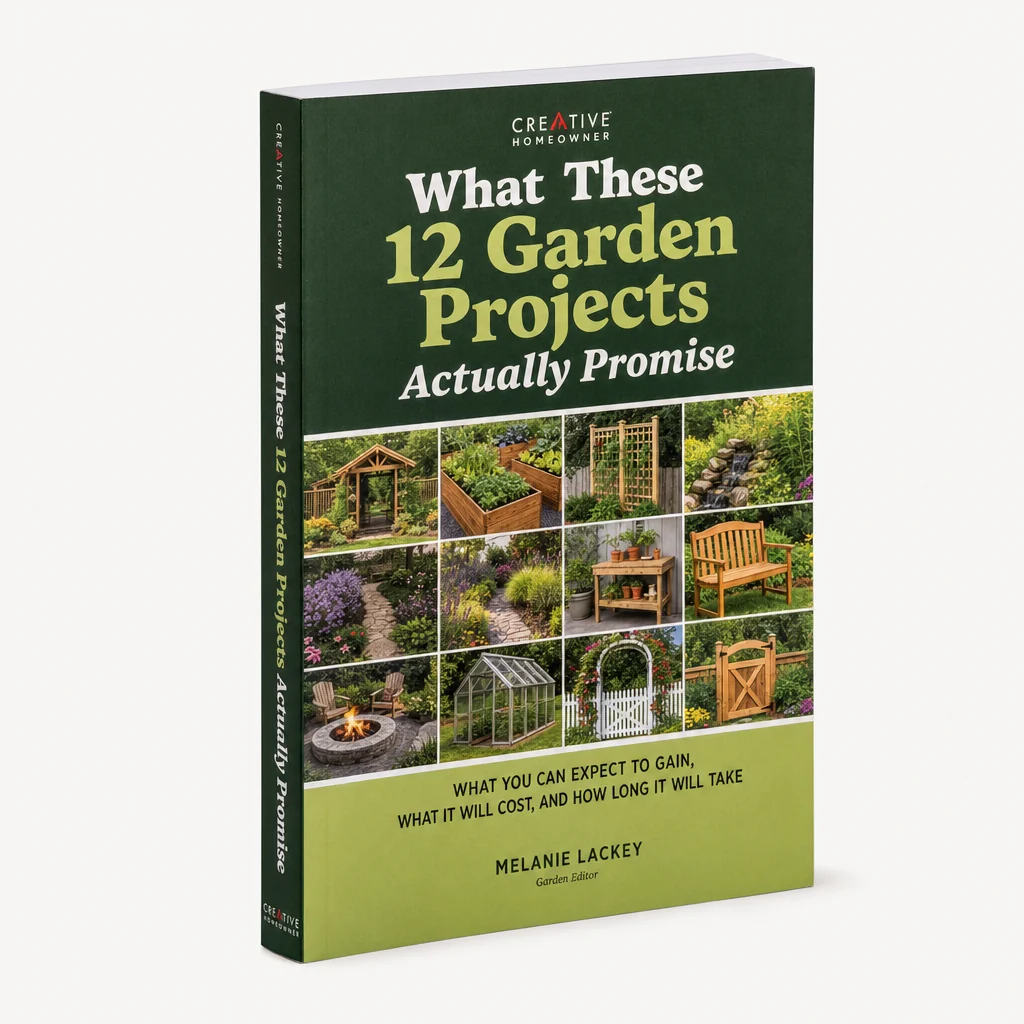
The phrase 12 Garden Projects You Can Complete in a Single Weekend is best understood as an editorial umbrella rather than the title of one identifiable book. It describes a familiar and useful sort of gardening guide: practical projects broken into manageable jobs, with enough ambition to transform a corner of the garden but not so much that you need a site compound and a sympathetic neighbour.
There are three books particularly close to that idea. Frank Perrone's Build It Yourself: Weekend Projects for the Garden, ISBN 9781616893385, contains 12 simple garden projects. Its range runs from fencing and birdfeeders to a potting table and compost bins. Ali Ward's Garden Projects in a Weekend: Projects for 1, 2 or 3 Weekends takes a broader garden-making approach, including wildflower meadows, seating arrangements, lighting and low-maintenance courtyards. David R. Stiles and Jeanie Stiles' Garden Projects You Can Build (The Weekend Project Book) is an illustrated how-to paperback containing instructions for 20 projects.
That distinction matters. One book may help you build a useful object. Another may help you alter how a part of the garden works. Neither is automatically better. A timber compost bin is satisfying in a very direct, screw-it-together sort of way. A new seating arrangement can be equally transformative, though it may involve more measuring, more lifting and at least one moment of standing back with your hands on your hips.
The weekend-project rule worth keeping
A project only counts as a weekend win if the site is usable again on Sunday evening. That means allowing time for preparation, clearing up, tool returns, watering in and the small adjustments that always appear once you sit down and look at the thing properly.
For UK gardens, the appeal is obvious. Our outdoor spaces are often modest, awkwardly shaped and used hard through the warmer months. A small terrace may need to work as a dining spot, plant nursery, child-friendly corner and somewhere to dry a jumper after an unexpected shower. A project with a clear purpose earns its keep quickly.
I also like the modesty of the format. Weekend gardening is not about pretending every plot needs a grand redesign. It is about solving one irritation at a time: the compost heap that looks like a collapsed haystack, the bare fence that has been annoying you since you moved in, the patch of lawn that hates being mown, or the tools that have somehow migrated behind the shed.
Use project books as a starting point, not a dare. The garden gets the final vote. Its slope, drainage, access, shade and existing planting will usually matter more than how tidy the original photograph looks.
This guide reviews the concept as much as the books. The real question is not whether a project sounds achievable on paper. It is whether it remains achievable once you have measured the space, found the cable reel, checked the weather and remembered that you still need to cook dinner.
The Bookshelf at a Glance: Specs, Formats & What You're Actually Buying
Weekend-project books can look remarkably alike from a distance: a handsome garden photograph, some encouraging copy and a promise that you will be potting, building or relaxing in no time. Look closer and their personalities diverge. Perrone's book is rooted in straightforward constructed projects. Ward's title stretches into garden design and planting-led changes. The Stiles volume offers a larger collection of buildable projects in illustrated how-to form.
That makes them complementary rather than interchangeable. If your immediate urge is to make a potting table, a compost bin or a feeder, the practical-build emphasis in Perrone's title is highly relevant. If the problem is that an awkward lawn edge is never used, or a seating area has no sense of purpose, Ward's project categories speak more directly to the issue. If you enjoy working from drawn instructions and want a deeper bank of project ideas, the Stiles book offers 20 projects rather than a tightly defined dozen.
Perrone's project list is appealing because it has useful garden infrastructure at its core. Compost bins and potting tables are not glamorous in the manner of a billowing border, but they have a funny way of making the whole garden easier to enjoy. A proper place to prepare plants saves your kitchen worktop. A contained compost area stops organic matter becoming a visual argument with the rest of the garden.
Ward's categories are more spatial. Wildflower meadow work, new seating arrangements, garden lighting and low-maintenance courtyard ideas ask you to think about the experience of being outside. This is especially useful when the garden already has all the ingredients but somehow still feels slightly unresolved. A pair of chairs is not always a seating area. A few lights are not automatically lighting design. The difference is intent.
The Stiles and Stiles book's illustrated how-to approach will appeal to readers who like to understand how parts fit together before reaching for a saw. Drawings can be wonderfully direct. They do not distract with a styled garden around the object; they show the object. That said, a drawing also asks more of the reader. You need to translate a clean illustration into your particular garden, your particular timber and your particular wonky paving slab.
For practical garden infrastructure
Perrone's collection explicitly includes fencing, birdfeeders, a potting table and compost bins: useful targets if your garden needs working features rather than another decorative flourish.
For changing how a garden feels
Ward's projects include seating, lighting, wildflower meadow work and low-maintenance courtyard ideas, making the title more about use and atmosphere than one material or construction method.
For readers who prefer illustrated instruction
The Stiles title is an illustrated how-to paperback with instructions for 20 projects. It offers breadth for the gardener who likes having several possible builds in reserve.
The sensible way to choose is to begin with the frustration, not the book cover. Is your garden short of storage, shelter, wildlife interest, a useful working surface or somewhere comfortable to sit? Once you can answer that, a project category becomes much easier to assess. This sounds obvious. It is astonishing how often we skip it and buy three more pots instead.
Project by Project: The Weekend Builds Examined Honestly
The 12-project idea works best when you stop treating every project as the same kind of task. A feeder, a fence panel, a meadow patch and a courtyard conversion may all appear on a weekend-gardening list, but they demand different things from you. Some are primarily about making. Some are about clearing. Some are about waiting. The latter is where the phrase "completed" needs a little gardening common sense.
1. Fencing repairs and simple screening
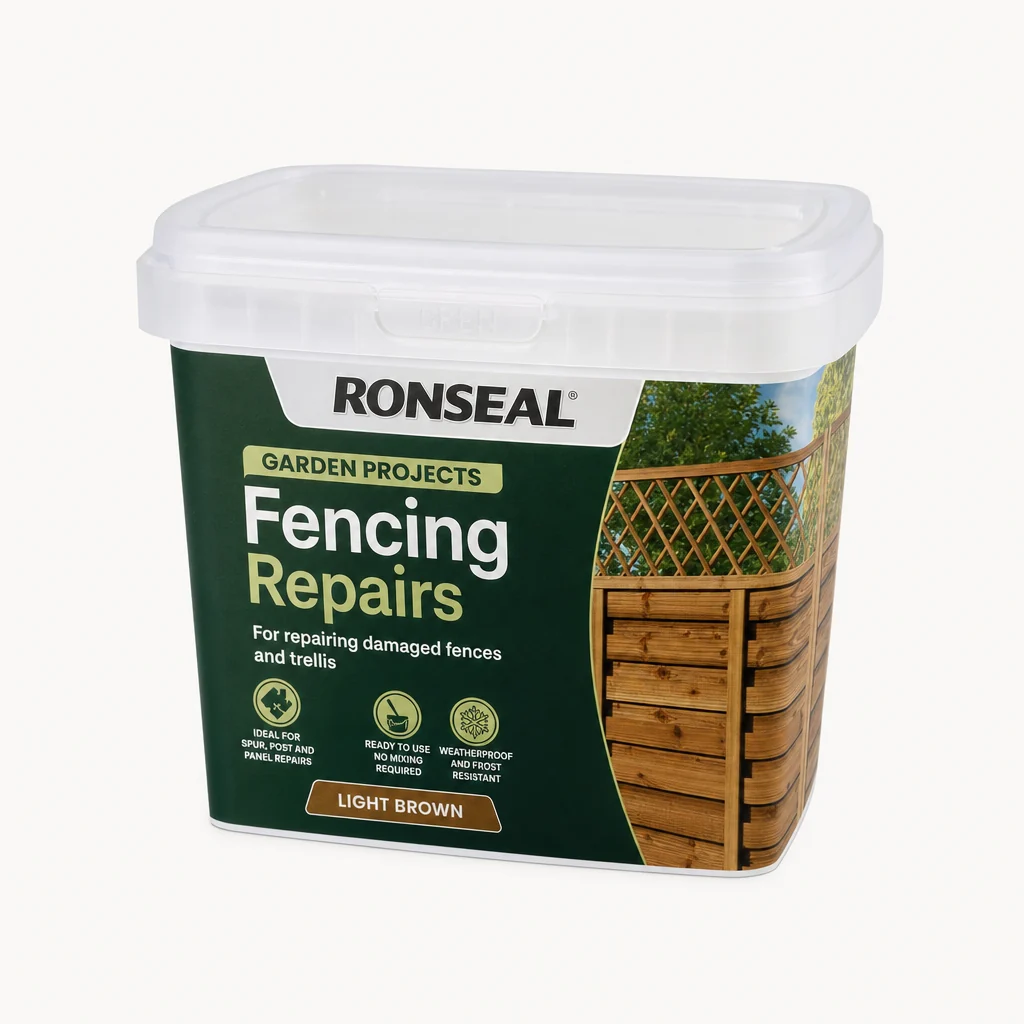
Fencing is a classic weekend job because the visual payoff is immediate. It can provide privacy, define a boundary or give climbers something to do besides wander along the ground looking mildly offended. But a fence project is only a tidy weekend prospect when the line is straightforward, access is clear and the work is limited. Replacing or adding a simple section is very different from creating a long boundary run across uneven ground.
Before committing, check where the boundary sits and whether you can physically move materials into position. Also think about what the fence is for. A screen for a seating corner can be lighter and more decorative than a structural boundary fence. That distinction may save a great deal of effort.
2. Compost bins
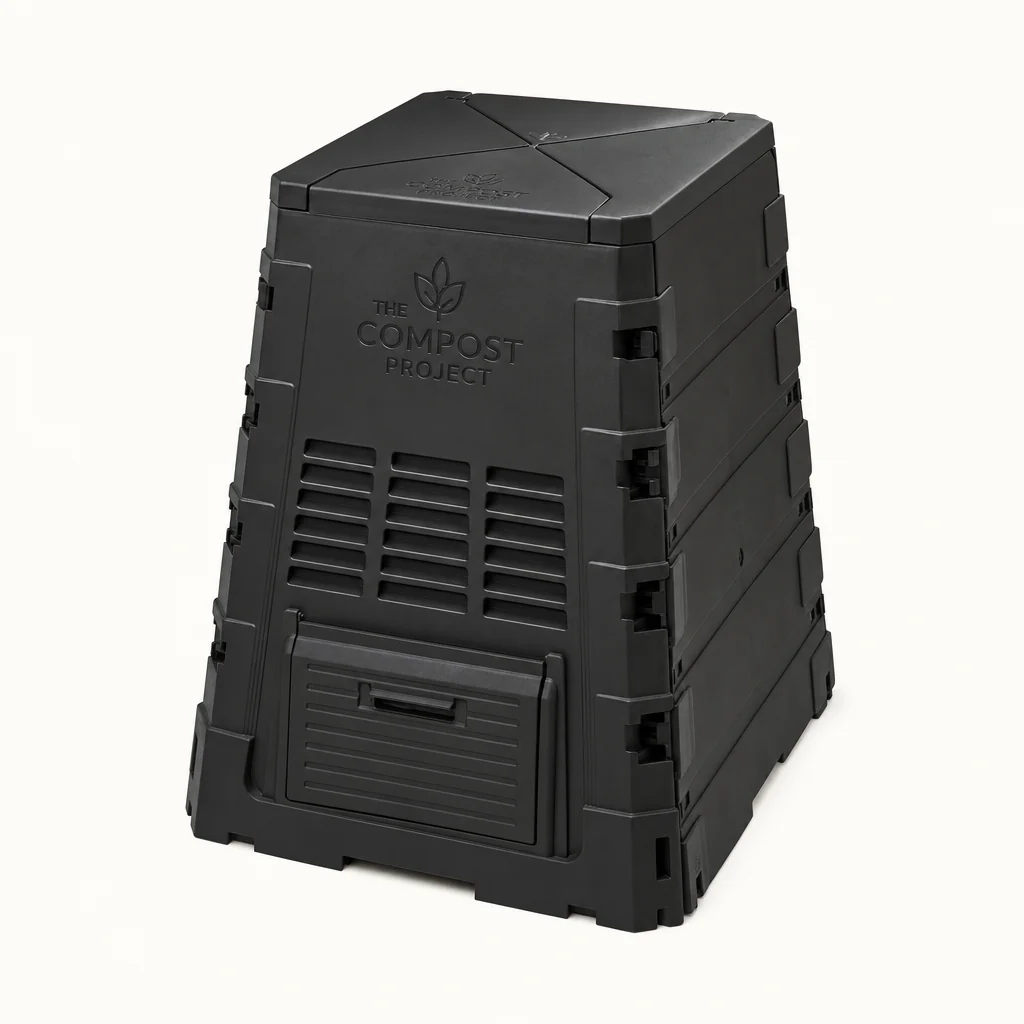
A compost bin is one of the least showy upgrades and one of the most sensible. It gives grass clippings, prunings and suitable kitchen waste a designated home, and it prevents the back corner of the garden becoming an ever-expanding pile of good intentions. Perrone's inclusion of compost bins is exactly the sort of practical project that suits a productive weekend.
The key is location. Choose somewhere accessible enough that you will actually use it in drizzle, but not so prominent that every visitor has to discuss your vegetable peelings. Leave room to turn material, open a lid or remove finished compost. A bin that is beautifully made but impossible to reach from the path will become decorative very quickly. Not in the good sense.
3. Potting tables
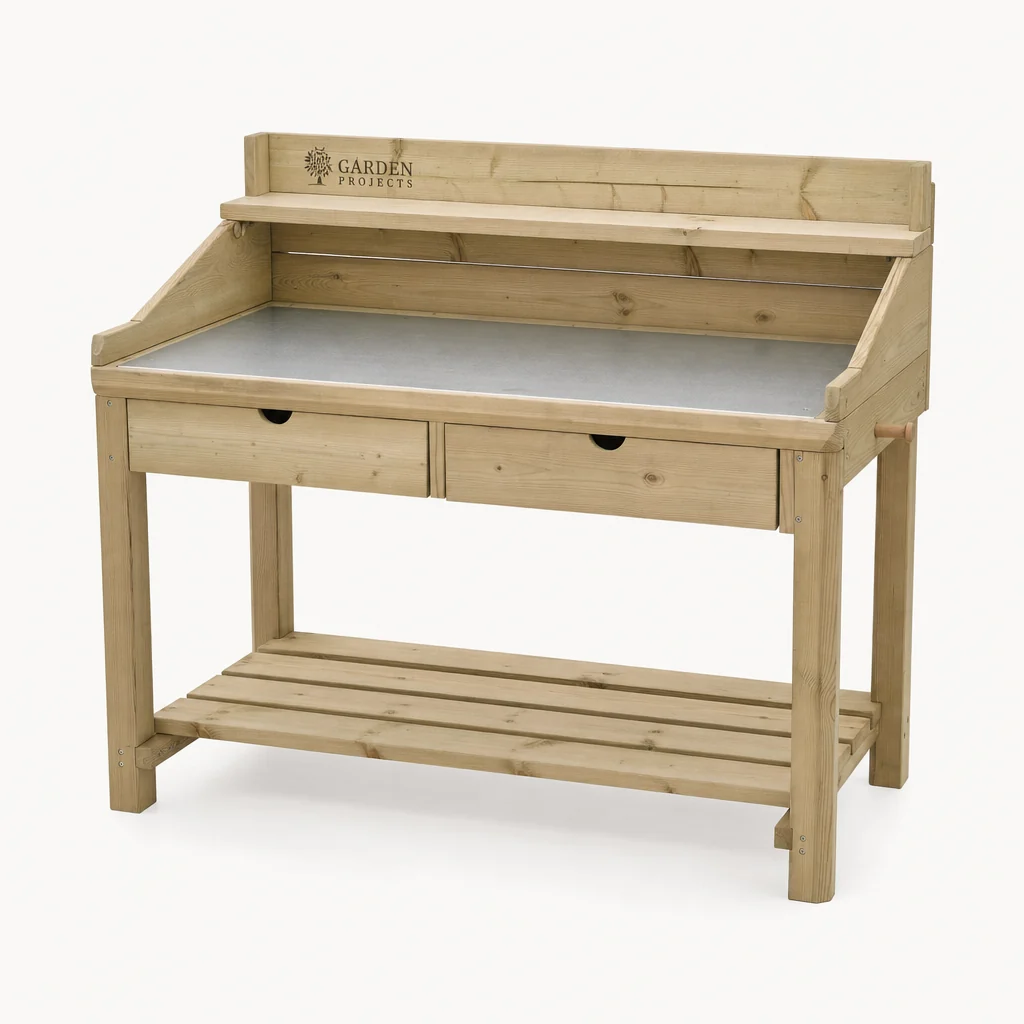
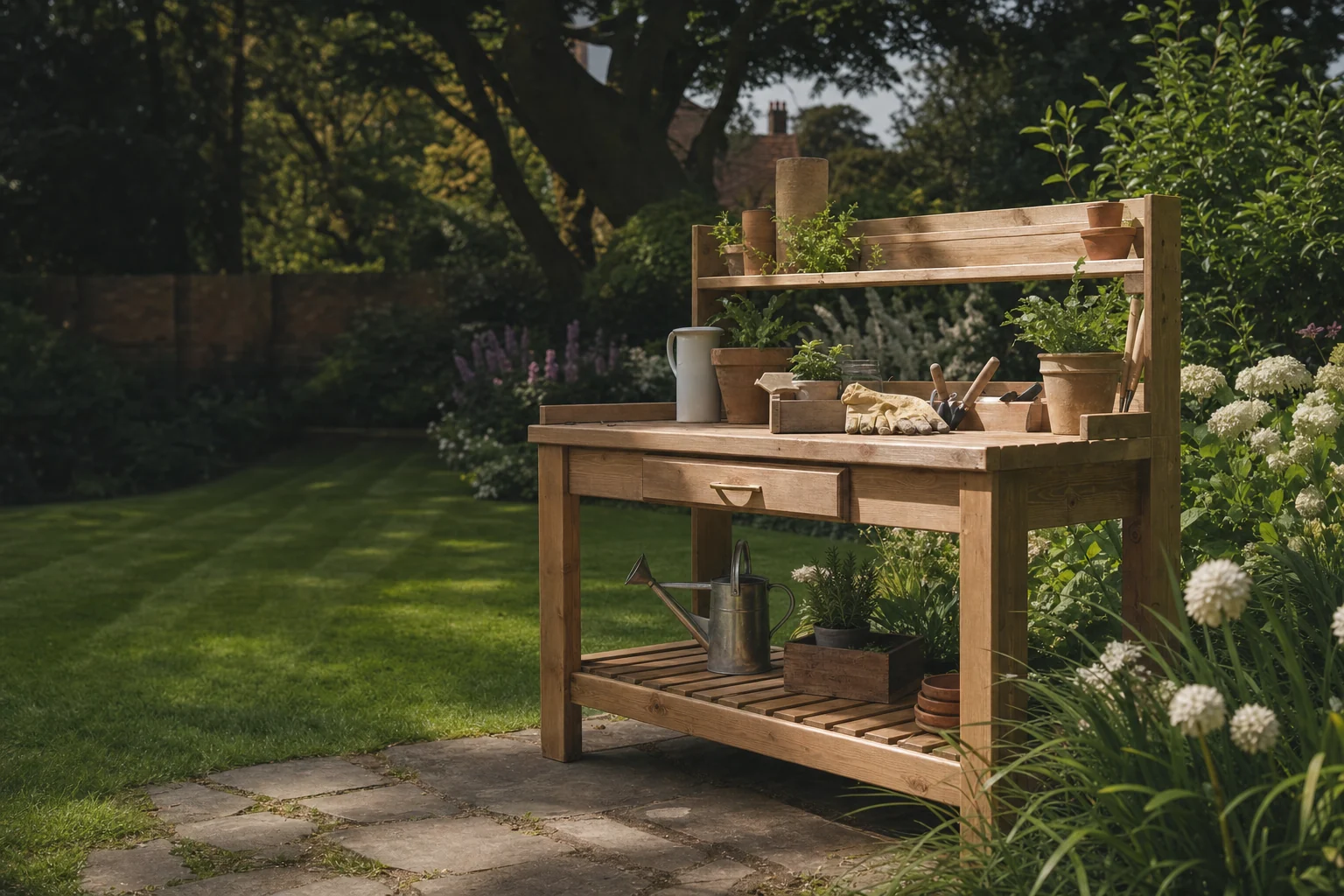
A potting table earns its place through repetition. You notice the benefit every time you sow, repot, divide, label or carry a tray of seedlings outside. The ideal height is personal, so take a moment to mimic the work before deciding on proportions. You are trying to avoid hunching, not create a handsome outdoor desk at precisely the wrong level.
Allow for a surface that can get wet and dirty without causing an emotional event. Shelves below are useful for pots, compost and trays, whilst a rail or hooks can keep hand tools within reach. Keep the finished table close to water if possible. Carrying a watering can across the garden repeatedly is a small inconvenience that becomes very large in April.
4. Birdfeeders
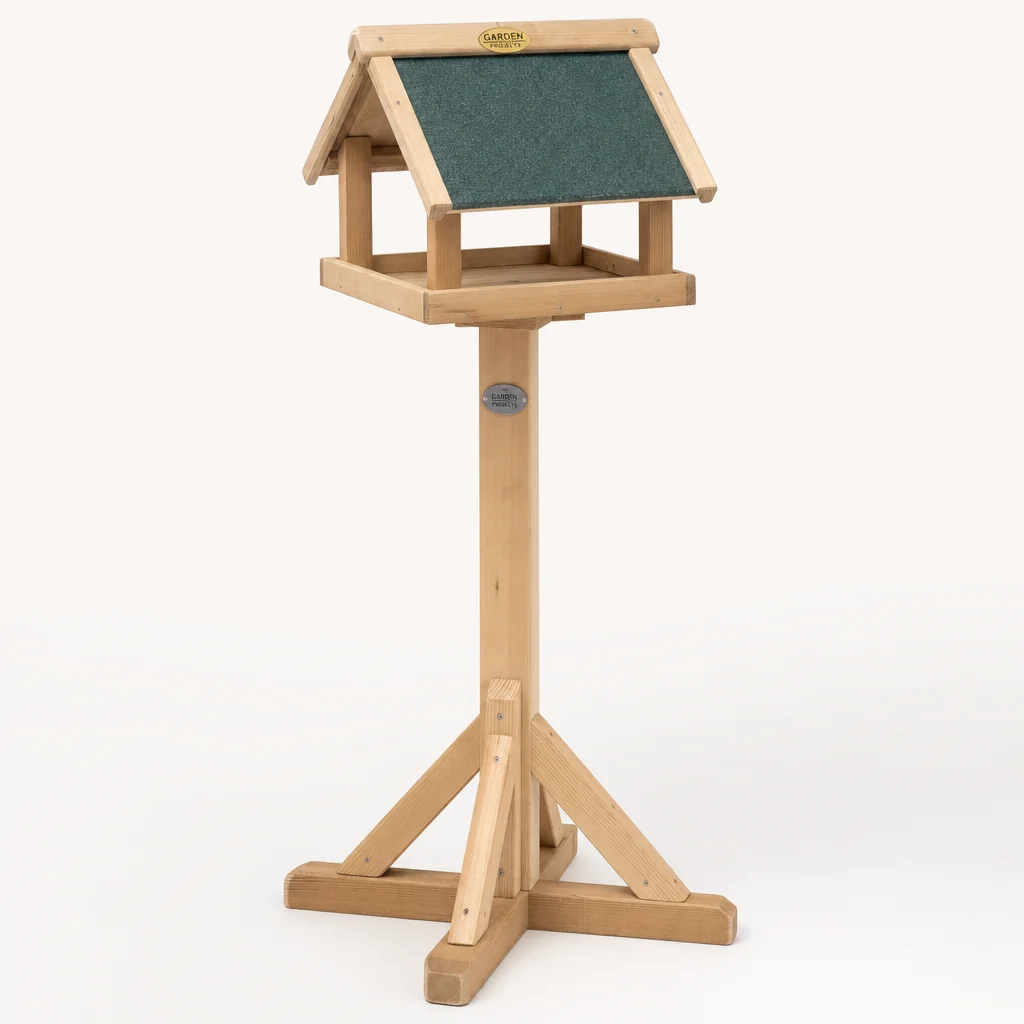
A birdfeeder is a pleasingly contained project. It can introduce wildlife interest without reorganising the whole garden, and it makes a good first build because the consequences of a slightly imperfect cut are rarely catastrophic. Placement still matters. You want a position you can see from indoors, refill easily and keep reasonably clean.
Think about how the feeder will sit in the garden rather than treating it as a floating object. A feeder on a post, near planting that offers cover but not immediate ambush, can look intentional. It also creates a small viewing ritual. Morning tea becomes more interesting when something else is having breakfast too.
5. Wildflower meadow patches
Wildflower meadow work is one of Ward's most attractive ideas, particularly for hard-to-mow areas. However, it is not a project that can be judged by the condition of the space on Sunday night. The sowing or planting stage may be finished, but the garden then takes over. This is a living project, not a flat-pack one.
The weekend task is preparation: deciding the area, clearing competing growth where appropriate, preparing the surface and establishing the patch. The pleasure comes later. This makes it an excellent choice if you can enjoy process as well as instant transformation. If you need a dramatic result for a garden gathering next weekend, choose seating or lighting instead.
6. Courtyard planting schemes
A courtyard can feel sparse even when it contains plenty of plants. Often the issue is not quantity but structure: too many small pots, no focal point, nothing at eye level and nowhere for the eye to rest. Ward's low-maintenance courtyard approach is useful because it treats a compact hard-landscaped garden as a whole rather than as a collection of containers.
For a weekend overhaul, group plants by need and role. Use a few larger containers rather than dozens of tiny ones. Repeat shapes or materials so the space feels deliberate. Most importantly, leave a route through it. A courtyard does not become luxurious when every inch is filled. It becomes a maze with rosemary.
7. Seating arrangements
Reworking seating is probably the most underestimated project in the entire category. It can be low on construction and high on impact. Move the chair to where the evening sun actually lands. Turn a bench towards a view rather than a fence. Add a small surface for a drink, book or pruning trug. Suddenly the garden has an invitation rather than merely furniture.
The useful test is brutally simple: would you sit there for half an hour without needing to move? If not, investigate shade, wind, sightlines, dampness and access. A seat that looks lovely in a photograph but leaves you staring at the wheelie bins is not quite there yet.
8. Garden lighting
Lighting changes the garden's evening character more quickly than almost any planting project. It can make a route feel safer, pull attention towards a favourite tree or extend the useful life of a small dining area. But light is not merely decoration. Avoid placing bright points where they shine directly into eyes, doors or neighbouring windows.
Start with purpose. Do you need to see steps? Define an edge? Make a seating corner feel less abrupt after dusk? A small number of well-considered light sources usually feels calmer than a garden full of competing glow. The garden should feel inviting, not like it has been selected for a game show final.
9. Low-maintenance conversions
Turning a difficult section into something calmer is a genuinely valuable weekend ambition. Hard-to-mow corners, narrow strips and persistently awkward beds consume time out of proportion to their size. A conversion might mean simplifying planting, improving access, defining the area for a different use or choosing a planting approach that does not demand weekly intervention.
This is not about making the garden lifeless. It is about removing chores that give very little back. A low-maintenance patch should still have a job: wildlife habitat, a planted view, a useful route or a place to put a chair. Otherwise it can just look like you lost interest halfway through.
10. Hard-to-mow area transformations
Ward specifically includes turning hard-to-mow areas into wildflower meadows. It is an elegant example of designing around a real garden problem rather than fighting it indefinitely. Slopes, tree bases, awkward corners and thin lawn strips can all become places where mowing is no longer the default answer.
Observe why the area is hard to mow. Is it slope, shade, tree roots, poor access or an inconvenient shape? Once you know the cause, the answer becomes more specific. The project may not be a meadow in every case, but it should make that part of the garden easier to live with.
11. Small utility zones
Potting tables and compost bins naturally create a utility zone, even if the book does not call it that. Give the working part of the garden a little order: a place for empty pots, a spot for tools and a route that does not require stepping over bags of compost. This can be a modest reorganisation rather than a construction marathon.
It is the quiet project type. Nobody gasps at it during a barbecue. Then, six months later, you realise you no longer spend ten minutes looking for secateurs. That is a form of garden luxury.
12. Wildlife-focused finishing touches
Birdfeeders are the obvious example, but wildlife thinking can shape any weekend project. Avoid creating dead corners that cannot be maintained. Retain some planting cover around seating and structures. Consider where water runs. Choose a location for a feeder that works for birds and for the people who will clean and refill it.
Which projects feel most weekend-friendly?
Small birdfeeding projects, a simple composting setup, a potting station, seating changes and contained planting improvements can provide a satisfying finish line. Meadow and low-maintenance conversions are equally worthwhile, but their visible results develop on the garden's timetable rather than yours.
Head-to-Head: How These Three Books Stack Up Against Each Other
It would be easy to line these titles up and declare one the winner. That would also be a little silly. They approach the garden from different directions. Perrone's book speaks to the reader who wants to build useful things. Ward's title is for the reader who wants to reshape the garden experience over one, two or three weekends. Stiles and Stiles offers a larger illustrated collection for the person who enjoys a proper project menu.
The comparison becomes more useful when it is framed around the kind of decision you face on Friday evening. Do you want a project with a physical object at the end? Do you want to reclaim an underused area? Or do you want a book that can keep supplying future ideas once this weekend is over?
| Focus | Frank Perrone | Ali Ward | David R. Stiles & Jeanie Stiles |
|---|---|---|---|
| Title | Build It Yourself: Weekend Projects for the Garden | Garden Projects in a Weekend: Projects for 1, 2 or 3 Weekends | Garden Projects You Can Build (The Weekend Project Book) |
| Project quantity | 12 simple projects | Projects arranged around one, two or three weekends | 20 projects |
| Core approach | Build-it-yourself garden features | Garden improvement and transformation projects | Illustrated how-to construction projects |
| Named examples | Fencing, birdfeeders, potting table, compost bins | Wildflower meadows, seating, lighting, courtyards | Instructions for a broad set of buildable projects |
| Format described | Weekend garden project book | Weekend project book | Illustrated how-to paperback |
Perrone's strength is its directness. Fencing, feeders, a potting table and compost bins are easy to understand as projects because each solves a defined problem. This gives the book a practical, slightly workshop-like character. If you enjoy seeing a loose garden need turned into a tangible object, its 12-project structure feels focused rather than limited.
Ward's strength is range of garden thinking. A wildflower meadow and a seating arrangement are not made in the same way, yet both can change how a garden functions. The one-, two- and three-weekend framing is refreshingly realistic because it accepts that not every worthwhile garden job fits into a neat Saturday-and-Sunday box.
The Stiles book has the largest stated project count. Twenty instructions gives it the feel of a reference book as well as a source of inspiration. Its illustrated format is likely to suit readers who are happy examining a drawing carefully, identifying the relevant stages and adapting them with confidence. If you prefer a garden guide that presents a wide selection of potential builds, breadth is its obvious advantage.
What the format gets right
- It breaks garden ambition into understandable jobs rather than one intimidating masterplan.
- It mixes useful infrastructure with more expressive garden improvements.
- It gives readers permission to improve a single difficult corner instead of redoing everything.
- It encourages a satisfying rhythm of plan, make, plant and enjoy.
Where readers need judgement
- A named project may still be too large for your access, tools or available daylight.
- Planting-led projects continue after the initial weekend is finished.
- Every garden has different drainage, levels and established features to work around.
- "Weekend" can become optimistic if preparation is ignored.
My shortlist would be simple. Choose Perrone when utility is the immediate priority. Choose Ward when the garden needs a more thoughtful change of use. Choose Stiles and Stiles when you want a substantial illustrated bank of construction ideas. Better still, borrow the mindset from all three: solve a practical problem, make the space more enjoyable and leave yourself with a project you can genuinely maintain.
The True Cost of a Weekend Project: Materials, Tools & Hidden Extras
The most expensive part of a weekend project is often not the headline material. It is the collection of small necessities you did not think about until halfway through: the right fixings, an outdoor extension lead, a replacement blade, a brush, a protective finish, a second pair of hands, or a way of getting awkward materials through a side gate.
That is why a shopping list should be treated as a project plan, not merely a list of things to buy. Separate what is essential for the build from what improves the finish. You may be able to complete a potting table without hooks, a shelf liner or labelled storage jars. You probably cannot complete it without the basic components that make it stable and usable. Start there.
For a composting project, think beyond the enclosure. How will you access the material? Does it need a front that opens? Will you be able to turn the contents? Is the ground suitable for the kind of composting you want to do? A bin placed in a forgotten, unreachable patch is not a system. It is garden furniture with ambitions.
For fencing or screening, materials are only one part of the job. Posts, supports, fixings and the state of the ground are just as important as the visible panels. A screen that looks light and decorative can still catch wind. If the area is exposed, build and position with that in mind. Wind has a surprisingly robust opinion on garden design.
For a potting table, reclaiming suitable material can be rewarding, but do not let the word "reclaimed" become a euphemism for "damp, split and covered in mystery staples". Examine it carefully. Outdoor furniture and work surfaces need to tolerate dirt, water, movement and repeated use. A table that wobbles on day one will not become steadier through positive thinking.
The same principle applies to planting projects. Wildflower and courtyard work may appear lighter on tools than a build, but they often demand more preparation than expected. Clearing an area, moving containers, improving access to a bed and deciding where material will temporarily live are all real parts of the work. Do them first. A beautiful planting scheme is harder to create when every surface is already occupied by displaced pots.
Tools deserve a rehearsal too. If you have not used a particular tool recently, do not make a complex project its first outing. Check that batteries are charged, blades are appropriate, leads reach safely and hand tools are in usable condition. A weekend job should not be derailed because the only screwdriver you can find has a rounded tip and an inexplicable coating of old paint.
A better weekend budget
Budget time as carefully as materials. Include measuring, collection, site preparation, the actual work, a break before decisions get silly, tidy-up and an hour for the small problem you have not yet discovered. That final hour is rarely wasted.
For readers who like a neat finish, the final stage is also worth protecting. Keep a little time for sanding rough edges where appropriate, sweeping the area, returning tools and putting plants back where they belong. The difference between a completed garden project and a project that merely stopped is usually visible in this last stretch.
Soil, Seasons & Sunlight: Why UK Gardens Need Different Advice
Garden projects do not happen in a vacuum. They happen in a British garden, which means they happen around rain, wind, sudden cold, long evenings, short afternoons and soil that may be sandy, heavy, compacted, root-filled or all of those things in different corners. A project book can be inspirational, but your conditions decide how closely its idea can be followed.
For outdoor construction, a dry spell is useful for obvious reasons: timber, tools and people all tend to behave better. More importantly, dry ground makes it easier to see what you are working with. You can assess levels, drainage and access without trying to distinguish a genuine dip in the lawn from a temporary puddle. A project that looks straightforward in bright weather can become unnecessarily awkward when the ground is saturated.
Planting projects need a different sort of timing. Wildflower meadow work, courtyard planting and any change involving living material should be planned around the needs of the plants as well as your diary. A weekend is just the point at which you begin the relationship. You still need to consider watering, establishment, seasonal growth and what happens when you go away for a fortnight in August.
Observe the target area before starting. Notice where water settles, when it receives direct sun, whether wind funnels through it and how people move around it. A few minutes of observation can prevent a great deal of remedial gardening later.
Sunlight is particularly important for seating and planting. A sunny breakfast spot may be an overheated late-afternoon corner. A bright-looking border in spring may be shaded once nearby trees leaf out. Likewise, a sheltered-feeling courtyard can become a wind tunnel when doors are open or a particular weather direction arrives. You do not need to turn every project into a meteorological survey, but it is worth looking beyond the weather forecast for this weekend.
Soil changes the character of almost every garden improvement. A compost bin placed over ground you can reach and manage will work more naturally as part of the garden than one isolated on a hard-to-access surface. A meadow-style conversion needs an honest appraisal of what is already growing there. A courtyard planting scheme needs containers or beds that suit the site's drainage and heat. The book gives you an idea; the soil gives you the terms and conditions.
UK gardens also make materials work hard. Rain, frost, summer heat and persistent damp affect outdoor surfaces. Think about how a potting table will shed water, whether a birdfeeder can be cleaned comfortably, whether lights are suitable for their location and how a screen will cope with exposure. Beautiful details are welcome, but a design that holds water or traps debris will soon become a maintenance project in disguise.
Map the usable light
Check the site at more than one point in the day before locating seating or planning a planting scheme. The nicest-looking corner is not always the nicest corner to use.
Follow the water
After rain, notice where runoff gathers and where paths become slippery. It is better to work with those patterns than build something that has to fight them.
Respect exposure
Lightweight furniture, freestanding screens and feeders all need sensible positioning. A garden feature should feel settled, not permanently one gust away from a rescue mission.
There is a useful emotional benefit to this slower approach. It turns the garden from a blank canvas into a collaborator. Once you know where the awkward patch is wet, why the bench is never used or where the sun lingers, the right project often becomes clear. The garden has been dropping hints all along. We are merely becoming less stubborn.
Ease of Use in the Garden: Instructions, Diagrams & the Real-World Test
A garden instruction book is not read in the same way as a novel. It gets opened on a bench, balanced on a bag of compost, consulted with dirty hands and revisited after you have already started. That makes clarity more important than grand prose. A good project guide tells you what you are trying to achieve, what needs deciding before the first cut or planting hole, and what sequence keeps the work manageable.
Perrone's title has a reassuringly practical project list. Fencing, birdfeeders, potting tables and compost bins all have clear real-world purposes, which helps a beginner understand the end result. They are also easy categories to research further in local context if your own garden introduces a complication. A potting table may be a simple build in principle, but the height, surface and storage layout should still reflect how you garden.
Ward's weekend framing is useful because it acknowledges different scales of work. A garden makeover is not always a single act of construction. It can involve making decisions about use, clearing a space, arranging seating, establishing planting and adding the finishing elements that make the area feel complete. Readers who enjoy a more design-led process will likely find that approach more natural.
The illustrated format of the Stiles and Stiles paperback brings a different kind of strength. Drawings can strip away visual noise and focus attention on structure. They are especially helpful when you want to see the relationship between parts rather than simply admire the finished object in a styled setting. The trade-off is that an illustration asks you to look carefully and translate it into physical material. Beginners should be patient with that stage rather than rushing to the first cut.
My preferred real-world test for any instruction is the pause test. Can you stop halfway through, look at the page and understand what the next action is without mentally reconstructing the entire project? If yes, the guide is doing its job. If no, slow down. Sketch the next stage yourself, label materials or make a short checklist. There is no prize for following a project at maximum speed.
It also helps to separate decisions from actions. Decide the location before moving materials. Decide the size before cutting. Decide the planting groups before arranging pots. The most frustrating garden afternoons are usually not caused by difficult work. They are caused by making fundamental design decisions whilst holding something heavy.
Keep a pencil beside the project
Mark changes as you make them: adjusted dimensions, a different location, a material substitution, a lesson learned. The book remains useful, but your notes turn it into a guide for your own garden rather than somebody else's idealised one.
Digital inspiration can be handy, but it should not replace a plan. Short videos are brilliant for seeing a technique, yet they often compress the least glamorous stages: levelling, clearing, checking alignment, cleaning up and allowing enough time to correct errors. Use them for confidence, not as proof that every task takes the length of a cheerful montage.
What Real Weekend Gardeners Learn From the Format
The enduring appeal of weekend garden projects is not really about speed. It is about momentum. Gardeners enjoy being able to point at something on Sunday evening and say, "That did not exist on Friday." It might be a potting surface, a feeder, a calmer courtyard, a revived seating spot or the first stage of a meadow patch. The scale is manageable, and that sense of completion encourages the next improvement.
Clear instructions are naturally valuable, but the most useful garden books also help readers recognise which jobs fit their experience. A beginner may be perfectly happy assembling a simple feeder or reorganising a seating area, whilst preferring more support before tackling fencing. An experienced maker may relish drawings, timber work and problem-solving, but have less interest in a planting-led redesign. There is no universal difficulty level because the garden itself changes the challenge.
The common joy in this category is inspiration with boundaries. You are not being asked to transform an entire plot or become an expert landscape designer by Monday morning. You are being offered a contained problem and a route towards solving it. That is generous. It is also much more likely to lead to a finished garden than a giant, vague plan pinned above the kettle.
The common frustration is optimism. A project can be simple without being quick, and a weekend can be busy even when the project itself is not especially complicated. Gardeners tend to underestimate moving things, cleaning things, waiting for weather, making a second trip for a forgotten item and deciding exactly where something should go. The remedy is not cynicism. It is a better sequence.
Why weekend projects work
- They give a small garden an immediate sense of purpose.
- They can solve recurring annoyances rather than merely disguise them.
- They make useful milestones for gardeners building confidence.
- They suit the gradual, lived-in way most gardens evolve.
The traps to avoid
- Starting with materials before measuring the actual site.
- Choosing a project because it photographs well rather than because it solves a need.
- Forgetting access, storage and future maintenance.
- Treating living planting projects as complete the moment they are installed.
The best community wisdom is usually gloriously ordinary: start smaller than you think, prepare more than you think, and keep a clear route to the kettle. There is a lot to be said for that. A garden project should make you want to spend more time outdoors, not leave you avoiding the back door because the job has become an accusation.
If you are new to making garden changes, choose a project with a forgiving finish line. A birdfeeder can be adjusted. A seating layout can be moved again. A potting table can gain a hook or shelf later. Those early successes teach you how your garden behaves. The more permanent the job, the more time you should spend observing and planning before beginning.
Safety, Sustainability & Doing It Right First Time
A cheerful weekend project still deserves sensible preparation. Garden work often combines uneven ground, sharp tools, awkward loads, changing weather and the natural urge to finish "just one more bit" as daylight fades. None of that is a reason to avoid making things. It is a reason to set up well.
Start with the work area. Remove trip hazards, keep a clear route in and out, and avoid leaving tools where somebody will step on them later. Check the ground beneath ladders, stools or work supports. If you are handling long materials, be conscious of gates, windows, overhead branches and the person who has just come outside carrying tea without expecting a timber delivery.
Power and lighting deserve particular care. Garden lighting can be lovely, but outdoor electrical work is not a casual add-on. If a project moves beyond simple positioning and into electrical installation, take appropriate professional advice. The same common sense applies to any job near existing services, walls, boundaries or structures. A garden should be improved, not turned into an archaeological dig for cables.
Dress for the task, not the photograph. Sturdy footwear, gloves suited to the work, eye protection where appropriate and a pause before using an unfamiliar tool are small precautions with very large benefits.
Manual handling is the unglamorous part of garden making. Do not twist whilst carrying awkward materials. Make more journeys with lighter loads where possible. Ask for help before something becomes difficult, rather than after it has become dangerous. There is no badge of honour for trying to move an inconvenient object alone because you are "nearly there". Nearly there is where many bad decisions live.
Sustainability is equally practical. A project that uses less material, creates a useful long-term feature and can be maintained is generally a better garden choice than a fashionable object with a short working life. Compost bins support a more circular garden routine. Birdfeeders can encourage observation of wildlife. Meadow-style conversions can make an awkward area more ecologically interesting. A durable potting surface may reduce the temptation to buy temporary solutions repeatedly.
Measure before cutting or ordering
Measure the target area, the route into it and the final footprint. A project can be perfectly designed and still not fit through a side passage.
Choose materials with a future
Think about repair, reuse and maintenance. A simple, sound design is easier to look after than something that relies on difficult-to-replace parts.
Plan the ending
Allocate time to sweep up, store leftover materials safely and clear tools away. This protects both the project and your enthusiasm for the next one.
Finally, remember that good garden projects improve over time. A compost bin becomes more useful as it becomes part of your routine. A meadow patch develops as plants establish. A seating area gains character when you learn what you enjoy doing there. Give the project a tidy start, then allow it to become part of the garden rather than a frozen imitation of the original idea.
Weekend Garden Projects: Frequently Asked Questions
It has a defined finish line, manageable preparation, clear access and no dependency on a complicated sequence of drying, delivery or specialist work. It should also leave time to tidy the site and test whether the feature actually works.
Start with the smallest useful change: a birdfeeding project, a seating reorganisation, a contained planting scheme or a simple garden utility improvement. The best first project teaches you something without making a mistake expensive or difficult to reverse.
The preparation and establishment stage can be a weekend task. The visual result develops over time, which is part of its appeal. Think of it as a weekend of useful work followed by a longer period of watching the garden respond.
Prioritise the thing that removes the biggest irritation. If you lack a working surface or a composting area, build something useful. If a garden corner is never used or is difficult to maintain, choose a planting or layout-led project.
Reduce the scope before you begin. Complete one good section, one useful feature or one properly prepared area rather than beginning several connected jobs. A smaller finished project is far more motivating than a large project stalled at its messiest stage.
GardenScout Verdict
The weekend-project format remains one of the most useful ways to improve a garden because it encourages focused, realistic change. Frank Perrone's 12 simple builds suit gardeners seeking practical features such as fencing, birdfeeders, potting tables and compost bins. Ali Ward's title is especially appealing for readers who want to rethink how a garden area is used, with meadow, seating, lighting and courtyard ideas. David R. Stiles and Jeanie Stiles offer the broadest stated collection, with 20 illustrated projects.
The winning approach is not to race through a list. Choose one persistent garden problem, prepare honestly, build or plant with care, then leave enough time to enjoy the result. That is a weekend well spent.
Who Should Choose This Kind of Garden Project Guide?
The new gardener
Choose a contained project with a visible benefit, such as a feeder, a simple potting area or a seating reset. Confidence grows much faster when the finish line is close.
The practical maker
Perrone's focus on 12 simple garden projects will appeal if you enjoy solving a garden problem with a useful built object.
The garden re-thinker
Ward's blend of meadow, seating, lighting and courtyard ideas suits a garden that needs better flow, less maintenance or a stronger sense of place.
The project collector
The Stiles and Stiles paperback is the natural fit for readers who enjoy illustrated instructions and want a larger selection of possible future builds.