
The Best Cordless Multi-Tool Systems: One Battery, Every Job
Choose the battery platform first, then let one set of batteries power the jobs that keep a British garden, shed and patio ticking along.
Why Your Shed Is Full of Chargers — and How to Fix It
It is early October, which means the garden is moving into its quieter-looking but oddly demanding season. There are timber edges to repair before winter rain finds the weak spot, greenhouse panels to tidy, pots to scrub, shrubs to cut back and the annual hunt for the extension lead that has somehow migrated behind a stack of compost bags.
This is also when many of us notice a small domestic absurdity in the shed: several chargers, several types of battery and at least one cordless tool that cannot be used because its battery is somewhere else, flat, or attached to something completely unrelated. The drill has one charger. The hedge trimmer has another. The leaf blower came with a third. Nothing is technically wrong, but the collection has acquired the organisational charm of a drawer full of mystery keys.
The sensible answer is not necessarily to replace everything you own in one dramatic weekend. It is to decide which battery platform you want future purchases to join. A cordless oscillating multi-tool is a particularly useful place to begin because it is not simply another version of a drill. It does jobs that other garden tools cannot do neatly: flush cuts, careful scraping, small repairs and awkward little bits of outdoor maintenance that usually become a nuisance because no single tool feels quite right.
Buy the battery family, not just the tool
A bare multi-tool can look like a very good deal until you remember that it needs its own battery and charger. If you already own compatible batteries, that same bare tool becomes a straightforward addition. If you do not, the purchase is really an entry ticket to a wider system.
That is the point of this guide. We are not trying to declare that one brand is magically best for every person with a garden. We are looking at the systems around the tools: how many compatible products sit within the platform, how the batteries behave, and whether the multi-tool gives you a sensible route into a shed where the charger situation remains civilised.
Within a manufacturer's platform, compatible batteries can move between tools designed for that voltage family. Across brands, they cannot. A DeWalt battery does not belong on a Milwaukee tool, and a Makita LXT battery does not become compatible merely because the voltage printed on another tool looks similar. That sounds obvious, but it is the detail that makes "one battery, every job" either wonderfully simple or mildly expensive.
Think ahead to the jobs you are likely to add over the next few years: drilling, pruning, trimming, blowing leaves, lighting a dark corner of the garden or fixing timber outdoors. The strongest platform is usually the one that covers the work you genuinely do, not the one with the most impressive-looking tool on a shelf.
For the ordinary DIY gardener, one battery system means fewer chargers to find space for, fewer instructions to lose and fewer occasions when a useful tool is unavailable because its particular battery is taking a long lie-down. It is not glamorous. It is, however, exactly the sort of decision that makes gardening jobs happen on a Sunday afternoon rather than being added to next weekend's list.
What "One Battery, Every Job" Actually Means in the Garden
An oscillating multi-tool is easy to underestimate. It is small, it has a blade that looks rather specialised, and it does not advertise itself with the noisy certainty of a chainsaw or hedge trimmer. Yet once you have used one outside, you begin spotting jobs for it everywhere.
Rather than spinning like a drill bit or saw blade, the accessory moves backwards and forwards through a very short arc. It oscillates. This gives you controlled cutting close to a surface, without the broad sweep of a circular saw or the tendency of a reciprocating saw to jolt and grab. You can approach an awkward repair gently, take off a little material, check the fit and carry on. For garden maintenance, that measured approach is often the difference between a tidy repair and an unexpectedly smaller raised bed.
There is a seasonal reason this matters now. Autumn is a good time for practical tidying and repairs whilst plants are slowing down but winter weather has not yet made every outdoor job feel like an expedition. A multi-tool can help you remove crumbling sealant from greenhouse glazing bars, trim a replacement timber batten to fit, smooth a splintered decking edge, or clean dried compost from pots before they are stored away. None is a grand project. All are much nicer when the right tool is in your hand.
Flush cutting in awkward corners
Where loppers, a hand saw or a larger powered saw need space to swing, an oscillating blade can work close to a fence, planter, patio edge or timber frame.
Small repairs with less dismantling
It is useful when a single damaged board, fixing or short piece of timber needs attention and removing half the structure would be excessive. Which, in a garden, is surprisingly often.
Scraping and surface preparation
With an appropriate scraper or sanding accessory, the tool can shift old residue, smooth weathered wood and help prepare outdoor surfaces for a more durable finish.
Neater irrigation and greenhouse work
For small adjustments around fittings, cramped timber staging or old sealant, the compact head is easier to place precisely than a larger cutting tool.
A multi-tool is not a replacement for every saw, every pruner or every scraper. It would be unfair to expect it to be. Long cuts through large timber are better handled by a saw designed for them, and living woody growth is usually better managed with sharp pruning tools. But it excels at the fiddly, close-to-the-surface jobs where a conventional tool feels too large, too blunt or too enthusiastic.
For gardeners, the battery platform matters because this is usually not the tool you use in isolation. You might use the same battery in a drill to fit a raised-bed bracket, then put it in the multi-tool to trim a timber liner, then later move it to a blower for clearing dry leaves from the path. That is where the system begins to feel genuinely useful rather than merely branded.
A note on living roots and branches
Use a multi-tool carefully around plants. It can be handy for a small, accessible root or tight pruning job, but it cannot tell the difference between a troublesome root and one that is holding a mature shrub steady. Pause, identify what you are cutting and use clean, suitable accessories. Gardening has enough surprises without accidentally unplanting a favourite.
Platform Showdown: DeWalt 20V MAX, Milwaukee M18 and Makita 18V LXT
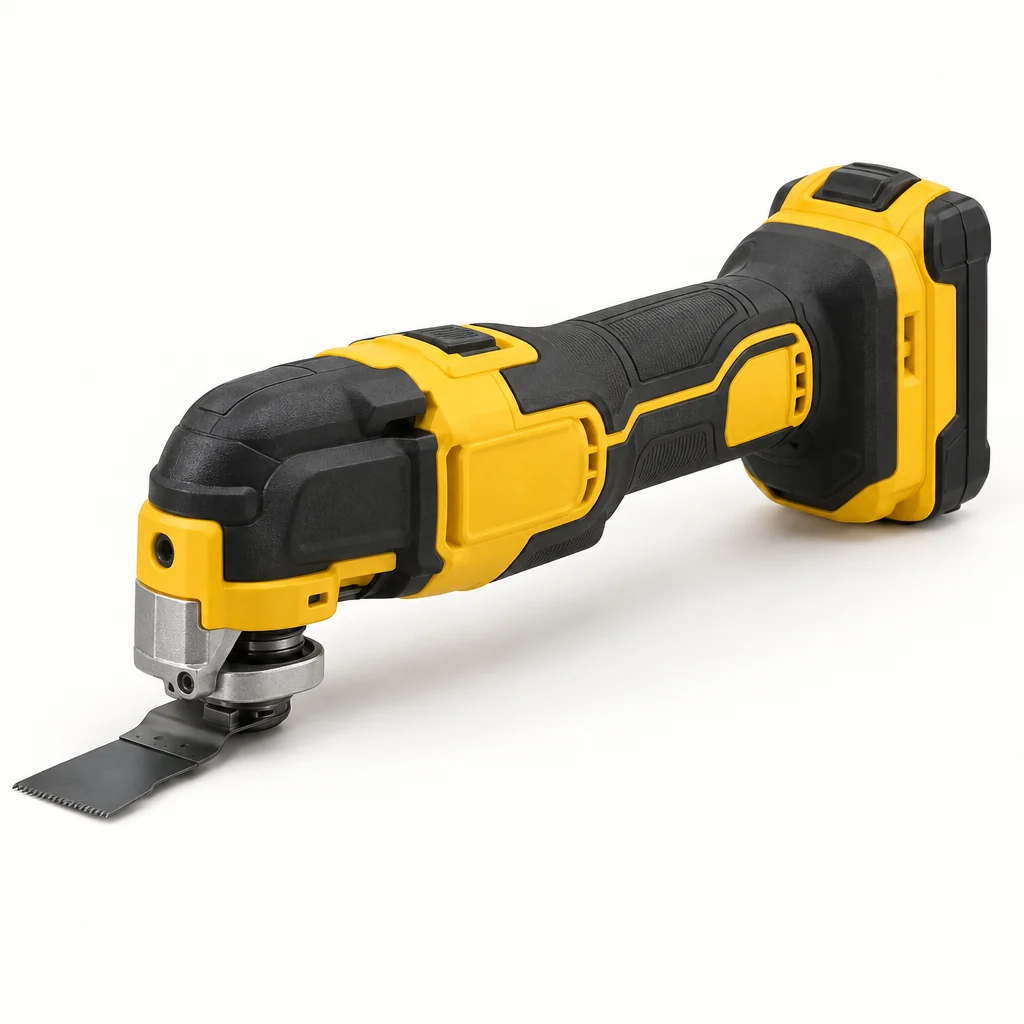
It is tempting to compare cordless tools as if the tool body is the whole purchase. With a battery platform, it is only part of the story. The battery and charger are the shared infrastructure. Once those are in place, every compatible bare tool has the potential to be a simpler, less cluttered purchase.
DeWalt's 20V MAX platform has more than 300 compatible tools. Its battery development includes XR POWERPACK technology using tabless 21700 cells, while FLEXVOLT reaches capacities up to 15.0Ah. Milwaukee's M18 REDLITHIUM platform covers more than 275 tools, with FORGE technology combining tabless 21700 cells and pouch cells, and capacities up to 12.0Ah. Makita's 18V LXT family is described as the world's largest 18V cordless tool system, with more than 300 compatible LXT tools.
Those totals are useful as a broad indicator of ecosystem depth, but do not treat them as a shopping list. You are unlikely to need three hundred tools. What matters is whether the range includes the garden and DIY tools you are likely to reach for. A gardener who builds raised beds, maintains decking and tackles shed repairs may value a different selection from someone whose main cordless work is pruning, blowing paths clear and maintaining containers.
| Platform | Compatible tool ecosystem | Battery technology noted in the range | Highest stated capacity | Multi-tool route |
|---|---|---|---|---|
| DeWalt 20V MAX | More than 300 tools | XR POWERPACK with tabless 21700 cells | FLEXVOLT up to 15.0Ah | DCS356B brushless three-speed oscillating multi-tool |
| Milwaukee M18 REDLITHIUM | More than 275 tools | FORGE with tabless 21700 and pouch cells | Up to 12.0Ah | 2836-20 M18 FUEL oscillating multi-tool |
| Makita 18V LXT | More than 300 LXT tools | 18V LXT battery family | Platform capacity varies by battery | XMT04ZB sub-compact brushless StarlockMax option |
"Tabless" refers to the way cells are designed to move electrical current with less concentrated resistance than conventional tab arrangements. In practical terms, the appeal is heat management and sustained output when a tool is working hard. That can matter outdoors: cutting weathered timber, sanding a repair in warm weather, or getting through a batch of jobs when there is nowhere particularly cool to put the batteries except the greenhouse shelf. Not ideal. We have all done it.
The large-capacity figures can also be misleading if they become the only thing you look at. A 15.0Ah battery stores more energy than a 12.0Ah battery, but larger capacity is not automatically the best everyday choice for a handheld multi-tool. Weight, balance and the nature of the job matter. For short trimming, scraping and repair work, a battery that keeps the tool manageable can be more useful than the largest possible pack. Save the biggest capacity batteries for sustained, demanding work where runtime is the priority.
Makita is worth separating slightly here. Its 18V LXT system is its established 18V family, whilst XGT is a separate 40V platform. Do not assume batteries move between them. The useful lesson is the same for every brand: check the exact battery family before buying a bare tool. "Makita battery" is not specific enough, just as "DeWalt battery" and "Milwaukee battery" are not specific enough when different ranges exist.
DeWalt DCS356B Deep Dive: Three Speeds, One Battery
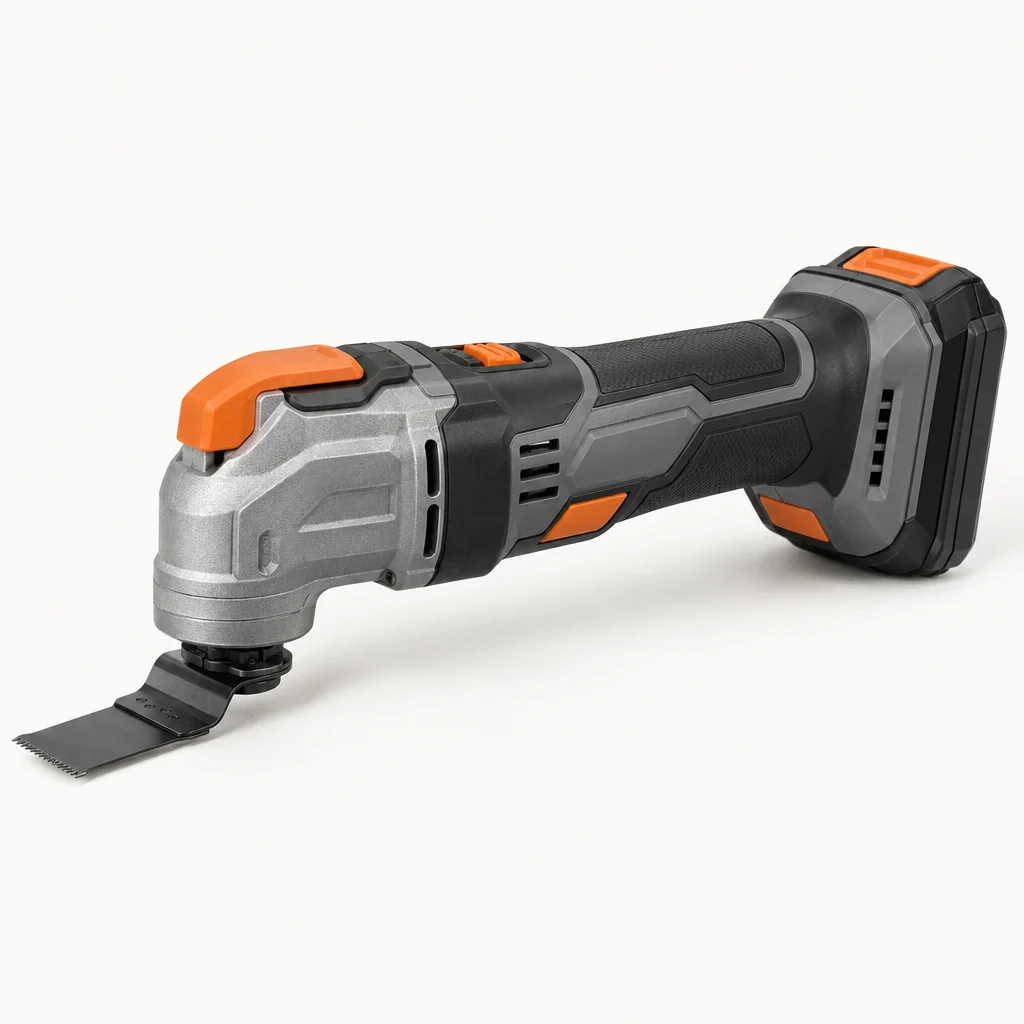
The DeWalt DCS356B is a brushless, three-speed oscillating multi-tool built around the 20V MAX battery platform. It is a persuasive choice for someone who wants a capable multi-tool but also wants that purchase to lead naturally into a broad battery ecosystem. DeWalt's range is substantial, and that makes the DCS356B feel less like a specialist purchase and more like a useful first brick in a larger shed-wall.
Its three speed settings give it a practical advantage for mixed garden work. Low runs from 0 to 13,000 oscillations per minute, medium runs from 0 to 17,000 OPM and high reaches 0 to 20,000 OPM. The point is not to use the highest setting for every task simply because it is there. Slower work can be easier to control when you are scraping, easing through a delicate cut or working close to a visible surface. Higher speed has a place when cutting demands it. The useful thing is having the choice.
The DCS356B has a quick-change system and includes a universal accessory adapter. That matters because accessories are where a multi-tool becomes either brilliantly useful or needlessly annoying. The ability to move from a cutting blade to a scraper or sanding accessory without turning the job into a hunt for a specific fitting helps keep its appeal intact.
Vibration deserves more attention than it often receives in product listings. DeWalt gives a reduced-vibration figure of 10.5m/s² and reports more than a 10% reduction compared with the earlier DCS355 when used with a wood blade. For a quick cut, you may not care. For a long afternoon repairing timber edging, trimming material around a greenhouse or sanding several weathered surfaces, you probably will. Hand fatigue is not an exciting subject, but neither is stopping halfway through a task because your hands have begun sending strongly worded letters.
In continuous cutting with a 5.0Ah battery, the DCS356B has delivered roughly 45 minutes before the battery fuel gauge blinked. Treat that as a useful reference rather than a promise for every job. Cutting material, blade type, pressure and battery condition all affect runtime. Still, it gives a meaningful sense of why a 5.0Ah battery is a sensible all-round size for outdoor jobs that go beyond a few quick snips.
Strengths
- Three speed bands allow a more measured approach to scraping, trimming and cutting.
- The brushless motor is designed for longer runtime than brushed equivalents.
- Quick accessory changes and a universal adapter make the tool easier to adapt between jobs.
- It joins a 20V MAX ecosystem of more than 300 compatible tools.
Consider before choosing
- The battery family should be the deciding factor if you already own another established cordless system.
- A large-capacity battery may offer more runtime but can change the balance of a handheld tool.
- The multi-tool still needs the correct accessory for the material in front of it.
For a gardener starting fresh, DeWalt's strongest argument is breadth. If your future includes a mixture of garden maintenance, decking repairs, outdoor storage, timber projects and ordinary household DIY, the DCS356B offers a capable multi-tool within a wide platform. If you already own DeWalt 20V MAX batteries, the decision becomes even simpler: the battery sharing is the value.
Milwaukee 2836-20 M18 FUEL: A Professional Platform for Serious Outdoor Work
Milwaukee's 2836-20 M18 FUEL oscillating multi-tool sits comfortably in the more demanding end of the cordless market. That does not mean it is only for tradespeople. It means its strengths make particular sense for gardeners, landscapers and committed DIYers whose outdoor jobs often blur into building work: repairing a garden room, working on hardwood decking, fitting storage, modifying raised beds or dealing with the sort of old timber that appears to have survived several previous owners out of sheer stubbornness.
The tool uses Milwaukee's POWERSTATE brushless motor and runs from 10,000 to 20,000 OPM. A 10-setting dial gives more granular speed adjustment than a simple low-medium-high arrangement, and Auto-Load is intended to provide controlled starts and faster cutting under load. That combination suits jobs where you want the initial contact to be gentle but still need the tool to continue cutting with authority once it is working.
The headline figure is the 4.2° oscillation angle. A wider arc means the accessory moves further with each cycle, which can help the tool remove material more aggressively. In a garden setting, that can be useful when cutting through tough timber, working around small roots where access is poor, or dealing with dense material in an outdoor building project. It is not an invitation to force the blade. A multi-tool works best when the accessory is allowed to do the cutting rather than being pushed as if it owes you money.
Wider angle, different character
The Milwaukee's 4.2° oscillation angle is a meaningful design feature for harder cutting work. It is particularly attractive if the multi-tool will spend as much time on decking, timber repairs and garden structures as it does on light scraping and neat finishing.
The integrated LED sweeps through 180°, which is more useful than it sounds when your work has taken you under a bench, into a shed corner or behind a water butt. Outdoor projects have a wonderful habit of becoming dark exactly where you need to see the cut line. A built-in light will not solve every visibility problem, but it does remove one small irritation.
Milwaukee describes the M18 FUEL oscillating multi-tool as combining fast cutting, demolition power and low full-tool vibration. In a standard door-jamb cutting comparison, it completed the task in under 30 seconds where other tools took 45 seconds. A garden is not a door-jamb laboratory, thankfully, but the result indicates the type of high-output performance this tool is aimed at.
The M18 platform's main appeal is that it has enough depth to support a serious mix of work. If your garden projects are mostly gentle maintenance, it may be more capability than you need. If your outdoor space includes a workshop, garden office, substantial timber structures or frequent hard-use maintenance, the M18 FUEL route is easier to justify. The right choice is not the most muscular tool; it is the one that best matches the work you actually keep finding.
Makita 18V LXT: The Quietly Sensible Ecosystem Choice
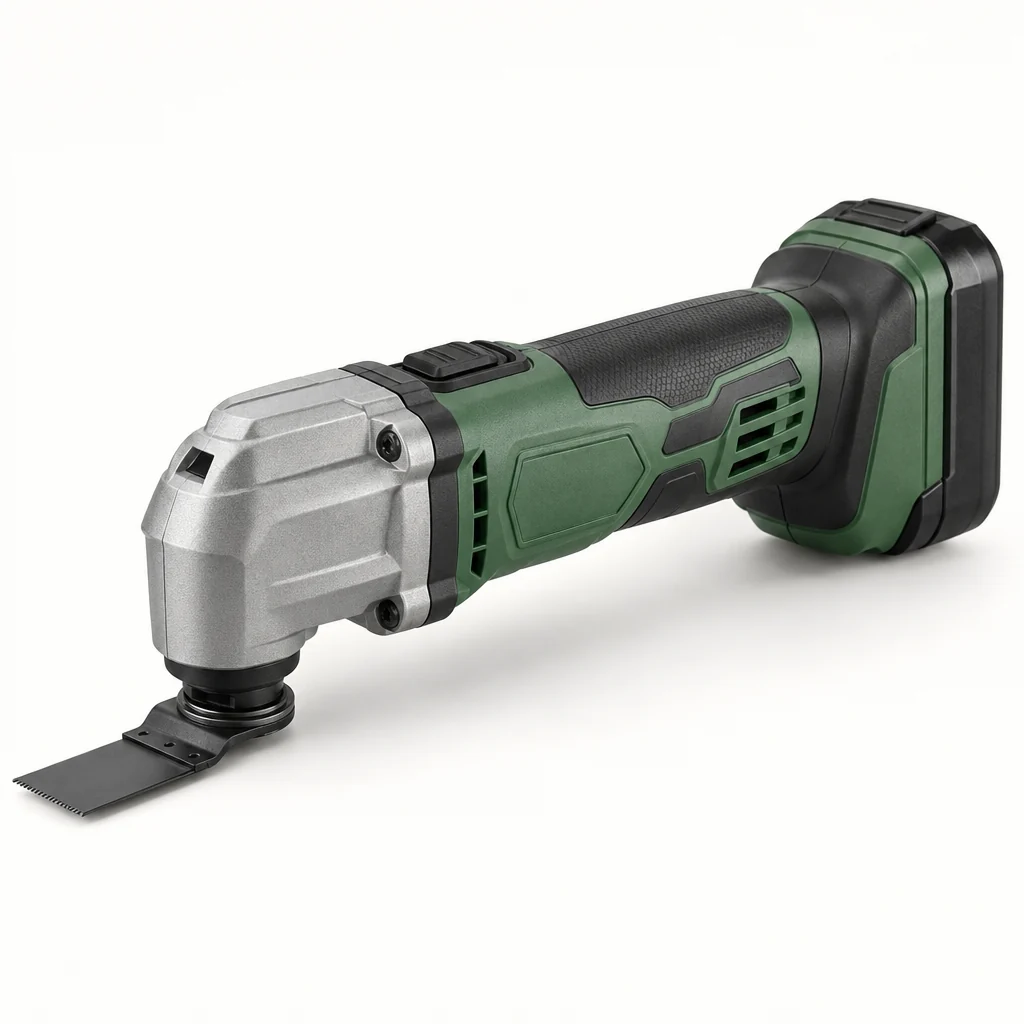
Makita's 18V LXT system has an obvious appeal for gardeners because it is broad, established and designed around battery interchangeability across more than 300 LXT tools. That is exactly what a platform should do: make the next useful purchase easier, rather than creating another charging arrangement that requires a labelled drawer and a small spreadsheet.
The LXT batteries use a slim slide-on design that helps keep the centre of gravity low. That may sound like a technical detail until you have spent a while working at an awkward angle beside a raised bed, along the edge of a deck or up a ladder adjusting part of a greenhouse. Balance is comfort. Comfort means you work more carefully. Careful work tends to produce fewer repair jobs later.
For the multi-tool itself, the Makita XMT04ZB is a sub-compact brushless model using the StarlockMax accessory system. It sits within the 18V LXT family and is designed around a compact format. Makita's vibration-control approach includes AVT counterbalance technology, with up to 85% less vibration stated for the XMT04ZB. That is a striking claim and a relevant one for anyone who expects to use a multi-tool for repeated sanding, cutting or restoration work.
There is also an important buying habit to adopt with Makita: be exact about the platform. LXT and XGT are distinct battery systems. XGT technology includes tabless battery development and a stated maximum capacity of 8.0Ah, but it is not an LXT battery family. The branding may live under the same manufacturer, but the batteries do not simply swap across. This is not a complaint; it is a reminder that system buying rewards a moment of care before checkout.
The established Makita owner
If LXT batteries already power tools in your shed, adding an LXT multi-tool keeps the system simple and avoids duplicate charging equipment.
The comfort-conscious gardener
Low vibration and balanced handling matter if you are regularly sanding, restoring outdoor timber or working carefully in confined spaces.
The deliberate buyer
LXT makes sense for gardeners who want a mature platform and prefer to add tools gradually as real jobs appear.
Makita is not necessarily the loudest choice in a comparison like this, and that can be part of its appeal. A dependable battery family with a deep tool range gives you room to grow without forcing you to buy every possible tool at once. The garden will provide plenty of reasons to expand the system in its own good time.
Battery Maths: The Cost You Notice Later
Most cordless-tool buyers focus on the first purchase. That is understandable. You need a multi-tool now; the fence repair is looking at you; the greenhouse sealant is not going to remove itself. But battery systems reward a longer view.
Imagine the path many gardeners take. First comes a multi-tool for repairs. Then a drill for a raised bed or shed job. Then a hedge trimmer becomes appealing when an old cord proves too short for the back boundary. A blower follows because dry leaves on paving are somehow more annoying than leaves anywhere else. Perhaps a garden light joins the collection for the darker months. None of these purchases is unreasonable. The cost and clutter depend heavily on whether each one needs its own battery and charger.
With a shared platform, you can choose complete kits when you need additional batteries, then buy bare tools once you have enough packs for the way you work. This does not mean bare tools are automatically the best option. If you often work for long periods, want a battery permanently available for another tool or are joining a platform from scratch, a kit can make excellent sense. The point is that you get to make that decision from a position of flexibility.
Battery sharing is not just about cost. It is about workflow. Two compatible batteries let one charge whilst the other is in use. A third can be helpful if you use several cordless tools in one session or tend to work through a long list of autumn repairs.
There are a few practical rules that prevent disappointment. First, buy genuine batteries suited to the platform and tool. Second, do not leave batteries in very hot, very cold or damp conditions. A shed can be perfectly serviceable for garden tools but still become harsh for electronics if it is poorly ventilated or prone to condensation. Third, label your batteries if several people use the same workshop. This sounds fussy until someone puts your fully charged pack into a neighbour's tool bag.
Capacity is also about choosing the right battery for the job rather than always choosing the biggest. Larger packs are useful for extended cutting or heavy work, but for a short task at shoulder height or in a cramped greenhouse corner, a more manageable battery can make the tool less tiring. The goal is not to prove you own the largest battery. The goal is to finish the job neatly before tea goes cold.
Finally, avoid the "brand-by-brand" trap when buying seasonal garden equipment. A tempting offer on a standalone blower can look sensible in isolation, but if it introduces a new battery and charger for one occasional task, it may create more hassle than it saves. A slightly more considered purchase within your existing ecosystem often pays back in daily convenience.
Garden Performance: What Matters More Than a Laboratory Score
Garden work is awkward. That is one of its more endearing qualities, right up until you are kneeling in wet grass trying to cut a small piece of timber beside a fence panel. The ideal multi-tool is not necessarily the one that shines in a single headline benchmark. It is the one that remains controllable, visible, comfortable and properly powered for the task in front of it.
For flush cutting, the important factors are blade choice, speed control and access. A tool that can reach close to the workpiece without a large body blocking your line of sight is easier to use accurately. DeWalt's three-speed arrangement is useful here because it allows you to start with more control. Milwaukee's 10-setting dial offers still more adjustment, particularly if you want to tune the tool to the material and accessory. Makita's low-vibration emphasis is appealing where careful handling matters over a longer session.
For tougher, more aggressive cutting, Milwaukee's 4.2° oscillation angle is the standout figure in this group. A wider movement at the accessory can help the tool cut assertively through demanding materials. It is a clear advantage for the gardener whose multi-tool regularly crosses into construction work: timber repairs, hardwood decking, dense insulation in a garden building or stubborn material around old fittings.
For runtime, the DeWalt DCS356B provides a useful real-world marker: roughly 45 minutes of continuous cutting with a 5.0Ah battery before the fuel gauge blinked. Continuous cutting is a demanding way to work a multi-tool; many garden tasks involve measuring, repositioning, clearing debris, checking a fit and wondering where you put the pencil. In ordinary use, your session may therefore look quite different. But the figure is helpful because it puts battery choice in context.
| Garden task | What to prioritise | Relevant platform strength |
|---|---|---|
| Trimming timber neatly beside a planter or deck edge | Control, suitable blade and manageable balance | DeWalt's three-speed control; Makita's low-vibration approach |
| Removing old sealant around a greenhouse frame | Visibility, patient speed control and a scraper accessory | DeWalt LED; Milwaukee 180° integrated LED |
| Working through tough timber or dense material | Cutting aggression, robust motor and battery capacity | Milwaukee's 4.2° oscillation angle and M18 FUEL output |
| Long maintenance sessions | Vibration management, spare batteries and comfort | DeWalt reduced-vibration design; Makita AVT counterbalance |
It is worth saying plainly that no cordless multi-tool turns poor accessories into good ones. A worn blade burns rather than cuts, a wrong blade makes a simple job slow, and an unsuitable scraper can damage the surface you were trying to preserve. Keep a small, labelled accessory box with cutting blades, scraper blades and sanding sheets suited to the work you commonly do. It is an inexpensive habit that transforms the usefulness of the tool.
Before cutting near plants, irrigation pipe or existing cables, stop and look. Trace what is behind the material. Clear soil and debris from the immediate area. Work in good light. The multi-tool's precision encourages you to get close to things, which is exactly why a little extra care is worthwhile.
How to Choose the Right System for Your Shed
If you already own batteries from one of these systems, begin there. Compatibility is the whole premise. It is rarely sensible to abandon a useful collection of batteries and chargers simply because another multi-tool has a feature you like. Buy into a new platform only when the wider range better suits the work you do or when you are starting with a genuinely clean slate.
If you are starting fresh, make a small list of the next four tools you realistically expect to buy. Not the fantasy workshop list. The real one. Perhaps it includes a drill, hedge trimmer, leaf blower and garden light. Perhaps it is a drill, sander, multi-tool and something for maintaining decking. Then look at which platform supports that little collection comfortably.
DeWalt is the straightforward all-round contender for gardeners who anticipate a mixture of DIY and outdoor maintenance. The DCS356B offers three speed settings, a brushless motor, quick accessory changes and a broad 20V MAX system around it. Milwaukee M18 is compelling for demanding, professional-leaning work where high-output cutting and a wide oscillation angle are especially relevant. Makita LXT is an excellent ecosystem-first choice for gardeners who value the depth of its established 18V family and a balanced, low-vibration approach.
The five-minute compatibility check
Before buying, check the battery family printed on the tool, the battery you own or plan to buy, and the charger that supports it. Do this even when the brand name matches. It is a tiny bit of homework that prevents a surprisingly irritating mistake.
Think, too, about where the tools will live. A shared system is easiest to use when batteries, charger and accessories have a sensible home. Put the charger somewhere dry and accessible. Keep batteries off a cold concrete floor. Store blades where they will not become rusty or disappear under a tangle of twine. The system works best when it is not treated as a collection of things to be rescued from the shed each time you need them.
Frequently Asked Questions
The GardenScout Verdict
The best cordless multi-tool system is the one that makes your next five jobs easier, not merely the next five minutes. DeWalt's 20V MAX platform is a strong all-round route, with the DCS356B offering useful three-speed control and access to a large ecosystem. Milwaukee M18 FUEL is the serious-work option, particularly appealing where demanding cutting and outdoor construction meet. Makita 18V LXT remains a deeply practical choice for anyone building a broad, coherent garden and DIY toolkit around one established battery family.
Start with the batteries you have if they already serve you well. If you are beginning from scratch, choose the platform that covers the work you genuinely expect to do. Your future self — standing in the garden on a chilly October afternoon with one charged battery and the right tool — will be quietly delighted. Which is about as close to a standing ovation as shed organisation ever gets.