
Cordless Drills & Augers for Planting Bulbs and Posts Fast
Bulb-planting augers versus standalone post-hole powerheads — compared for speed, soil type and the season-long slog of getting hundreds of holes in the ground.
There's a particular kind of ache that comes from kneeling on cold October soil, trowel in hand, trying to plant three hundred daffodil bulbs before the light goes. I know it intimately. For years I did the whole thing by hand, and by hole one hundred and fifty my wrist had staged a full mutiny. So when I first bolted an auger bit into a cordless drill and watched it chew a perfect six-inch hole in about four seconds, it felt genuinely revelatory. That single moment reshaped how I approach autumn planting entirely.
But here's the thing that took me a good while to properly understand: "augers for planting" is not one product. It's two quite different categories that solve overlapping problems in very different ways. On one side you have auger drill bits — passive steel spirals that slot into a cordless drill you already own. On the other you have standalone cordless earth auger powerheads — self-contained, battery-powered machines built to punch post holes and beyond. Understanding which you actually need is the whole game, and it's what this guide is really about.
Over this article I'll walk through the leading bulb-planting augers from Power Planter, Yard Butler and Breck's, the standalone Ryobi and Ridgid powerheads, and — crucially — how each performs across the soil types most of us are actually digging into. There's real benchmark data here on runtime, hole counts and digging speed, plus honest limitations, because no tool in this space is magic. Some of them just come remarkably close.
The Two Categories, Quickly Explained
Before we get into specifics, let's draw the line clearly, because getting this wrong is the single most common way people waste money in this category.
Auger Drill Bits
A steel spiral with a hex or round shaft that fits the chuck of a standard cordless drill. No motor of its own — it borrows the power of whatever drill you already have. Brilliant for bulbs, bedding plants and plugs. The likes of Power Planter, Yard Butler and Breck's live here.
Standalone Cordless Earth Auger Powerheads
A complete battery-powered machine with its own brushless or brushed motor, gearbox and grip handles. Built for post holes, fence footings and heavier ground. The Ryobi RY40710 and the twin-battery Ridgid unit are the examples we'll focus on.
The rough rule I've settled on after several seasons: if your job is bulbs and bedding, an auger bit in a decent drill is almost always the smarter, cheaper, lighter choice. If your job is post holes and fence lines, or you're facing hard, compacted, stony ground, a standalone powerhead earns its keep fast. Plenty of gardeners, myself included, end up owning one of each.
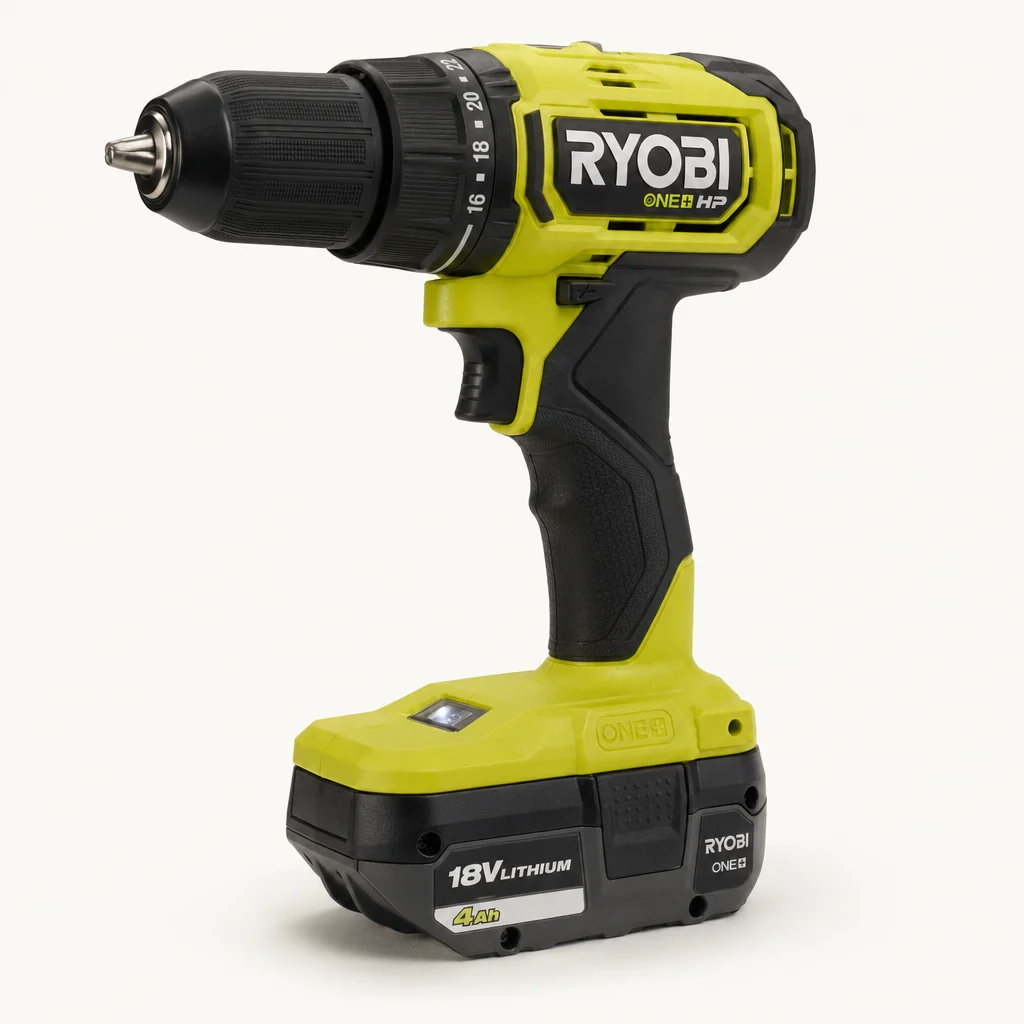
An auger bit is only ever as capable as the drill driving it. A £30 bulb auger paired with a tired 12V drill will disappoint; the same bit in an 18V or 20V drill is a different animal entirely. Budget for the pairing, not just the bit.
Key Specs at a Glance
Let's ground everything in numbers before we go further. Here's the spec snapshot that matters most across the two flagship reference points in this guide — the compact Power Planter bulb auger and the standalone Ryobi powerhead.
Even at a glance you can see the philosophical split. The Power Planter bit is small, light and depends on your drill; the Ryobi is a 40.2-pound self-contained machine with its own 40V battery and a torque figure of nearly 54 ft-lbs. One goes in your jacket pocket, the other lives in the shed and comes out for serious digging.
Power Planter: The Bulb Auger Benchmark
If you spend any time in gardening forums, you'll notice Power Planter comes up constantly — and for good reason. This is an American, family-owned firm that has been hand-welding garden augers in rural Illinois for over twenty years. That "hand-welded" detail isn't marketing fluff; it genuinely shows in the build quality. These are professional-grade tools rather than the flimsy pressed-steel spirals you sometimes find bundled with cheap drills.
The Bulb & Bedding Plant Tool (3" × 7")
This is the one I reach for most, and I suspect it'll be the sweet spot for the majority of readers. It's a 3-inch diameter, 7-inch long auger built around a hand-welded 5/8-inch steel shaft with 10-gauge flighting and a 3/8-inch non-slip hex drive. It digs holes up to 6 inches deep — precisely the depth most spring bulbs want — and it takes a minimum 14V drill, though Power Planter sensibly recommend 18V for most gardening tasks.
The feature I appreciate most is subtle: unlike some cheaper augers, it doesn't leave a compacted cylinder of clogged dirt that you then have to poke back into the hole. The flighting clears the spoil cleanly, so you drop in the bulb, sweep the loose soil back over, and move on. Over a few hundred holes that small efficiency adds up enormously.
Pro Tip
For light, well-worked soil, an 18V or 20V drill will happily run any auger from 7 inches up to 12 inches long. Save the heavier 20V–60V tools for augers 4 inches wide or wider, or for holes deeper than 12 inches in hard ground. Matching drill to bit is where the speed really lives.
The Large Bulb Auger (4" × 28")
When bulbs give way to bigger jobs — established perennials, small shrubs, or genuinely digging the odd post hole — the 4-inch by 28-inch auger steps up. It's built around a heavy-duty 1-inch shaft made of 100% steel with double 10-gauge flighting, and Power Planter suggest pairing it with a large cordless drill sporting a 1/2-inch hex drive.
What I like here is the serviceability. The heavy-duty hex adaptor doubles as a replaceable auger tip, and the leading portion carries replaceable auger blades. For a tool you're going to lean into hard, hard-wearing ground, being able to swap the business end rather than bin the whole thing is genuinely reassuring for long-term value.
Sizing the Range
Power Planter's line spans well beyond these two. The 2- to 3-inch augers run from 7 inches all the way to 48 inches in length, covering bulbs, grass plugs, annual and vegetable plugs and small potted plants. There's a compact 2" × 7" flower and grass-plug tool at the small end, a 3" × 12" "DIY Guru" in the middle, and — for the truly ambitious — an 8" × 28" auger with a heavy-duty tip at the top. The longer the auger and the wider the diameter, the more drill you need behind it. It's a genuinely coherent ladder, and most gardeners will find their rung somewhere in the 3-inch bracket.
Power Planter Pros
- Hand-welded, professional-grade build that outlasts pressed-steel rivals
- Flighting clears spoil cleanly — no clogged dirt cylinder to push back
- Coherent size range from 2" plug tools to 8" heavy-duty augers
- Larger models feature replaceable tips and blades for long service life
- Non-slip hex drives grip the chuck reliably under load
Power Planter Cons
- You must supply an appropriately powered drill — no motor included
- Wider and longer models demand 20V–60V drills for hard soil
- Battery drain on a driving drill sets in roughly every 100 holes
- Premium pricing at the larger end of the range
Yard Butler and Breck's: The Value Alternatives
Power Planter isn't the only game in town, and depending on your job, one of these two may suit you better.
Yard Butler Roto Planter
The Yard Butler Roto Planter takes a slightly different tack. At 24 inches long and 2¾ inches wide, it's built to dig holes up to a genuinely useful 22 inches deep — far deeper than a standard bulb auger. It's made from heavy-duty powder-coated steel and clips into any 3/8-inch bit cordless or electric drill. My favourite detail is the three flats machined into the shaft, which stop the auger slipping in the chuck — a real problem with round-shafted bits under load, and one that ruins your rhythm mid-planting.
That 22-inch depth makes the Roto Planter interesting for anyone planting deeper subjects or wanting an auger that reaches beyond typical bulb territory without stepping up to a standalone powerhead.
Breck's Improved Bulb Auger
The Breck's Improved Bulb Auger is the specialist's speed tool. At 20½ inches long including its extender, it drills 2¼-inch diameter holes and attaches to any 3/8-inch or larger drill. Its headline claim is eye-catching: up to 500 holes per hour, dug from a standing position. That standing-up bit matters more than the number itself — the extender is what saves your back, and for anyone planting at volume, that's the whole point.
One important caveat: the Breck's uses a round shaft, not hex or square. It works with cordless drills, but the maker recommends a corded drill for denser soils. In light, friable ground it flies; in heavy clay, the round shaft is more prone to slipping and you'll want the extra sustained grunt of mains power.
| Feature | Power Planter 3" × 7" | Yard Butler Roto Planter | Breck's Improved |
|---|---|---|---|
| Diameter | 3 inches | 2¾ inches | 2¼ inches |
| Length | 7 inches | 24 inches | 20½ inches (with extender) |
| Max Depth | 6 inches | 22 inches | Standing-height drilling |
| Shaft / Drive | 3/8" hex | 3/8" bit, three shaft flats | Round shaft, 3/8"+ |
| Best Soil | Light to medium | Light to medium | Light (corded for dense) |
| Headline Strength | Clean spoil clearing | Deep holes, anti-slip | Up to 500 holes/hour |
Shaft shape quietly determines a lot. Hex and machined-flat shafts (Power Planter, Yard Butler) resist slipping in the chuck under load; round shafts (Breck's) can spin free in heavy soil, which is exactly why a corded drill is advised for dense ground.
Standalone Powerheads: When Bits Aren't Enough
Auger bits are wonderful for bulbs and bedding. But the moment you're sinking fence posts, deck footings or anything that needs a wide hole punched deep into stubborn ground, you cross into standalone powerhead territory. Here the tool brings its own motor, gearbox and grip handles, and the numbers change dramatically.
Ryobi RY40710
The Ryobi RY40710 is the standout in this bracket for the home and semi-pro user. It runs on Ryobi's 40V battery platform, spins at a 210 RPM high speed, and produces 53.98 ft-lbs of engine torque. It'll take a bit up to 8 inches in diameter and drive a hole to a maximum depth of 31 inches. It ships with a 32-inch long, 8-inch diameter auger bit, and it weighs in at 40.2 pounds — this is a two-handed machine you plant your feet for.
Crucially, it's built around sensible safety and control features: forward and reverse, an anti-kickback system (which matters enormously the first time an auger catches a root or stone), and two speeds. The premium HP brushless motor is the headline internal upgrade, promising more power, longer runtime and a longer motor life than brushed equivalents. Ryobi back it with a 5-year warranty, which for a tool that lives a hard life outdoors is genuinely worth having.
Ridgid Twin-Battery Auger
The Ridgid earth auger takes a different power approach, running on double 18-volt 4 Ah rechargeable batteries rather than a single high-voltage pack. At 34 pounds it's a touch lighter than the Ryobi, which counts when you're wrestling it across a fence line all afternoon. The twin-18V arrangement is a familiar strategy from the cordless world — pairing two established-platform batteries to deliver higher combined output — and it's a sensible fit for anyone already invested in 18V tools.
Pro Tip
An anti-kickback system isn't a luxury on a standalone powerhead — it's the feature that protects your wrists. When an 8-inch auger snags a buried root at 210 RPM, the reaction force wants to spin you. Never run a large powerhead without one, and always keep a braced, feet-planted stance.
Real-World Performance: Speed, Runtime & Soil
Specs tell you what a tool can do; benchmarks tell you what it actually does. Here's where the rubber — or rather the steel — meets the soil.
Digging Speed
On raw hole-punching speed, the numbers are genuinely impressive. The Ryobi RY40710 drills a 30-inch hole in about 2 minutes — remarkable for a hole deep and wide enough for a fence post. On the auger-bit side, Power Planter used in a two-person operation planted 400 bulbs in roughly one hour total, and Breck's claims a capacity of up to 500 holes per hour with its standing-height design. Those aren't like-for-like jobs, of course — a 30-inch post hole is a different beast from a 6-inch bulb hole — but they illustrate the two ends of the productivity spectrum beautifully.
The takeaway is intuitive once you see it: bulb augers win on sheer hole count because each hole is shallow and narrow; the powerhead wins on hole size, trading raw count for depth and diameter. Choose your tool by which of those two axes your job actually demands.
Runtime and Battery Life
Runtime is where honest expectation-setting matters most. On the Ryobi, testers drilled 19 test holes on a single charge with the battery still holding ample charge afterwards — a genuinely reassuring result for a day's fencing. The 40V pack takes about 2 hours to charge fully, which reviewers fairly described as "quite lengthy". If you're working at volume, a second battery on rotation is close to essential rather than optional.
For auger bits, the limiting factor is your drill's battery, and here Power Planter users report battery drain roughly every 100 holes. A spare battery is strongly recommended — swapping a flat pack costs you thirty seconds, whereas waiting for a recharge mid-planting derails your entire afternoon.
Soil Type — The Deciding Factor
More than any other variable, soil dictates which tool succeeds. In light, friable, well-worked beds, almost anything works — even the round-shafted Breck's flies, and an 18V drill with a 3-inch auger will out-plant three people with trowels. As soil density climbs, the picture shifts fast.
Light, Loamy Soil
Ideal for any auger bit. An 18V or 20V drill runs 7- to 12-inch augers effortlessly. This is bulb-auger heaven — high hole counts, minimal fatigue.
Medium / Compacted Soil
Step up the drill. Hex or machined-flat shafts (Power Planter, Yard Butler) resist slipping. For Breck's round shaft, a corded drill is recommended here.
Hard, Stony or Clay Ground
For augers 4 inches or wider, or holes deeper than 12 inches, use a 20V–60V drill — or move to a standalone powerhead with anti-kickback for genuine post-hole work.
If your ground is baked hard or heavy clay, water it thoroughly the evening before you plant. Damp soil augers vastly more easily than dry, saves your battery, and dramatically reduces the risk of the bit snagging and kicking back.
Head-to-Head: Bit vs Powerhead
Let's put the two categories directly against each other on the criteria that matter to a real gardener planning a real job.
| Criterion | Auger Bit (Power Planter 3") | Standalone Powerhead (Ryobi RY40710) |
|---|---|---|
| Best Job | Bulbs, bedding, plugs | Post holes, footings, deep/wide holes |
| Max Hole Depth | 6 inches (bulb model) | 31 inches |
| Max Diameter | 3 inches | 8 inches |
| Weight to Handle | Weight of your own drill | 40.2 pounds |
| Power Source | Your existing drill battery | Dedicated 40V battery |
| Safety Features | Depends on drill | Anti-kickback, forward/reverse, two speeds |
| Speed on Its Job | Up to ~400–500 holes/hr | ~2 min per 30-inch hole |
| Warranty | Varies by maker | 5-year |
What jumps out is that these tools barely compete at all — they complement one another. The powerhead's 31-inch depth and 8-inch diameter are simply out of a bulb auger's reach, whilst no 40-pound powerhead is the sensible choice for tucking 300 crocus bulbs into a border. The honest answer for most serious gardeners is that the two categories together cover everything, and neither on its own does.
Ratings & My Overall Assessment
Having lived with tools from both categories across a few planting seasons, here's how I'd score the field as a whole — weighing the auger-bit ecosystem and the standalone powerheads together as a solution to "planting bulbs and posts fast".
Speed is unquestionably the standout — the transformation from hand-planting to powered augering is the single biggest quality-of-life upgrade I've made to my autumn routine, full stop. Build quality is excellent at the Power Planter end and reassuring on the Ryobi with its 5-year warranty. The only real drag on the scores is runtime: two hours to recharge a 40V pack, and battery drain roughly every 100 holes on a driving drill, both point firmly towards owning spares.
Who Should Buy What
The Bulb Enthusiast
Planting hundreds of bulbs each autumn? A Power Planter 3" × 7" in an 18V drill, plus a spare battery. Clean spoil clearing and hex grip make it the reliable workhorse.
The Back-Saver
Struggle with kneeling and bending? Breck's Improved with its extender lets you drill up to 500 holes an hour from standing — light soil, ideally paired with a corded drill.
The Fencer / Builder
Sinking posts or footings? The Ryobi RY40710 with its 8-inch bit, 31-inch depth, anti-kickback and 5-year warranty is the confident choice for real digging.
The 18V Loyalist
Already invested in an 18V platform? The twin-battery Ridgid powerhead at 34 pounds slots neatly into your existing battery ecosystem for post-hole work.
Frequently Asked Questions
The Verdict
Fast, Reliable, and Genuinely Back-Saving
There's no single "best" product here, because the honest answer depends entirely on what you're digging. For bulbs, bedding and plugs, an auger bit — and the hand-welded Power Planter 3" × 7" is my pick — paired with a good 18V drill and a spare battery is transformative. It clears spoil cleanly, grips securely with its hex drive, and turns a punishing afternoon into a brisk one.
For post holes, fence lines and heavy ground, the standalone Ryobi RY40710 is the standout: 53.98 ft-lbs of torque, an 8-inch bit, 31-inch reach, anti-kickback safety and a 5-year warranty, drilling a 30-inch hole in roughly two minutes. It's a 40-pound machine that earns every ounce.
The one universal truth across both categories is battery discipline — with drain around every 100 holes on a bit, and a two-hour recharge on the Ryobi, a spare pack is the difference between finishing the job and stopping halfway. Buy the tool that matches your ground and your job, keep a battery charging in reserve, and you'll wonder how you ever managed on your knees with a trowel.
My final advice, after several seasons of this? If you can only justify one purchase, let the job decide. Mostly bulbs and borders — buy the bit. Mostly posts and hard ground — buy the powerhead. And if, like me, you eventually find yourself owning one of each, you'll have quietly assembled the fastest planting kit a garden can reasonably ask for.