
Growing Fruit Trees in Pots: Apples, Figs and Citrus
Rootstocks, sensible pot sizes, feeding and winter protection for a genuinely productive patio orchard — even when your garden is more paving than pasture.
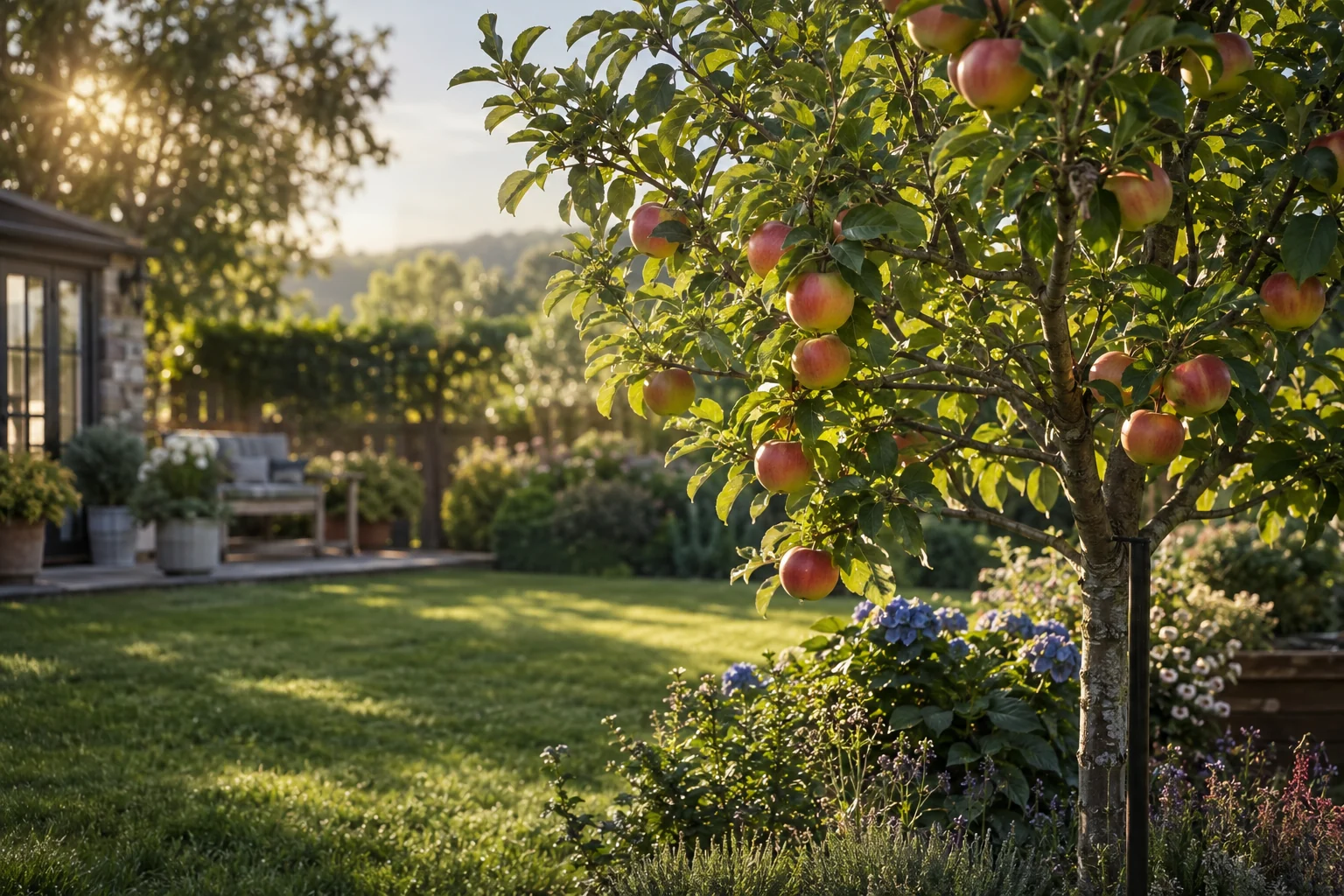
The Patio Orchard Dream — Can a Pot Really Replace a Garden?
It is mid-October, and the patio is beginning to look less like an outdoor room and more like a holding area for damp chairs, fallen leaves and pots that need moving before the weather gets ideas above its station. This is exactly when a container fruit garden earns its keep. A ripe fig picked in late summer, a small crop of apples from a sunny wall, or a citrus tree brought indoors with its glossy leaves and faintly improbable fruit: these are not reserved for people with a walled orchard and a wheelbarrow collection.
Small-space gardening has made fruit trees feel possible again. Courtyards, balconies and paved back gardens may not offer room for a traditional orchard, but they can make excellent homes for carefully chosen trees in containers. The key word is carefully. A fruit tree is not a strawberry plant with ambitions. It is a woody, long-lived plant with roots, a graft union, seasonal needs and a fairly firm opinion about being waterlogged.
Jessica Cornwall's Grow Fruit Trees in Pots: The Beginner's Guide to Growing Apples, Citrus, Figs, and More in Containers — Even in Small Spaces Like Patios, Balconies, and Tiny Yards arrives squarely in this territory. Published in April 2026 as part of the Grow Food Anywhere series, it is a beginner-focused introduction to growing apples, citrus, figs and other fruit in confined spaces. Its promise is an appealingly practical one: help with the setup, common mistakes, rootstocks, pot sizes, feeding, overwintering, harvesting and using what you grow.
That is a strong starting point, because the failures with patio fruit are usually not mysterious. The apple is planted on an over-vigorous rootstock. The young tree goes into a vast decorative pot full of saturated compost. The citrus is left outside for one cold snap too many. Or the plant receives plenty of kindness in the form of water, and none in the form of potassium when it is trying to make fruit. Gardening has a fondness for making generosity look suspiciously like sabotage.
The useful job to do now: inspect every potted fruit tree before winter. Check that water can leave the pot freely, lift containers off cold paving where possible, remove fallen leaves and fruit, and decide which plants need a sheltered position before a hard frost arrives. October is not the month for forcing new growth; it is the month for making good decisions quietly.
A pot cannot quite replace the buffering effect of open ground. Roots in containers experience hotter summer compost, colder winter compost and far less room to forage. But it can give you something valuable in return: control. You choose the compost, manage moisture, move a tree out of a bitter wind, and put a sun-loving fig exactly where the heat collects against a wall. For a small garden, that control is the difference between a decorative tree and one that produces a bowl of fruit.
At a Glance: Key Facts, Formats and What You're Actually Buying
This is a compact, accessible guide rather than an encyclopaedia of pomology. That is not a criticism. There is a place for large reference books with every possible pruning diagram, Latin name and disease chart; there is also a place for a book that helps a beginner avoid buying the wrong tree on a bright Saturday morning.
(6 × 0.22 × 9 in)
The paperback's modest size makes sense for its subject. Fruit growing is best learned with one hand holding a book and the other holding a slightly muddy pot. A physical copy can sit in the greenhouse or potting shed and survive being consulted during repotting, which is rather different from trying to keep a phone screen clean whilst balancing a rootball on your knee.
The digital edition, meanwhile, suits the gardener who wants a portable checklist whilst standing in a nursery, comparing labels and wondering why every apple tree appears to have a different collection of letters and numbers after its name. The book's main value lies in helping readers ask the right questions before they buy: Is this genuinely dwarfing? Will it pollinate? Can it winter outside? Does it need a much larger final pot than the one I have in mind?
Think of the book as a starting map
For a first container fruit tree, a concise guide is often more useful than a vast manual. Read it before choosing a plant, then keep the nursery label and any cultivar-specific instructions with the tree. Rootstock, variety, site and local winter conditions still matter more than a one-size-fits-all rule.
It is also worth being clear about what a book cannot do. No guide can inspect your particular balcony for wind, tell you whether a downpipe is soaking one side of a pot, or notice that the compost has sunk below the original root level. The growing part remains wonderfully analogue. You will need to look, touch the compost and occasionally lift a pot. Fortunately, those are all rather pleasant jobs when the rain holds off.
Rootstocks Decoded: The Decision That Makes or Breaks a Patio Apple
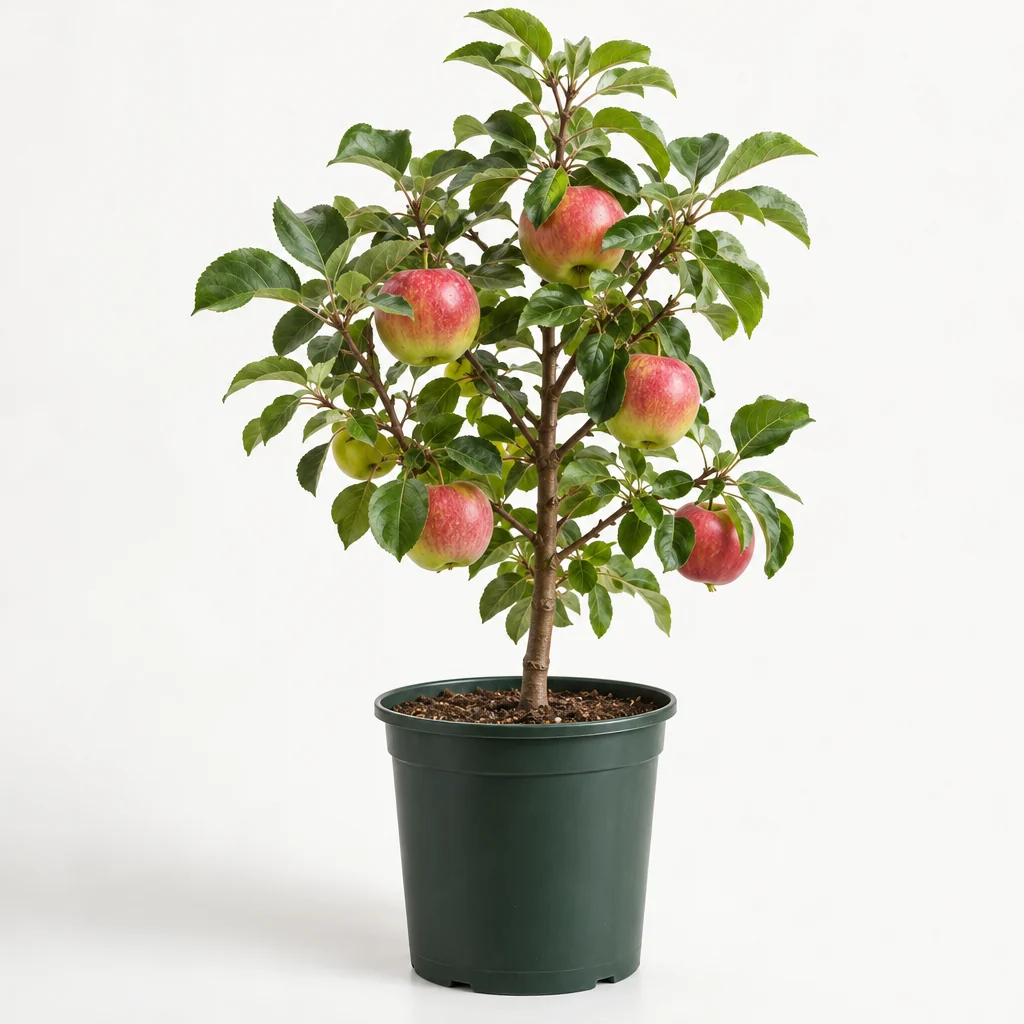
If you remember only one phrase from this article, make it this: buy the rootstock, not just the fruit name. A 'Cox', 'Egremont Russet' or 'Bramley' label tells you what apple you may harvest. The rootstock tells you how large the tree wants to become, how quickly it will grow and whether life in a pot is remotely fair on it.
Most named apple trees are grafted. The visible upper portion is the fruiting variety; the roots and lower stem are a different plant selected for its vigour and other useful traits. The graft union is usually visible as a swelling low on the trunk. In a container, this underlying rootstock is not a technical footnote. It is the architecture of the entire enterprise.
M27: the truly small apple option
M27 is an ultra-dwarfing apple rootstock. Trees are commonly kept around 1.2–1.5 m tall and are a natural fit for containers around 30–45 cm in diameter. It is the rootstock to seek when space is genuinely tight and you want an apple tree that can live on a patio without eventually behaving as though it has been denied its birthright.
M26: more substantial, still manageable
M26 is dwarfing rather than ultra-dwarfing. At roughly 1.8–2.5 m, it needs more room above and below ground, generally suiting a final container around 45–60 cm in diameter. It can be a good choice where there is a sunny patio, a little headroom and willingness to prune sensibly.
MM106: usually a step too vigorous
MM106 is semi-vigorous and generally too large for long-term container growing without severe root restriction. A determined gardener can make almost anything fit for a while, but a tree permanently fighting its allotted space is not a triumph of gardening. It is an argument waiting to happen.
Flying Dragon for compact citrus
For citrus, Flying Dragon — a dwarfing form of trifoliate orange — is particularly important. It can keep a citrus tree to around 1–1.5 m, which matters enormously when a UK winter means bringing the plant under cover or into a bright indoor space.
Rootstock labels are particularly valuable because container growing is a long game. You may get away with an over-large tree for a season or two. It may even look impressively vigorous, which is how these things lure us in. Then comes the moment when watering becomes relentless, the pot becomes unstable and pruning turns into annual emergency surgery. Starting with a suitable rootstock is much easier than trying to negotiate with a mature tree later.
Apples also introduce a separate question: pollination. Some varieties need a compatible partner flowering at the same time, whilst others are described as self-fertile. In a small space, a self-fertile tree or a paired planting arranged with pollination in mind is often simpler. This is a point to confirm with the supplier when choosing a particular cultivar, because a beautifully compact tree that flowers enthusiastically but sets little fruit is still going to be disappointing.
Do not confuse "dwarf" with "small forever"
A dwarf tree is still a tree. It needs a stable pot, annual attention and a pruning plan. The practical benefit is not that it requires no care; it is that its scale remains realistic for a patio and for the person expected to move it when the forecast turns nasty.
Figs are rather different. They are usually grown on their own roots rather than supplied on apple-style rootstocks, and their natural response to confined roots can actually help encourage fruiting. Citrus may be grafted, and the rootstock affects ultimate size, but winter protection matters at least as much as size in Britain. In all three cases, the best plant is not necessarily the most glamorous variety. It is the one whose eventual habit, hardiness and needs match the spot you actually have.
Pot Sizes, Compost and the Container Upgrade Ladder
There is a peculiar temptation, especially when buying a handsome terracotta pot, to go enormous immediately. It feels generous. It looks decisive. It is also often a mistake. A young tree placed in a container far larger than its current root system sits in a great volume of compost that can remain wet for too long. Roots need moisture, of course, but they also need air. Permanently soggy compost is one of the quickest routes to poor growth and root rot.
For young apples, a sensible starting point is a container around 30–40 cm in diameter. Move up gradually, usually annually during the first three years, as roots fill the available compost. An M27 apple generally finishes in a pot around 45–60 cm across. An M26 tree requires a more generous final container of 60 cm or more, with at least 40–50 litres of compost. Those dimensions are not decorative suggestions. They are the minimum working space for a fruit tree expected to crop and remain healthy.
Citrus commonly finish in containers around 45–50 cm in diameter. This is large enough to provide useful root room whilst still being physically possible to move. That final point matters more than people think. A lemon tree that requires four adults and a furniture dolly to reach shelter is not a practical indoor winter plant, however charming it looked in June.
Figs can eventually need substantial containers too, but they respond well to restricted roots. A pot gives you a way to contain their natural enthusiasm. What matters is that the container has generous drainage holes and a solid enough base not to topple when the canopy is full of leaves. A fig in a light plastic pot can become surprisingly top-heavy. There is nothing quite like finding your prized tree lying horizontally after a gust to focus the mind on ballast.
Compost: drainage before drama
Use a good-quality container compost suited to long-term planting, with enough structure to avoid collapsing into a dense, airless mass. The exact blend varies with the tree and the gardener's preferred materials, but the underlying principles do not. The compost must retain moisture without staying saturated. The pot must drain freely. The rootball should sit at the same level it was growing previously, with the graft union on apples and citrus kept above the compost surface.
Do not rely on a saucer permanently full of water beneath outdoor pots. A brief collection of run-off is one thing; a tree standing with its roots wet is another. Raise pots onto feet, bricks or purpose-made supports so excess water can escape and winter cold is not conducted straight through the container base. This small adjustment is useful throughout the year, but particularly now, when repeated autumn rain can turn a sheltered corner into a slow-motion puddle.
The simplest moisture check: push a finger into the compost rather than watering by calendar alone. In autumn and winter, a tree uses much less water than it did in summer. A damp surface does not always mean the lower root zone is wet, and a dry surface does not always mean the tree is thirsty. Containers reward curiosity.
Repotting is usually best tackled in winter, whilst deciduous trees are dormant, or in the early years as annual growth demands it. For this October, concentrate on surface housekeeping: clear weeds, remove moss if it is sealing the compost surface, check drainage holes and make sure an autumn gale cannot blow the pot over. Come next spring, reassess whether the roots have filled the container and whether an upgrade is due.
Feeding Regimes: Nitrogen, Potassium and a Seasonal Calendar
A tree in open soil can send roots hunting. A tree in a pot cannot. It has the nutrients supplied in its compost, the feed you give it and not a great deal else. That makes feeding one of the most consequential ongoing tasks in container fruit growing — but it does not mean pouring something into the pot whenever you remember.
The useful way to think about it is seasonal purpose. In spring, the tree needs support for leaves and fresh growth. In summer, once fruit is setting and swelling, it needs a change of emphasis towards flowering and fruit development. In autumn, it needs to slow down and harden growth before winter. The calendar is not fussy for the sake of it; it follows what the tree is trying to do.
| Season | What the tree is doing | Practical feeding approach | What to watch for |
|---|---|---|---|
| March–May | Making leaves and new shoots | Use a high-nitrogen feed or balanced feed, such as Growmore 7-7-7, fortnightly. Liquid seaweed is also used to support new growth. | Fresh growth needs water as well as nutrients. Feed does not compensate for a dry rootball. |
| June–August | Holding and ripening fruit | Switch to a high-potassium feed. Tomato feed, including products formulated at around 5.3% K₂O, is widely used weekly during fruiting. | Do not overfeed nitrogen at the expense of fruit. Lush leaves are not automatically a successful harvest. |
| September–February | Slowing down or resting | Stop routine feeding as growth slows. Concentrate on drainage, hygiene and protection. | Soft late growth is vulnerable when frost arrives. Autumn is not a time to encourage it. |
The spring-to-summer switch catches many new growers out. Nitrogen is associated with green growth, and green growth looks reassuring. But a fruit tree needs potassium as it moves into flowering, fruiting and ripening. If your apple or fig is producing ample leafy shoots but disappointing fruit, the answer is not necessarily more fertiliser. It may be a matter of timing, light, pollination, pruning or the tree simply being too young. Plants, like teenagers, can be very good at growing in directions you did not ask for.
Feeding should always follow watering, not replace it. Liquid feed applied to a bone-dry rootball is neither kind nor efficient. Water first if the compost is dry, then apply feed according to the product instructions. Equally, do not feed a stressed, waterlogged plant in the hope that nutrition will cheer it up. Solve the drainage problem. Fertiliser is not a counsellor.
For now: ease off, do not pep up
By mid-October, routine feeding should be over for outdoor container fruit. Your work now is to prevent waterlogging, shelter pots from harsh conditions and allow growth to settle down. Set a reminder for early spring instead of trying to squeeze one last burst of growth from a tree heading into winter.
Citrus need particular restraint in a UK autumn. They may continue to hold leaves and fruit in a bright indoor position, but reduced light and cooler compost mean lower demand. Overfeeding when conditions are dim rarely produces a happier plant. Keep the root zone free-draining, avoid sudden changes between parched and drenched, and keep an eye out for pests once the tree comes indoors.
Overwintering Strategy: Protecting Patio Trees Through a UK Winter
Overwintering is the point where British container fruit growing becomes a little less romantic and a little more logistical. An orchard tree in the ground benefits from the insulating mass of surrounding soil. A tree in a pot has roots exposed on all sides. When a hard frost settles in, the compost can freeze more thoroughly and more quickly than the ground beneath a nearby border.
UK cold snaps can reach around -10°C to -15°C in colder areas. Apples on M27 and M26 rootstocks are generally hardy, but their roots remain more vulnerable in a container than they would be in open ground. You do not need to panic at every chilly night. You do need a plan before several severe frosts arrive in succession.
Apples: hardy tree, exposed rootball
Apple trees on M27 and M26 are generally hardy to RHS H6, but protect the container when temperatures fall below -5°C. Insulate pots with bubble wrap or hessian, place them in a sheltered position and keep them out of the path of cold winds.
Figs: shelter the roots, not just the branches
Established figs in the ground can survive British winters, but container-grown figs have more exposed roots and are vulnerable below -10°C. Move them to an unheated greenhouse, garage or shed when severe weather threatens, or use fleece as minimum protection.
Citrus: bring them under cover
Citrus need a bright, protected winter position in the UK. A compact tree on Flying Dragon rootstock is far more manageable when it is time to move indoors or into a suitable frost-free space.
For apples, the most sensible strategy is usually to group pots near the shelter of a wall, raise them off wet paving and wrap the container rather than smothering the whole tree. Bubble wrap or hessian around the pot reduces the rapid freezing and thawing that roots dislike. Do not block drainage holes. A beautifully insulated pot with nowhere for winter rain to go is a rather expensive swamp.
Figs are deciduous, which makes them easier to tuck into a cold but protected place once leaves have dropped. An unheated greenhouse, garage or shed can provide valuable shelter during severe weather. They do not need a warm living room. They need protection from the worst cold, particularly around the rootball, without being encouraged into premature spring growth.
Citrus are the demanding members of the trio. They want light, protection and consistency. Bringing them indoors can expose them to dry central heating, low light and pests, so aim for the brightest suitable place rather than the cosiest. Check leaves regularly for signs of trouble and water sparingly enough to avoid permanently wet compost. Citrus dislike cold shock, but they also dislike being treated as a tropical houseplant beside a radiator.
Before the next cold spell: decide where each pot will go, clear the route to it and test whether you can actually move it. This sounds comically obvious until you attempt to drag a waterlogged fig across frosty paving in the dark. A trolley, pot feet and a sheltered corner are useful winter equipment, not extravagances.
What the Book Covers — and How to Use It Well
The book's stated coverage aligns neatly with the things first-time container fruit growers most need to understand: choosing suitable fruit trees, setting up a small-space growing area, rootstocks, pot sizes, feeding, overwintering, harvesting and storage. Apples, peaches, citrus, figs and avocados all appear in its scope, so readers looking beyond the three headline crops will find a wider invitation to experiment.
That broad species list is useful, but it should also sharpen your judgement. Apples, figs and citrus do not ask for the same conditions. An apple can be left outside with sensible pot protection. A fig can be restricted in a container and sheltered when the cold becomes serious. Citrus requires a brighter, more protected winter arrangement. Avocados and peaches introduce their own considerations. "Fruit tree" is a category, not a care instruction.
The book also promises guidance on the biggest beginner mistakes. This is exactly the right subject to include, because the mistakes tend to be expensive and slow to reveal themselves. A poor choice of rootstock may not become obviously wrong until the tree has outgrown its pot. Overwatering may look like a nutrient deficiency. Underfeeding potassium may give you a handsome green plant and very little fruit. Insufficient winter protection may become clear after one grim February morning.
What suits beginners well
- Its focus on patios, balconies and tiny yards addresses a real UK gardening problem: space is limited, but enthusiasm is not.
- Rootstocks and pot sizes are included, which are the decisions most likely to determine whether an apple remains manageable.
- Feeding, overwintering, harvesting and storage move beyond the nursery purchase and into the parts that determine long-term success.
- The coverage of apples, figs and citrus gives a useful mix of hardy, Mediterranean-feeling and indoor-wintering fruit.
Where you still need local judgement
- A compact guide cannot replace checking the rootstock and pollination needs of the specific apple tree you are buying.
- Winter decisions depend on your local exposure, not merely the county forecast or the date on the calendar.
- Container size is affected by the tree's age, vigour and stability, so the pot must be assessed as the tree grows.
- Every patio has its own pattern of shade, reflected heat and wind. Your plants will reveal it soon enough.
The sensible way to use a guide such as this is before buying, at planting, and again at the change of each season. Read the relevant section, then look at the actual plant. Does the label identify the rootstock? Is there a graft union? Does the pot drain? Is the tree becoming too heavy for its container? Has the weather shifted from mild drizzle to a proper frost forecast? Books are most helpful when they prompt observation rather than replacing it.
For this time of year, use the overwintering and common-mistakes material as your immediate checklist. The feeding sections can wait until spring. The urge to repot can wait unless there is an urgent drainage problem. Your best fruit-growing decision in October may simply be to do less, but do it in the right place.
A Practical Year for Apples, Figs and Citrus in Pots
Fruit trees reward routine, and a routine is less intimidating when it is broken into seasons. The exact weather will always have the last word — Britain has made an art form of the unexpectedly warm February and the unhelpfully cold April — but a simple annual rhythm keeps the main jobs from drifting.
Autumn: secure, tidy and prepare
Now is the moment to remove fallen fruit and leaves from the compost surface, check drainage, tidy supports and position pots for shelter. Stop routine feeding. Apples and figs will be winding down, whilst citrus needs a plan for protected winter accommodation. Do not prune aggressively merely because the garden feels quieter. Save major reshaping for the appropriate dormant period and avoid stimulating tender growth before frost.
Winter: protect and observe
Winter is about avoiding extremes. Insulate containers, protect apple roots below -5°C, move potted figs under cover when temperatures threaten to fall below -10°C, and keep citrus in a bright protected position. Water much less than in summer, but do not allow the rootball to become dust-dry for weeks. Check after strong winds and heavy rain. A pot may drain perfectly in theory and still become blocked by leaves in practice.
Spring: assess roots, refresh and feed
Come next spring, examine trees as growth starts. This is the useful time to repot young trees that have filled their containers, moving up one sensible size rather than leaping to a giant tub. Begin spring feeding from March to May with a high-nitrogen or balanced feed applied fortnightly. Watch new leaves, flowers and developing shoots. They are your most honest progress report.
Summer: water deeply and switch feeding emphasis
From June to August, pots can dry with startling speed, especially beside warm walls or on balconies exposed to wind. Water thoroughly as needed rather than offering frequent, token splashes that wet only the surface. During fruiting, move to a high-potassium feed weekly. Keep an eye on stability: a fruit-laden fig or apple becomes heavier at exactly the point summer weather becomes breezier.
There is no shame in starting with one tree. In fact, it is often the wisest choice. Learn how one apple, fig or citrus responds to your site before turning the patio into a densely packed fruit department. Success breeds confidence; confidence breeds more pots; eventually you will be explaining rootstock codes to visitors who only came round for tea.
How This Guide Sits Beside Other Fruit-Growing Resources
There is no single perfect fruit-growing book for every gardener. The best choice depends on whether you want a compact confidence-builder, a broad UK reference or a deeper exploration of managing orchard trees. Cornwall's guide is designed around the small-space container question, which gives it a clear purpose.
| Resource | Best suited to | Container-fruit emphasis | Useful distinction |
|---|---|---|---|
| Grow Fruit Trees in Pots Jessica Cornwall |
Beginners with patios, balconies, courtyards or very limited growing space | Central focus, with apples, citrus, figs and further fruit included | A concise guide built around the practical challenge of growing fruit in containers. |
| Grow Your Own Mini Fruit Garden Christy Wilhelmi |
Gardeners planning a compact edible space | Relevant within a broader mini-fruit-garden approach | Useful for readers interested in creating a small fruit-growing scheme rather than choosing one tree. |
| Fruit Trees for Every Garden Orin Martin |
Readers wanting a wider organic fruit-tree reference | Part of a broader approach to apples, pears, peaches, plums, citrus and more | A broader fruit-tree resource, first published in 2019, rather than a guide focused solely on pots. |
For a UK gardener, it is sensible to pair any general container guide with locally relevant advice from your chosen nursery or garden centre. The details that matter most — rootstock, cultivar, pollination group, likely mature size and winter treatment — should be available when you buy. A generic description such as "ideal for patios" is encouraging, but it is not quite enough on its own.
The particular strength of a container-first guide is that it begins with the constraints rather than treating them as an afterthought. That is how most of us garden. We start with a sunny wall, a balcony rail, an awkward paved corner or a patch near the back door. Then we ask what can thrive there. It is much more useful than beginning with a dream orchard and trying to squash it into three pots afterwards.
Frequently Asked Questions About Fruit Trees in Pots
The GardenScout Verdict
Growing fruit trees in pots is not a shortcut to an orchard. It is its own style of gardening: more hands-on, more movable and often more forgiving of limited space, provided you begin with a suitable tree. Rootstock, pot size, drainage, seasonal feeding and winter protection are the foundations. Get those right and an apple, fig or citrus can become one of the most satisfying plants on the patio.
As autumn settles in, resist the urge to fuss. Check drainage. Protect exposed pots. Move citrus before cold weather catches you out. Then, when spring comes round again, choose your rootstock with care, size the pot sensibly and let your small orchard grow at a pace you can actually enjoy.