
The Fastest-Growing Vegetables: 12 Crops You Can Harvest in Weeks
From cress on the kitchen windowsill to proper outdoor crops with pods and roots, these are the vegetables that make a British garden feel productive almost immediately.
Why Fast-Growing Veg Belongs in Every UK Garden Right Now
There is a particular sort of gardening optimism that arrives with a packet of seeds. You sow them, picture baskets of vegetables, perhaps mentally allocate space in the freezer, and then discover that the crop will be ready sometime between "later" and "next geological era". Lovely. Not always helpful.
Fast-growing vegetables solve that problem rather neatly. With cress, the journey from dry seed to sandwich filling can be as little as five to seven days. Rocket can reach baby-leaf size in 18 to 21 days. Round radishes are often ready in 21 to 28 days. That is not merely quicker than a conventional vegetable plot; it is quick enough to change how you use one. A bare patch is no longer a commitment for the whole summer. It is an opportunity for a month.
That matters in the UK. Most of us are working with an outdoor season framed by a last frost around late April and a first frost around mid-October. In broad terms, that gives a 22- to 26-week window for frost-sensitive vegetables, assuming the weather behaves itself. It frequently does not. A cool spring can sit there with its arms folded until June; a hot, dry spell can persuade salad crops to bolt just as they become useful; August can turn into a slug festival with very little notice.
Quick crops are insurance against all of that. They let you make several sowings rather than placing all your hopes on one grand April weekend. They fill gaps between slower vegetables. They turn a growbag, trough, windowsill or one-metre strip of border into an actual source of food, rather than a place where you occasionally inspect seedlings and sigh.
Think in harvest windows, not seed packets
"Days to maturity" is best treated as a useful target, not a legally binding promise from nature. Cool soil, dry compost, crowding, low light and pest damage all slow things down. The figures here are practical harvest windows for the crop stage described: often baby leaves or shoots, rather than a fully mature plant.
There is another advantage: fast vegetables encourage the habit that makes gardens productive. You notice moisture. You sow again before the first row is finished. You harvest little and often. In my experience, the person who raises three modest trays of leaves over a month generally gets more from them than the person who plants a heroic quantity once, then remembers it in August.
This guide is deliberately specific. It separates pea shoots from pea pods, baby beet leaves from mature beetroot, and spring onions from seed from spring onions grown from sets. Those distinctions are where the useful speed is hiding. A crop can be "fast" on a cheerful label and still take two months if you are waiting for the wrong part of it.
At a Glance: The 12 Fastest Crops Ranked by Days to Harvest
Here is the headline ranking, from the almost comically swift to crops that need a little more patience but still deliver within roughly two months. The final three are not rivals for a tray of cress. They are the bigger, more substantial reward once you have exhausted the thrill of eating something you sowed last Tuesday.
5–10 days
18–21 days
21–28 days
21–30 days
25–35 days
60–70 days
The ranking is useful, but it needs one important caveat. Cress, pea shoots and baby leaves are harvested very young. That is precisely why they are so useful, but it is not the same thing as waiting for a mature head of lettuce, a full kale plant or a bowl of pea pods. There is no cheating here, just sensible harvesting. A baby leaf is still a leaf. A pea shoot is still delicious. Nobody at lunch is asking to see its birth certificate.
For season extension, the most forgiving group is cress, rocket, winter salad leaves and spinach. Cress is an indoor crop all year. Rocket, winter salad mixes and spinach can continue in cool weather under fleece or in a cold frame, although growth slows considerably when daylight is weak. "Year-round" does not mean identical harvest speed in January; it means the crop remains possible when the open garden is looking a bit emotionally unavailable.
Crop 1–3: The Seven-Day Wonders — Cress, Rocket and Radish
1. Garden cress: five to 10 days, and no garden required
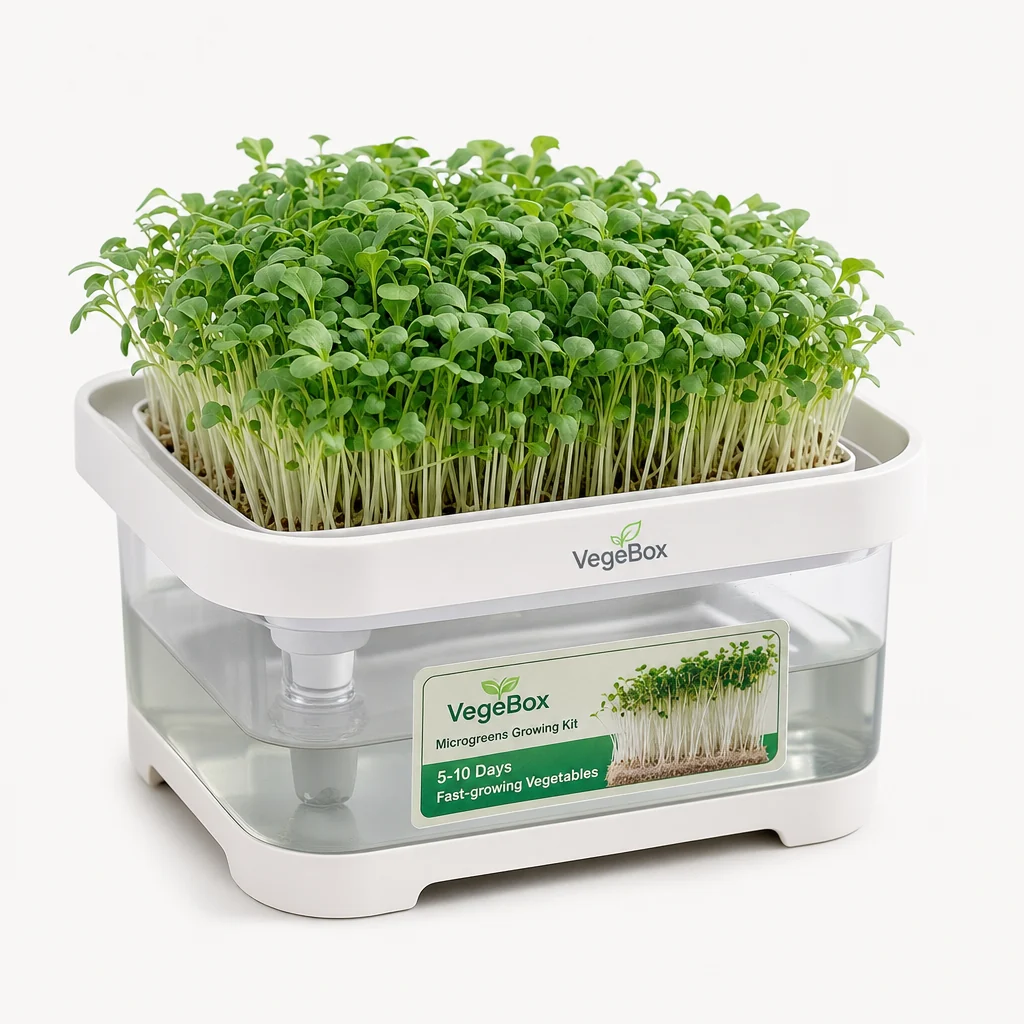
Garden cress, Lepidium sativum, is the obvious starting point because it is hard to beat for speed. Seeds germinate in two to four days and can be harvested in five to 10 days. It will grow on damp cotton wool or a paper towel, which makes it ideal for a windowsill, a classroom experiment, children who want results before their attention wanders, and adults who want results before theirs does.
You do not need soil, though shallow compost trays work too. Keep the growing medium evenly damp rather than swimming, sow the seed fairly generously, and snip the stems just above the surface once the little leaves are up. A tray can yield roughly 20–30g. That does not sound heroic until you realise that it is more than enough to liven up egg sandwiches, soups and salads, and you can sow another tray every seven to 10 days.
Best location: indoors, year-round
Cress needs very little room and does not need outdoor weather to cooperate. A bright windowsill is enough.
Best habit: steady moisture
It is a shallow-rooted crop. Letting cotton wool or paper dry out is the quick route to sad, collapsed seedlings.
Best harvest: one clean snip
Harvest the whole tray rather than expecting repeated cuts. Its great strength is that the next batch is scarcely more than a week away.
One small UK windowsill note: avoid a fiercely south-facing position in summer if it turns into a miniature greenhouse. Cress can rush upwards and become less tidy when overheated. Bright but not baking is the sweet spot.
2. Rocket: 18 to 21 days to peppery baby leaves
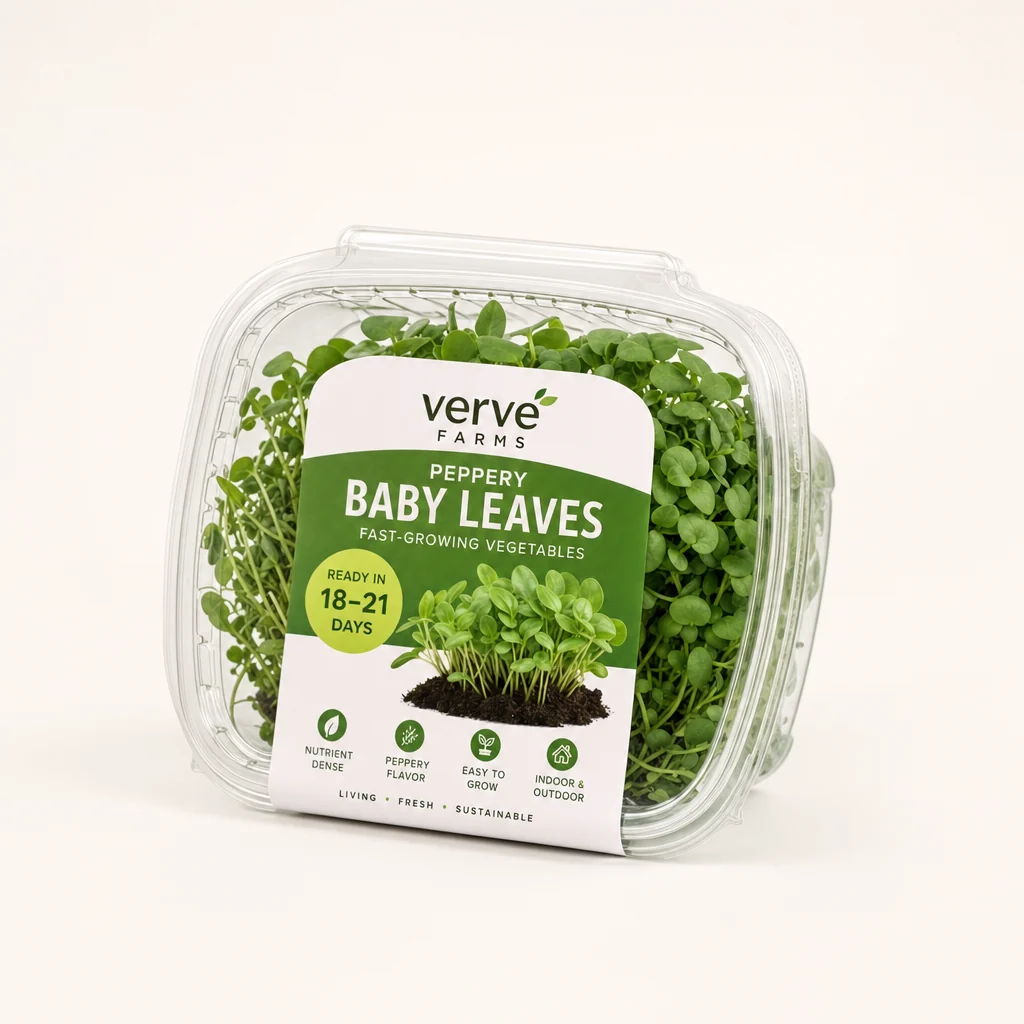
Rocket, also known as arugula and botanically Eruca vesicaria, is the crop I reach for when a salad needs some personality. It reaches baby-leaf stage in 18 to 21 days, and its deeply cut leaves make a tray look productive long before you have filled a bowl. The flavour is peppery, sometimes pleasantly so and sometimes rather like it is trying to start an argument. Heat and drought intensify it.
Sow direct outdoors from March to September, or start under cover from February. Rocket prefers cool conditions, with an optimal soil temperature of 10–20°C. In a British spring, that is good news. In a hot July, it means you should think about shade, water and succession sowing rather than expecting a single sowing to remain elegant for weeks.
Choose bolt-resistant varieties such as 'Skyrocket' or 'Apollo' for summer growing, sow every two to three weeks, and cut young. At baby-leaf stage, rocket can yield around 200–300g per square metre. Take outer leaves or shear a small patch above the growing point, then let it recover. Eventually the leaves become tougher and the flavour more forceful. At that point, compost it with dignity and sow another patch.
3. Round summer radish: 21 to 28 days to a proper root crop
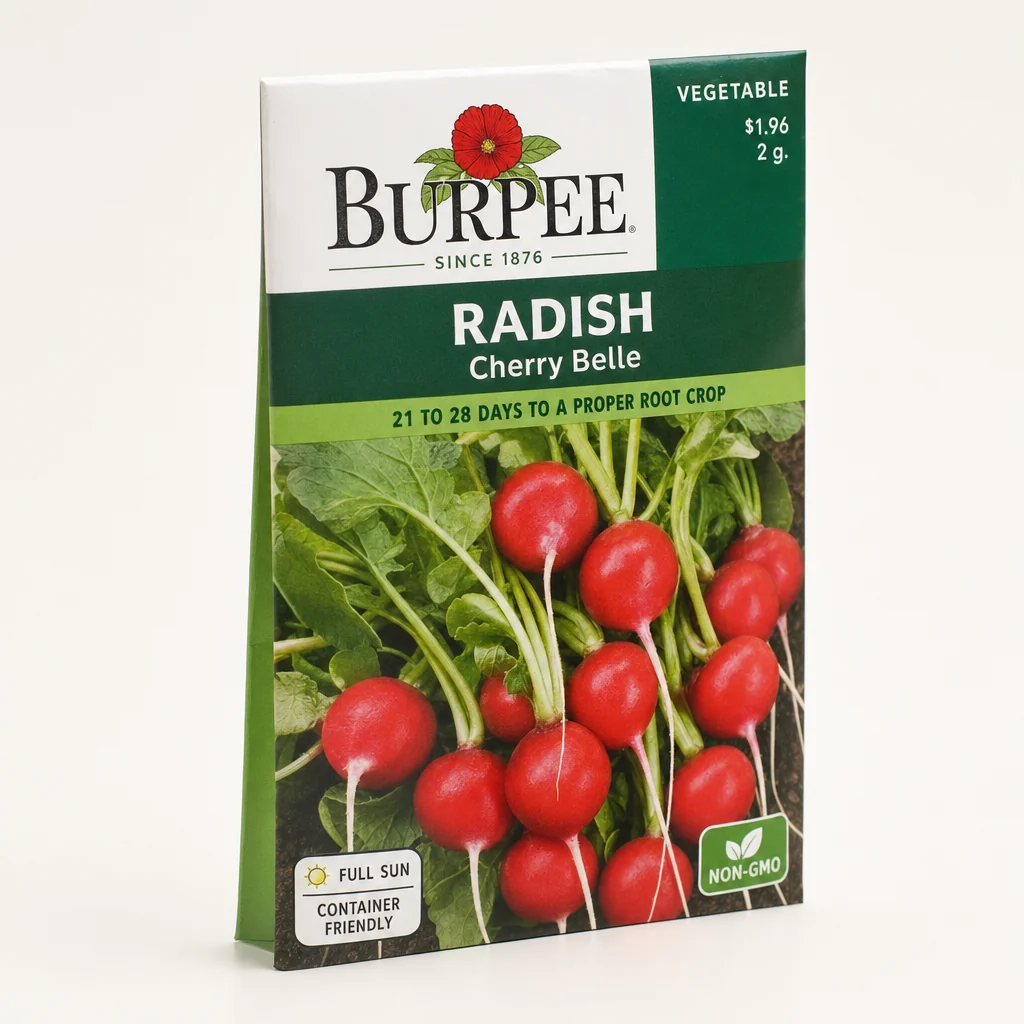
Radishes are often called foolproof. They are not, exactly. They are fast, which is different. A quick crop has less time to go wrong, but radishes can still produce nothing but leaves if sown too thickly, too late or into poor conditions. The good news is that their preferred routine is wonderfully simple.
Sow round summer types such as 'Cherry Belle' and 'Scarlet Globe' outdoors from March to August, at around 1cm deep. The soil should be at least 10°C. Sow thinly, then thin seedlings to 5cm apart for decent root formation. The initial spacing may be about 2.5cm, but leaving every seedling packed together is a classic error. All foliage, no radish. It is the vegetable equivalent of a very impressive hairdo with no substance underneath.
Radish rule: thin earlier than feels necessary
Round radishes need room to swell. If you sow heavily, thin to 5cm and eat the tiny thinnings in a salad. 'French Breakfast' can be ready in around 25 days in good conditions. Save mooli and daikon for another plan: those larger roots take 60–70 days.
Keep radishes watered consistently, especially in dry spells. Their fast-growing roots can become disappointing if growth stalls. Harvest as soon as they are a useful size rather than waiting for a mythical perfect specimen. Older radishes become hotter and woodier. The prize for speedy sowing is speedy eating.
Crop 4–6: Cut-and-Come-Again Champions — Spring Onions, Salad Leaves and Baby Spinach
4. Spring onions: fast only when you start with sets
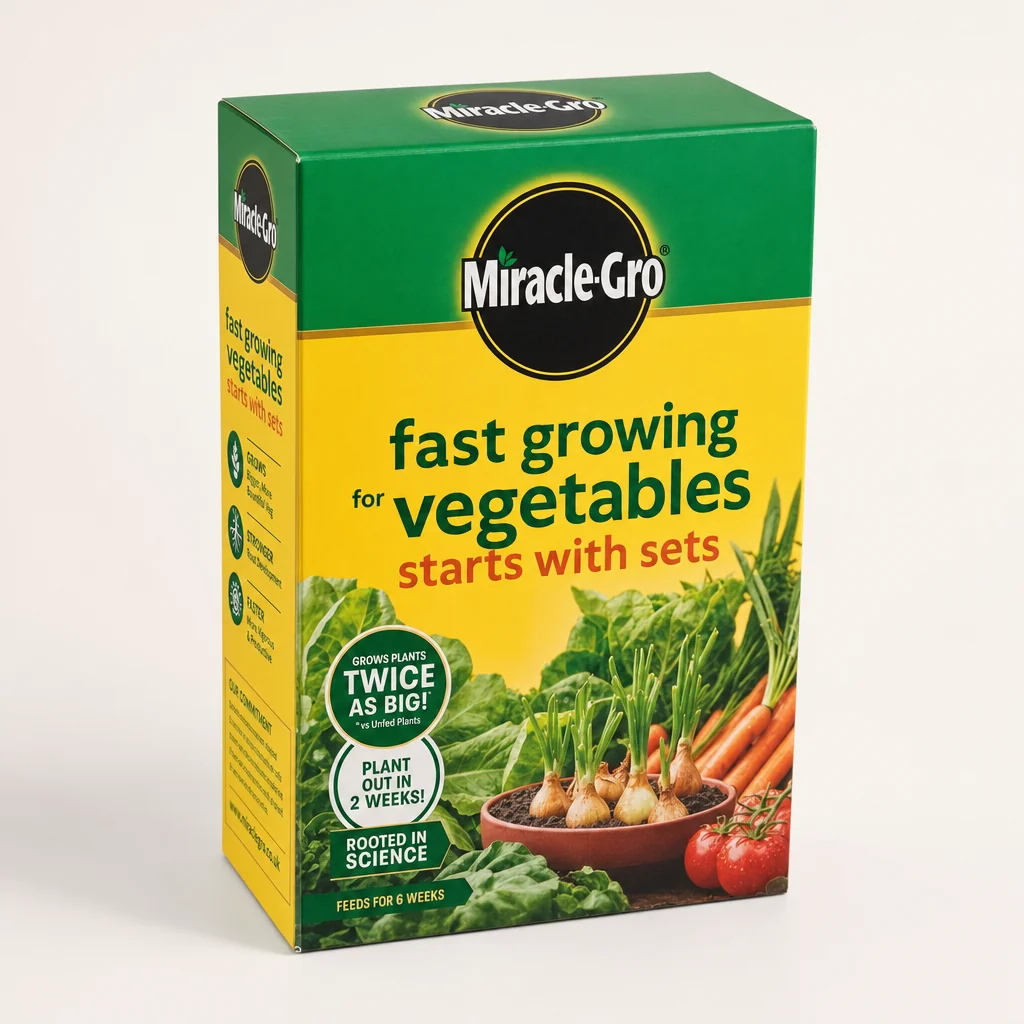
Spring onions, or scallions, are a very good example of why the starting point matters. Allium fistulosum grown from seed takes around 60–70 days to reach harvest. Start with sets, however, and you can harvest in 21–28 days. If your aim is quick food rather than a long-term horticultural meditation, use sets.
'White Lisbon' is the familiar UK benchmark, ready in about eight weeks from seed but three to four weeks from sets. Plant into a container at least 15cm deep or a prepared bed, with roughly 2.5cm between plants. Harvest once stems reach pencil thickness. They are wonderfully unfussy in the kitchen and fill the awkward gap between needing something oniony and not wanting to sacrifice a whole large onion.
You can sow seed from March to September if you are content to wait longer. For a winter-minded plan, 'White Lisbon Winter Hardy' can be sown in August or September for a spring harvest. The distinction is worth repeating because it prevents disappointment: spring onions are quick from sets, not magically quick from seed.
5. Baby salad leaves: the reliable little workhorse
Baby salad leaves are perhaps the most rewarding crop for a small garden because they are so adaptable. The category includes loose-leaf lettuces, mixed salad leaf blends and lamb's lettuce. You can take a first cut in 21–30 days, use a windowsill tray, trough, growbag, raised bed or any container that can hold a modest amount of compost, and then cut again two to four times before quality declines.
'Salad Bowl', in both red and green forms, 'Lollo Rossa' and compact 'Tom Thumb' are useful choices. 'Tom Thumb' is especially at home in containers. Sow thinly in drills, or broadcast lightly across a tray. The temptation is to sow a thick green carpet, because it looks wonderfully abundant. Resist a little. Overcrowding reduces airflow, complicates watering and makes it harder to cut cleanly.
The optimal temperature is 15–18°C. Above 24°C, lettuce tends to bolt. That is why British summers present the familiar salad paradox: just when you most want a bowl of leaves, the plants are considering flowers. In July and August, a little shade cloth can prolong the useful period. In colder months, grow 'Arctic King' or lamb's lettuce, Valerianella locusta, under a cold frame for a winter crop.
For cut-and-come-again crops, leave the central growing point intact and cut a few centimetres above the compost or soil surface. A too-low haircut is not a brave pruning strategy. It is usually the end of the plant.
6. Baby spinach: quick, nutritious and strongly opposed to summer
True spinach, Spinacia oleracea, reaches baby-leaf stage in 25–35 days. It is easy to confuse it with perpetual spinach, which is actually Beta vulgaris. Perpetual spinach is more bolt-resistant, but it takes longer. If the point is a quick tray of tender leaves, grow true spinach.
'Matador' and 'Medania' are sensible varieties for UK conditions. Sow from February to May, then again from August to October. Avoid the summer peak where possible because spinach bolts readily above 20°C. For baby leaves, broadcast seed across a tray or shallow section of bed. For larger leaves, allow around 15cm spacing.
Spinach is one of those crops that rewards cool weather and regular watering. It can feel almost perversely pleased with a grey April day. Nutritionally, baby spinach leaves can have up to three times the vitamin C concentration per gram of mature leaves. Large quantities also contain high levels of oxalic acid, so blanching is sensible if you are preparing a lot of it. For ordinary salads, sandwiches and a handful stirred through warm dishes, just enjoy it.
Crop 7–9: The Brassica Speedsters — Baby Kale, Pak Choi and Baby Beet Greens
7. Baby kale: mature later, eat earlier
Kale has a reputation for being a serious vegetable. Hardy. Worthy. Slightly smug. Let it grow to maturity and that is broadly fair: full plants take 60–90 days. Harvest it as baby leaf, though, and it becomes a genuinely fast crop at 25–35 days.
For UK baby-leaf production, 'Dwarf Green Curled', 'Redbor F1' and 'Nero di Toscana' are all useful. Cavolo Nero is a little slower, but it brings a richer flavour. Sow outdoors from March to August, with a minimum germination temperature of 7°C. Thin to 10cm for baby leaf, or 45cm if you want to leave plants to form full-sized crops. The spacing difference is enormous because the harvest intention is completely different.
Kale offers approximately 49mg of vitamin C per 100g raw. More immediately useful, it keeps producing leaves when many more delicate salad crops have called it a season. An August sowing can provide baby leaves through winter under fleece protection. The main threat is not frost. It is slugs, who appear to regard emerging brassicas as a very small but exclusive restaurant.
Use copper tape around containers or wildlife-friendly pellets where needed, and inspect young plants regularly. A few minutes spent watching the bed at dusk is not glamorous gardening, but it reveals a great deal about who is eating your seedlings.
8. Pak choi: one of the quickest whole-plant brassicas
Pak choi, or bok choy, Brassica rapa subsp. chinensis, is one of the fastest brassicas that gives you a proper whole plant rather than only a scattering of leaves. It takes 30–45 days to harvest and is at its best in the cool, shortening days of spring and autumn.
Sow from March to May, then from July to September. Avoid the height of summer, when warmth and long days increase the chance of bolting. 'Joi Choi F1', 'Canton Pak Choi' and red-leaved 'Rubi F1' are suitable choices. Sow direct or transplant, give each plant 15–20cm, and either harvest the whole plant at ground level or keep picking the outer leaves.
Pak choi is also particularly useful in containers, provided they are at least 20cm deep. This makes it a strong candidate for patios, balconies and the sort of small paved space where a traditional vegetable plot would be a triumph of optimism over geometry.
The primary issue is flea beetle damage. The tiny holes can make leaves look as though someone has been practising with a hole punch. Fine mesh from day one is the most reliable defence. The timing matters: putting protection on after the damage appears is rather like closing the gate after the goat has taken up residence in the living room.
9. Baby beet greens: the dual-purpose crop hiding in plain sight
Beetroot is normally listed as a root crop that takes 60–90 days. That is true if you are waiting for beetroots. But sow it with a plan to thin progressively, and you can harvest baby beet greens in 28–35 days while the remaining plants continue towards roots. It is one of the cleverest ways to get two crops from one row.
'Boltardy' is a UK favourite and bolt-resistant, while 'Chioggia' offers a mild flavour and candy-striped roots later on. 'Detroit 2' is another dependable option. Sow from April to July, then thin in stages. The first tiny seedlings can go into salads; later thinnings provide larger, earthy-sweet leaves with a flavour similar to chard.
| Fast brassica or beet crop | First useful harvest | Best sowing windows | Main issue to manage |
|---|---|---|---|
| Baby kale | 25–35 days as baby leaf | March–August | Slug pressure on young seedlings |
| Pak choi | 30–45 days as a whole plant | March–May; July–September | Flea beetle and summer bolting |
| Baby beet greens | 28–35 days from thinnings | April–July | Remembering to thin progressively |
Thinnings from a one-metre beet row can yield approximately 150–200g of baby leaves over four to six weeks. That is a respectable return from a crop you may have grown anyway. Beets also contain betalains, the antioxidant pigments responsible for those hands, chopping boards and tea towels that will never quite be the same shade again.
Thinings are harvests, not waste
With beetroot, do not thin a row once and throw the seedlings away. Thin little and often, eating every stage, whilst leaving enough space for the plants you want to mature into roots.
Crop 10–12: The Bigger Rewards — Pea Shoots, Bush French Beans and Early Carrots
10. Pea shoots: the shortcut to sweet pea flavour
Peas are normally thought of as a 60–70 day wait for pods. That is true, but it overlooks the excellent crop sitting above the compost. Pea shoots are ready at microgreen stage in 10–14 days, or after three to four weeks if you prefer longer shoots with tendrils. They are tender, sweet and far more useful than their speedy schedule suggests.
Any garden pea variety will work for shoots, but compact varieties such as 'Meteor' and 'Feltham First' are good UK choices. Sow densely, around 5cm apart in trays or directly into a small bed. Pre-soak seeds for 12 hours to speed germination, then keep them moist. Once shoots are around 5–8cm tall, snip them above the lowest leaves.
You can often get one or two regrowths, although the first cut is generally the strongest. Sow outdoors from March under a cloche or from April without protection. Pea shoots contain around 40mg of vitamin C per 100g, along with folate, but their greatest quality is that they make an ordinary lunch feel briefly as though it knows what it is doing.
11. Bush French beans: substantial harvest, no stakes
Bush French beans, Phaseolus vulgaris, are the crop on this list that begins to feel like a proper summer main event. First pods arrive in around 55–65 days from sowing, appreciably quicker than climbing and runner beans, which take 80–100 days. They have a bush habit, so no staking is required. That alone earns them points in any garden where canes have a habit of looking like an unfinished tent.
Wait until after the last frost before sowing outdoors, which in the UK is typically from mid-May. Soil temperature should exceed 12°C and is ideally 15°C or higher. Beans dislike cold, wet soil with a depth of feeling that is almost admirable. Sowing early into chilly conditions rarely saves time; it usually loses it.
'Speedy' is listed at 53 days and is among the quickest options, with 'Safari F1' and 'Tendergreen' also good choices. Space plants 15cm apart in rows 45cm apart. A three-metre row can produce around 2–4kg across the season. Harvest young pods at 10–12cm for the best flavour, and keep picking. Leaving pods to swell into old age tells the plant that its work is done.
Slugs can be troublesome at germination, and black bean aphid can collect beneath leaves later on. Check undersides regularly. It is never the top side of a bean leaf where the drama is happening.
12. Early and round carrots: the patient person's fast crop
Carrots are last here, but that does not make them slow in context. Round or globe varieties such as 'Paris Market', 'Parmex' and 'Thumbelina' are ready in 60–70 days, compared with standard Nantes or Chantenay types at 70–80 days. Maincrop carrots, at 90–120 days, belong in a different article and possibly a different state of mind.
The key to success is soil. Early carrots need loose, stone-free sandy-loam soil, or a deep container at least 30cm deep. Heavy, lumpy ground produces forked roots that are entirely edible but look as though they have had a difficult upbringing. Sow under fleece from March or outside from April, then thin to 5cm.
Carrot fly, Psila rosae, is the main UK pest. You can sow after late May or use enviromesh. Companion planting with spring onions has been shown in UK trials to reduce carrot fly incidence by up to 50%, so these two crops make sensible neighbours. A one-metre row of round varieties can yield approximately 1–1.5kg.
Why the bigger three are worth it
- Pea shoots can be harvested in 10–14 days, with possible regrowth.
- Bush beans provide productive summer crops without supports.
- Round carrots make a useful root harvest within 60–70 days.
- Each adds texture and flavour beyond the usual salad-leaf routine.
What can slow them down
- Peas and beans resent cold soil and late frosts.
- Beans are vulnerable to slugs while germinating.
- Carrots need deep, fine soil and careful thinning.
- Carrot fly protection requires planning at sowing time.
How to Keep the Harvests Coming Instead of Getting One Big Glut
The secret to fast vegetables is not finding the one miraculous crop. It is succession sowing: small sowings repeated at sensible intervals. This is gardening's answer to not buying twelve loaves of bread on the same day. You get fresher harvests, less waste and far fewer evenings spent trying to use a frankly unreasonable quantity of rocket.
For cress, sow every seven to 10 days. For rocket, radish and baby salad leaves, make a fresh sowing every two to three weeks. Spinach is best treated as a spring and late-summer crop, while pak choi slots into the cooler spring and autumn windows. Beetroot can be sown from April to July, then thinned for greens as the row develops.
Use every available scale of space. Cress and pea shoots belong in trays. Salad leaves and spring onions are very happy in containers. Radishes slip between larger plants. Kale and pak choi can occupy a raised-bed corner. Carrots want depth, not width, which makes a suitable container surprisingly useful. Bush beans need a little more room, but a short row is still manageable.
Balcony growers
Prioritise cress, pea shoots, salad leaves, spring onions, rocket and pak choi in containers.
Families and beginners
Start with cress, radish and pea shoots for visible progress and forgiving harvests.
Cool-season gardeners
Lean into rocket, spinach, winter salads and kale under fleece or in a cold frame.
Watering is the unglamorous bit that makes the timetable work. Fast crops have shallow roots and relatively little time to recover from a dry spell. Check containers especially often: compost can look fine on top whilst being dry where roots actually are. Water the soil, not just the foliage, and aim for consistency. A dramatic soak after several dry days is not quite the same as a steady supply.
Also be realistic about light. Indoors, a bright windowsill works brilliantly for cress and can support small trays of shoots. Outdoors, most of these vegetables perform best with good daylight, though leafy crops appreciate protection from extreme summer heat. If a spot receives very little light, grow cress there and save the more demanding crops for a brighter place. There is no medal for growing carrots in a gloomy corner.
Common Fast-Crop Failures and the Simple Fixes That Matter
Quick vegetables do not need complicated growing systems. They do, however, make their preferences obvious rather quickly. A radish that fails in four weeks has not wasted much time, but it is still mildly irritating. Most setbacks can be traced to a handful of patterns.
Problem: crowded seedlings
Radishes need thinning to 5cm, beetroot needs progressive thinning, and dense salad mixes need enough air around them. Give plants the room their chosen harvest stage requires.
Problem: sowing cool-season leaves in heat
Rocket, lettuce, spinach and pak choi can bolt in warm conditions. Use shade cloth for summer salads, and sow spinach and pak choi in their cooler preferred windows.
Problem: pests arriving first
Use fine mesh from day one against flea beetle on pak choi, protect young kale from slugs, and consider enviromesh for carrots where carrot fly is a problem.
Problem: treating soil temperature as an afterthought
Radishes need at least 10°C soil, beans need more than 12°C and ideally 15°C+, while cold, wet conditions slow peas and beans dramatically.
Perhaps the most common disappointment is measuring success against a photograph of a mature plant when you intended to grow a baby crop. Baby kale is supposed to be small. Pea shoots are supposed to be snipped. Beet thinnings are supposed to look like tiny beets that have not finished becoming beets yet. Harvesting early is not failure. It is the entire strategy.
The flip side is harvesting too late. Radishes become hot and woody. Rocket toughens and intensifies. Salad leaves lose their sweetness. Beans become fibrous. Fast crops are at their best when you catch them in the narrow window where they are tender and abundant. Check them frequently. That is a much nicer task than it sounds, particularly when dinner is involved.
Fast-Growing Vegetable FAQs
Cress is the fastest crop in this guide, with germination in two to four days and harvest in five to 10 days. It can be grown indoors all year on damp cotton wool, paper towel or compost.
Rocket can be started under cover from February and sown outdoors from March. Radishes can be sown from March when soil reaches 10°C. Spinach can be sown from February to May, while peas can go outside under a cloche from March.
Yes. Cress, pea shoots, rocket, baby salad leaves, spinach, spring onions and pak choi are particularly container-friendly. Spring onions need a pot at least 15cm deep, pak choi benefits from 20cm depth, and early carrots need a deep container of at least 30cm.
The usual reason is crowding. Sow around 1cm deep and thin plants to 5cm apart. Keep soil evenly watered and harvest promptly once roots are a useful size.
Cress can be grown indoors year-round. Rocket, winter salad leaves and spinach can be grown under fleece or in a cold frame, although lower temperatures and light levels slow growth compared with spring and autumn.
The GardenScout Verdict
The quickest route to a productive vegetable garden is not necessarily a larger plot, a grander plan or an alarming collection of seed packets. It is choosing crops that match the time, space and weather you actually have.
Start with cress or pea shoots if you want a win this fortnight. Add rocket, radishes and cut-and-come-again leaves if you want regular salads within a month. Then build towards spinach, kale, pak choi, beet greens, bush beans and early carrots for more substantial harvests. Sow little and often, protect young plants where pests are a known nuisance, and do not wait for every crop to become enormous before eating it.
That is the pleasure of fast vegetables. They make gardening feel immediate. One week you are looking at compost. A few weeks later, lunch is standing there in a trough, behaving as though it was all very easy.