
Small Garden, Big Harvest: 12 Vegetables That Produce an Incredible Amount of Food
The crops that earn their keep in a UK garden, courtyard, patio or determined collection of pots — with yields, timings and the small-space tactics that make the difference.
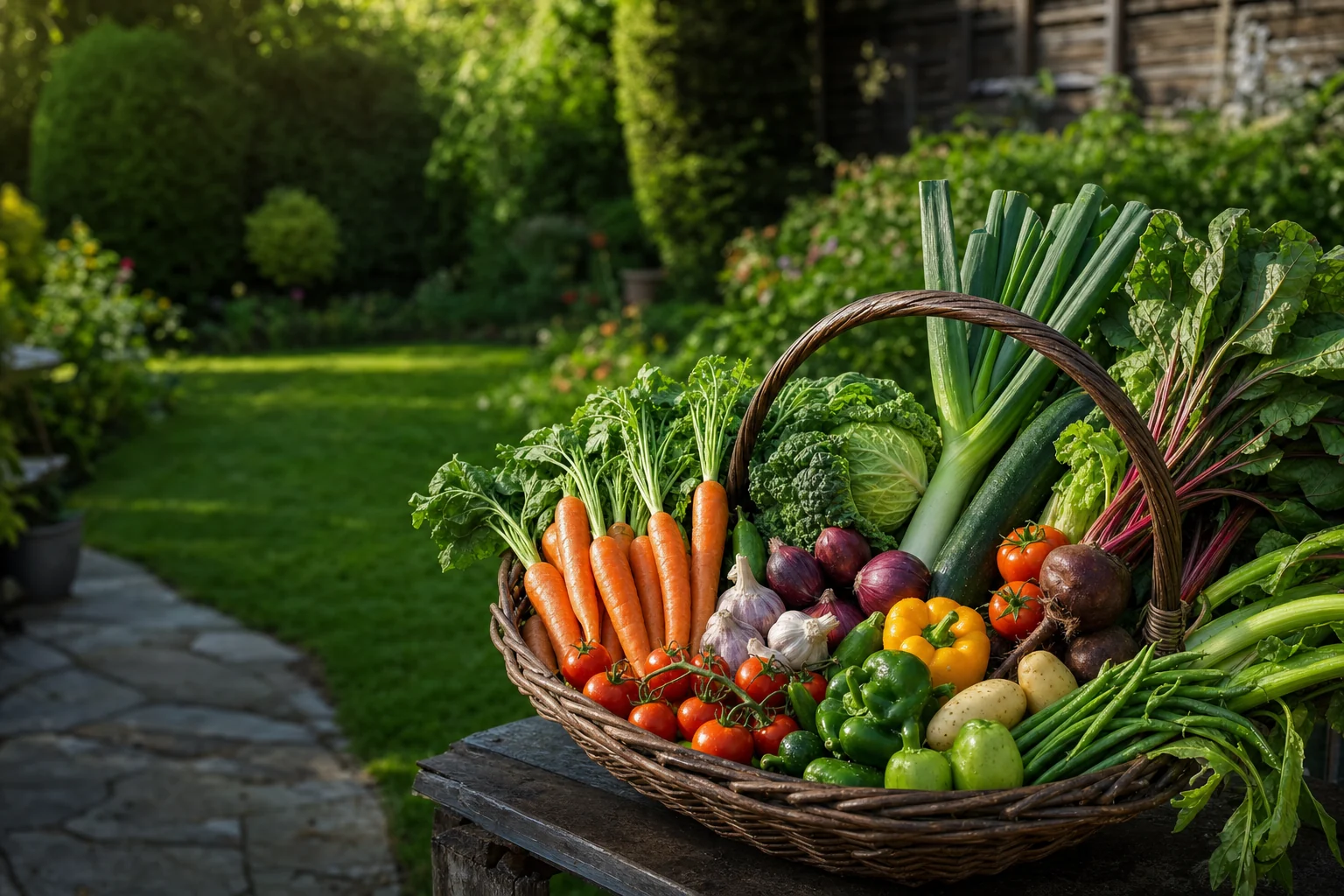
Why Small Gardens Can Still Feed You Well: Setting the Scene
Small-space gardening has one undeniable advantage: it does not let you waste time pretending a mediocre crop is "probably worth keeping". In a large allotment, a row that produces very little can hide quietly at the far end behind the compost bays. In a modest back garden, every square metre is standing directly in front of you, looking expectant. It wants a job.
That matters increasingly in the UK. The average garden has shrunk to approximately 190 square metres, whilst interest in growing food rose sharply after the pandemic. Plenty of us now want a few proper meals from the garden rather than three strawberries, an exhausted mint plant and a cucumber that appears in October after everyone has stopped believing in it.
The useful question is not, "What can I grow?" Nearly anything can be grown somewhere, given enough stubbornness. The better question is, "What will give me the most food for the least ground, over the longest possible period?" That is how a small garden starts behaving like a productive one.
The small-garden rule
Prioritise crops that do at least one of three things brilliantly: grow upwards, crop repeatedly, or mature quickly enough to share their space with another crop. The real trick is not squeezing in more plants. It is making each patch work more than once.
"High yield" can sound rather agricultural, as if we are about to hand you a clipboard and ask for a tractor. Here it simply means a worthwhile return from a compact area. In practical UK terms, that can be kilograms per square metre, the number of weeks a plant remains productive, or how many separate harvests it provides. A cordon tomato may occupy a roughly 30cm footprint but crop for months. A lettuce never gives you a mountain of leaves at once, but can be picked repeatedly. A radish is not a big crop, admittedly, yet it can be in and out before a slower vegetable has worked out where it lives.
This guide focuses on 12 vegetables with a particularly persuasive record in small spaces: tomatoes, runner beans, courgettes, lettuces, spinach, kale, Swiss chard, cucumbers, dwarf French beans, radishes, beetroot and spring onions. There is no prize for growing all of them. In fact, that would be a fairly efficient route to watering fatigue. Pick the crops you actually eat, then arrange them so that tall plants, fast plants and leafy plants are not all competing for the same patch of sunlight.
A productive garden is not necessarily a self-sufficient garden. Think of these crops as fresh, frequent and unusually generous additions to your kitchen — the things you can pick at the moment they become dinner, which is rather the point.
The Yield Scorecard: How We Ranked These 12 Vegetables
Yield figures are useful, but gardening is not a laboratory with a roof and identical weather in every bed. A sunny sheltered garden in the south will treat a tomato rather differently from an exposed northern plot in a damp summer. Soil, feeding, spacing, variety, pests and the gardener's willingness to pick things promptly all have their say. Courgettes, in particular, appear to respond to missed harvesting by producing one the size of a canoe overnight. Vindictive, but impressive.
So the scorecard below is designed as a decision tool, not a promise written on a seed packet. It uses five practical measures: likely yield, length of harvest window, ease of growing, container suitability and compatibility with UK conditions. The yield references are drawn from RHS Growing Guides, Garden Organic UK trial results, Which? Gardening vegetable trials and National Vegetable Society show records. They are best treated as sensible working benchmarks for a well-managed crop.
It is also worth being clear about a slightly awkward truth: the highest numerical yield is not automatically the best choice. Courgettes can produce an extraordinary combined 15–25kg from one plant in a season, but that only counts as a triumph if you like courgettes. Kale can crop for a year, but it is not much help if everyone in your household views it as ornamental shrubbery. Grow what you use. This is a radical policy, apparently.
The bars are deliberately not a beauty contest. Tomatoes and courgettes have large headline totals, whilst lettuce, radish and spring onions win through speed and repetition. Kale and Swiss chard make a compelling case through duration: you do not need to sow them every fortnight in order to keep picking. A balanced small garden usually needs a few from each camp.
Do not forget height. A runner bean growing two or three metres upwards is using a very different kind of space from a courgette spreading across the bed. Measure the floor footprint first; then recruit walls, fences, arches and canes to do some work.
Build a Small Plot Around Time, Height and Appetite
Before getting into individual crops, there is a useful bit of planning that prevents a surprising amount of chaos later. Divide your possible plants into three categories. First, tall crops: tomatoes, runner beans and cucumbers. Second, broad crops: courgettes and kale. Third, quick or low crops: lettuce, spinach, radishes, beetroot, spring onions, chard and dwarf French beans.
Tall crops belong at the back of a bed or against a boundary where they will not shade everything else. If your garden is effectively one sunny paved corner, that might mean a big pot with a support rather than a conventional bed. There is no gardening police force coming to inspect it. The vegetable will not know the difference provided it has root room, water and sufficient light.
Broad crops need honesty. A courgette is remarkably productive, but it will not become compact merely because the garden is. Give it its roughly 0.75m², grow just one plant if space is tight, and make peace with the fact that it intends to be the centrepiece. Kale can be picked for far longer than a lettuce but needs room to develop. These are plants you choose consciously, rather than slipping into a spare corner on a hopeful Tuesday.
What makes a crop earn space
- It produces over many weeks rather than in one brief flush.
- It grows vertically or can share its bed with a faster crop.
- It provides food you would otherwise buy regularly.
- It performs reliably in a UK growing season.
What can waste it
- Growing novelty vegetables nobody wants to cook.
- Planting too closely and hoping enthusiasm counts as spacing.
- Choosing one-off crops where repeated-picking crops would suit better.
- Ignoring the shade created by tall supports in a small bed.
Succession sowing is the other half of the plan. Instead of planting every lettuce seed, every radish seed or every spring onion at once, sow a small amount repeatedly. That keeps the harvest useful rather than overwhelming. It also means a failed sowing is mildly annoying instead of a season-ending catastrophe.
The best small plots have rhythm. A radish patch is cleared and becomes a place for more lettuce. Spinach is cut, then cut again. A tomato climbs through summer whilst salad leaves fill the soil below it. It is less like filling a cupboard and more like keeping a small kitchen in motion.
Courtyard grower
Focus on containers: bush tomatoes, salad leaves, chard, spring onions, radishes and dwarf French beans.
Small back garden
Add a vertical support for runner beans or cucumbers, plus one generous courgette plant if you have the room.
Busy household
Choose repeated-picking crops — tomatoes, kale, chard and cut-and-come-again lettuce — rather than lots of single harvests.
Tomatoes: The King of the Small Plot (For Good Reason)
If I had room for only one fruiting crop in a compact sunny garden, I would usually choose tomatoes. Not because they are effortless — they are thirsty, hungry and not especially forgiving about missed watering — but because their return can be extraordinary. A cordon tomato trained as a single stem occupies a footprint of around 30cm and can yield 8–10kg in a good UK summer.
That is a lot of salads, sandwiches, sauces and standing in the garden eating warm cherry tomatoes with the vague intention of taking some indoors. It is also a crop that turns vertical space into a proper asset. Tie a cordon up a cane, string or sturdy support, remove side shoots as it grows, and it keeps heading upwards rather than becoming a leafy ground-level argument.
Cordon varieties: maximum output per footprint
Indeterminate, or cordon, tomatoes continue growing and fruiting upwards. They suit a small sunny bed, greenhouse or sizeable container where you can provide a vertical support and keep them to one stem.
Bush varieties: simpler container growing
Bush tomatoes stay more compact and do not need the same side-shoot routine. They are often the calmer option for a patio, though they do not exploit vertical space in quite the same way.
Sun and consistency matter
Tomatoes are worth placing in your brightest available spot. Regular watering is especially important in containers, where roots cannot go exploring when the compost dries out.
For dependable varieties, 'Gardener's Delight' is a prolific cherry tomato that has earned its place in countless British gardens. 'Alicante' is a reliable mid-sized choice for UK conditions. For hanging baskets and elevated containers, 'Tumbling Tom' is useful, producing around 1–2kg per basket and freeing ground-level space for something else.
Start tomato seed indoors in February or March. Plant out only after frost risk has passed: around mid-May in the south and later May in the north. Harvesting generally runs from July to October. That is a long productive season from a tiny footprint, provided you begin early enough and do not rush plants into cold ground because one sunny April afternoon has made everyone reckless.
Train, do not tangle
For a cordon tomato, keep one main stem and remove side shoots regularly. The goal is not to make the largest possible tomato plant. It is to direct its energy into a tidy, supported crop that can be picked easily and does not shade its neighbours.
Courgettes and Cucumbers: The Overachievers Every UK Gardener Needs
There is a long-running British gardening joke about courgettes being left anonymously on neighbours' doorsteps. It survives because it is true. One plant can produce 20–30 fruits across a season, often delivering one every three or four days at peak. That abundance is not a design flaw. It is the entire reason courgettes deserve a place in this guide.
A plant needs approximately 0.75m², so this is not a crop for pretending you can fit six into a raised bed the size of a coffee table. But in its allotted space, it can produce a combined 15–25kg. The RHS recommendation of two plants for a family of four makes the point rather neatly. For a small household, one plant may be plenty. More than plenty. Potentially a lifestyle choice.
'Black Beauty' is an AGM variety valued for its dark green, prolific fruits. 'Defender F1', also an AGM variety, offers virus resistance and suits allotment conditions well. 'Tromboncino' is particularly interesting for small gardens because it can be trained as a climber, saving ground space; its fruits can reach up to 60cm. It is a courgette with ambitions of becoming garden infrastructure.
Cucumbers are another strong candidate where there is warmth, sun and vertical support. A productive plant can provide 20–25 fruits. Train one upwards rather than allowing it to wander across paths and pots, and it becomes a very efficient use of a sheltered wall, greenhouse edge or sturdy trellis.
| Crop or variety | Why it suits a small garden | Harvest potential | Space-saving approach |
|---|---|---|---|
| 'Black Beauty' courgette | AGM variety with prolific dark green fruits | 20–30 fruits; roughly 15–25kg per season | Allow one plant around 0.75m² |
| 'Defender F1' courgette | AGM and virus-resistant | High seasonal cropping potential | Useful where reliability matters |
| 'Tromboncino' | Climbing habit; fruits up to 60cm | Long fruits picked through the season | Train vertically to reclaim soil space |
| Cucumber | High fruit count from one supported plant | 20–25 fruits per plant | Grow upwards on a trellis or support |
Pick little and often
Courgettes are most useful when harvested young and regularly. Leaving fruits to become enormous may feel victorious for a day, but it quickly reduces the number of manageable courgettes arriving afterwards.
The caveat with both crops is straightforward: they demand water and feeding to match their appetite. A large leafy plant in a container can dry out with startling speed in warm weather. Give it room, keep moisture consistent and harvest faithfully. In return, it will make your veg drawer look as though you own a market stall.
Beans of All Kinds: Vertical Yield Machines for Tiny Footprints
Runner beans are one of the clearest examples of why "small garden" does not mean "small harvest". They grow two to three metres tall but need only around a 15cm ground footprint per plant. Along a fence, up an arch or around a wigwam, they turn open air into cropping space. It is difficult not to admire the efficiency.
Each runner bean plant can produce approximately 200–300 individual beans, equivalent to around 2–3kg per plant in a season. A 1.8m wigwam with six plants arranged in a 60cm-diameter circle can yield 12–18kg. That is an astonishing return from a patch of ground that might otherwise hold one small shrub and an optimistic solar light.
'Enorma' is an AGM runner bean with long, straight pods and a reputation for reliability. 'Scarlet Emperor' is the heritage favourite, valued for flavour. 'Painted Lady' brings bicoloured flowers as well as edible beans, making it especially good for a decorative garden where vegetables need to earn visual as well as culinary approval.
Fence line
Use a sunny boundary as the support zone. Beans make a practical green screen whilst keeping the centre of the garden open.
Arch or tunnel
An arch uses height and makes picking easy. It can also create shade below, which may suit leafy crops in the hottest part of summer.
Classic wigwam
A six-plant wigwam is compact, productive and practical where there is no fence or wall in the right place.
Dwarf French beans take a different approach. They do not need a tall support, making them useful in beds and containers, but they still offer a worthwhile return: around 0.5–0.7kg from every 30cm row. Think of runner beans as the dramatic vertical centrepiece and dwarf French beans as the neat, lower-growing supporting act.
Beans reward frequent picking. Pods left to become old and swollen send the plant a message that its work is done. Keep harvesting whilst pods are young and tender, and it is much more likely to continue. It is one of those tiny routines that separates "a few beans" from a serious bowlful.
Leafy Greens That Keep on Giving: Lettuce, Spinach and Chard
Leafy greens rarely get the glory of a tomato or the comic scale of a courgette, but they are arguably the most useful crops in a small garden. You can pick them often, use them immediately and sow them repeatedly. A salad harvested moments before lunch has a level of freshness that plastic bags from the supermarket cannot really compete with.
The principle is cut-and-come-again. Instead of pulling up a whole lettuce, remove the outer leaves and allow the centre to continue growing. A single 'Salad Bowl' or 'Lollo Rossa' plant can provide four to six full harvests across eight to ten weeks before it bolts. A 30cm by 30cm patch of mixed lettuce, kept going with succession sowing, can supply weekly salads for one person indefinitely through the growing season.
That word "indefinitely" does depend on continuing to sow, of course. Lettuce is generous, not magical. Sow outside every two to three weeks from March to August, rather than committing all your seed on one ambitious spring morning. For autumn sowings from September to November, choose cold-tolerant varieties such as 'Winter Density' and 'Arctic King'. Under fleece or a cloche, winter crops become a realistic possibility.
Spinach brings the same repeated-cut logic, with around 0.5kg per square metre per cut. Young leaves can be taken for salads, while larger leaves are useful cooked. It is a crop worth growing in runs rather than trying to make one sowing last forever. When conditions make it bolt, move on and sow something better suited to the moment.
Swiss chard is one of my favourite small-garden workhorses because it remains productive for eight to 12 months. Pick outer stems and leaves, leave the centre intact, and it simply carries on. Kale has similar staying power, producing around 1–2kg per plant per year. Neither needs to be harvested in a frantic single weekend. That is a considerable advantage when life gets busy or the weather turns properly British.
Leafy crops are useful where summer shade appears. They still need light, but a location that becomes too hot for radishes or lettuce at midday may be entirely welcome to spinach and chard later in the season.
The limitation is that leafy greens are not bulky storage crops. Their value is in frequency and freshness. They are the vegetables you walk outside for whilst pasta water boils, not the ones you stack in a shed for winter. In a compact garden, that immediate usefulness is a very good trade.
Quick-Turnaround Crops: Radishes, Spring Onions and the 30-Day Harvest
Catch cropping is one of the cleverest habits a small-space gardener can acquire. It means filling gaps between slower vegetables with a fast crop that finishes before the main plant needs the space. It sounds fiddly at first, but it is simply a refusal to leave bare soil lounging about for weeks.
Radishes are the champions here. In UK conditions, 'French Breakfast' can be ready in 25 days from sowing, whilst 'Cherry Belle' can be ready in 22 days. A 30cm by 30cm patch can produce 16–20 radishes. Sow a small patch every 10–14 days from March to September and you can keep a steady supply moving through the season.
There is a caveat, because radishes do enjoy reminding gardeners that speed has a price. They bolt rapidly in heat. In southern England, avoid July and August sowings unless you can give them partial shade; spring and autumn sowings generally give the best bulbs. If yours are leafy but disappointing below ground, it is often heat, dry soil or simply waiting too long to harvest.
Spring onions are less dramatic but wonderfully practical. Their small footprint makes them easy to slot between larger plants, and they can regrow from roots. They are particularly good for the gardener who wants a regular garnish, stir-fry ingredient or salad addition without dedicating a whole bed to it. Plant little and often, then take what you need.
Use waiting time
Sow radishes or spring onions in the gaps around young tomatoes, beans or kale. By the time those larger plants need the room, the quick crop should be harvested and out of the way. This is small-garden efficiency at its least glamorous and most effective.
Beetroot also deserves a place in the quick-and-compact conversation. A 30cm row can produce 10–15 roots, and the leaves are edible too. That dual-purpose quality is valuable where space is tight. Harvest some leaves lightly whilst the roots develop, but do not strip the plant bare unless you are willing to accept smaller roots in exchange.
How the 12 Crops Work Together in One Compact Garden
The list becomes more powerful when you stop seeing it as 12 separate choices. Each crop occupies a different niche. Tomatoes, runner beans and cucumbers climb. Courgettes spread. Kale and chard stand for months. Lettuces and spinach fill the middle. Radishes, beetroot and spring onions use brief opportunities in the gaps. Dwarf French beans keep the lower level productive without needing a tall frame.
That variety is what turns a small garden from a collection of pots into a system. You might have a cordon tomato against a sunny wall, runner beans on a wigwam, one courgette at the corner of a bed, chard near the path for easy picking, and a shifting carpet of lettuce, radishes and spring onions around them. Nothing especially complicated is happening. You are simply matching the plant to the space it naturally wants.
| Vegetable | Headline return | Best role in a compact garden | Container fit |
|---|---|---|---|
| Tomato | 8–10kg per cordon plant in a good UK summer | Sunny vertical feature crop | Yes, especially bush types |
| Runner bean | 2–3kg per plant; 200–300 beans | Fence, arch or wigwam climber | Partial |
| Courgette | 15–25kg; 20–30 fruits in a season | One high-output broad plant | Partial |
| Cucumber | 20–25 fruits per plant | Supported sunny climber | Partial |
| Lettuce | 4–6 harvests per plant | Frequent cut-and-come-again salads | Yes |
| Spinach | 0.5kg per m² per cut | Repeated leafy harvests | Yes |
| Kale | 1–2kg per plant per year | Long-term leafy crop | Partial |
| Swiss chard | 8–12 months cropping | Long-season cut-and-come-again leaves | Yes |
| Dwarf French bean | 0.5–0.7kg per 30cm row | Compact bean crop without tall supports | Yes |
| Radish | 16–20 from 30cm × 30cm | Rapid catch crop | Yes |
| Beetroot | 10–15 roots per 30cm row | Roots plus edible leaves | Yes |
| Spring onion | Regrows from roots | Small, regular kitchen harvests | Yes |
The only real danger is enthusiasm outrunning capacity. Twelve vegetable types sounds manageable until you remember each requires sowing, watering, feeding or picking at slightly different moments. Start with four or five. Build confidence. Then add another crop next season. A productive garden should feel satisfying, not like you have accidentally taken on a second job involving slugs.
A Straightforward Seasonal Routine
A small garden benefits from regular, short visits far more than heroic weekend interventions. Ten minutes a few times a week will catch thirsty containers, ripe beans, bolting lettuce and courgettes trying to establish their own postcode. It also makes harvesting part of ordinary life rather than a big event.
In February and March, start tomatoes indoors and begin thinking about supports. From March, sow lettuce, spinach, radishes, beetroot and spring onions in manageable batches. Keep the sowing schedule moving every couple of weeks for salads and radishes. Once frost danger has passed in May, plant out tomatoes and begin the warm-season crops.
Summer is the season of picking. Harvest lettuce leaves rather than whole plants. Pick runner and dwarf beans frequently. Keep courgettes young. Take tomatoes as they ripen. Continue sowing salad crops where space opens. In hot weather, watch radishes carefully and give them partial shade if possible. They are very fast, and they know it.
As autumn approaches, cold-tolerant lettuces such as 'Winter Density' and 'Arctic King' become useful, particularly under fleece or a cloche. Chard and kale continue providing leaves, whilst spring onions and beetroot can make good use of the spaces left by crops that have finished. The garden changes pace, but it need not stop being productive.
Container crops have very little margin for missed watering. Tomatoes, cucumbers and courgettes are especially demanding once growing strongly. Check compost rather than trusting the weather forecast; a pot can be dry even after rain, particularly beneath dense foliage.
Frequently Asked Questions
The GardenScout Verdict
A small garden can produce an astonishing amount of food when every crop has a clear role. Grow upwards with tomatoes, runner beans and cucumbers. Give one courgette the room it deserves rather than trying to cram in three. Keep salads, spinach, chard and kale close to hand for repeated picking. Then use radishes, beetroot and spring onions to make every temporary gap pay its rent.
The headline figures are genuinely impressive — 8–10kg from a cordon tomato, 12–18kg from a six-plant runner-bean wigwam, 15–25kg from one productive courgette — but the quieter crops matter just as much. A steady supply of leaves, roots and quick harvests is what makes a garden useful week after week. Start with what you enjoy eating, sow little and often, and let the garden become productive in its own very British, slightly untidy way.