
How to Repair Bare Patches Under Trees and in Deep Shade
Choose shade-tolerant seed, mow higher, repair properly — and know when a stubborn patch would be happier as something other than lawn.
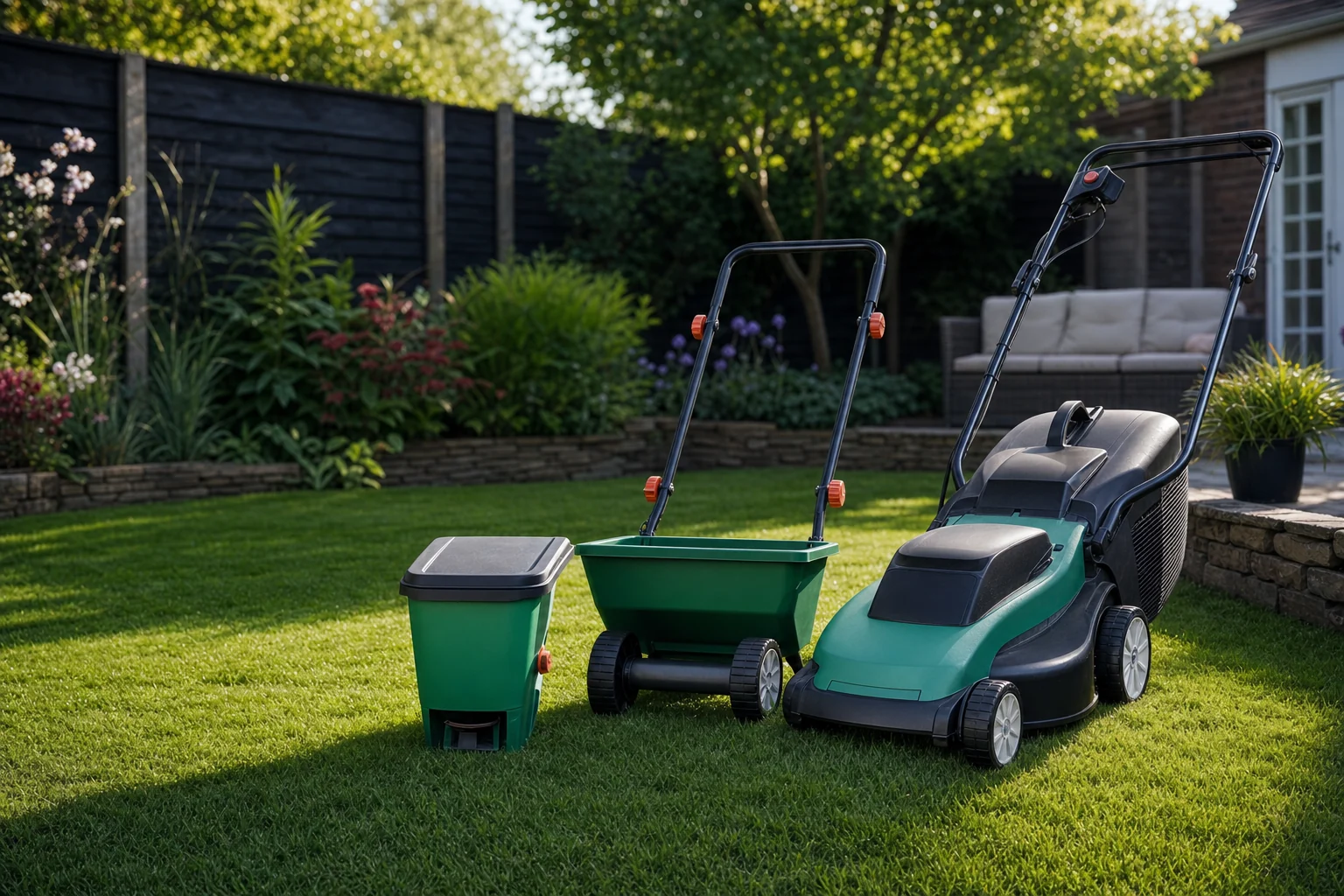
Why Grass Struggles Under Trees — and What You Can Actually Do About It
If your lawn disappears beneath a tree every summer, you are not failing at lawn care. You are trying to establish a sun-loving, hungry plant in one of the most competitive places in the garden. A mature tree is a magnificent thing. It is also, from the lawn's point of view, a very large and rather selfish neighbour.
There are three pressures at work. First, roots. Tree roots occupy the same upper soil layers that grass seedlings need, taking moisture and nutrients before a newly germinated grass plant has much of a chance. Second, the canopy. Dense foliage can cut light dramatically, and in the heaviest cover very little reaches the ground. Third comes the rain shadow. You may see a proper downpour from the kitchen window, but a surprisingly small amount of it can make it through a thick canopy to the soil below.
Then there is traffic. The cool spot under a tree tends to become the place people stand to talk, children cut across, and dogs settle down on a warm afternoon. Soil compacts. Surface roots become exposed. A thin lawn becomes a bare lawn with alarming speed.
It helps to identify the kind of shade you have before buying anything. Partial shade receives around 2–6 hours of direct sun a day, often with shifting, dappled light. It is difficult but entirely workable with the right seed and aftercare. Deep shade receives fewer than 2 hours of direct sun. You can sometimes establish grass there, but keeping it dense is another matter. Full shade means virtually no direct light, often below dense evergreen cover or beside a north-facing boundary. In that situation, no clever bag of seed is going to rewrite plant biology. Harsh, perhaps. Useful, absolutely.
Start with an honest light check
Watch the patch on a bright day before you repair it. Note when direct sun arrives and leaves. Dappled light is not the same as direct light, and a patch that looks bright in winter may be almost dark once the canopy is fully leafed out.
The good news is that late August is an excellent time to act in much of the UK. Soil is still warm, summer annual weeds are easing off, and autumn rain is usually more helpful than a hosepipe. This guide explains which seed blends suit each sort of shade, why raising the mower is not optional, and when to stop spending energy on grass that plainly does not want to live there.
The Shade-Tolerant Seed Category: Four Brands, One Big Promise
Patch-repair products are built around a pleasingly simple idea: put grass seed, fertiliser and a moisture-holding mulch or coating together, then make it easier for a gardener to deal with one horrible bald spot without assembling a miniature agricultural supply chain first.
The four names discussed in this article are Scotts Miracle-Gro with EZ Seed Patch & Repair Sun and Shade; Sunday Lawn Care with Bare Repair Sun and Shade; Pennington with Smart Seed Dense Shade; and Jonathan Green with Black Beauty Dense Shade. Please note: all four are primarily US-market brands and have limited availability in the UK. Before purchasing, verify that the product is available from a UK supplier, as formulations or pack sizes sold here may differ. They approach the same problem from slightly different directions, but each is intended to simplify repair compared with traditional overseeding.
With conventional overseeding, you choose seed, prepare the ground, apply it at the right rate, top-dress if needed, feed separately and keep the surface damp. There is nothing wrong with that route — indeed, it is often sensible for a large lawn — but it demands more decisions. The all-in-one products place the seed alongside feed and a protective medium that helps it remain moist and, in some formulations, less likely to wash away.
The important bit is not the branding on the bag but the grass species within it. Perennial ryegrass germinates readily and establishes quickly, which is useful when a bare patch is in full view from the patio. Fine fescues are more at home in lower light and tend to cope better with leaner, drier shade than many standard lawn grasses. Tall fescue brings toughness and deeper rooting. Kentucky bluegrass is valued for density and colour, but it is not the part of a blend doing the heaviest shade work.
Read "sun and shade" carefully. It usually means a blend can deal with a mixed lawn containing both brighter and shadier areas. It does not mean it will produce a bowling-green sward beneath a dense evergreen canopy.
That distinction matters because gardeners often sow an all-purpose repair mix under a tree, see a few green shoots, and assume the job is done. The seedlings then thin once the tree is in full leaf and the first dry spell arrives. The seed was not necessarily poor. It was simply being asked to solve roots, drought, darkness and compaction all at once. Even grass has limits. We should probably admire its optimism.
Scotts EZ Seed Patch & Repair Sun and Shade — In-Depth Review
Scotts EZ Seed Patch & Repair Sun and Shade is the broadest general-purpose option of the four. It is designed to repair bare areas in lawns that include both open and shaded places, rather than serving only the darkest corner beneath a tree. That makes it a logical fit for the typical garden where shade moves through the day and the lawn is not uniformly difficult.
The range comes in several pack sizes. The 1.70 kg (3.75 lb) pack covers up to 7.9 m² (85 sq ft); the 4.54 kg (10 lb) pack covers up to 20.9 m² (225 sq ft); the 9.07 kg (20 lb) pack covers up to 41.3 m² (445 sq ft); and a 11.34 kg (25 lb) pack covers up to 51.7 m² (556 sq ft). For a handful of small scars beneath a tree, the smallest pack is the relevant scale. For a lawn with multiple worn routes, a larger bag saves you repeatedly trying to judge whether "one more patch" is genuinely one more patch.
The species blend is a sensible three-part approach: Kentucky bluegrass, perennial ryegrass and fine fescue. Kentucky bluegrass contributes density and an attractive green lawn appearance when conditions are reasonable. Perennial ryegrass is there for speed; it helps give a repair area visible life before patience runs out. Fine fescue is the key shade-tolerant member, bringing a more delicate leaf and a better ability to function where light is less generous.
It is a classic combination for a lawn that shifts between light conditions. The catch is that a mixed blend must still obey the conditions in front of it. Under very deep shade, the fine fescue may be the survivor whilst the other grasses become less prominent. That is not a failure of the blend. It is the lawn gradually selecting the species best suited to the site.
Mixed grass seed blend
Kentucky bluegrass, perennial ryegrass and fine fescue offer a balance of density, speedy establishment and shade tolerance across a mixed lawn.
Super-absorbent growing mulch
The mulch holds up to six times its weight in water, helping keep moisture close to seed during the delicate germination period.
Tackifier for vulnerable patches
A tackifier is included to reduce seed wash-away, a useful feature where a repair patch is on a slope or runoff is a problem.
Seedling protection and lawn food
Continuous-release lawn food removes the need for a separate first feed, while the formula includes a protectant intended to help young seedlings through their most vulnerable stage.
The colour-changing mulch is particularly practical. It moves from dark brown to light brown as it needs water, so you are not left poking the surface of a patch every few hours wondering whether it is moist enough. That is a small touch, but patch repair often fails through inconsistent watering rather than any dramatic horticultural disaster.
Its stated germination conditions are daytime temperatures between 15.5°C and 26.7°C (60–80°F), with no frost risk. In UK terms, late August through to mid-October is usually the more dependable opportunity, provided the ground has not dried hard. Spring sowing can also work from March to May, but it has a shorter runway before summer drought and a larger weed burden. Autumn gives seedlings time to make roots before next year's canopy starts doing its thing.
Under good conditions, germination can begin in 7–14 days. That is encouraging, though it is worth remembering that germination is the opening scene, not the happy ending. Keep watering through establishment, keep feet off the patch, and do not scalp it at the first opportunity. Where heavy tree cover is involved, some gardeners find a mixed sun-and-shade lawn thins again after the first month. For partial shade and a lawn with varied light, however, EZ Seed's broad blend and practical format make it a strong all-rounder.
Sunday Bare Repair and Pennington Smart Seed — The Challengers Reviewed
Sunday Bare Repair Sun and Shade takes a slightly different route. Its blend uses perennial ryegrass for quick initial coverage and fine fescue for longer-term shade tolerance. It comes in a 2.04 kg (4.5 lb) pack covering up to 5.1 m² (55 sq ft), and a 1.70 kg (3.75 lb) jug covering up to 7.9 m² (85 sq ft).
That coverage is worth pausing over. The 2.04 kg pack covers up to 5.1 m², whilst Scotts' 1.70 kg pack covers up to 7.9 m². This does not automatically make one "better" — different formulations and sowing densities can require different amounts — but it does mean you should compare coverage, not just bag weight. A bag is not a unit of lawn repair. It is merely a bag.
Sunday's defining feature is its coco coir and mulch coating. Coir, made from coconut husk fibre, absorbs and holds water around each seed. That can be helpful beneath trees, where the rain shadow turns an apparently damp week into a dry surface just where the seed is trying to germinate. It is also a renewable material, which will appeal if you are trying to make garden purchases with a little less reliance on conventional wood-fibre mulch.
With proper watering, Sunday says you may see new grass growth in 14 days or less. Its application window is 15.5–29.4°C (60–85°F). Late summer into early autumn is again the sensible UK period, though be guided by the actual weather rather than the calendar's confidence. If the soil is cool, saturated and covered in freshly fallen leaves, wait a little and prepare the site properly.
Pennington Smart Seed Dense Shade is the more explicitly shade-led choice in this pairing. It is intended for places receiving 2–6 hours of daily sun, putting it squarely in the partial-shade category. The 2.49 kg (5.5 lb) One Step Complete Shade Patch & Repair mix combines Smart Seed grass seed, professional-grade fertiliser and mulch. It is presented as a comprehensive repair product rather than a bag of seed alone.
Pennington states that it can repair bare spots in two weeks or less, even in difficult shade, and that established grass requires up to 30% less water than ordinary grass seed year after year. As with every such claim, the phrase to keep in the front of your mind is established grass. A germinating patch still needs close attention. You cannot scatter it under a thirsty beech, leave for a fortnight and expect a verdant surprise. The beech will have other plans.
| Feature | Sunday Bare Repair Sun and Shade | Pennington Smart Seed Dense Shade | Scotts EZ Seed Sun and Shade |
|---|---|---|---|
| Seed approach | Perennial ryegrass plus fine fescue | Dense-shade repair mix | Kentucky bluegrass, perennial ryegrass and fine fescue |
| Moisture feature | Coco coir and mulch coating around seed | Mulch included in all-in-one mix | Super-absorbent mulch holds up to six times its weight in water |
| Stated light guidance | Sun and shade use | 2–6 hours of daily sun | Sun and shade use |
| Germination claim | New growth in 14 days or less with proper watering | Repairs bare spots in two weeks or less | Germination within 7–14 days in suitable conditions |
| Pack coverage stated | Up to 5.1 m² or 7.9 m², depending on pack | Not stated here | Up to 7.9 m², 20.9 m², 41.3 m² or 51.7 m², depending on pack |
My practical reading is this: Sunday makes particular sense for a small, carefully tended patch where moisture retention is the priority and you will be around to water. Pennington is a sensible candidate for a genuinely partially shaded lawn that still receives a meaningful spell of direct sun. Neither should be treated as a solution to full shade. The bag cannot see the sky, but you should.
Jonathan Green Black Beauty Dense Shade — The Specialist Option
Jonathan Green Black Beauty Dense Shade is the specialist option in this group. It is designed for areas with up to 70% shade, the boldest shade-specific position among these products. That makes it the one to consider when ordinary "sun and shade" language feels a little too optimistic for the ground beneath your mature tree.
The blend includes tall fescues, fine fescues and perennial ryegrass. This is a strong composition for a difficult lawn. Fine fescues are important because they tolerate lower light and can live in conditions that leave coarser lawn grass looking distinctly fed up. Perennial ryegrass provides quicker germination and early establishment. Tall fescue is included for resilience and its capacity to root deeper than many turf grasses, potentially accessing moisture and nutrients lower in the soil profile than some of the tree-root competition.
That does not mean tall fescue somehow outsmarts a large established tree. No lawn grass is winning a direct contest with a thirsty mature tree in dry weather. What it does offer is a tougher component in the mixture, one better equipped than shallow-rooted alternatives to cope with periods when the upper soil dries quickly.
Jonathan Green describes its Black Beauty varieties as selected for dark green colour, drought tolerance and disease resistance. That cultivar focus is the distinction from anonymous commodity seed mixtures, where you may know broadly what grass types are present but not the characteristics they were selected to deliver. It is an appealing proposition if the patch is an important part of the lawn rather than an out-of-sight strip behind the shed.
Strengths
- Specifically positioned for areas with up to 70% shade.
- Combines tall fescue, fine fescue and perennial ryegrass for a balanced response to shade and drought pressure.
- Germination is stated at 10–14 days, with another stated range of 14–21 days for a dense lawn.
- Well suited to under-tree repairs where shade tolerance is more important than a standard lawn appearance.
Limits
- "Up to 70% shade" is not the same as no light at all.
- Surface roots and severe drought still need a change in planting strategy, not repeated sowing.
- A darker, denser lawn remains dependent on preparation, watering and a higher mowing regime.
- Deep shade will always grow more slowly than a sunny patch.
Specialist seed is not a licence to ignore the site
For patches beneath trees, the best-performing seed is often simply the blend with the greatest proportion of fescues — paired with a lighter canopy, a higher mower setting and enough water to get seedlings established.
Black Beauty Dense Shade is best thought of as the seed choice for the gardener who has already accepted that the situation is difficult and wants a blend built around that fact. If the site receives a little filtered daylight and there is enough accessible soil between roots, it is a credible route. If the soil is a web of surface roots under a solid roof of evergreen foliage, skip ahead to the alternatives section. It may save you several rounds of hopeful reseeding.
Head-to-Head: Which Product Wins at Each Shade Level?
There is no single winner for every bare patch because "shade" is far too broad a label. A lawn beneath a lightly canopied silver birch behaves very differently from one under a mature beech, and both are very different from a narrow strip beside a north-facing fence. Work from the light level, then match your expectations to it.
Light or dappled shade
This is the kinder end of the spectrum: perhaps beneath a silver birch, an ornamental cherry, or a deciduous tree where sunlight moves through the canopy. There may be several hours of direct sun, plus plenty of bright filtered light. Grass can be successful here if water is available and fallen leaves are cleared in autumn.
Best fit: Scotts EZ Seed Patch & Repair Sun and Shade. Its three-grass blend gives it broad adaptability across a lawn containing both brighter and shadier ground. The available pack sizes are useful when the problem ranges from a few small gaps to a series of worn areas. Its absorbent mulch, continuous-release lawn food and tackifier are practical support features for routine patch repair.
Moderate shade with 3–4 hours of direct sun
This is the classic under-tree challenge: enough sun that grass should be possible, but not enough that ordinary lawn habits will work. The soil may be dry even after rain, and the canopy will become much more oppressive after leaf-out. Here, fine fescue matters. Mowing height matters just as much.
Best fit: Pennington Smart Seed Dense Shade or Jonathan Green Black Beauty Dense Shade. Pennington's stated requirement of 2–6 hours of daily sun lines up neatly with this scenario. Jonathan Green brings tall fescue and fine fescue into a deliberately shade-focused blend, making it especially compelling when the patch is also dry and subject to root competition.
Deep shade with fewer than 2 hours of direct sun
At this point, seed selection becomes less about finding a miracle product and more about giving grass its best possible chance whilst retaining an exit plan. Jonathan Green is the most specialist seed option because of its up-to-70%-shade positioning. But even it needs some usable light, soil and moisture. Scotts, Sunday and Pennington can all germinate if conditions are favourable; keeping a dense lawn afterwards is the issue.
Best fit: assess the site before buying. If the patch receives a little direct light and there is room to rake, add a thin top-dressing and water, a shade-focused fescue blend may be worth trying. If it is full shade, do not keep purchasing seed as though persistence will eventually make a conifer transparent.
| Garden situation | Most suitable route | Why it fits | Key condition for success |
|---|---|---|---|
| Light, dappled shade | Scotts EZ Seed Patch & Repair Sun and Shade | Mixed Kentucky bluegrass, perennial ryegrass and fine fescue blend; wide choice of coverage sizes. | Keep soil moist during germination and avoid close mowing. |
| Partial shade, 2–6 hours of daily sun | Pennington Smart Seed Dense Shade | Its stated light requirement specifically matches this range. | Clear leaves, relieve compaction and give seedlings a full autumn to establish. |
| Dry, fairly dense under-tree shade | Jonathan Green Black Beauty Dense Shade | Fine fescue and tall fescue are useful species where shade and root competition coincide. | There must still be usable light and enough soil between roots. |
| Small patch where water dries quickly | Sunday Bare Repair Sun and Shade | Coco coir and mulch coating are intended to hold water around the seed. | Water consistently rather than relying on rainfall through a canopy. |
| Full shade or dense surface roots | Ground cover rather than lawn seed | Grass is unlikely to remain dense long term. | Choose plants suited to dry shade and disturb roots as little as possible. |
The practical winner is usually the one matched to the light you actually have. A shade-tolerant blend is worth using, but it is only one part of a repair plan. Preparation, watering and mowing height decide whether those new seedlings remain next spring.
Mowing Height: The Overlooked Secret to Shade Lawn Success
If I could persuade every gardener with a shady lawn to change one habit, it would be this: raise the mower. Most disappointing under-tree lawns are cut far too short. The result looks tidy for approximately an afternoon, then becomes thin, stressed and increasingly mossy. A close-cut shady lawn is asking a plant with limited light to operate with less leaf. It is not a fair contest.
The logic is straightforward. Grass makes energy through photosynthesis. Longer blades create more leaf surface, and more leaf surface captures more of the limited light reaching the ground. In shade, every usable scrap of light matters. Cutting hard removes the plant's solar panels just when it most needs them.
For shaded lawn, raise the mowing height significantly above the 2.5–4 cm typically used on a standard UK lawn — the exact figure will depend on your grass type and conditions, but the principle of cutting higher in shade is well established. It may initially look a little different if you are used to close mowing, but it will look better than bare earth. Give it a few weeks. Your eye adjusts rather quickly when the grass stops sulking.
Raise the cut significantly
Longer leaf blades capture more light and help shade-tolerant grasses maintain enough energy to survive under a canopy.
Remove no more than one-third
Each mow should remove no more than one-third of the blade length. This is especially important where grass grows slowly in low light.
Mow less often in deep shade
Grass beneath trees generally grows more slowly. Mowing to a calendar rather than according to growth often causes unnecessary stress.
Keep the surface clear
Remove fallen leaves before they mat down. A leaf layer blocks light, holds damp against the turf and turns a marginal lawn into a bare patch.
There is another advantage to higher cutting: it shades the soil itself. That can reduce surface drying, which matters where tree roots are competing for every drop. It will not replace watering in a dry spell, but it gives the lawn a slightly more forgiving microclimate.
Do not "tidy up" a new patch too soon
Wait until new grass is clearly rooted and tall enough to need a cut, then take only the top third with a sharp mower blade set high. Avoid turning sharply on the patch, and do not mow when the ground is sodden.
Come next spring, maintain this taller approach through the season. It may mean the area under the tree is not identical to the rest of the lawn. That is fine. Gardens are not carpets, and the tree has already made the rules. You are simply gardening intelligently within them.
Practical Patch Repair: Step-by-Step Under-Tree Application Guide
Successful repair starts before the seed leaves the bag. Under-tree soil is often compacted, dry and packed with fine roots. Throwing seed onto it is a little like scattering salad cress onto a doormat. Some may sprout, but it is not a long-term plan.
1. Choose the right moment
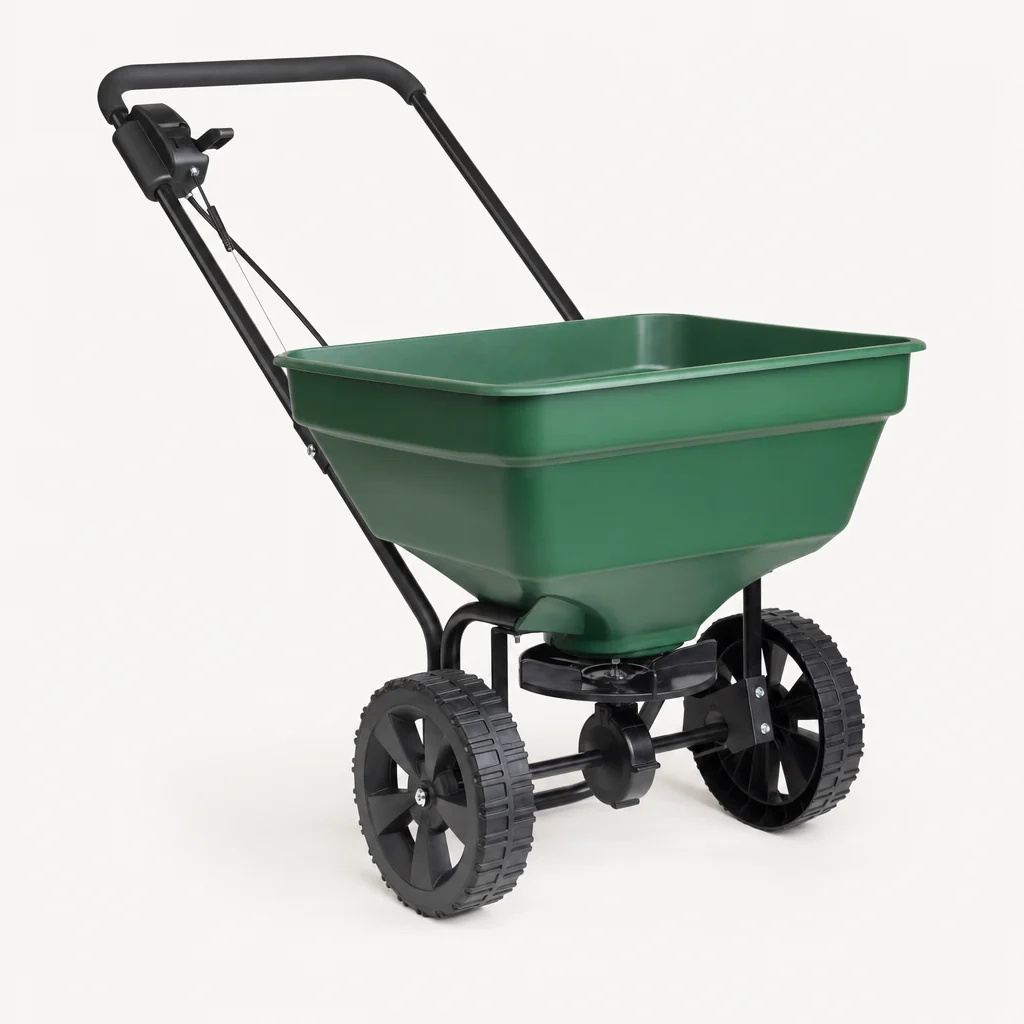
From late August to mid-October is the preferred repair window in the UK. Soil remains warm while summer annual weeds are declining and autumn moisture becomes more reliable. Right now, at the end of August, inspect the patch and act as soon as weather permits. Do not delay until the canopy is dropping a constant blanket of leaves.
A secondary period runs from March to May. It can be productive, particularly in a cool damp spring, but seedling grass then has less time to establish before warmer, drier conditions and full leaf cover arrive. Autumn remains the less stressful route for most under-tree repairs.
2. Clear, rake and relieve compaction
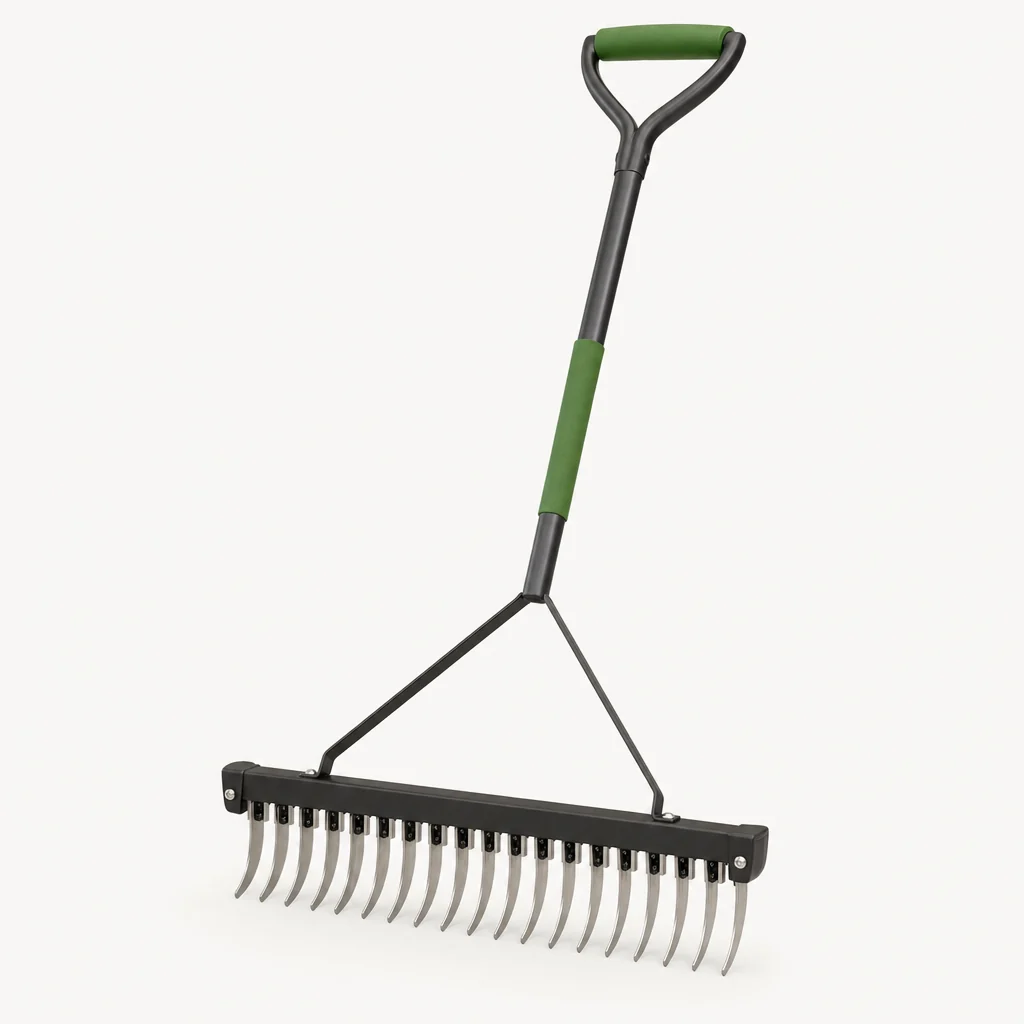
Rake out dead grass, moss, loose thatch and debris until you can see soil. Remove leaves, twigs and old mulch thoroughly. These are not harmless decorations: they block precious light and prevent seed touching soil.
Use a fork or scarifier to loosen compacted ground to a depth of around 5–10 cm. Work carefully around obvious roots. Do not hack through major roots or repeatedly dig deeply beneath a mature tree; damage to the tree is not a reasonable price for a slightly greener patch of lawn. In areas threaded with roots, use a hand fork gently in the open spaces between them.
3. Improve the sowing surface
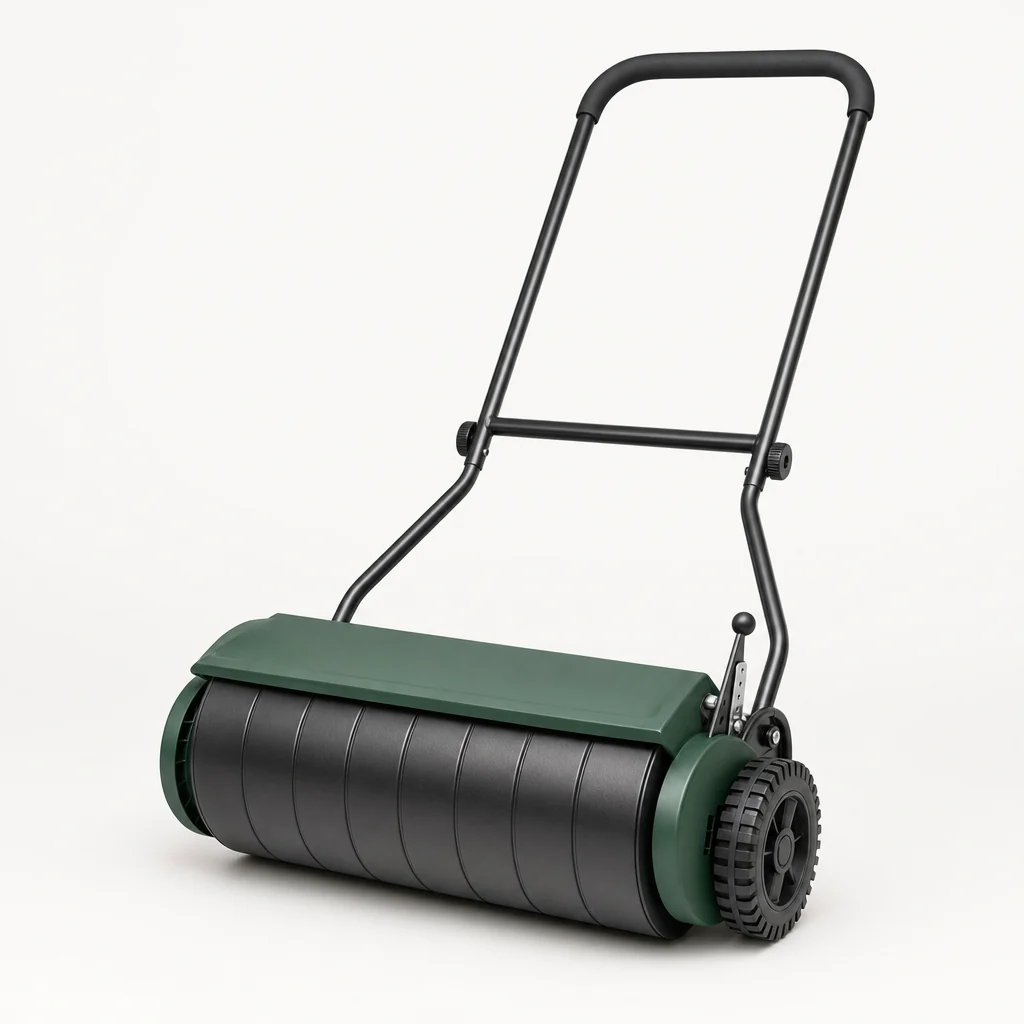
Where there is enough space between roots, add a thin layer of loam-based topsoil or compost and work it lightly into the top surface. The aim is not to bury the tree's root flare or manufacture a raised bed over its roots. It is to give grass seed a modest, finer surface with better seed-to-soil contact.
Under conifers and oaks, consider testing soil pH. If it is below 5.5, lime may be appropriate. A patch below pH 4.5 is particularly inhospitable for lawn grass. Do not apply lime blindly, though; soil is capable of surprising you, and a simple test avoids trying to correct a problem you do not actually have.
Time it for warm soil
Sow from late August to mid-October when the soil is still warm, or use March to May as the secondary spring opportunity.
Expose real soil
Remove thatch and fallen leaves so seed can contact the ground rather than sit on a dry, tangled layer.
Loosen 5–10 cm deep
Relieve compaction gently with a fork or scarifier, avoiding major roots and any temptation to excavate beneath the tree.
Keep the seed zone moist
Water carefully and regularly through germination. Rainfall alone may not reach the patch through dense foliage.
4. Sow, firm and water
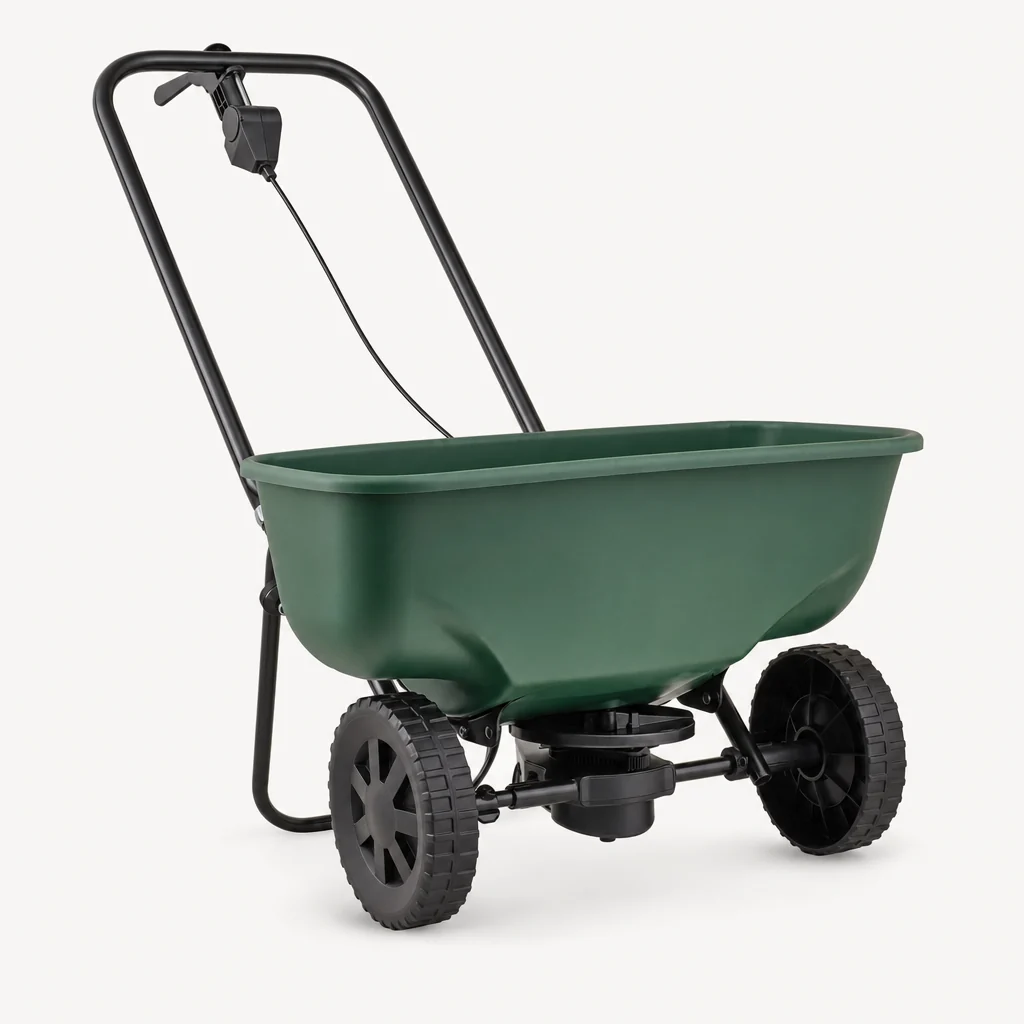
Apply your chosen repair mix evenly over the prepared ground, following the product directions. Lightly firm the surface so seed is in contact with soil. Do not bury it deeply; grass seed needs a shallow position and access to light. If birds are interested, a very light covering of fine compost can help, but avoid smothering the seed.
Water with a gentle rose or fine spray so you do not wash everything into a muddy crescent at one side of the patch. Keep the upper surface consistently moist while germination happens. The all-in-one mulch products help, but they are a buffer, not an irrigation system. Once seedlings are up, ease towards less frequent but more thorough watering as roots begin to explore.
Watch for tree-specific complications
Some trees, including walnut and eucalyptus, can release compounds that affect nearby plants. Where a patch repeatedly fails beside one of these, improve the surface with a thin layer of suitable topsoil or compost if roots allow — and be ready to switch from grass to a more tolerant ground cover.
Finally, protect the patch. A couple of discreet canes, a temporary barrier or a polite family announcement can spare it from being walked over at exactly the wrong moment. Newly germinated grass is not robust simply because it looks green. It is still very much in its baby shoes.
When to Abandon Grass Altogether — and What to Plant Instead
There is a point at which reseeding a shady patch becomes gardening's version of trying to teach a cat to fetch. You can keep trying, and occasionally something vaguely encouraging happens, but neither party is enjoying it very much.
If an area receives fewer than 1–2 hours of direct sunlight a day, or repeatedly returns to bare soil within one growing season after careful repair, grass is unlikely to be a satisfying long-term answer. The same is true where surface roots make soil preparation impossible, where moss returns persistently despite attempts to control it, or where pH is below 4.5. Moss is often blamed as the villain. Usually it is merely the plant most honest about the conditions.
Ground-cover planting can turn an awkward patch into a deliberate part of the garden. It also avoids the temptation to mow around exposed roots, which is neither enjoyable nor especially good for mower blades. Choose plants according to whether the soil is dry shade, ordinary shade or occasionally moist shade — but several reliable options cope especially well beneath trees.
For evergreen dry shade
Vinca minor, or lesser periwinkle, is evergreen, suppresses weeds once established and tolerates dry shade. It is useful where you want a dense, low-maintenance cover.
For a dense carpet under conifers
Pachysandra terminalis forms a dense mat and is particularly effective beneath conifers, where conventional lawn is often a lost cause.
For difficult dry root zones
Epimedium species are remarkably tolerant of drought and shade once established, with foliage that gives the patch texture rather than merely coverage.
For spring colour and low cover
Ajuga reptans, or bugle, is native, low growing and produces attractive spring flowers. It is a good option where shade is not relentlessly dry.
Vinca minor is an excellent choice for dry shade beneath deciduous trees, particularly if you would like year-round green cover. Pachysandra terminalis is one of the most convincing answers beneath conifers, where acidic conditions, needles and dense shade often combine to make turf miserable. Epimedium earns its place in almost every difficult-shade conversation because, once settled, it manages dry shade with unusual composure. Ajuga reptans is the more decorative option, bringing spring flowers and low foliage where the ground is not too parched.
A change of plan is not defeat
Replacing an impossible lawn patch with ground cover is not "giving up". It is choosing plants that suit the place. The result is often better for the tree, easier to maintain and far more attractive than a cycle of bare soil and hopeful seed.
When planting beneath trees, keep disturbance shallow and work around roots rather than through them. A small number of well-spaced plants, watered carefully while they establish, is kinder to the tree than wholesale digging. Add leaf mould or compost as a light surface mulch where appropriate, but do not pile material against the trunk.
Shade Lawn Questions, Answered
Yes. Late August to mid-October is usually the preferred UK repair period, provided the soil is still warm and you can keep the patch moist. Prepare it before heavy leaf fall begins.
A shade-tolerant blend containing fine fescue is the better starting point. Standard lawn seed may germinate, but it is less likely to remain dense where light and moisture are limited.
Seedlings can establish while conditions are favourable, then struggle once the canopy fully shades the ground and tree roots draw more moisture. Cutting too low compounds the problem by reducing the leaf area available for photosynthesis.
Raise the mowing height well above the 2.5–4 cm often used on a standard lawn — the key principle is to leave significantly more leaf length in shaded areas. Remove no more than one-third of the grass blade at each cut.
If the area receives fewer than 1–2 hours of direct sun, has persistent exposed roots, repeatedly goes bare after reseeding, or has severely acidic soil, a shade-tolerant ground cover will generally be the more durable option.
GardenScout's final take
The four products discussed — Scotts EZ Seed, Pennington Smart Seed Dense Shade, Sunday Bare Repair and Jonathan Green Black Beauty Dense Shade — each take a different approach to shade repair, as described in the reviews above. Bear in mind that all four are primarily US-market products with limited UK availability; check that you can source the product before relying on it. Match your choice to the light level you actually have, the species blend in the product and the conditions on your site rather than to any ranking, as no head-to-head comparative testing has been carried out.
The bigger lesson is simpler: sow in early autumn, prepare the soil, water where rain cannot reach, and mow at a higher setting than you would for a sunny lawn. Then be honest. Where grass has fewer than 1–2 hours of direct sun or is battling exposed roots, choose Vinca, Pachysandra, Epimedium or Ajuga instead. Your garden will look more intentional, and you can stop having the same argument with that tree every year.