
Grow Lamps and LED Grow Lights for Seedlings on Dark Windowsills
How to stop leggy seedlings before they begin their annual impersonation of very thin, very disappointed spaghetti.
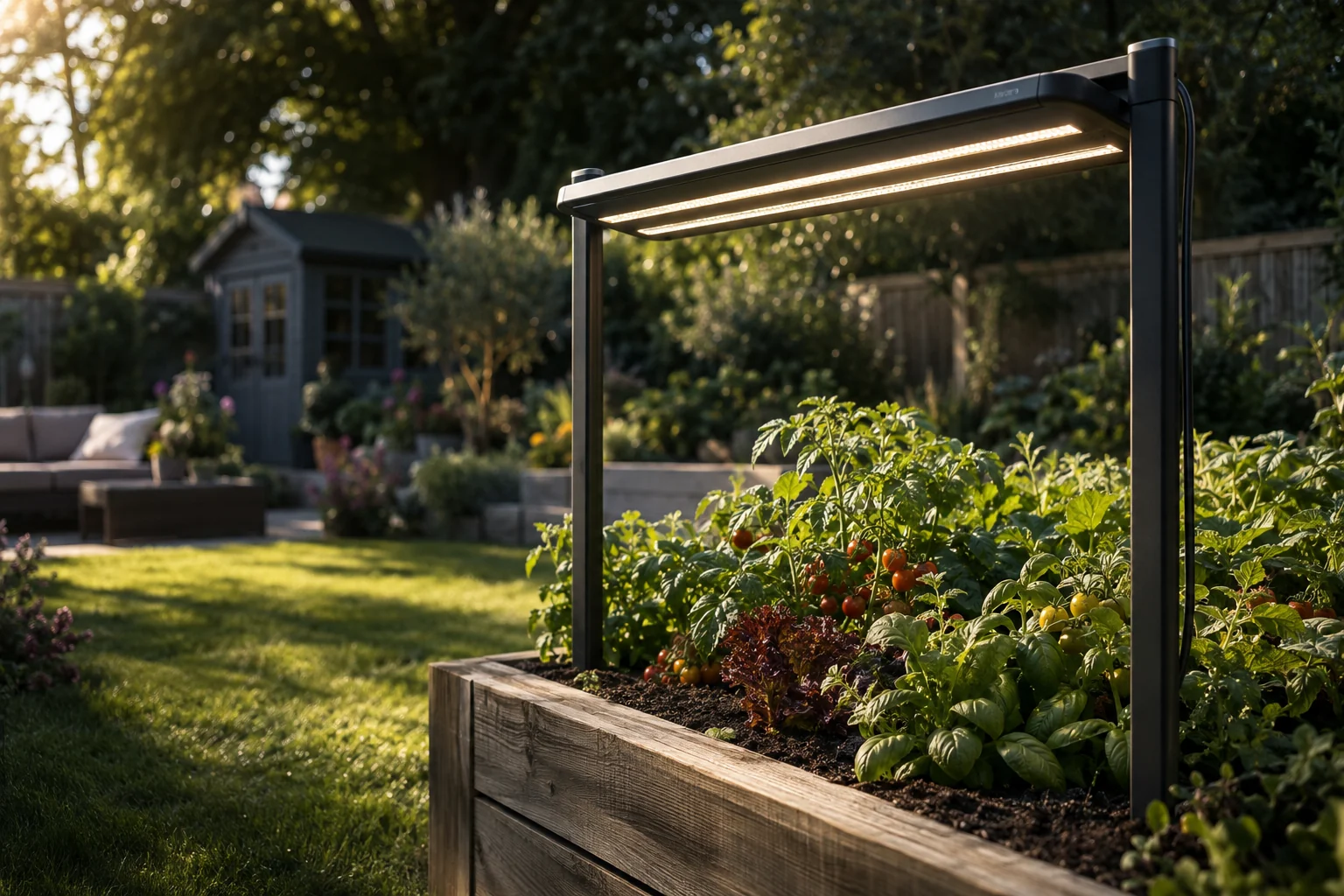
Why Your Seedlings Are Leggy — And What a Grow Light Actually Does
It is early October, which means most of us are not filling every windowsill with tomato seedlings just yet. The sensible jobs now are more modest: herbs for the kitchen, salad leaves, microgreens, winter greens and the occasional batch of houseplant cuttings. Still, this is exactly the point at which dark windowsills reveal their limitations. Daylight is shortening, cloud cover arrives with great enthusiasm, and the sun can vanish behind the neighbour's roof before you have finished your first cup of tea.
Come late winter and next spring, the same problem becomes more urgent. You sow tomatoes, chillies, annual flowers or brassicas with optimism. The seeds germinate beautifully. Then, a few days later, each seedling begins stretching towards the window as though it has heard there is a better life out there. The stems lengthen, leaves appear small and distant from one another, and the whole tray develops the stability of a toddler wearing ski boots.
This is etiolation: a plant's natural response to inadequate light. A seedling does not understand that it is living on a north-facing sill in Surrey or a shaded kitchen in Glasgow. It simply detects that light is weak and tries to reach it. The resulting stem is long, pale and relatively weak. It may bend, collapse or grow into an awkward shape that is difficult to pot on well. Even seedlings that survive can begin life at a disadvantage.
That is not a character flaw in your windowsill. It is simply British winter doing what British winter does. A grow light adds a dependable source above the plants, so they receive light from the direction in which a seedling expects to find it: overhead, not sideways through a cold pane of glass.
The first true leaves are the turning point
The period between germination and the appearance of sturdy true leaves is when a light makes its biggest practical difference. Germination itself relies mostly on moisture, warmth and a viable seed. Once the seedling is up, however, it needs enough usable light to build compact growth rather than merely chase brightness.
A grow lamp does not replace all the other basics. It cannot rescue compost kept sodden, a cold draught, poor ventilation or seedlings crammed shoulder to shoulder. Nor does it turn January into July. What it can do is remove the most common cause of weak indoor seedlings: insufficient light arriving at the wrong angle for too few hours of the day.
Think of a grow light as a supplement rather than a magic wand. Keep seedlings close enough to the light to benefit, turn trays occasionally if daylight comes strongly from one side, and leave enough room for air to move around stems and compost.
The good news is that the right setup need not involve a humming tent in the spare room or an electrical project worthy of a garden centre display. A clip-on lamp can improve a small herb tray. Linkable strips can turn a shelf into a compact propagation station. A hanging panel can manage dozens of plugs together. The trick is matching the light to the job rather than buying the most dramatic-looking thing in the search results.
The Science Behind the Spectrum: What "Full Spectrum" and 6000K Actually Mean for Seedlings
Grow-light language can become needlessly theatrical. There are purple lamps, "sunlike" lamps, red-heavy lamps, blue-heavy lamps and enough graphs to make a packet of lettuce seed feel like a laboratory project. For seedlings, the central question is simpler: does the light provide a broad, useful spectrum at a sensible intensity across the area you are growing?
"Full spectrum" generally means the LEDs provide a spread of wavelengths rather than one narrow colour. Modern white grow lights often look much like ordinary white lighting, although the mix may include extra red or far-red diodes. That is considerably easier to live with in a kitchen, bedroom or utility room than the old purple glow, which could make even a tray of basil feel slightly alien.
Colour temperature, measured in Kelvin, describes how warm or cool white light appears. Around 2700K looks warm and more yellow-red. It is associated with flowering-oriented lighting. For the compact leafy stage of seedlings, cooler white light in the region of 5000–6500K is a more natural fit. It appears blue-white to the eye and broadly suits vegetative growth.
The GooingTop dual-head clip light is rated at 6000K, placing it neatly in that cool-white seedling territory. The Barrina T5 strips use 5000K white light, another sensible choice for trays, herbs and young plants. Neither number should be treated as a guarantee that every seedling will thrive regardless of placement. It is one useful clue among several. Distance from the canopy, even coverage and the amount of time the light is used matter just as much.
Lux, lumens and PPFD: three terms worth separating
Lux measures how much visible light reaches a surface. It is helpful for understanding why an indoor windowsill can be dim, but it is weighted for human vision rather than plants. Lumens tell you how much visible light a lamp produces overall. Again, useful, but not the whole gardening story.
PPFD, or Photosynthetic Photon Flux Density, is more directly relevant because it measures the photons reaching a square metre each second in the wavelengths plants use for photosynthesis. The unit is μmol/m²/s. For seedlings, roughly 100–300 μmol/m²/s is a workable target. That sounds technical, but its practical message is wonderfully ordinary: tiny plants do not need to be blasted with the same intensity as a mature crop.
The Mars Hydro TS1000's stated PPFD of 743 μmol/m²/s at 45.7cm (18in) illustrates the point. That is far beyond what newly emerged seedlings generally require. Used at that distance with delicate seedlings, a powerful panel can be more light than they need. The answer is not to reject the panel outright. It is to hang it higher, use it over a larger area, or choose a lower-powered format when the job is simply a few pots on a sill.
Distance is part of the specification
A light's output only becomes useful when you consider where the seedlings sit beneath it. Move a lamp closer and the light on the leaves rises sharply; move it higher and coverage broadens but intensity falls. Begin cautiously, watch the plants for several days, and adjust rather than assuming one fixed height suits every model.
Do not become too attached to a colour-temperature number, either. A 5000K strip placed close and evenly above a tray can be more useful than a large, powerful panel hung too high in a poorly arranged corner. For modest propagation, simple and well positioned usually beats elaborate and badly managed.
Clip-On Contenders: Three Gooseneck Grow Lights for the Windowsill
Clip-on lights are the obvious starting point for anyone who has a handful of seedlings, a dark kitchen sill and no wish to install shelving. They clamp to a windowsill, table edge or shelf, bend into position and usually have a built-in timer. There is no hanging hardware, no tent and no need to start explaining your new hobby to visitors as though it were a small hydroponic research programme.
They are best treated as local lights. A clip lamp can help two to six small pots, a modest propagator tray or a short row of herbs. It is not the answer for a wide bench of seedlings, because light from narrow heads fades across the edges. Place the pots directly beneath the heads, not in a long line that extends far beyond them.
GooingTop LED Grow Light Clip: the small-space all-rounder
The dual-head GooingTop clip lamp is rated at 10W actual consumption and uses 84 LEDs. Its 6000K full-spectrum output is geared towards the cool white light useful for young leafy growth, and the stated colour rendering index is 90. It also has a quoted peak output of 2,500 lumens, five brightness levels and an automatic 4-, 8- or 12-hour timer cycle.
The practical appeal here is flexibility. Two goosenecks let you spread light over a pair of pots or angle one head towards a tray and the other towards a small herb pot. The clamp keeps the setup tidy, whilst the quoted 30,000-hour lifespan suggests it is designed for regular seasonal use rather than one brief sowing spree.
There is one housekeeping detail worth checking before you buy. Product descriptions for GooingTop variants do not always list the same LED layout: some show 10 red and 74 white LEDs, whilst others describe five red, five blue and 32 white LEDs. The overall 6000K specification and 84-LED description are useful reference points, but confirm the exact current version on the product listing so you know what is arriving.
Vogek 3-Head: more reach for a longer sill
The Vogek three-head gooseneck light is rated at 15W and includes a 3-, 9- or 12-hour timer. The extra head is its main advantage. If you have a row of basil, parsley and coriander pots, or a narrow run of seedlings rather than one tray, three separately positionable heads make it easier to spread the light. It is a more logical shape for a sill garden than a single central lamp trying heroically to cover both ends.
The limitation is the same as with any gooseneck model: coverage is shaped by placement. Three heads are useful only when you angle them carefully. If they all shine from the same point, you have simply created a brighter patch in the middle and two dim corners. Take a minute to arrange the heads above the actual leaf area. It pays off.
SANSI Clip LED Grow Light: modest, simple and gentle
The SANSI clip light uses 5W of power and provides 4000K natural light from a 360-degree gooseneck. It has four brightness levels and 3-, 6- and 12-hour timer settings. At 4000K, it sits in a more neutral part of the white-light spectrum than the 6000K GooingTop or 5000K Barrina strips. That does not make it unsuitable for seedlings, particularly where the light is supplementing some daylight, but it is a lower-powered choice for a smaller patch of plants.
Why clip lights work
- They attach without turning the house into a DIY project.
- Goosenecks make it easy to alter the angle as seedlings grow.
- Timers remove one repetitive part of the daily routine.
- They suit small windowsills, kitchen herbs and individual trays.
Where they struggle
- They do not illuminate a broad shelf evenly.
- Flexible arms can tempt you to place heads too far from plants.
- One lamp is unlikely to serve a serious spring sowing operation.
- They are best for compact clusters, not sprawling rows of pots.
| Feature | GooingTop dual-head | Vogek 3-head | SANSI clip light |
|---|---|---|---|
| Actual power | 10W | 15W | 5W |
| Light character | 6000K full spectrum | Not stated | 4000K natural light |
| Heads or adjustment | Two flexible heads | Three flexible heads | 360-degree gooseneck |
| Timer cycle options | 4 / 8 / 12 hours | 3 / 9 / 12 hours | 3 / 6 / 12 hours |
| Brightness control | Five levels | Not stated | Four levels |
Strip Lights and Shelf Panels: Barrina T5 and Spider Farmer SF300/SF600 for Seed Trays
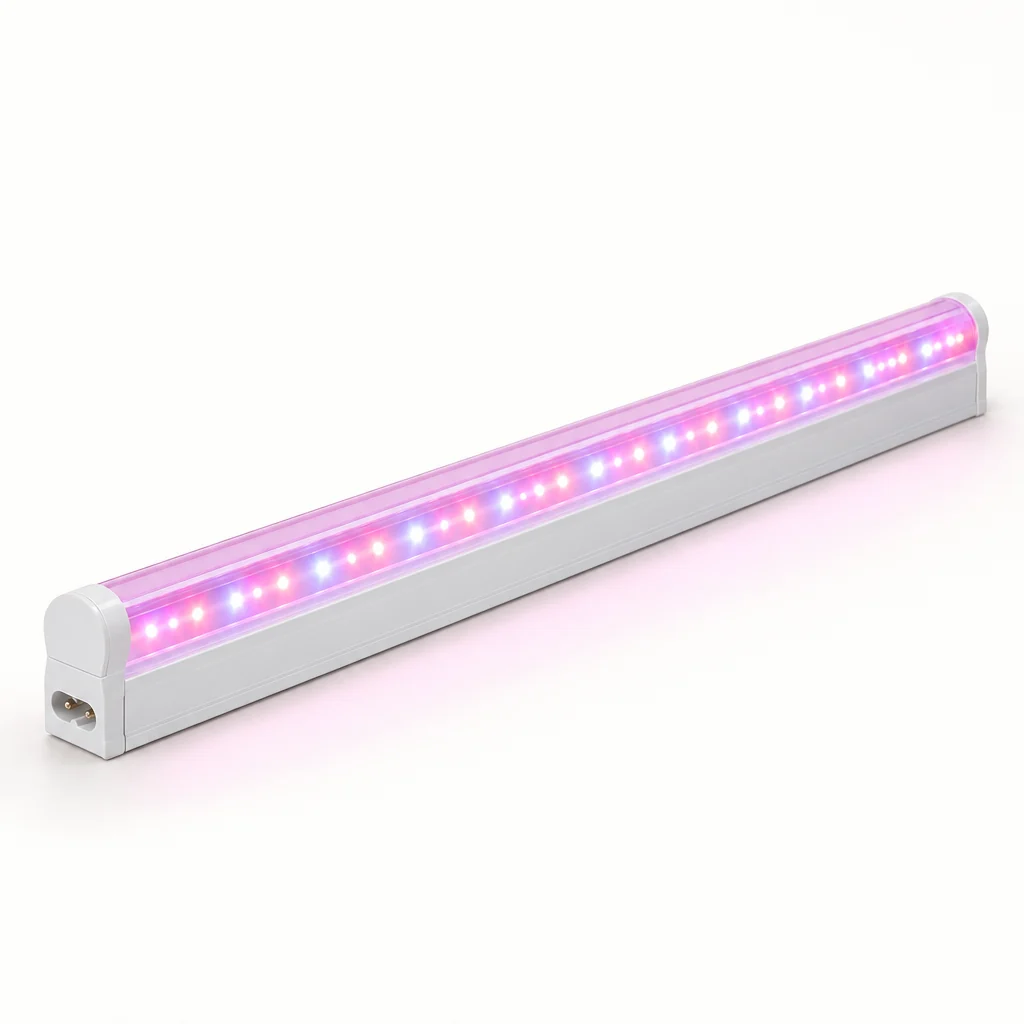
Once you move beyond one windowsill tray, strip lighting begins to make far more sense. Instead of aiming several small lamp heads at plants, you mount long, slim fixtures above the whole growing area. This is the format for anyone who uses a utility-room shelf, a greenhouse rack, a spare cupboard or a deliberately unglamorous corner of the house that has quietly become the seedling department.
Barrina T5 1FT: the shelf-builder's choice
The Barrina T5 1FT four-pack uses 5000K white full-spectrum light in a slim 30.5cm (1ft) fixture. The key practical feature is that the strips can be linked in series, with up to 16 connected together. Each fixture has its own on/off switch. This is less glamorous than a big panel, perhaps, but it is very useful.
In a shelf setup, the strips mount to the underside of the shelf above, illuminating the tray below. You can use a single strip for a small area or arrange several across the shelf width for more even coverage. The linking arrangement reduces cable clutter because fixtures join in a chain rather than each demanding a separate route back to a socket. Individual switches mean you can light one shelf whilst leaving another off.
Slim 30.5cm format
Short strips suit compact shelves and can be arranged to follow the shape of the growing area rather than forcing everything beneath one central lamp.
5000K white light
A cool white temperature that is a natural fit for leafy growth, herbs and young seedlings.
Linkable layout
Up to 16 strips can be connected in series, which is useful as a propagation shelf expands from one tray to several.
Separate switches
Each fixture has its own on/off switch, allowing a simple split between areas that are in use and those that are not.
There is a particularly useful UK application here. A cool greenhouse shelf may need supplementary light as spring sowing begins, but a shelf in a spare room or utility area can offer more stable conditions. If you have an airing cupboard shelf that remains suitably ventilated and does not become excessively warm, strip lights can create a tidy germination-and-growing space. Once seedlings have emerged, though, they need airflow as well as light. A closed cupboard is no place for a tray to spend its whole life.
Spider Farmer SF300 and SF600: long panels for broader runs
The Spider Farmer SF300 is a 33W light using 192 high-brightness diodes. It is rated at 2.3 μmol/J PPE and has a stated coverage of 61cm by 76cm (2ft by 2.5ft). Its long, low-profile body measures 60cm by 15cm by 3.5cm (23.62in by 5.9in by 1.39in), which makes it an interesting bridge between simple strip lighting and a traditional hanging panel.
The larger SF600 is rated at 74W, uses 384 Osram chips and covers 61cm by 122cm (2ft by 4ft). That footprint is useful for a longer shelf, a proper propagation bench or several trays arranged side by side. The shape is arguably more practical for rows of seedlings than a square panel, because seed trays and shelving tend to be rectangles. Gardening, quite often, is a game of fitting rectangular objects into other rectangular objects.
| Feature | Barrina T5 1FT four-pack | Spider Farmer SF300 | Spider Farmer SF600 |
|---|---|---|---|
| Actual power | Not stated | 33W | 74W |
| Light format | Four 30.5cm strips | Long panel | Long panel |
| Colour temperature | 5000K white full spectrum | Not stated | Not stated |
| LED details | Not stated | 192 high-brightness diodes | 384 Osram chips |
| Stated coverage | Arrange to suit shelf | 61cm × 76cm | 61cm × 122cm |
For seedlings, the real advantage of both formats is evenness. A well-spaced run of strips or a long panel can illuminate the full tray, including its edges. That means less rotating pots, fewer dark corners and less temptation for seedlings to lean towards one brighter patch.
Full Panel Power: Mars Hydro TS1000 and VIPARSPECTRA P1000 Head-to-Head
Full panels are for the gardener who has outgrown the windowsill. Perhaps you start dozens of vegetable plants each year. Perhaps you run a dedicated grow space, a small tent or a serious propagation shelf. Perhaps your seed orders have become less of a hobby and more of a filing system. No judgement here.
These lights offer considerably more power and coverage than clip lamps. That makes them useful, but it also makes restraint important. Seedlings need enough light to stay compact. They do not need to feel as though they are being interrogated.
Mars Hydro TS1000: substantial output over a 90cm square
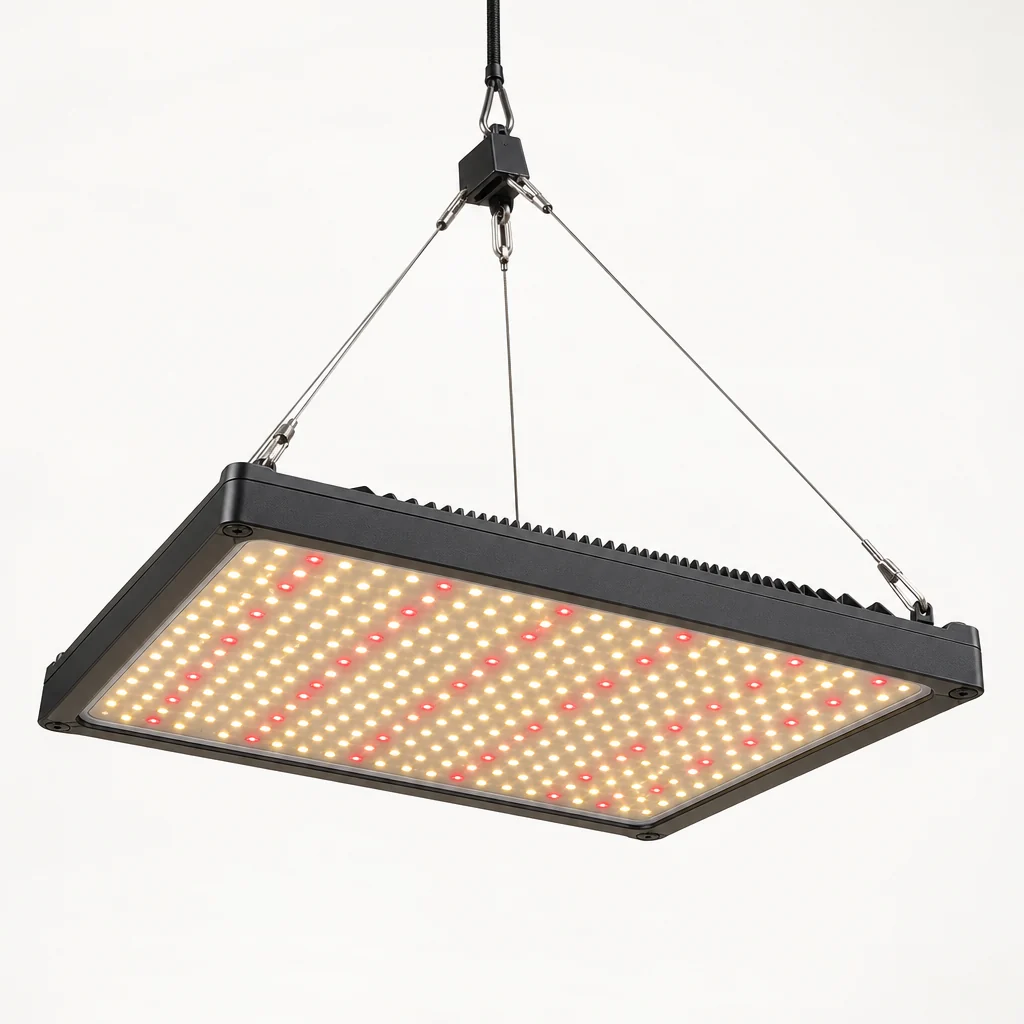
The Mars Hydro TS1000 draws 150W actual power and uses 354 individual LED bulbs. Its stated coverage is 91cm by 91cm (3ft by 3ft), making it a sensible physical match for a 90cm by 90cm growing area. The spectrum combines 3000K warm white, 6000K cool white, 660nm red and 730nm infrared light.
At a distance of 45.7cm (18in), its stated PPFD is 743 μmol/m²/s. Compare that with a typical seedling requirement of roughly 100–300 μmol/m²/s and the point becomes obvious: this is a powerful tool. Raising the panel above very young plants gives a broader, gentler spread. It also allows room to manoeuvre trays, inspect compost and water without repeatedly knocking the fixture.
The TS1000 is supplied with a hanging kit. That matters more than it sounds. A hanging light should be easy to adjust as plants grow, and you should be able to lift it clear when you need access. A panel hung at one fixed height in a cramped corner soon becomes a nuisance, however impressive its output may be on paper.
VIPARSPECTRA P1000: compact, dimmable panel with broad-spectrum mix
The VIPARSPECTRA P1000 has an actual power draw of 100W ±3%. It uses Samsung LM281B+ or high-intensity SMD LEDs depending on production run, with current specifications listing 351 diodes. Its full-spectrum mix includes 3000K and 5000K white light, 660nm red and 730nm far-red infrared.
The panel measures 30cm by 28cm by 6.6cm and weighs between 1.9kg and 2.3kg (4.2–5lb), depending on version. It has four dimming levels, passive aluminium heat sinks and no fan noise. Its stated vegetative coverage at 40.6cm (16in) is 76cm by 76cm (2.5ft by 2.5ft), while flowering coverage at 25.4–35.6cm (10–14in) is 61cm by 61cm (2ft by 2ft). For seedling work, the vegetative figure is the more relevant of the two.
Full-panel advantages
- They can illuminate a larger, more uniform growing footprint.
- They suit multiple seed trays and larger batches of plug plants.
- P1000 dimming gives a straightforward way to moderate output.
- Passive cooling means the P1000 runs without fan noise.
Full-panel realities
- They need a secure hanging position and room above the plants.
- Strong output can be excessive for newly emerged seedlings if positioned carelessly.
- They make little sense for one or two kitchen herb pots.
- A dedicated growing space needs regular checks for watering and airflow.
Setting Up a Grow Light Without Turning Seedlings into Crisps
The best grow light is the one you can position sensibly and use consistently. Before choosing a model, look at the actual space rather than the imagined future version of it. Measure the width of the windowsill, shelf or tray. Notice where the socket is. Check whether the light can sit directly above the plants without becoming an obstacle every time you open a blind, reach for a mug or water a pot.
For clip lights, clamp the fixture securely and arrange the heads over the leaves. Avoid pointing one head at the compost and another into open air simply because the arms look decorative that way. For strips, mount them along the shelf length so light spreads across the tray rather than forming one bright stripe. For panels, use the hanging system and leave yourself enough clearance to raise the fixture as required.
Start conservatively. Young seedlings are telling you quite a lot if you pay attention. If stems are still lengthening dramatically and leaning, the light may be too distant, too weak for the area or not used for long enough. If the upper leaves begin to look stressed or the tray dries unusually quickly, increase the distance or reduce the intensity where a dimmer is available. Plants are not always subtle, thankfully.
Light changes watering. Better-lit seedlings grow more actively and can use water faster, but a brighter lamp does not justify permanently wet compost. Water the compost, not the leaves, and let the surface begin to dry between waterings where the crop allows.
Air movement matters as much as it ever did. Indoors, seedlings can be warm, damp and motionless: three conditions that encourage weak growth and disease. Avoid placing a packed tray in a sealed corner. Give pots a little breathing room, remove failed seedlings promptly and use a ventilated room rather than treating propagation as a dark-cupboard experiment.
This October, lights are particularly useful for edible indoor sowings that would otherwise sit in low light. Herbs can be slow in gloomy conditions, and small leaves grown for the kitchen appreciate steady overhead illumination. As the calendar moves towards late winter and spring, the same setup becomes more valuable for early tomatoes, chillies, annual flowers and brassicas. A light purchased for one pot of basil now can become genuinely useful when seed-sowing season begins in earnest.
Spec Sheet Showdown: The Key Numbers in One Place
A specification table cannot tell you whether a light fits your shelf, where your socket sits or whether you will actually enjoy having it in the kitchen. It can, however, prevent the common mistake of comparing a 5W clip lamp with a 150W panel as though they are direct rivals. They are not. They are tools for very different spaces.
| Model | Actual power | Light details | Coverage or format | Controls and mounting |
|---|---|---|---|---|
| GooingTop Clip | 10W | 84 LEDs; 6000K; CRI 90 | Small pots and windowsill trays | Clip mount; five brightness levels; 4 / 8 / 12-hour timer |
| Vogek 3-Head | 15W | Three gooseneck heads | Windowsill herb rows | 3 / 9 / 12-hour timer |
| SANSI Clip | 5W | 4000K natural light | Small local area | Clip mount; four brightness levels; 3 / 6 / 12-hour timer |
| Barrina T5 1FT four-pack | 24 watts total | 5000K white full spectrum | Four 30.5cm strips; linkable up to 16 | Separate on/off switch per fixture |
| Spider Farmer SF300 | 33W | 192 high-brightness diodes; 2.3 μmol/J PPE | 61cm × 76cm | Long panel |
| Spider Farmer SF600 | 74W | 384 Osram chips | 61cm × 122cm | Long panel |
| GooingTop desktop light | About 10W | Bendy desktop design | Seedlings and kitchen herbs | Desktop format |
| VIPARSPECTRA P700 | 70W | 3000K, 5000K, 660nm red and 730nm | 61cm × 61cm at 40.6cm | Hanging panel; four dimming levels; 0 dB |
| Mars Hydro TS1000 | 150W | 354 LEDs; 3000K, 6000K, 660nm and 730nm | 91cm × 91cm | Hanging kit included |
| VIPARSPECTRA P1000 | 100W ±3% | 351 diodes; 3000K, 5000K, 660nm and 730nm | 76cm × 76cm vegetative coverage at 40.6cm | Hanging panel; four dimming levels; 0 dB |
The GooingTop clip light appears in more than one LED-layout version, so check the current product description for the exact diode arrangement. For seedling use, the more meaningful decision remains the overall format, output and area you need to light.
Buying Guide: Matching the Right Light to Your Setup
Before buying anything, ask three questions. How many plants do you genuinely expect to grow at once? How much space can you give them? And how much effort do you want the setup to require? Be honest here. A beautiful full-panel arrangement is not better than a clip light if your actual growing space is a narrow sill beside the kettle.
One to six pots
Choose a clip-on light. The GooingTop dual-head, Vogek three-head and SANSI clip formats are designed for close-range, small-area use.
Several trays on a shelf
Choose strips or a long panel. Barrina T5 strips allow a shelf to grow gradually, while SF300 and SF600 panels suit wider rectangular runs.
A dedicated propagation area
Choose a hanging panel. The P700, P1000 and TS1000 offer coverage for bigger batches when properly positioned and managed.
For a dark windowsill
A clip light is normally the sensible answer. The GooingTop dual-head's 6000K output, adjustable brightness and timer make it a well-matched format for a propagator tray or a few pots. The Vogek's three heads make more sense if you are lighting a longer herb row. The smaller SANSI is a neat option for a very limited plant collection, especially where it is supplementing rather than replacing window light.
Do not buy a full panel merely because it sounds more serious. A large light needs somewhere to hang, an area to cover and enough seedlings to justify its footprint. Used above two pots on a sill, it is rather like bringing a lawn tractor indoors to trim a houseplant.
For a full windowsill row or a small propagation shelf
The Barrina T5 format is practical because it follows the shape of the space. Mount strips beneath a shelf and you can light the whole tray from above. Add more strips if the shelf expands. Their linkable design is particularly handy if this year's "small project" turns into next spring's annual seed-starting campaign.
If you have a longer shelf and want one purpose-built fixture, the SF300's 61cm by 76cm coverage is useful for a compact rack. The SF600 stretches that approach to 61cm by 122cm. These long-panel forms are worth considering where rectangular trays are arranged in a row and you want a single, broad source overhead.
For 50 or more plugs at once
This is where a P700, P1000 or TS1000 becomes credible. The 70W P700 covers 61cm by 61cm at 40.6cm for vegetative growth. The 100W P1000 offers 76cm by 76cm vegetative coverage at the same distance and gives you four dimming levels. The TS1000 covers 91cm by 91cm and has substantially higher stated intensity, so it is best approached with particular care around small seedlings.
Buy for coverage first, power second
If every seedling receives a similar amount of light, they tend to grow more evenly. That usually matters more than owning the highest-wattage lamp. Choose a light whose shape suits the tray or shelf, then position it so the leaves receive a useful, gentle spread rather than a bright centre and gloomy edges.
Common Questions About Grow Lights for Seedlings
It may add some useful light, but household lamps are not generally designed to give even, overhead coverage to a tray of seedlings. A purpose-made grow light is easier to position close to plants and is more likely to provide a spectrum and shape suited to growing rather than simply lighting a room.
They can, provided the sill is not cold or draughty. Daylight is still welcome. The grow light's role is to make conditions more consistent when natural light is weak or comes from one side. In a very dim room, a shelf setup can be easier to manage than a crowded sill.
Check the distance and the coverage. A light that is too high, angled away from the tray or trying to illuminate too broad an area may not deliver enough useful light to the leaves. Also check that seedlings are not crowded, overheated or sitting in persistently wet compost.
Not necessarily, but it needs more care. The TS1000's stated PPFD at 45.7cm is substantially above a typical seedling range, so lifting it higher over young plants is sensible. A dimmable panel such as the P1000 also gives more control over output.
Use the setup for modest indoor crops and herb sowings rather than forcing a full spring programme. As late winter approaches, it becomes especially useful for the early sowings that otherwise become leggy on dark sills.
GardenScout verdict
For a few seedlings on a dark windowsill, start small: a clip-on grow light is simple, tidy and appropriately focused. For several trays, strips or long shelf panels provide much better coverage. Reserve full panels for a genuine propagation space, where their output can be raised, spread and used to its advantage.
The aim is not to create a miniature sun in the spare room. It is to give young plants enough steady overhead light that they grow short, sturdy and ready for the garden when the season catches up with them.