
Best Outdoor Solar and Low-Voltage Wall Lights for Patios
The wall, fence and step lights that make a patio usable after dusk — without filling every border with another hopeful spike light.
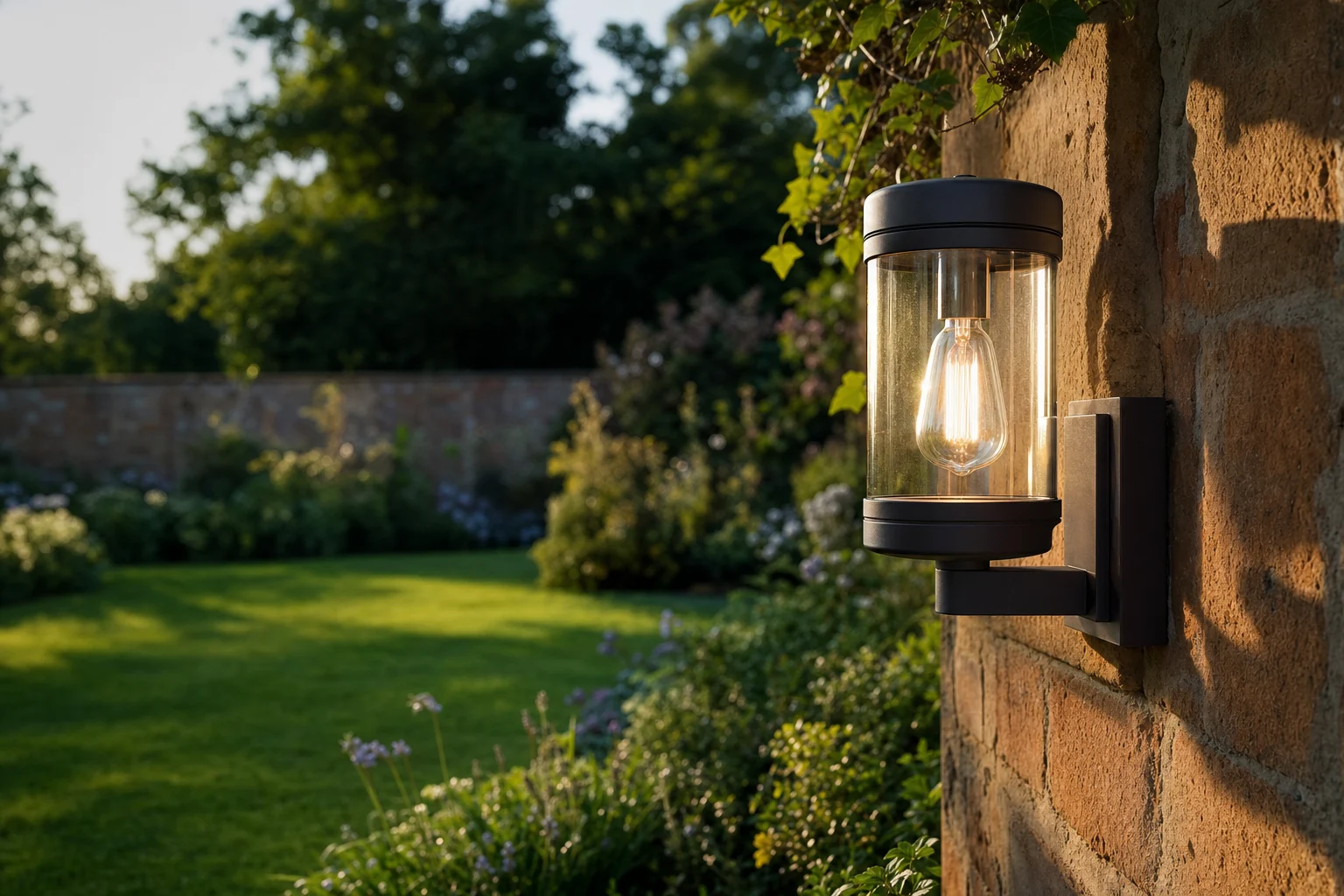
Why Your Patio Deserves Better Than Spike Lights
Most gardens acquire solar spike lights in the same way they acquire a mystery trowel and three plastic pots with no matching saucers. One appears. Then another. Before long there is a loose procession of tiny glowing mushrooms tracing the lawn edge, each doing its best against the British weather.
There is nothing inherently wrong with a spike light. A row can gently mark out a path, and the completely cable-free installation is hard to argue with. But spike lights tend to illuminate the bits of garden we pass through rather than the places where we actually sit. A patio, meanwhile, is often left with one harsh security lamp by the back door, or nothing at all. It is a slightly odd arrangement when the patio is the bit that hosts the evening drink, the late barbecue and the "we should probably go in now" conversation.
Wall-mounted and step lighting changes the feel of that space more fundamentally. Rather than creating isolated pools of light at ankle height, it puts illumination at useful points: beside a door, along a fence line, beneath a retaining wall cap, around deck edges and at the point where one level of paving becomes another. The result can be subtle, practical or security-led, depending on the fitting and how you deploy it. Often it is all three.
The products here divide neatly into two families. First are self-contained solar wall and deck lights, such as the HMCITY 120 LED Solar Wall Light, Torchstar SunGuard and Siedinlar Solar Deck Lights. They carry their own solar panel and stored power, so there is no external cable to conceal. Put one on a suitable surface, let it charge during daylight and it looks after itself.
Then there are low-voltage hardscape fittings. These run on 12–24V AC/DC, with the GKOLED-style units in this guide offering selectable 3W, 4W or 5W operation. They require a low-voltage system rather than the fully independent approach of solar, but are useful where you want a deliberately planned lighting scheme across a patio, wall or set of steps.
The simple patio-lighting rule
Use wall lights to help people see where they are going and to make the patio feel occupied after sunset. Use low-profile deck and step lights to reveal edges and level changes. Neither has to turn the garden into an airport runway. In fact, restraint is usually the whole trick.
This is a guide for homeowners with patios, raised decking, retaining walls, garden steps, fences and side passages who want more useful light without turning the project into a major electrical exercise. Solar is especially appealing where a cable route would be awkward. Low-voltage lighting earns its place where a more settled, repeatable installation is the goal.
There is also a useful distinction to make before we get swept away by LED counts. Patio light has jobs. One job is safe movement: finding the threshold, identifying a step, seeing the edge of a deck. Another is security and visibility: noticing movement by a side gate or looking into a darker corner. A third is atmosphere: the low, comfortable light that makes a chair feel worth sitting in. One fitting rarely does all three brilliantly. Choosing a system becomes much easier once you decide which job matters most.
Solar vs Low-Voltage Wired: Choosing the Right System for Your Patio
Solar and low-voltage lighting are not really rivals. They solve different problems. One is about independence; the other is about consistency. The right choice depends less on whether you like the idea of solar and more on the surface, the available daylight and what you expect the lights to do after dark.
Solar: the quick route to a lit patio
A solar wall light is a complete little system. The panel gathers daylight, the battery stores it, the light sensor tells the fitting when evening has arrived and, on motion models, a PIR sensor can tell it when someone has walked into view. No trenching. No cable clips wandering across brickwork. No transformer to position. For a fence at the far end of the garden or a wall where running cable would be a nuisance, that simplicity is genuinely useful.
It also encourages experimentation. You can try a light beside a gate, live with it for a few evenings and move it if the result is not convincing. That is far more forgiving than committing to an electrical layout before you have ever sat on the patio in the dark. The HMCITY and Torchstar options in this guide are particularly suited to that kind of task-focused placement: entrance points, bins, side paths and fence runs where motion-triggered light makes sense.
The limitation, naturally, is that solar energy must arrive before the light can spend it. A wall hidden by a deep overhang, permanently shaded by a mature tree or facing a narrow, gloomy side passage is not a promising location. The neatest-looking position may be the worst-charging position. This is the moment where solar lighting can become a tiny lesson in geography, delivered by a light that spends the evening sulking.
Direct sun remains the sensible target. A clear, open position gives the panel its best opportunity to recharge. The HMCITY calls for 6–8 hours of direct sunlight before use; Siedinlar deck lights also use a 6–8-hour daytime charging window. That does not mean every day will behave identically, but it does tell you that light placement starts with the panel, not the beam.
Low voltage: a system rather than a collection of lights
Low-voltage hardscape lighting takes a more deliberate route. The fittings operate on 12–24V AC/DC and form part of a system supplied through a low-voltage transformer. Once installed, the power source is not tied to each fitting's individual solar exposure. That makes it compelling for a shaded terrace, a covered outdoor kitchen, the underside of a wall coping or any patio zone where you want lighting to work as part of the landscape rather than as separate little devices.
It also scales differently. Solar is wonderfully easy one light at a time. Low voltage is better suited to a coordinated run: several lights beneath a bench, a sequence along a retaining wall, or repeated fittings beneath steps. You are designing rhythm as well as illumination. Equal spacing, consistent mounting height and an intentional beam direction make a modest patio feel much more composed.
Choose solar for independent problem-solving
Solar wall and deck lights are useful on remote fences, gates, steps and walls where running a cable would be disruptive or unattractive. They suit small, targeted jobs very well.
Choose low voltage for a connected scheme
12–24V hardscape lighting is a stronger fit for repeated fittings across walls, risers and built-in seating, especially where you want a unified layout rather than isolated pools of light.
Match the light to the task
Motion sensing is useful for access and visibility. Low-output deck lights are about edge definition. A brighter wall light can help make a patio entrance easier to navigate.
Site the panel, then site the light
With solar fittings, the panel's exposure is non-negotiable. Before drilling anything, hold the intended position in mind over a day: is it getting genuine daylight, or merely enjoying a pleasant view of a brick wall? If the answer is the latter, look for a better-lit location.
Both approaches avoid the character of a full mains-voltage patio installation. That makes them attractive for homeowners who want to improve the garden in stages. Start with the steps. Then add the gate. Then decide whether that long retaining wall would benefit from a run of low-voltage fittings. Good outdoor lighting is often iterative, because the garden only reveals its night-time awkwardness once you begin using it.
HMCITY 120 LED Solar Wall Light: Maximum Coverage, Three Clever Modes
HMCITY's 120 LED Solar Wall Light is the most overtly security-oriented option in this group. It is compact at 3.74 × 3.38 inches, yet its name tells you the headline: 120 LED chips are packed into a relatively small body. This is not a decorative lantern intended to cast a soft little glow onto a bistro set. It is a wall light designed to make a broad area more visible when it matters.
The most persuasive feature is its stated 270-degree coverage. That is a remarkably wide spread for a wall-mounted solar unit and has practical consequences. A conventional front-facing fitting may do a respectable job straight ahead, whilst leaving the approach from either side rather murky. The HMCITY's broad coverage is more useful along fences, at side gates, beside a patio door or on a wall that overlooks both paving and a path.
Wide coverage is not quite the same as indiscriminate brightness. The useful part is reduced blind spots. Mount the light near the point where two routes meet and it can serve both without needing a separate fitting for every direction. That is a tidy solution for a compact patio, where adding more products can quickly start to look like a small electrical goods aisle.
Mode one: Strong Light Sensing
In Strong Light Sensing Mode, the HMCITY remains off when there is no activity. When motion is detected, it illuminates at full brightness for 25–30 seconds. This is the most battery-conscious of the three options and probably the most sensible setting for a side path, gate or access route that does not need continuous light.
It is also the mode that most clearly treats the fitting as a security and arrival light. You walk out to put the recycling away; it wakes up. Someone comes through the side gate; it wakes up. The patio stays darker when nobody is using it. For many gardens, that is exactly right. Darkness is part of the garden's atmosphere too, and there is no particular prize for lighting the paving all night.
Mode two: Constant Light
Constant Light Mode gives medium brightness continuously for eight hours. This is the setting for people who want a dependable background glow across an evening rather than a light that appears only once someone has triggered it. On a patio wall, it can make the route to the house clearer and give the garden a lightly occupied appearance without the full-on response of a motion-only light.
It is worth being clear about the character of "medium brightness" here: it is a utility-oriented setting, not necessarily table lighting. For a dining area, you may still prefer a separate, more deliberately placed source nearer to the table. But as a general patio perimeter light, the steady mode has a useful purpose.
Mode three: Dim Light Sensing
Dim Light Sensing Mode is the compromise setting and, for many patios, the most interesting one. The fitting remains at a medium baseline when there is no movement, then switches to full brightness for 25–30 seconds when motion is detected. That means you have a constant point of reference when looking out across the patio, plus a brighter response as someone approaches.
Think of it as the garden equivalent of an alert but not jumpy dog. It is present. It notices things. It does not make a fuss until it has a reason.
The unit combines its PIR motion sensor with a dusk-to-dawn light sensor, so it is intended to charge during daylight and operate after dark. Its ABS construction is described as high-strength, high-temperature resistant, corrosion resistant and waterproof, whilst the IP65 rating is the relevant shorthand for real outdoor duty. It is a good specification profile for a fitting that will be exposed on a wall rather than tucked beneath a roofline.
Pros
- 120 LED chips in a compact body.
- Stated 270-degree coverage helps reduce dark side areas.
- Three modes provide a useful choice between motion-only, constant medium and dim-plus-motion operation.
- Monocrystalline panel with up to 30% conversion efficiency.
- IP65 rating and ABS construction suit exposed outdoor mounting.
Consider
- Its emphasis is broad visibility and motion response rather than warm, decorative patio ambience.
- Solar performance still depends on giving the panel a suitably bright position.
- For a long wall, one wide beam does not replace the visual neatness of several carefully spaced fittings.
My view is that the HMCITY makes most sense where one light needs to do a lot. A narrow side return, a gate beside the patio, an entrance where children, guests and dogs tend to appear from multiple angles: these are the places where the 270-degree figure matters more than the 120-LED headline. The LEDs are the engine. The coverage is the reason you would choose it.
Torchstar SunGuard Solar Motion-Sensor Wall Light: Refined Performance in a Compact Package
The Torchstar SunGuard takes a different approach. Where HMCITY sells breadth and mode flexibility, Torchstar offers a particularly clear, focused specification for motion-led illumination. It has 20 LED chips, produces 320 lumens and emits 6500K pure white light. Those are useful numbers because they allow you to picture its role before you even decide where to mount it.
At 320 lumens, the SunGuard is well placed for identifying movement and helping you navigate a patio, doorway or side route. It is a purposeful amount of light for an outdoor motion fitting. You can see who is at the gate. You can find the back-door keyhole without doing that awkward thing where you use your phone torch whilst pretending you meant to. You can spot the forgotten watering can that has migrated into the path.
It is not, however, an entire outdoor dining scheme by itself. A single, sensor-led wall light is unlikely to make a table beneath it feel softly and evenly illuminated. That is not a criticism; it is simply a reminder to separate security lighting from social lighting. Put SunGuard where visibility is the task, and let lower, more carefully distributed lighting handle the patio's quieter corners.
What 6500K looks like outdoors
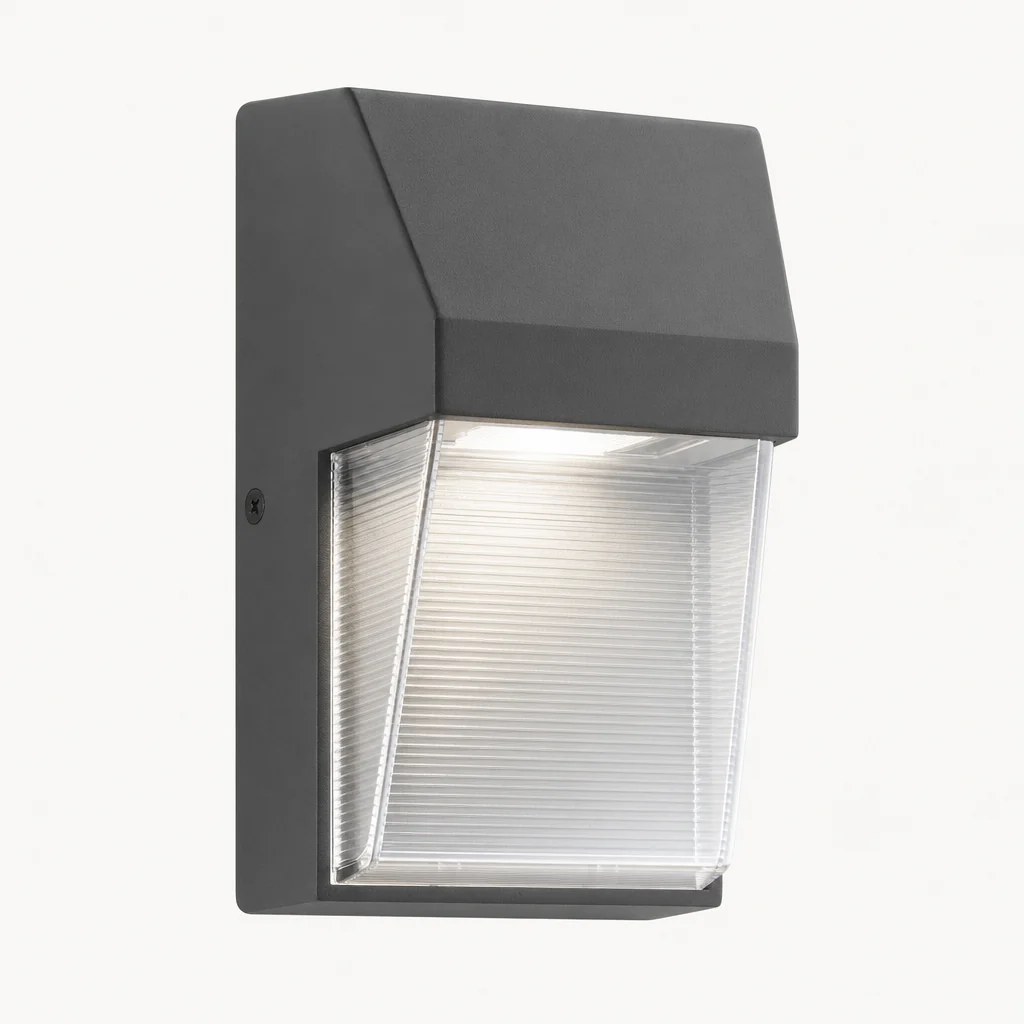
Colour temperature is one of those lighting details that sounds oddly technical until you see it in the garden. At 6500K, the SunGuard produces a cool, pure white light. It will look crisp, bright and clear rather than golden or candle-like. That makes it an excellent fit for a security-focused wall, a gate, a bin route or a patio entrance where visual definition is more important than romance.
For context, warm white lighting is commonly associated with the 2700–3000K range. Put a 6500K motion light directly beside a cluster of warm decorative lights and the contrast will be obvious. Again, that is not inherently a problem. It is a question of zoning. The cool light can do its practical work at the side gate, whilst warmer lighting, if you use it, can occupy the seating area.
The SunGuard detects movement over a 120-degree angle and from 26–33 feet away. When it senses motion at night, it turns on; after 15 seconds without motion, it turns off. This is a simple operating pattern with a clear job: deliver light exactly when movement occurs, without a long period of unnecessary illumination afterwards.
That 15-second delay is worth considering during placement. At a gate, by the back door or on a direct path, it is entirely logical. In a patio seating area where someone may sit mostly still, it is less appealing as the only light source. You could end up conducting a small arm-waving ceremony every time the light takes a break. Put it where people pass through rather than where they settle down.
The chart is not a judgement of quality; it shows that these lights belong to completely different categories. A 320-lumen sensor wall light and a 15-lumen deck marker are not substitutes. One is intended to reveal a zone when movement occurs. The other is intended to make an edge visible without overwhelming the setting. It would be like comparing a porch lamp with a glow-in-the-dark stair nosing. Both helpful. Different missions.
Pros
- 320-lumen output gives the product a clear visibility and security role.
- 120-degree sensing and a 26–33ft detection distance cover a useful approach area.
- 15-second automatic switch-off keeps operation tightly motion-led.
- IP65-rated ABS construction is appropriate for exterior use.
- Available in black, white and brown finishes.
Consider
- 6500K is crisp and practical, but cooler in character than classic ambient garden lighting.
- The short motion-only operating pattern does not make it a standalone seating-area light.
- Its 120-degree detection area is more focused than HMCITY's stated 270-degree coverage.
The SunGuard is my pick of this group for a homeowner who wants a precise motion sensor light with a clear stated output. Mount it above a side gate, beside a shed route, at a patio threshold or on a boundary wall where people approach from the front. It is less interested in flattering your garden furniture. Frankly, it has more important things to do.
Siedinlar Solar Deck and Step Lights: Safety Lighting Where It Matters Most
Siedinlar's Solar Deck Lights are the quiet achievers in this guide. They are not trying to flood a patio with light or announce every passing fox to the household. Their work happens lower down, at the places where feet need a little help: deck boards, path edges, driveways, docks, paving transitions and steps.
This is a completely different form factor from a wall-mounted motion light. A deck or step light is about making an edge legible. You do not need a bright beam pointed at a step; you need to see where the tread starts, where it ends and whether there is another level below it. The best step lighting is often the sort you barely notice until you walk up or down without having to think about it.
That matters on raised decking, split-level patios and garden steps. During daylight, a change of level is obvious. At night, it becomes the garden's most determined trip hazard. A modest row of edge markers can make a route feel much more assured without introducing glare at eye level or turning the whole area into a brightly lit stage.
The Siedinlar SD0115W and SD0115B models use 16 LEDs and provide 15 lumens of all-direction brightness. They are offered in white and blue versions. The SD008CW variant provides cool white and warm white modes. The output figure is deliberately modest, and that is appropriate. Fifteen lumens is not intended to light a patio table or throw a beam across a lawn; it is intended to make the fitting and its immediate surroundings visible.
Make level changes easier to read
Use deck lights on step risers, alongside treads or around the perimeter of raised decking so the route remains visually defined after dark.
Self-contained solar operation
The monocrystalline panel charges in 6–8 hours of daylight, with stated working time of 8–15 hours. The lights switch on automatically at night.
Built for heavily used surfaces
Siedinlar states pressure resistance up to 20 tons, including use in areas where a car or truck may pass over the fitting.
Flexible mounting approach
The deck lights can be mounted with the provided screws; the SD008CW version can also be installed with ground stakes.
The construction combines aluminium alloy, solar panels, LEDs and a storage battery. In visual terms, the important thing is that these are designed to sit into the landscape rather than above it. They can be used on a deck, road, dock, path, driveway, garden walkway, sidewalk, steps and stairs. That broad application list is useful because it reflects the core idea: use them where the ground itself needs to speak more clearly after dusk.
Repeat beats random
Step lights look most convincing when they follow a pattern. Keep the mounting height and spacing consistent across a run. One lone marker on a three-step flight can look less like deliberate design and more like a missing component from a spaceship.
These are orientation lights, not floodlights. Their stated 15-lumen output is best understood as a subtle visual marker for edges, pathways and level changes. Pair them with a wall light if the same space also needs stronger movement-triggered visibility.
There is a one-year warranty and 24-hour customer service attached to the Siedinlar deck light range. More importantly, the 20-ton pressure-resistance claim gives these units a specific practical edge in driveways and thresholds, where a conventional little garden light would have a very short and rather dramatic career.
For patios, I particularly like the idea of using them to define the outer perimeter of a raised platform, then allowing a separate wall light to handle the doorway. It divides the jobs cleanly. The deck lights tell your feet what is happening. The wall light tells your eyes what is happening further ahead.
GKOLED Low-Voltage Hardscape Lights: When Consistent Power Beats Solar Convenience
Solar is wonderfully liberating until the location is permanently shaded. This is where low-voltage hardscape lighting earns its keep. GKOLED-style low-voltage fittings operate on 12–24V AC/DC and use a sealed LED module with an IP65 rating. They are part of a wired low-voltage system, which means their power does not depend on a solar panel receiving a good day's light above each individual fitting.
That distinction matters most on patios with overhangs, covered structures, dense planting or tall boundaries. The very places that most benefit from subtle under-cap or under-bench lighting are often the places where a compact solar panel will struggle. A low-voltage fitting can sit beneath a coping, under a built-in bench or along the sheltered side of a retaining wall, where it is visually useful even if the sky is barely visible.
The general hardscape category offers selectable 3W, 4W or 5W operation, while GKOLED is associated with 3W integrated LEDs and a broad 160-degree beam angle. That wide beam suits the hardscape job nicely: not a narrow spotlight, but a wash that can spread along the face of a wall, across paving below a capstone or down the riser of a step.
IP65 is a sensible standard for outdoor patio lighting. The "6" indicates dust-tight protection; the "5" refers to protection against water jets. That is the same headline weather rating found on the HMCITY and Torchstar wall lights, although the products differ in power source and purpose.
The trade-off is that low voltage needs planning. You need the correct low-voltage transformer and a sensible route for the system. That is more involved than attaching a solar unit to a fence post with supplied screws. But the installation effort can pay off when the finished scheme looks integrated: a series of fittings that appear to belong to the patio rather than to have been added one at a time over several optimistic weekends.
Use hardscape lights where the fitting location is excellent for light but poor for solar charging: beneath a wall cap, under seating, on sheltered retaining walls and around covered patio structures. This is where a low-voltage system has a practical advantage over individual solar units.
There is also a design advantage in being able to work from a single low-voltage approach across several features. Imagine a patio with a short retaining wall, two steps and a built-in bench. Solar could handle one or two exposed points, but a low-voltage run allows the whole composition to read as one project. That visual continuity is difficult to quantify, but it is what separates "lights in the garden" from actual landscape lighting.
For homeowners who use the patio throughout the year, this category is the sensible answer to a simple question: do you want a few independently useful lights, or do you want a system? Neither answer is morally superior. One just requires more cable management.
Head-to-Head: How These Patio Lights Stack Up
The easiest way to compare these products is not by asking which is "best" in the abstract. It is by asking what sort of darkness you are trying to fix. A side gate, a broad fence junction, a step edge and a shaded retaining wall are four different problems. Happily, the four product families here line up rather neatly with those problems.
| Feature | HMCITY 120 LED | Torchstar SunGuard | Siedinlar Solar Deck | GKOLED Hardscape |
|---|---|---|---|---|
| Power approach | Solar | Solar | Solar | 12–24V AC/DC |
| Primary role | Wide-area motion and patio visibility | Focused motion-led visibility | Deck, path and step-edge marking | Integrated wall, cap and hardscape lighting |
| Confirmed output | 120 LED chips | 320lm | 15lm, 16 LEDs | 3W integrated LEDs |
| Coverage or beam | 270° coverage | 120° detection angle | All-direction brightness | 160° beam angle |
| Motion sensing | Yes, with three operating modes | Yes, 26–33ft detection distance | Automatic night operation | System-dependent installation |
| Weather protection | IP65 | IP65 | Pressure resistance up to 20 tons | IP65, fully sealed LED module |
| Best placement | Fence junction, gate or patio entrance | Doorway, side route or access point | Steps, decking and perimeter edges | Under caps, benches and shaded hardscape |
HMCITY is the obvious choice when spread matters. Its 270-degree coverage and three operating modes give it versatility around a busy patio entrance or a fence corner where people can approach from different directions. The Constant Light and Dim Light Sensing modes also make it more adaptable than a strictly motion-only fitting.
Torchstar SunGuard is more specific. Its 320-lumen output, 6500K light, 120-degree detection angle and 26–33ft sensing range point firmly towards practical security and navigation. It is the one I would choose when I want to know exactly what the product is doing: sensing motion, producing crisp light and switching off 15 seconds after movement stops.
Siedinlar is not competing with either wall light for brightness. It should not be judged that way. Its stated 15 lumens are designed for modest guidance, and the format works on surfaces where a wall light would be either impossible or faintly ridiculous. You cannot mount a HMCITY halfway along a step tread. Well, you can, but it would be a story rather than a lighting scheme.
GKOLED hardscape lighting is the structured option. It belongs in a patio project where you can plan cable routes and want fittings placed exactly where solar panels would not thrive. Its 160-degree beam angle, sealed LED module and 12–24V AC/DC operation make it the logical choice for retaining walls, wall caps and built-in architectural features.
The strongest patio schemes are layered
One motion light by the door is useful. One row of step lights is useful. Together, they are better: the wall light gives you general awareness, whilst the low-level lights tell you where the patio changes level. Lighting works hardest when each fitting has one clear job.
Planning a Patio Lighting Layout That Feels Intentional
A good patio layout begins with a walk. Not a daylight stroll with a cup of tea and a vague sense that the garden looks quite nice. Go outside at dusk or after dark and walk from the house to the gate, from the gate to the bins, from the patio to the shed and across any steps. Do it as someone carrying plates. Do it as someone looking for a dropped phone. Do it when you are tired. The awkward points reveal themselves quickly.
Start with access. The back door, side gate and main route across the patio are the locations most likely to justify a brighter wall-mounted light. If the area is broad or has several approaches, HMCITY's wide 270-degree coverage is a strong fit. If the route is direct and you want a focused motion response, the Torchstar's 120-degree detection zone and 26–33ft range make more sense.
Then look down. Any raised deck edge, single step, change in paving height or path transition deserves consideration. Siedinlar deck lights can trace those points without overwhelming the surrounding garden. The aim is not to make every surface equally bright; it is to distinguish the surfaces that matter. Your eyes do the rest.
Finally, look at the architecture. Retaining walls, coping stones, built-in planters and benches can benefit from low-voltage hardscape fittings, particularly where their underside or mounting location is too shaded for solar. A 160-degree beam is useful here because you want a broad, gentle distribution across a surface rather than a sharp point of light.
The gate-and-door homeowner
Choose a motion wall light. Torchstar suits a direct, focused approach; HMCITY suits a wider, multi-directional patio entrance.
The raised-deck owner
Choose Siedinlar deck lights to make tread edges and perimeter boundaries visible without creating eye-level glare.
The patio-project planner
Choose a low-voltage hardscape approach if your wall caps, seating and retaining walls need repeated, coordinated fittings.
Mounting height matters too. A sensor wall light needs a clear view of the approach zone. If foliage grows into its sensing area, trim it back rather than waiting for the light to develop opinions about every moving leaf. With low-level deck lights, keep the visual line consistent: similar heights, similar distances from edges and no accidental mix of horizontal, vertical and diagonal placement unless your patio is going for "experimental municipal underpass".
Try not to place a bright sensor light where it will shine directly into the seating position. It may be handy for the person arriving at the patio, but annoying for everyone already on it. Angle, height and distance are your friends. Put security and arrival lights at the perimeter or near access points; preserve the seating area for calmer, lower lighting.
There is another small but important point: avoid using light to solve every uncertainty in the garden. A well-lit route and clearly marked steps can be enough. Beyond that, let the planting, wall texture and night sky do some of the work. Outdoor lighting should give the garden a second shift, not erase the fact that it is evening.
Patio Wall Light Questions Answered
Final Verdict: Build a Patio You Can Actually Use After Dusk
The best patio lighting is rarely a single miracle fitting. It is a modest combination of light types, each placed where it earns its keep. A motion sensor by the door. A marker at the step. A soft line under a wall cap. Suddenly the patio is not simply what remains visible after sunset; it is a place that still feels welcoming, navigable and deliberately designed.
If you want the broadest solar wall-light coverage and the flexibility of three operating modes, the HMCITY 120 LED Solar Wall Light is the standout. Its 270-degree coverage is the feature that gives it real practical value around gates, fence corners and patio entrances.
If you prefer a more clearly defined security light, Torchstar SunGuard is the strongest fit. Its 320-lumen output, 6500K colour temperature, 120-degree detection angle and 26–33ft motion range make it a practical option for seeing and being seen. It is crisp, focused and not remotely embarrassed about being useful.
For steps, decking and patio boundaries, Siedinlar Solar Deck Lights occupy their own lane. Their 15-lumen, 16-LED format is about subtle guidance, and the stated pressure resistance up to 20 tons makes the range particularly interesting where vehicles may pass. They are the products that help your patio make sense underfoot.
And for an integrated arrangement across shaded walls, seating and hardscape details, low-voltage GKOLED-style fittings are the more considered route. They ask more of the installation, but their 12–24V AC/DC operation, selectable wattage and 160-degree beam angle are suited to a properly planned landscape-lighting scheme.
GardenScout's patio-lighting takeaway
Choose HMCITY for wide solar coverage, Torchstar for crisp motion-led visibility, Siedinlar for low-level step and deck definition, and low-voltage hardscape lighting for a connected permanent scheme. Start with the darkest practical route, add light where feet and hands need it, then stop before the garden starts looking like it is preparing for take-off.