
Best Wall Planters and Vertical Garden Kits for Small Spaces
Wall pockets, tiered planters and living-wall kits that turn a balcony, courtyard or rather underused fence into a proper growing space.
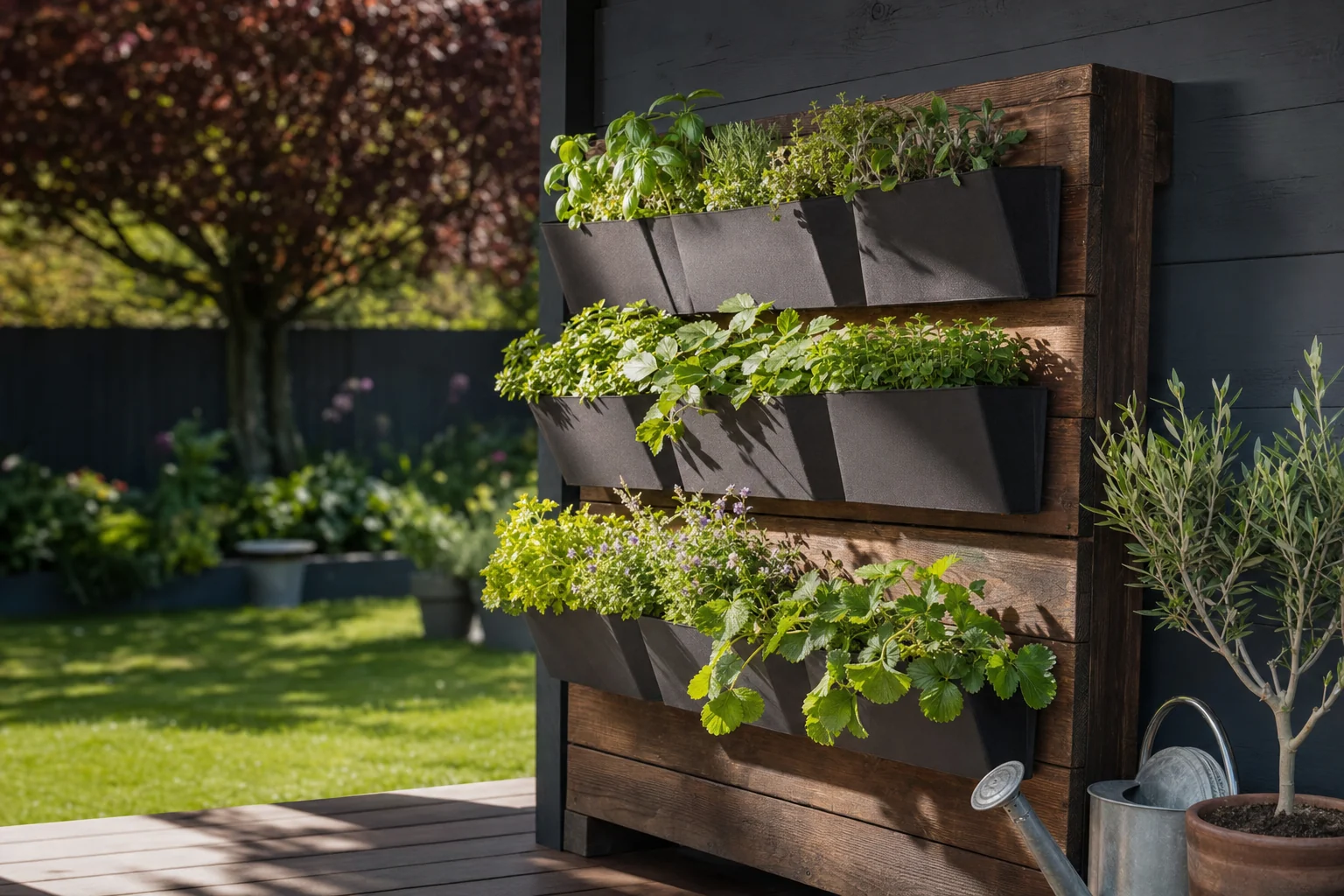
Why Your Walls Are the Most Underrated Growing Space in Your Garden
Small-space gardening has a peculiar way of making you notice every neglected surface. A balcony can feel full after two chairs, a table and a couple of pots. A courtyard may have room for a bench but not much else. Yet the fence behind it, the brick wall beside it, and the thin vertical strip by the door are all sitting there doing absolutely nothing. Rude, really.
That is why vertical gardening makes so much sense. In a compact garden or balcony, every patch of floor quickly becomes precious. At that scale, spreading containers across the ground quickly becomes a logistical exercise involving awkward shuffling, drips on paving and the inevitable moment when you reverse into a rosemary plant. Growing upwards is not a gimmick. It is simply the most efficient way to reclaim space you already have.
There are three distinct families of product here, and choosing the right one matters more than choosing the prettiest colour. First are wall pockets and panel systems: Florafelt, Wally Grow and Woolly Pocket sit flat against a vertical surface and create the classic planted-wall effect. They are brilliant where floor area is scarce and visual impact matters. Think fences, courtyard walls, balcony screens and those blank bits of wall that have been waiting years for a purpose.
Then come tiered and stacking planters, including GreenStalk, VIVOSUN and G TALECO GEAR. These stand on the ground, but pack a remarkable amount of growing room into a compact footprint. They are the practical choice for herbs, salads, strawberries and compact flowering plants: crops you want close to hand rather than displayed halfway up a wall.
Finally, there are modular framed kits such as the EDOSTORY Vertical Garden Raised Bed Planter Kit. These look more like a raised bed that has learned to stand upright. The frame supports separate containers at different heights, making them a persuasive bridge between traditional vegetable growing and vertical design.
The space-saving headline
The GreenStalk 5-Tier Original is only 19 inches wide, yet it provides 30 planting pockets and holds 5 cubic feet, or 40 gallons, of potting mix. It is an extraordinary amount of soil and planting opportunity in a footprint that would otherwise accommodate one fairly ordinary pot.
The promise is seductive: more plants, less floor space, and a garden that looks lush rather than apologetic. But vertical growing is not magic. It shifts the challenge. You need to think about weight, watering, wall fixings, drainage and access. A living wall with a thirsty plant at the top and a permanently soggy one below is not a relaxing design feature; it is a small horticultural argument mounted on your fence.
Before choosing a planter, decide whether you need growing capacity or green-wall effect. A freestanding tower is usually the stronger food-growing tool. A fabric panel is usually the smarter route to covering a blank vertical surface with foliage.
This guide separates those jobs properly. There is no single "best" vertical planter for every garden. There is, however, a much better match for your wall, your crops and your tolerance for watering cans.
How We Assessed Vertical Planters for Small Spaces
Comparing vertical planters is not quite like comparing ordinary pots. A standard container needs to hold compost, drain well and survive a few seasons outdoors. A vertical system must do all of that whilst remaining stable, manageable and sensible to install. Once it has several tiers, pockets or removable boxes, the small details begin to matter a great deal.
I have used six practical criteria to make sense of this crowded category. They are deliberately less glamorous than a lifestyle photograph of trailing nasturtiums, but they are the things that determine whether you will still like the planter after the first enthusiastic weekend of planting.
Planting capacity
Pocket count, container count and soil volume tell you what the system can realistically support. Thirty shallow positions are not automatically better than five deeper boxes; it depends what you want to grow.
Planted weight and load placement
Compost and water are heavy. A product that is easy to move empty may become a permanent installation once planted, so wall and balcony suitability must be considered before filling it.
Watering design
Central reservoirs, top-to-bottom filtration and drip tubing can turn a daily chore into a straightforward routine. On a high-density planter, that is a genuine quality-of-life feature.
Material and outdoor resilience
UV-resistant plastic, recycled horticultural felt and galvanised steel each solve a different problem. The best material is the one that suits the product's mounting style and exposure.
Installation and maintenance
A freestanding stack is not the same commitment as a panel fixed to fencing. Removable containers also change the experience of pruning, replanting and clearing spent roots.
Value per growing position
Where prices are available, pocket count and flexibility give useful context. Cheap is only cheap if the design still fits your growing plan and lasts long enough to justify filling it with compost.
Weight deserves a separate word because it is the least exciting specification and possibly the most important. The GreenStalk 5-Tier Original reaches approximately 150 lb when planted and watered, which is about 68 kg. That is not a planter you casually slide into the sun after lunch. It needs a final position, level ground and a bit of forethought before the first bag of compost goes in.
Put the load where it belongs
For a wall-mounted planter, assess the finished planted weight rather than the empty product weight. For a tower, assume it will stay exactly where you assemble it. Vertical gardening rewards confidence; moving a waterlogged planter full of roots does not.
Crop choice also helps decide the format. Strawberries, herbs and trailing nasturtiums are natural candidates for pockets and stacked tiers because they make use of the edges. Larger, deep-rooted plants call for more compost and more stable containers. The art is to match the crop to the system rather than trying to make a decorative felt panel behave like a full-sized allotment bed. We have all been ambitious in spring. The tomatoes remember.
GreenStalk Vertical Planters: The Gold Standard for Soil-Based Growing
GreenStalk is the most fully developed soil-based family in this guide. Its three headline models offer a straightforward ladder of scale: the 3-Tier Original at $109, the 5-Tier Original at $149, and the 7-Tier Leaf at $169. That is useful because vertical gardening is often sold as an all-or-nothing lifestyle choice. It need not be. A smaller stack lets you test the routine; the larger versions make sense when you know you will use the capacity.
The 5-Tier Original is the one that best explains why GreenStalk has become such a serious name in this category. It measures 19 inches wide and 55 inches tall, so its ground footprint remains surprisingly modest. Yet it contains 30 planting pockets, each with a 10-inch depth. Every pocket holds 1 cubic foot, or 8 gallons, of soil, with a total requirement of 5 cubic feet or 40 gallons of potting mix.
Those figures reveal both the GreenStalk's great strength and its central compromise. The strength is obvious: this is a truly substantial growing system, not a decorative novelty with a few token planting holes. The 10-inch depth gives roots far more room than the shallow pockets common on fabric wall panels. That makes a meaningful difference for herbs that become woody, for strawberries that need steady moisture, and for gardeners who want a planter to carry a proper mix of edible and ornamental plants.
The compromise is weight. At approximately 150 lb when planted and watered, the 5-Tier is a serious piece of garden infrastructure. Each planted and watered tier weighs around 30 lb. This is not inherently a criticism; substantial soil volume inevitably creates substantial weight. It is simply a reason to choose the spot first. Level paving, a sturdy courtyard surface or an appropriately considered balcony position is far preferable to improvisation later.
The feature that separates GreenStalk from a basic stack of pots is its patented watering design. Water is poured into the reservoir at the top and distributed to each tier. That sounds like a modest convenience until you picture watering 30 individual pockets with a small can, missing the back row, then discovering the bottom plants have received far more attention than the top. The central channel gives the system a coherent irrigation logic rather than leaving it as a pile of containers wearing the same jumper.
For a gardener managing a busy balcony or courtyard, that is the feature worth paying attention to. It encourages consistent watering, which is the boring but essential half of successful container growing. Plants in a compact vertical planter can dry out faster than a large bed, especially when wind catches the exposed foliage. A simple top reservoir reduces the chance that the highest tier becomes a dry-zone experiment.
3-Tier Original
A smaller entry into the Original range.
5-Tier Original
30 pockets with the full tall-stack format.
7-Tier Leaf
The tallest listed GreenStalk option.
The material choice is equally practical. The 5-Tier Original is made in the USA from food-grade, UV-resistant plastic that is BPA-, BPS- and PVC-free. Gardeners growing herbs, salad leaves and strawberries often prefer that clarity around material composition, particularly where plants are going directly from planter to plate. UV resistance also matters on a sun-facing balcony, where cheap plastic can become brittle with rather depressing speed.
What GreenStalk gets right
- Thirty deep planting pockets create genuine food-growing capacity.
- The top reservoir distributes water across all five tiers.
- Compact 19-inch width makes excellent use of a small footprint.
- Food-grade, UV-resistant plastic is well suited to edible planting.
- A five-year warranty gives the system reassuring long-term intent.
What to plan around
- Approximately 150 lb planted and watered means placement is a serious decision.
- At 55 inches tall, it needs comfortable access to the top reservoir.
- The large soil volume requires a considerable initial fill of potting mix.
- It is a freestanding tower, not a substitute for a flat planted feature wall.
My view is simple: choose GreenStalk when your priority is growing rather than decorating. It is the right answer for a compact patio, an accessible balcony corner or a courtyard where you want a lot of herbs and edibles in one manageable place. It is less appropriate if your real aim is to soften a tall wall, disguise fencing or make a broad visual statement. For that, the fabric-panel systems further down the page make more sense.
VIVOSUN vs G TALECO GEAR: Budget Stackable Planters Put to the Test
Not every vertical garden needs to begin with a tower carrying 40 gallons of compost. Sometimes you want a modest, inexpensive way to get herbs off the paving, try strawberries in layers, or add a green flourish beside a balcony chair. That is where the budget stackable format earns its keep.
The VIVOSUN 5-Tier PP Vertical Stackable Planter has 15 pots across five layers and is priced at $39.99. A related VIVOSUN stackable format is listed at under $36, using a five-tier build with a 12.5-inch diameter footprint. It is a much smaller-scale proposition than GreenStalk, but that is precisely its appeal. It asks for less compost, less floor area and less commitment.
VIVOSUN's design has several thoughtful details for the price bracket. It uses thick PP material intended for repeated use, with resistance to fading and cracking in summer. The stack can be assembled with two, three or four tiers rather than only as the full five-tier tower. That is more useful than it sounds. A gardener can start with a shorter setup on a windowsill-height table, or divide the planter's purpose between a compact herb arrangement and a more open strawberry tower.
There is also more mounting flexibility than you might expect. The planter can be hung with chains or mounted on a cylindrical rod. Its water filtration system takes water from the top down through the structure, whilst a bottom dish helps prevent stains on the ground. For a renter with pale balcony tiles, that last part is not glamorous but it is very welcome. Nobody wants to hand back a flat with an accidental ring of compost tea in the corner.
| Feature | VIVOSUN 5-Tier PP | G TALECO GEAR 5-Tier | GreenStalk 5-Tier Original |
|---|---|---|---|
| Structure | Five-layer stackable planter | Five stacked beds | Five-tier soil-based planter |
| Planting positions | 15 pots | Stacked beds | 30 planting pockets |
| Assembly flexibility | Can be assembled with 2, 3 or 4 tiers | Five-tier format | Five-tier format |
| Water / drainage approach | Top-to-bottom filtration and bottom dish | Drainage holes in each tier | Patented top-reservoir distribution system |
| Material | Thick PP | Plastic (PP) and steel | Food-grade UV-resistant plastic |
| Price | $39.99 | — | $149 |
G TALECO GEAR takes the same broad idea and strips it right back to essentials: five stacked beds, with drainage holes in every tier. That is not a criticism. It is the sort of no-nonsense construction that can suit gardeners who want a vertical arrangement without a more elaborate watering architecture. The drainage holes are the crucial feature here. Stacked growing systems must avoid water sitting around roots, and per-tier drainage is the basic safeguard.
The difference between these lower-cost systems and GreenStalk is not merely pocket count. It is a difference in gardening style. VIVOSUN and G TALECO GEAR suit smaller plants, lighter planting schemes and gardeners who are happy to monitor moisture more closely. GreenStalk is designed as a larger planted ecosystem with deep pockets and a central watering route. The less expensive stacks are more modular and casual. They are the garden equivalent of a good folding chair: useful, adaptable and easy to introduce without reorganising your entire life.
With every stackable planter, water slowly from the top and observe where it emerges. A top-down system is convenient, but individual tiers still deserve a quick check during the first few watering sessions so you understand how your compost mix behaves.
Why budget stacks appeal
- VIVOSUN offers 15 planting pots at a much lower listed price than larger soil towers.
- Its 2-, 3- and 4-tier assembly options suit changing spaces and smaller crops.
- Hanging-chain and cylindrical-rod options broaden the possible setups.
- The bottom dish is useful where drips and staining are a concern.
- G TALECO GEAR's drainage holes address a fundamental need in stacked growing.
Where expectations matter
- Fifteen pots do not provide the same growing capacity as GreenStalk's 30 pockets.
- Smaller individual planting areas are better for compact crops than large plants.
- A filtered top-down watering route still requires sensible compost and routine checks.
- Basic stacked-bed designs offer fewer built-in watering conveniences.
VIVOSUN's popularity in the Vertical & Wall Planters category is understandable: it is accessible, compact and genuinely flexible. I would choose it for a first vertical garden, a rented outdoor space, or a gardener who wants a practical herb-and-strawberry tower without committing to a large volume of compost. G TALECO GEAR is the simpler alternative for anyone happy with a straightforward stacked-bed layout and per-tier drainage.
Florafelt Living Wall Panels: Fabric Pocket Systems for Planted Feature Walls
Florafelt approaches vertical gardening from the wall outward. Its systems are not freestanding towers pretending to be living walls; they are designed to be mounted as planted panels. That distinction matters. Where GreenStalk turns a small patch of ground into a densely planted tower, Florafelt turns a blank surface into the garden itself.
The range covers a useful spread of scales. The 2-Pocket Panel is 12 inches wide by 12 inches tall and 1.5 inches thick. The 4-Pocket Panel measures 12 by 24 inches and is also 1.5 inches thick. The 8-Pocket panel runs to 12 by 48 inches, whilst the 12-Pocket panel broadens out to 32 by 24 inches and is 2 inches thick. For a taller, narrow composition, the Compact Living Wall Kit measures 12 inches wide, 62 inches high and 6 inches deep once assembled.
That format range is one of Florafelt's strongest arguments. You can begin with a compact herb wall near a kitchen door, build a narrow stripe of foliage beside a seating area, or combine units into a larger planted composition. The panels are designed for a display wall, but they do not require you to commit to one enormous fixed unit from day one.
The 12-Pocket panel is especially interesting because it remains impressively light for its area. It weighs 7 lb unplanted and about 15 lb once planted. Each pocket is 10 inches wide and 6 inches deep, with felt that stretches to hold a 4- to 6-inch potted plant. It includes 12 Root Wraps and rubber bands, a section of drip irrigation tubing, a rigid backing board and hanging tabs.
That roughly 15 lb planted figure changes the calculation for wall gardening. A planted GreenStalk tier weighs approximately 30 lb; the entire planted Florafelt 12-Pocket panel is around half that. The two products perform different jobs, of course, but the comparison neatly explains why fabric-panel systems are so useful for vertical surfaces. They distribute modest planting weight across a backing board rather than concentrating a large soil mass in one free-standing column.
A better fit for a genuine wall
For a planted feature wall, Florafelt's relatively low listed planted weights are a major advantage. The 2-Pocket panel is about 3 lb planted, the 4-Pocket about 5 lb, the 8-Pocket about 20 lb, and the 12-Pocket about 15 lb. Choose the panel according to both the wall shape and the load you are comfortable mounting.
The panels use black Florafelt horticultural fabric made from 100% recycled plastic water bottles. It is designed to be tough and not decay. That is a particularly sensible material for this role: it has to hold plants, allow access to roots, live outdoors and avoid becoming a crumbling decorative object after a few wet months. The black finish is also visually useful, disappearing behind foliage rather than competing with it.
Flexible mounting approach
The 12-Pocket panel can use the supplied top hanging tabs, or be attached directly to existing fencing or exterior-rated wood supports with smooth coated decking screws.
Drip-ready panel design
The 12-Pocket panel includes a section of drip irrigation tubing, making it easier to plan a consistent watering route across a larger living wall.
Pockets sized for potted plants
The 10-inch-wide, 6-inch-deep pockets on the 12-Pocket model stretch to accept 4- to 6-inch potted plants, simplifying the initial planting process.
Compact Kit reservoir system
The Compact Living Wall Kit uses a patented hybrid-hydroponic arrangement with a pleated design intended to distribute water efficiently and avoid oversaturation at the root zone.
The Compact Living Wall Kit deserves separate attention because it is more than a loose collection of pockets. Its 12-inch-wide, 62-inch-high assembly includes Florafelt horticultural felt on corrugated plastic backing and a plastic reservoir. It weighs 9 lb unplanted and approximately 20 lb with plants. The hybrid-hydroponic setup aims for even moisture at the roots without oversaturation, which is exactly the balancing act that vertical planting systems need to manage.
At 6 inches deep once assembled, the Compact Kit does protrude further than the flat panels. That is not necessarily a drawback. It can be a positive where plants need a little more physical presence or where you want a wall feature that reads as a deliberate garden element rather than a textile strip. But it is worth considering on a narrow balcony passage. A vertical garden should make a small space feel fuller, not make it feel as though it has acquired elbows.
Florafelt is the best choice here for the gardener whose wall is the opportunity. Use it for foliage combinations, herbs close to the kitchen, compact flowering plants or a layered mixture of trailing and upright forms. It can produce food, certainly, but its real gift is transforming a surface into something that feels alive.
Wally Grow and Woolly Pocket: Designer Wall Planters for Style-Led Spaces
Wally Grow and Woolly Pocket occupy the more design-conscious end of wall planting. That does not mean they are merely decorative. A well-designed living wall is often more likely to be watered, maintained and enjoyed because it becomes part of how you use the space. But these are systems for gardeners who want their planting to look intentional as well as productive.
Wally Grow's Pocket Wall Planters are defined by their horizontal proportions. The Junior measures 18 inches wide by 10.5 inches high, with a 7.5-inch pocket depth. The 1 Pocket version measures 24 by 15 inches overall and has a 9.5-inch pocket depth. Then the format stretches: the 3 Pocket is 68 by 15 inches, and the 5 Pocket reaches 112 by 15 inches. The latter is nearly 9.5 feet wide. That is not a little accessory. It is a proper horizontal living-wall run.
| Wall shape or setting | Wally Grow format | Florafelt format |
|---|---|---|
| Small accent beside a door | Junior, 18 × 10.5 in | 2-Pocket Panel, 12 × 12 in |
| Compact vertical strip | 1 Pocket, 24 × 15 in | 4-Pocket or 8-Pocket Panel |
| Long fence panel | 3 Pocket, 68 × 15 in, or 5 Pocket, 112 × 15 in | Grouped panels can create a longer composition |
| Tall, narrow courtyard wall | Horizontal format may need several runs | Compact Kit at 12 × 62 × 6 in is naturally suited |
Orientation is the real decision. A long timber fence panel, low balcony screen or broad courtyard wall naturally suits Wally Grow's horizontal design. It lets planting read as a band across the surface rather than a small object lost in the middle. On the other hand, a tall, narrow gap between a downpipe and a door, or a slim stretch of wall beside a seating nook, generally favours Florafelt's upright panels and Compact Kit.
Wally Grow uses breathable recycled felt. That breathability allows soil to aerate naturally, helping plant health. The pocket depths are also substantial for a wall system: 7.5 inches on the Junior and 9.5 inches on the larger listed formats. In practical terms, that means you are not restricted to tiny bedding plants. Herbs, foliage plants and trailing selections have enough depth to establish a meaningful root zone, provided the wall receives the right light and you keep up with watering.
Long horizontal coverage
The 5 Pocket Wally Grow spans 112 inches wide, making it particularly compelling for a full fence run or wide balcony boundary.
Breathable recycled felt
The material encourages natural soil aeration, an important quality in planted pockets where roots cannot spread outward into open ground.
Useful pocket depth
The Junior offers 7.5 inches of pocket depth, while the 1, 3 and 5 Pocket formats provide 9.5 inches.
Woolly Pocket takes another route entirely: its Living Wall Kit has 36 pockets for diverse plants and can be mounted using zip ties, nails or screws. The appeal is obvious for a gardener who wants density. Thirty-six pockets allow a complex mix of plants, with room for repetition, contrast and trailing layers rather than a handful of isolated specimens.
The mounting options are worth noting too. Zip ties, nails and screws create different installation possibilities depending on the support surface and the degree of permanence you want. As with every wall-mounted system, choose the fixing method for the structure and the planted load, not merely for what is easiest to reach in the shed at 5pm on a Sunday.
Design first, then plant sensibly
Horizontal systems are brilliant at making a fence feel wider and more finished. Vertical panels add height and drama to narrow spaces. Decide which visual direction your wall needs before getting carried away by pocket counts.
For style-led spaces, both brands have a convincing role. Wally Grow is the strong choice for a long horizontal statement with deep pockets. Woolly Pocket is the dense, flexible option for a plant-rich wall composition. Florafelt remains the more modular answer where you want to build a wall gradually. They are different approaches, not interchangeable copies.
EDOSTORY Vertical Garden Frame: The Modular Kit for Raised-Bed Devotees
The EDOSTORY Vertical Garden Raised Bed Planter Kit is the outlier in this guide, and that is exactly why it will suit some gardeners so well. Rather than using stacked cups or fabric pockets, it combines a pale green 4.5-foot frame with five removable container boxes. It looks and behaves more like a raised-bed system that has been arranged into a vertical framework.
That makes it particularly appealing to gardeners who like the familiar logic of containers but want to gain height. Each box is a discrete growing area. You can approach it as five little raised beds: one for herbs, one for salad leaves, one for edible flowers, one for strawberries, one for whatever plant you bought because it looked cheerful and now need to find a home for. It happens.
The galvanised steel construction is the key differentiator. Plastic has real virtues in this category: it is light, washable and easy to mould into clever watering channels. But a steel frame brings a different sort of confidence, especially where a vertical planter will live through wet weather year after year. EDOSTORY's galvanised construction is rust resistant, which is precisely what you want from a frame that may spend much of its life outdoors in a British garden.
The five removable boxes are the stand-out feature. With a fixed fabric pocket system, removing a tired plant can disturb the surrounding arrangement. With a stacked tower, a large root ball may require you to work around the tier's geometry. Here, an individual box can be lifted out for replanting, composting or reconfiguring. That is not just convenient; it lets gardeners evolve the planting through the seasons without dismantling the whole structure.
Best reasons to choose it
- Five removable boxes make individual crop changes straightforward.
- The 4.5-foot frame adds vertical order without relying on wall mounting.
- Galvanised steel offers a rust-resistant structural alternative to plastic towers.
- The raised-bed-like format is intuitive for gardeners who prefer separate containers.
Best reasons to look elsewhere
- It does not create the flush, foliage-covered look of a fabric living wall.
- Five boxes offer a different type of capacity from 30 small planting pockets.
- A frame-and-box system has a more visible structural presence in a compact space.
- It is a freestanding raised-bed format rather than a wall-mounted solution.
I would recommend EDOSTORY to the practical gardener who finds wall pockets a little too fiddly and stacked cups a little too compact. It is for someone who wants order, removability and a more traditional planting experience, but has run out of horizontal ground. Think of it as vertical gardening for people who still like a proper container.
Head-to-Head: The Essential Comparison Across the Range
By now, the category divides quite cleanly. GreenStalk leads for deep soil capacity and integrated watering. VIVOSUN and G TALECO GEAR offer a smaller, simpler route into stacked growing. Florafelt is the modular wall-panel specialist. Wally Grow makes sense for broad horizontal walls, Woolly Pocket for a dense multi-pocket display, and EDOSTORY for gardeners who prefer removable raised-bed-style containers.
The table below keeps to the details that are most useful when narrowing the field. Products do not all publish the same information, so the comparison focuses on confirmed format, dimensions, counts, planted weights, materials and watering features where those are known.
| Product | Category | Confirmed growing format | Size or footprint | Key practical feature |
|---|---|---|---|---|
| GreenStalk 3-Tier Original | Tiered planter | Three-tier Original model | 22.5" W x 11" D x 28" H | Part of GreenStalk's soil-based range |
| GreenStalk 5-Tier Original | Tiered planter | 30 pockets; 5 cu. ft. / 40 gal. soil volume | 19 in wide × 55 in tall | Patented top-reservoir watering; 5-year warranty |
| GreenStalk 7-Tier Leaf | Tiered planter | Seven-tier Leaf model | 22.5" W x 11" D x 52" H | Tallest listed GreenStalk option |
| VIVOSUN Stackable Planter | Tiered planter | Five tiers | 12.5-inch diameter footprint | Compact stackable layout |
| VIVOSUN 5-Tier PP | Tiered planter | 15 pots across five layers | 27.6" W x 27.6" D x 24.4" H | Top-down filtration, bottom dish and flexible assembly |
| G TALECO GEAR 5-Tier | Tiered planter | Five stacked beds | 31.5" W x 15.75" D x 31.5" H | Drainage holes in each tier |
| Florafelt 2-Pocket Panel | Wall panel | 2 pockets | 12 × 12 × 1.5 in | Approx. 3 lb planted |
| Florafelt 4-Pocket Panel | Wall panel | 4 pockets | 12 × 24 × 1.5 in | Approx. 5 lb planted |
| Florafelt 8-Pocket Panel | Wall panel | 8 pockets | 12 × 48 × 1.5 in | Approx. 20 lb planted |
| Florafelt 12-Pocket Panel | Wall panel | 12 pockets | 32 × 24 × 2 in | Recycled felt, backing board and drip tubing section |
| Florafelt Compact Kit | Living-wall kit | Vertical pocket system | 12 × 62 × 6 in assembled | Hybrid-hydroponic reservoir arrangement |
| Wally Grow Junior | Wall pocket | Single Junior pocket format | 18 × 10.5 in | 7.5-inch pocket depth |
| Wally Grow 3 Pocket | Wall pocket | Three-pocket horizontal format | 68 × 15 in | 9.5-inch pocket depth |
| Wally Grow 5 Pocket | Wall pocket | Five-pocket horizontal format | 112 × 15 in | Long fence-run potential |
| Woolly Pocket Living Wall Kit | Living-wall kit | 36 pockets | — | Mount with zip ties, nails or screws |
| EDOSTORY Vertical Garden Kit | Modular frame | Five removable container boxes | 4.5-foot frame | Rust-resistant galvanised steel construction |
Rather than forcing subjective scores onto products designed for very different jobs, the most honest comparison is capacity and format. The bars below show the confirmed pocket or pot counts for the models where a direct count is published. They are not ratings. A 36-pocket Woolly Pocket is not automatically "better" than a 15-pot VIVOSUN; it simply gives you a different planting canvas.
For edible growers
Choose GreenStalk if herbs, strawberries and a high volume of soil-based planting are the priority.
For bare walls
Choose Florafelt for a modular planted panel that is designed to sit against fencing or suitable supports.
For a styled courtyard
Choose Wally Grow for a broad horizontal living-wall statement, especially across a long fence run.
The quickest route to a decision
If you have floor space but very little of it, start with a tower or framed planter. If you have wall space but almost no floor area, start with pockets or panels. If you have both, decide whether you want a productive mini-kitchen garden or a living backdrop. That one choice removes most of the confusion.
Frequently Asked Questions About Vertical Planters
Yes. Herbs are one of the most natural uses for wall pockets, panels and small stacked planters. Choose a position with the appropriate light and remember that pockets can dry faster than plants in a large ground bed. Keeping frequently used herbs close to the kitchen is also one of those rare gardening choices that feels clever every single day.
Tiered and stacked planters are particularly well suited to strawberries because the plants can sit around the outside of the structure, with fruit held away from the ground. GreenStalk offers deep 10-inch pockets and substantial soil volume, while smaller VIVOSUN stacks provide a more compact approach.
Because water and compost quickly turn a light product into a heavy installation. The GreenStalk 5-Tier Original reaches approximately 150 lb planted and watered. Florafelt's 12-Pocket panel is about 15 lb planted. Both can work beautifully, but they demand entirely different thinking about positioning and support.
Match the planter to the wall's proportions. Long, low fence panels favour Wally Grow's horizontal sizes, including the 112-inch-wide 5 Pocket format. Tall narrow spaces favour Florafelt's vertical panels or the 62-inch-high Compact Living Wall Kit.
They can. GreenStalk's patented top reservoir distributes water to each tier, and VIVOSUN uses a top-to-bottom filtration system. Those systems simplify watering, but you should still observe how moisture moves through your particular compost mix and adjust your routine to the weather.
Final Verdict: Which Vertical Garden Kit Should You Choose?
The best vertical planter is not necessarily the one with the most pockets, the tallest stack or the cleverest-looking photograph. It is the one that removes the limiting factor in your space. For some gardeners, that limiting factor is a lack of ground. For others, it is an ugly fence. For plenty of us, it is simply the fact that there is nowhere left to put another pot without turning the seating area into an obstacle course.
GreenStalk 5-Tier Original is the standout choice for serious soil-based growing in a compact footprint. Its 30 pockets, 5 cubic feet of soil capacity and integrated watering system make it the strongest option for a small-space edible garden, provided you respect the finished weight and choose its location carefully.
VIVOSUN's 5-Tier PP planter is the more approachable starting point. It is affordable at $39.99, flexible in its assembly and thoughtfully designed with top-down filtration and a bottom dish. It will not replace a large deep-soil tower, but it does not need to. It gets a surprising amount of planting into a very small space.
Florafelt is the best route to a real planted wall. The varied panel sizes, recycled horticultural fabric, sensible planted weights and Compact Kit's hybrid-hydroponic arrangement make it the most versatile family for fences, courtyard walls and narrow vertical gaps.
Wally Grow is the design-led answer for broad horizontal surfaces, whilst Woolly Pocket brings dense 36-pocket planting to a living-wall format. EDOSTORY, meanwhile, earns its place with a rust-resistant galvanised steel frame and five removable boxes that make seasonal changeovers far less fiddly than fixed pockets.
GardenScout's bottom line
Buy GreenStalk for maximum growing capacity in a small footprint. Choose Florafelt, Wally Grow or Woolly Pocket when the wall itself is the opportunity. Pick VIVOSUN or G TALECO GEAR for an uncomplicated stacked introduction, and EDOSTORY when you want the familiar practicality of separate raised-bed-style containers. Use the vertical plane well and even the smallest outdoor space can begin to feel like a garden rather than a compromise.