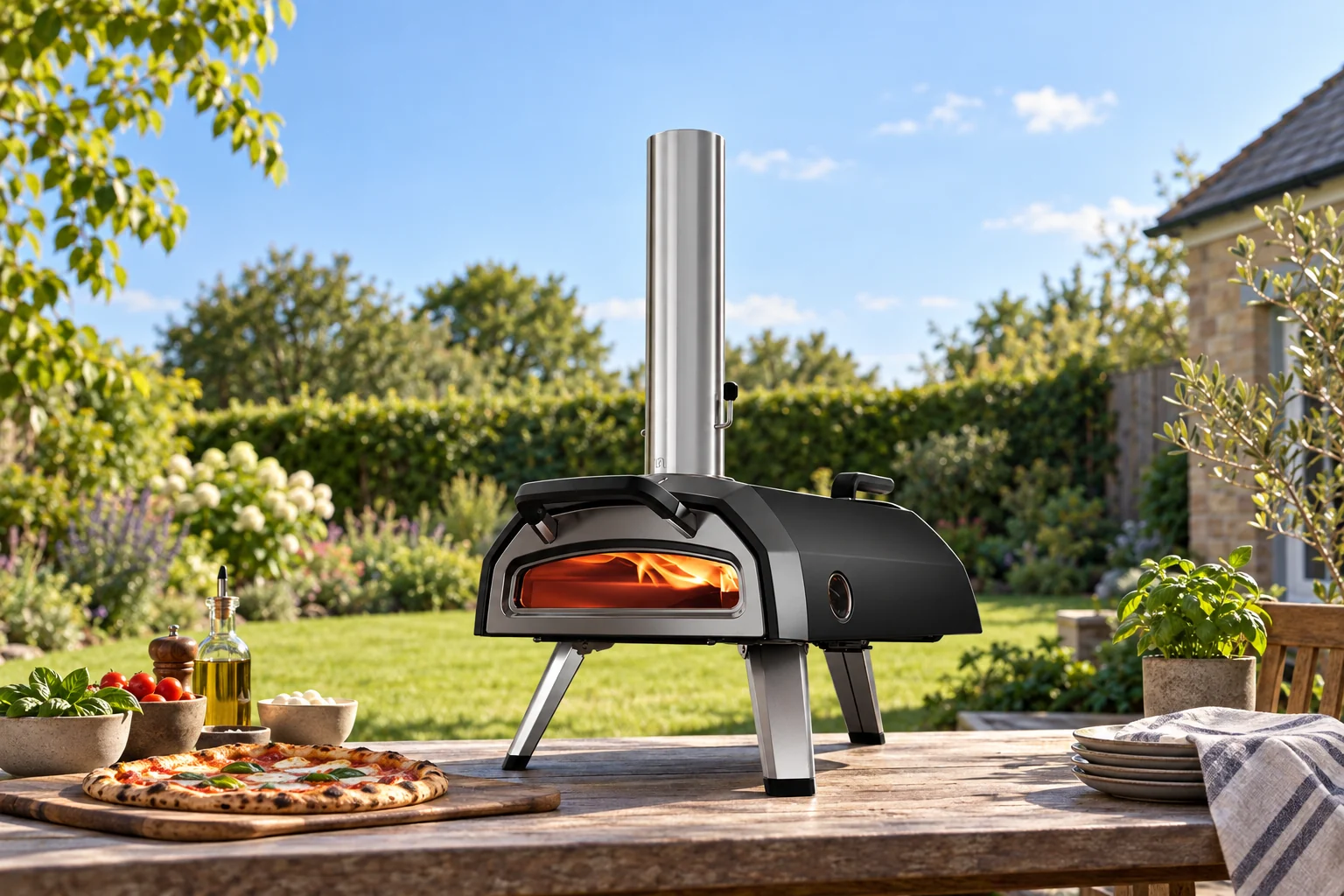
The short answer
Yes, the Ooni Karu 2 makes a useful winter cooker, but buy the Gas Burner Bundle, as the standard oven runs only on wood and charcoal. Gas starts quickly and is unaffected by damp fuel. Keep the oven, stone and fuel dry, check the stone with an infrared thermometer, and cook one 12-inch pizza at a time.
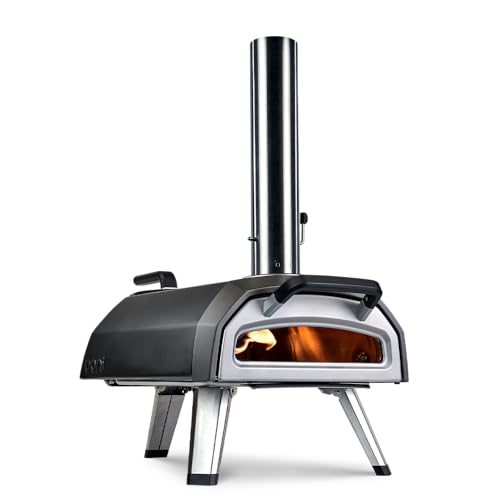
Reaches 500°C on wood or charcoal, with an optional gas burner that makes cold, damp winter cooking far more practical.
Check price on AmazonWe link to the exact model on Amazon UK. Prices change often, so check the live price before you buy. As an Amazon Associate we earn from qualifying purchases.
Introduction: Why the Ooni Karu 2 Belongs in Your Winter Garden
Note: The standard Ooni Karu 2 does not include a gas burner — that is a separate purchase. See the bundle options section below for details.

Every garden has its seasonal casualties. The parasol gets wrapped up, the cushions retreat to the loft, and the barbecue — so lively in July — is quietly pushed behind the shed with a cover over its head like a sulking parrot. By the middle of November, most of us have stopped cooking outdoors altogether. It is dark by half four. The patio is slippery. The idea of standing over a grill in a drizzle that never quite becomes rain holds very limited appeal.
Check today's price: Ooni Karu 2 on Amazon UK
And yet. There is something properly cheering about fire in a cold garden. A wood-fired oven glowing on the terrace on a still, frosty evening is a very different proposition from a barbecue in a heatwave. You stand close to it rather than retreating from it. You cook one thing at a time, quickly, and hand it straight to someone waiting with a plate. It turns a dull Saturday into a small occasion, which is precisely what late autumn needs.
The problem has always been practicality. Damp logs sulk. Wind steals heat. Charcoal needs coaxing. And a pizza oven that takes an hour of faffing before it is usable is an oven that will spend December under a tarpaulin. That is the question I want to answer here: does the multi-fuel flexibility of the Ooni Karu 2 — wood and charcoal out of the box, gas with an optional burner — make it a genuinely more useful cold-weather cooker than a single-fuel oven? Or is "multi-fuel" simply a nice phrase on the box?
To orient you quickly: the Karu 2 is Ooni's portable 12-inch multi-fuel outdoor oven, model number UU-P35300. It was previously sold as the Ooni Karu 12G Multi-Fuel Pizza Oven; Ooni renamed it and confirms the two are identical, so if you have read about the Karu 12G, you have read about this oven. It carries a UK RRP of £349 for the standard version. It is the smaller sibling of the Karu 2 Pro, which is a different, larger oven, and I shall come back to that distinction because it matters when you are deciding whether this one is big enough for your household.
This is a first look, built from Ooni's own specifications and from what hands-on reviewers at Tom's Guide, The Independent and Woman & Home have reported. I have pulled those findings together and read them through a gardener's lens: what happens when it's 4°C, the lawn is sodden and you fancy a margherita anyway.
The short answer, up front
Yes — with a caveat. The Karu 2's real winter advantage isn't its 500°C top temperature. It's the ability to switch to gas when damp fuel, wind or simple tiredness would otherwise send you back indoors. But the standard oven does not include the gas burner, so the most winter-friendly version costs more than the headline price.
Ooni Karu 2: Specifications at a Glance
Let's get the numbers on the table before we talk about how they behave on a chilly patio. Spec sheets for pizza ovens can be surprisingly unhelpful — lots of superlatives, few useful dimensions — but Ooni is reasonably forthcoming with this one.
A few other details worth knowing. The model number is UU-P35300, and the EAN is 5060967396467 — handy if you are cross-checking a retailer listing and want to make sure you are looking at the standard 12-inch oven rather than a bundle or the Pro. The oven opening is 98mm tall, the claimed operating range runs from 110°C at the gentle end up to that 500°C maximum, and there's an integrated analogue thermometer on the body. That thermometer reads the ambient air temperature inside the oven, not the stone itself, which is a distinction that matters more than you might think (more on that shortly).
The pizza capacity is up to 12 inches — call it roughly 30cm (12in) across. That is a decent individual or sharing-sized pizza, but not the great platter-sized thing you may picture from a restaurant.
Now, about that weight. At 15.3kg, the Karu 2 is "portable" in the way a full suitcase is portable. You can certainly pick it up — Tom's Guide found it relatively easy to carry, helped by the folding legs and removable chimney — but it is not something to swing one-handed off a wall. For most people, the realistic picture is this: it lives on a sturdy patio table or outdoor worktop during the cooking season, and gets carried carefully into a shed or garage between sessions. If your back is anything like mine after an afternoon of bulb planting, ask someone to take the other end.
Karu 2 or Karu 2 Pro? They are separate ovens. The Pro has a larger cooking surface and handles pizzas up to 16 inches. The standard Karu 2 covered here is the compact 34cm-stone, 12-inch model. If you regularly cook for six or more, it's worth knowing the bigger option exists before you commit.
What's in the Box — and What You'll Still Need to Buy
This is where expectations sometimes trip people up. The oven is often described as "gas/wood/charcoal", and you could easily assume that means you open the box and can cook on any of the three. You can't. The standard Karu 2 arrives ready for wood and charcoal. The gas burner is a separate accessory. Ooni says so clearly on its own product page, but it's worth repeating, because for a winter buyer the gas burner may well be the most important part of the whole package.
Here is what you do get in the standard box, and what each piece actually does if you've never used a pizza oven before.
Main oven body
The powder-coated carbon steel shell with a stainless steel interior. This is the bit that holds the heat and the stone, sitting on folding stainless legs.
Front door
An insulated door with a borosilicate glass window and Ooni's ClearView technology, designed to reduce soot build-up so you can actually see the pizza. Keeping the door shut keeps heat in — a big deal in cold air.
Chimney and chimney cap
The chimney draws air through the fire and carries smoke up and away from the cook's face. It detaches for carrying and storage.
Solid-fuel tray and fuel grate
The tray holds your wood or charcoal at the back of the oven; the grate lifts the fuel so air can circulate beneath it. Ooni says this tray is 45% larger than the one on the previous Karu generation, which should mean less frequent topping up.
Rear fuel hatch
The opening at the back through which you feed fuel. Topping up from the rear means you don't have to open the front door and dump heat while a pizza is cooking.
Draft-defender plate
A plate that helps control how air moves through the oven. Airflow is everything with live fire, and in a breezy British garden anything that tames it is welcome. Check the manual for exactly when to fit it with your chosen fuel.
Cordierite baking stone
The 34 × 34cm, 15mm-thick stone your pizza sits on. Arguably the most important component of all — see below.
Fixings, Torx key and instructions
Everything needed to assemble it. Woman & Home found the pictorial instructions clear and the build quick; Tom's Guide found assembly uncomplicated too.
Why the cordierite stone matters so much
If you have ever wondered why pizza at home in a domestic oven comes out pale and slightly bready underneath, the answer is mostly about the surface it sits on. Cordierite is a ceramic material that soaks up a great deal of heat and holds it. When you slide raw dough onto a properly hot stone, that stored heat surges into the base, driving off moisture rapidly and setting the crust before it can go soggy. The stone's slightly porous surface also helps draw moisture away from the underside of the dough.
In winter that heat reservoir is your friend. Cold air rushing in every time you launch a pizza, or a sharp gust round the side of the house, will knock the air temperature about. A thick, fully heated stone is much less flighty. It's the thermal equivalent of a well-mulched border — it buffers the extremes. At 15mm thick, the Karu 2's stone gives you a reasonable buffer, provided you give it time to heat right through.
It also explains the slightly odd advice you'll see from every pizza-oven maker: keep the stone dry. Cordierite and water are not great friends at high temperature. A stone that has absorbed moisture from a damp shed and is then blasted with heat can crack. Ooni recommends storing the oven indoors or covered, with the stone kept dry, and over a British winter I'd treat that as non-negotiable.
What you'll need on top
Ooni's own recommendation for the standard oven is a cover, an infrared thermometer, fuel and at least one 12-inch peel. Tom's Guide made the same point: a peel and an infrared thermometer are practical additions, and the gas adapter is another separate purchase. None of the following comes in the standard box:
- A pizza peel — the flat paddle for launching and retrieving pizzas. You genuinely cannot do without one.
- An infrared thermometer — because the built-in gauge reads air, not stone. The stone temperature is what tells you whether your base will cook properly.
- A cover — essential if the oven is going to spend any time outdoors between sessions.
- Fuel — kiln-dried hardwood, lumpwood charcoal, or both.
- The gas burner and a propane supply — if you want gas.
Before the first cook, Tom's Guide notes the oven needs an initial burn-off of around 30 minutes after assembly to clear residual manufacturing coatings. It's a one-off, but plan for it — ideally on a dry afternoon rather than in the dark with hungry people watching.
Built for More Than Pizza: The Multi-Fuel Case
"Multi-fuel" sounds like the sort of feature that matters to people who write product descriptions rather than people who cook. In practice, though, it changes how you use the oven through the year, and nowhere more than in the darker months. Each fuel has a distinct personality, and the trick is knowing when to reach for which.
Wood: the full theatre
Wood is the reason most people want a pizza oven in the first place. The flame rolls over the roof of the oven, licks the top of the pizza, blisters the crust and leaves that faint smoky edge you can't quite replicate any other way. The Independent's tester reported exactly that: crisp, fully cooked bases, a strong rise, charred crusts and a genuine wood-fired flavour.
But wood asks more of you. You need small, properly dry hardwood pieces and kindling — not chunky logs from the woodpile, and certainly not anything that has been sitting in an open log store since October. The Independent found that starting and managing a wood fire took some practice, and that wood took longer to reach temperature than gas. Tom's Guide found that adding fuel by eye during cooking caused temperature swings between pizzas, and sometimes within a single pizza.
Wind makes all of that more pronounced. A gusty evening can fan a wood fire into roaring heat one minute and pull it away the next. That's where the rear fuel hatch earns its keep — you can feed the fire without opening the front — and where the draft-defender plate helps temper the airflow. Wood is glorious, but it's the fuel for still evenings and patient cooks.
Charcoal: steadier, simpler
Charcoal sits in the same solid-fuel tray, on the same grate, and behaves rather more politely. It burns with a steadier, more even heat than wood and generates far less dramatic flame, which means you get less of that rolling-fire flavour but a more predictable oven. For beginners, that predictability is a gift. You can set up a good bed of lit charcoal, let the stone soak up the heat, and spend less time fiddling.
Lumpwood charcoal is the one to use. It lights faster and gets hotter more quickly than compressed briquettes, which are designed for long, slow barbecue sessions rather than the fierce heat a pizza wants. Tom's Guide actually ran a combined approach — lumpwood charcoal as the base heat, topped with small beech pizza logs — and found it got the stone to roughly 400°C in 10–12 minutes. To my mind, that's the cleverest way to use this oven in cold weather: charcoal for the steady foundation, a few pieces of wood on top for flame and flavour.
Charcoal also stores well. A sealed bag of lumpwood in the garage is far more forgiving than a log pile that has been rained on sideways for a fortnight.
Gas: the one that gets you outside
Here's the honest bit. Gas is the least romantic fuel and quite possibly the most useful one in winter. With the optional burner connected to a propane supply, you turn it on, let it preheat and adjust the flame with a dial. No kindling, no fanning, no ash to clean out afterwards, no worrying about whether your logs have dried. Ooni also says the Karu 2 gas burner uses 36% less fuel than the previous Karu model's.
On a Tuesday evening in January, when you get home at six and it's 3°C and spitting, that's the difference between pizza in the garden and pizza from the freezer.
My rule of thumb
Wood and charcoal make the Karu 2 more entertaining. Gas makes it more usable. For summer weekends, the solid fuels are the whole point. For winter weekdays, gas is the feature that keeps the oven in use rather than in storage.
And yes, it does more than pizza
Ooni and the reviewers all point out that the Karu 2 is happy cooking steaks, vegetables, wings and other dishes in a pan. That's genuinely relevant at this time of year. Think a cast-iron dish of roasted squash from the allotment, leeks charred until sweet, or a skillet of sausages and red onions done in a few fierce minutes. The 98mm opening limits you to fairly shallow pans and dishes — this is not the place for a whole turkey — but for quick, high-heat cooking it's very capable.
| Fuel | What you need | Winter strengths | Winter drawbacks | Best for |
|---|---|---|---|---|
| Wood | Small, dry hardwood pieces and kindling (supplied tray and grate) | Big flame, wood-fired flavour, real theatre | Damp wood is hard to light and smokier; temperature swings; needs constant attention | Still, dry evenings and patient cooks |
| Charcoal | Lumpwood charcoal (supplied tray and grate) | Steadier heat, easy to store dry, simpler for beginners | Still produces ash and some smoke; less flame character | Reliable solid-fuel sessions; mixed cooking |
| Gas | Optional Ooni gas burner plus propane supply | Quick to start, adjustable, no ash, no fuel to dry | Extra cost; separate gas storage; less atmosphere | Cold, damp evenings and short sessions |
Heat, Speed and Performance: What the Numbers Tell Us
Let's deal with the headline figure first, because it's the one that gets people excited and occasionally disappointed: pizza "ready in 60 seconds".
That is a real claim, but it describes the cooking time of a Neapolitan-style pizza once the oven is fully up to temperature. It does not mean you go from cold metal to dinner in a minute. Neapolitan pizza genuinely does cook in roughly a minute to a minute and a half on a stone in the region of 450–500°C; that's how it's done in Naples. What comes before that minute is the preheat, and the preheat is where weather, fuel and technique come into play.
Ooni says the Karu 2 can reach its recommended baking temperature in as little as 15 minutes. Here is how that compares with what reviewers actually measured:
Read those numbers with care. Tom's Guide measured the stone and used a charcoal-and-wood combination; Woman & Home measured the base with a heat gun after a wood-only session, and reported that heat across the base was even. Neither is "right" — they simply illustrate how much results depend on fuel and how you build the fire. The broader lesson is that the Karu 2 can reach pizza-worthy temperatures briskly, but you should expect some variation, and that wood-only starts tend to be slower.
Once hot, the cooking itself is quick. Reviewers found pizzas cooked and out of the oven in under two minutes, but rotated each one at least every 30 seconds to manage browning and avoid burning. The same reviewer was blunt that the oven can go from nicely charred to burnt very quickly, and that you need to stay close and watch. This is not a "pop it in and pour a drink" appliance. It's a "stand beside it with the peel" appliance.
How many pizzas, how fast?
Tom's Guide cooked five pizzas back-to-back for a group using roughly two to three handfuls of lumpwood charcoal and five to six small logs. That's a helpful real-world indication of fuel appetite for a modest gathering. The same reviewer, though, suggested a larger oven for bigger parties, since the Karu 2 cooks one pizza at a time.
For a household of two to four, one-at-a-time is perfectly civilised: each pizza takes a couple of minutes, and people eat as they go. For a bonfire-night crowd of twelve, you'll be on peel duty for a long while, and someone will inevitably be waiting with an empty plate and a hopeful expression.
The thermometer question
The built-in analogue thermometer measures the air in the oven, not the stone. In a cold, windy garden those two figures can drift apart: the flame may push the air temperature up quickly whilst the stone, which does the real work on the base, is still catching up. That's why an infrared thermometer is such a sensible extra. Point it at the centre of the stone before you launch each pizza and you'll avoid the classic winter disappointment — beautifully blistered top, pale floppy bottom.
Size check before you buy
The 34 × 34cm stone takes pizzas up to roughly 30cm (12in). That's a compact cooking surface compared with the Karu 2 Pro's 43cm (17in) surface and 40cm (16in) pizza capacity. If you love big sharing pizzas or cook for a crowd most weekends, weigh that up now rather than after the box arrives.
Design, Build and Portability: Garden-Ready or Patio-Bound?
The Karu 2 has the look of a serious bit of kit: dark powder-coated carbon steel outside, stainless steel inside, die-cast aluminium at the nose and rear, and a borosilicate glass door. Tom's Guide described it as feeling premium, singling out the high-quality housing, thick stone and glass door; The Independent also called it solidly built.
Living with 15.3kg
Portability is a relative term. With the legs folded and the chimney detached, Tom's Guide found the Karu 2 relatively easy to carry, and Ooni positions it for gardens, camping and other outdoor spots. At 15.3kg, though, I'd call it "movable" rather than "grab-and-go". The practical arrangement for most gardeners is a permanent cooking spot — a sturdy, heat-resistant outdoor table or worktop — with the oven carried to dry storage between sessions. In winter that storage step is important, so be honest with yourself about whether you'll actually do it. If carrying 15kg down a wet garden path after dark sounds like a chore you'll skip, factor in a good cover and a sheltered storage spot near where you cook.
How it will cope with British damp
Powder-coated carbon steel is a sensible choice for an outdoor appliance; the coating provides a barrier against moisture. It is not, however, invulnerable. Chips and scratches can let water get to the steel underneath, and a powder-coated surface left wet under a sagging tarpaulin all winter will not thank you for it. The stainless interior, legs, fuel tray and grate are more forgiving of moisture, but the stone, as we've discussed, really must be kept dry.
Ooni recommends storing the oven indoors or protecting it with a cover when it isn't in use. Of the two, indoor storage is the safer bet from November to March. If you do use a cover outdoors, let the oven cool fully first, make sure it's raised off standing water, and check underneath it after heavy rain.
The chimney
The chimney does two jobs: it creates the draw that pulls air through the fire, keeping it burning hard, and it carries smoke up and away from your face. On a cold evening you'll find yourself standing quite close to the oven, so having the smoke exit above head height is genuinely appreciated. It also detaches, which makes the whole unit much easier to store and carry. Fit it securely each time — a wobbly chimney on a windy evening is not something you want next to an open flame.
The glass door
I think the door is quietly one of the best things about this oven for winter. Every time you open a pizza oven, you lose heat — and in cold air you lose it faster. The borosilicate glass, with Ooni's ClearView technology to reduce soot build-up, lets you watch the pizza and the fire without opening up. Woman & Home also noted that the door was particularly useful when the flames were close to the user's face, which, given how close you'll be standing, is no small comfort.
Pros
- Reaches up to 500°C for authentic, fast Neapolitan-style pizza
- Wood and charcoal ready; gas option for convenient winter cooking
- Glass door lets you watch the cook without losing heat
- Thick 15mm cordierite stone buffers temperature swings
- Solidly built, with folding legs and removable chimney
- Larger solid-fuel tray than the previous Karu
- Clear instructions and straightforward assembly
- Warranty extends to five years when registered
Cons
- Gas burner sold separately — standard box isn't a three-fuel kit
- Peel, infrared thermometer, cover and fuel all extra
- Solid-fuel temperatures can fluctuate as you top up
- Needs constant attention; pizzas burn quickly
- One 30cm (12in) pizza at a time; 98mm opening limits dishes
- Wood smoke can bother neighbours in tight gardens
- At 15.3kg, it's movable rather than truly grab-and-go
Bundle Options and Pricing: Which Version Should You Buy?
The Karu 2 comes in several configurations, and choosing the right one is arguably more important than the decision to buy it at all. Here is how Ooni prices them in the UK. The bundle figures are Ooni's listed prices before any discounts the company may be showing at the time.
Ooni Karu 2 (standard)
Wood and charcoal ready. No gas burner, no peel, no cover.
Essentials Bundle
Oven plus selected pizza-making accessories. Gas burner not the focus here.
Gas Burner Bundle
Oven plus the gas burner. The most practical start for year-round use.
Ultimate Bundle
Oven with a larger accessory package for those going all in.
The standard oven at £349
This is the version most people will see first. It's a complete, capable wood-and-charcoal oven, and if you mostly plan to cook on dry weekends and enjoy tending a fire, it's all you need — apart from a peel, fuel and ideally a cover and infrared thermometer. It makes the most sense for anyone who already has some of those accessories from a previous oven, or who's happy to buy them piecemeal.
The Gas Burner Bundle at £439
For a GardenScout reader who wants an oven they'll actually use between November and March, this is where I'd start. It's the version that delivers on the "multi-fuel" promise from day one. You get the reliable, low-faff fuel for cold weeknights, and wood and charcoal remain there for weekends and summer. The £90 difference over the standard oven buys you a lot of convenience. Bear in mind you'll also need a propane supply and any necessary fittings, so check what's required before your first session.
The Essentials Bundle at £424
Ideal if you're new to pizza ovens and want to start cooking straight away without hunting down a peel and the other bits separately. It's a sensible package for summer-focused buyers. For winter use specifically, though, the absence of gas is a significant gap, so weigh it against the Gas Burner Bundle carefully.
The Ultimate Bundle at £694
This is the "I've decided pizza is my new personality" option, with a much larger accessory package. If you already know you'll use everything in it, fine. If you're still finding out whether outdoor pizza is a lasting passion or an autumn fad, I'd start smaller and add accessories as your needs become clear.
Whichever version you buy, check exactly what's included with your order and what warranty terms apply. Ooni's standard warranty is one year, extendable to five by registering the oven — worth doing on day one, before the box goes out for recycling.
The Karu 2 in a UK Winter Garden: Practical Realities
This is the heart of it. Does the multi-fuel flexibility genuinely make the Karu 2 a useful cold-weather cooker? Having weighed up the specifications and the reviewers' findings, I think it does — provided you go in with your eyes open about what winter does to live-fire cooking.
Cold makes everything slower
The Karu 2 is 15.3kg of steel, aluminium and ceramic. On a 3°C evening, all of that starts cold, and cold metal and stone have to be heated before the oven settles at pizza temperature. The quick heat-up times quoted above were achieved in conditions that may well have been milder than a frosty British evening. So build in a margin. Don't promise pizza at 6pm if you're lighting at quarter to. Let the stone heat right through, check it with an infrared thermometer, and resist the urge to launch the first pizza because the air gauge looks impressive. The air will heat first; the stone lags behind.
The flip side is encouraging. Once that 15mm stone is properly hot, the cold air matters much less. And because the cooking itself takes only a minute or two, you're not standing outside for long between pizzas.
Wind is the real enemy
Most UK gardens are windier than we like to admit, especially in late autumn. Wind steals heat from the oven body, fans or chokes the fire depending on its direction, and blows smoke where you don't want it. A few practical points:
- Position the oven with its back to the prevailing wind, so gusts aren't blowing straight into the mouth of the oven when you open the door.
- Use the draft-defender plate as the manual directs — airflow control is precisely what it's for.
- Feed fuel through the rear hatch rather than opening the front, so you don't lose a blast of heat every time.
- Keep the glass door shut as much as possible and watch through it.
- Use a natural windbreak — a wall, hedge or fence — but keep the oven well clear of anything combustible. A fence panel two feet from a 500°C oven is not a windbreak; it's kindling.
Damp fuel is the quiet killer of winter cooking
Wet wood is miserable. It is hard to light, burns cool and produces lots of smoke. Using dry materials is recommended precisely because wet wood creates more air pollution. If you plan to cook with wood this winter, buy kiln-dried hardwood and keep it indoors — garage, utility room, a lidded box in the shed — rather than in an open log store. Charcoal should be stored in sealed bags or a lidded bin. And this, really, is where the gas option comes into its own: when everything outside is damp, gas simply doesn't care.
Smoke and neighbours
Winter brings its own etiquette. The Independent warned that wood-fired cooking can be smoky in smaller gardens or closely spaced housing, particularly where windows are open or washing is out. There's less washing out in November, admittedly, but smoke drifting into a neighbour's open kitchen window on a still, cold evening hangs about. In a terrace or tight semi, charcoal or gas will make you more popular than wood.
A sensible winter session, step by step
- Check the forecast. It is advisable to avoid severe weather. A dry, still, cold evening is ideal; driving rain or gales are not.
- Set up on a stable, non-combustible surface in the open air, away from fences, sheds, overhanging branches, dry vegetation, garden furniture and play areas. Never use it in a shed, greenhouse, conservatory or covered structure — this is an outdoor-only oven.
- Bring the oven out dry, with the stone dry, from indoor storage if possible.
- Light your chosen fuel — gas for speed, lumpwood charcoal with a few small hardwood pieces for flavour.
- Preheat patiently and check the stone with an infrared thermometer, not just the built-in gauge.
- Cook one pizza at a time, rotating regularly, and stay with the oven throughout. Never leave it unattended whilst lit.
- Let it cool completely before covering or moving it, then return it to dry storage.
Keep a safe way of dealing with a fire close by, and keep children and pets well away from the hot body. Good lighting helps enormously in winter: a head torch or a garden light trained on the cooking area makes peel work far safer when the sun has gone by half four.
What to do this week
Mid-November is a lovely time to give it a go. Bonfire night is behind us, the festive rush hasn't started, and a dry, frosty weekend is perfect for a first cook. Get your fuel inside now so it's bone-dry, and clear a winter storage spot before the oven arrives.
Come next spring, when the evenings lengthen, you'll be glad you learned its habits in the cold — wood-fired summer cooking will feel very easy by comparison.
Who Should Buy the Ooni Karu 2 — and Who Should Skip It
No oven suits everyone, and the Karu 2 has a fairly clear sweet spot.
Small to medium gardens
Households with a patio or outdoor cooking area, a stable heat-resistant surface and good clearance around the flame.
Year-round cooks
People who want to keep cooking outdoors in winter and are willing to add the gas burner for cold, damp evenings.
Flavour seekers
Those who want restaurant-style crusts and the option of genuine wood or charcoal flavour, in 30cm (12in) pizzas.
Occasional travellers
Anyone who'd like to take it camping or to a friend's garden and doesn't mind a 15.3kg lift.
Push-button cooks
If you want something you can set and leave, this isn't it. It needs constant attention.
Big-party hosts
One 12-inch pizza at a time is slow for large groups. The Karu 2 Pro is the bigger option.
Tight or enclosed spaces
Not for indoor use, enclosed balconies or cramped yards where smoke or flame could affect people, buildings or neighbours.
Anyone expecting gas in the box
The standard oven is wood and charcoal only. Choose the Gas Burner Bundle if gas is what you want.
Frequently asked questions
Verdict: A Genuinely Useful Winter Cooker — If You Buy the Right Version
So, does the Ooni Karu 2's multi-fuel flexibility make it a more useful cold-weather outdoor cooker? I think it does, and for a slightly unglamorous reason. The headline features — 500°C, 60-second pizzas, the lovely glass door — are all real and all welcome. But what actually keeps an oven in use through a British winter is how easy it is to get going when conditions aren't perfect. Wood is the fuel you'll love. Charcoal is the fuel you'll rely on. Gas is the fuel that gets you out of the back door on a damp Thursday.
The reviewers broadly agree on the strengths: excellent pizza quality, fast cooking, solid build, a properly useful door and straightforward assembly. They agree on the weaknesses too: the gas burner costs extra, solid-fuel temperatures can wander, it needs your full attention, it cooks one 12-inch pizza at a time, and accessories add to the real cost. None of those is a deal-breaker, but every one of them is worth knowing before you buy.
The GardenScout verdict
The Ooni Karu 2 is a well-built, genuinely flexible 12-inch oven that can make a cold garden feel like an occasion. For summer cooks happy to tend a fire, the standard £349 wood-and-charcoal version is all you need. For anyone who wants to cook outside from November through to March, the Gas Burner Bundle is the smarter buy — it's what turns "multi-fuel" from a phrase on the box into a real reason to keep cooking.
Keep it dry, keep the stone dry, keep the fuel dry and keep an eye on it. Do that, and this is one garden appliance that needn't hibernate.
If I were setting one up this month, I'd store a sack of lumpwood charcoal and a box of kiln-dried hardwood in the garage, clear a corner of the shed for the oven itself, register the warranty on day one, and pick a still, frosty weekend for the first proper cook. Then I'd make the dough the night before, because a slow cold prove is one of the few things in gardening or cooking that actually benefits from low temperatures. Winter, for once, is on your side.
- Ooni Karu 2Best multi-fuel all-rounderView on Amazon
Buying for a gardener? See our gifts for outdoor cooks, checked on Amazon every day.