
How to Grow Sweet Peas for Armfuls of Scented Flowers
Sow at the right moment, pinch with confidence and keep picking. This is how a modest row of sweet peas becomes the most generous thing in the summer garden.
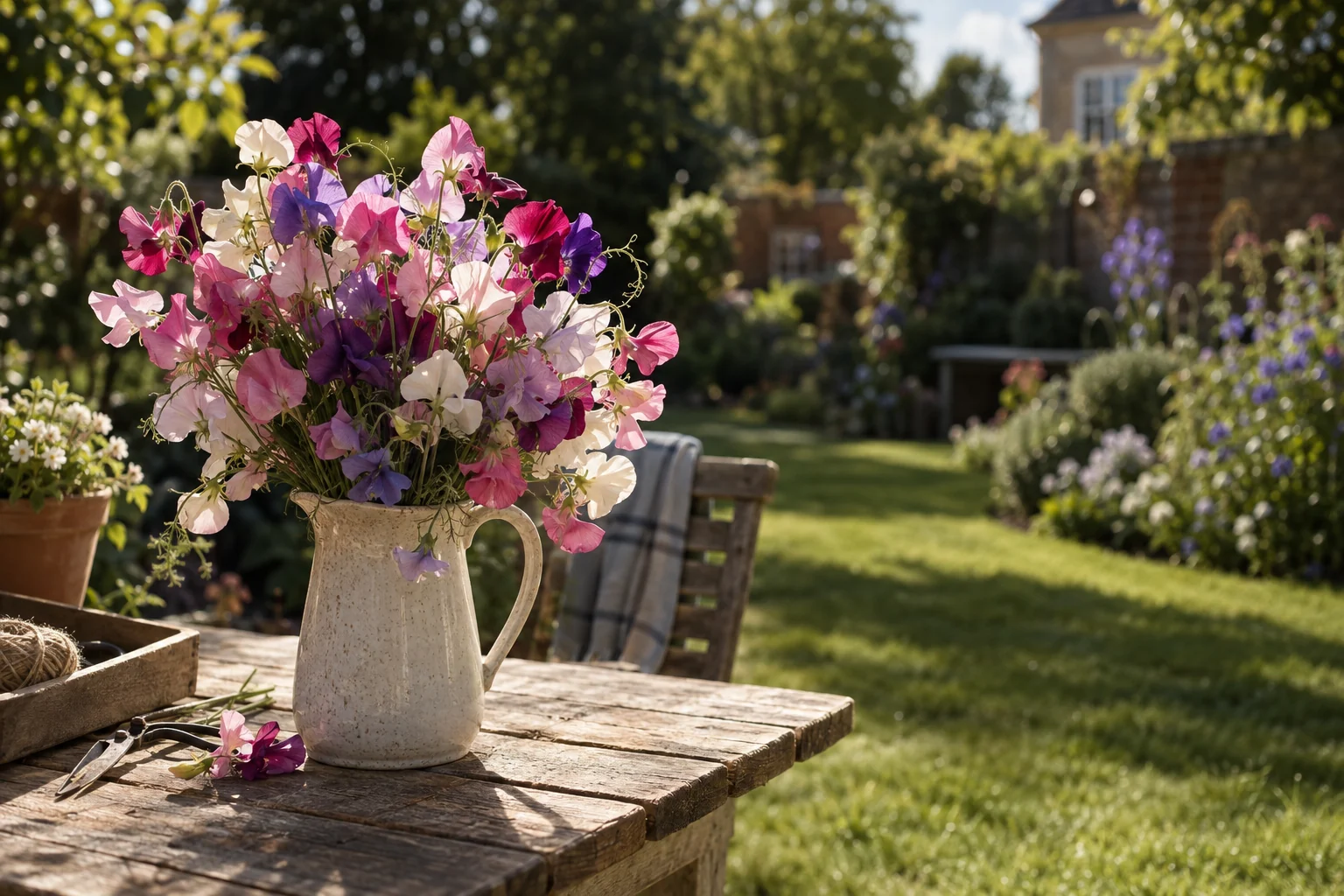
Sweet Peas: Britain's Most Beloved Cottage Garden Flower
It is late October, which means the garden is beginning to look as though it would quite like a lie-down. Dahlias are fading, the lawn has stopped pretending it needs mowing every weekend, and the seed trays can feel like a job for some distant, sunnier version of yourself. Sweet peas are the exception. If you want armfuls of flowers next year, this is one of the useful little windows in which to get moving.
Lathyrus odoratus has been woven into British gardening life for centuries. It has the loose, romantic look of a cottage-garden favourite, but it is not merely decorative background planting. A good sweet pea plant is a flower factory with ambition. Give it a support, keep it watered, remove the flowers and seed pods with something approaching obsession, and it responds with an extraordinary run of bloom.
The scent is the thing, of course. A vase of sweet peas on a kitchen table has a way of making the whole room feel briefly more civilised. It is soft, sweet and unmistakably summery, even when rain is ticking at the window and the washing is still on the airer. Plenty of flowers are beautiful. Very few can fill a room quite so generously from a handful of stems.
There is also something deeply satisfying about their rhythm. You sow. You wait. You pinch out the growing tip when the plant is small enough to look slightly offended by the procedure. Then, once summer arrives, you cut flowers every few days and somehow get rewarded with more flowers for doing so. It is one of gardening's better bargains.
This guide concentrates on the three decisions that make the largest difference to the eventual haul: whether to sow in autumn or spring, how and when to pinch out young plants, and why cutting regularly is not a luxury but the central trick. Support, watering and pest problems matter too, naturally. But get these three right and you have already done most of the intelligent work.
The sweet pea rule worth remembering
Sweet peas are annuals, so their priority is to flower, make seed and finish. Your priority is different: keep removing flowers before pods develop. The plant keeps trying to complete its life cycle; you keep politely interrupting it with secateurs.
At a Glance: Everything You Need to Know Before You Sow
Before filling every available pot with compost, it helps to know the broad timetable. Sweet peas give you two sensible sowing routes in the UK: autumn, which is what you can do now, or spring, which remains an excellent option if autumn has slipped away beneath a heap of leaves and other perfectly reasonable distractions.
Neither method is a test of gardening virtue. Autumn sowing tends to produce larger, earlier plants because they have time to build roots before the rush of spring. Spring sowing is straightforward, useful where winter protection is limited, and entirely capable of producing a spectacular display. Direct sowing outdoors is the simplest route, although it gives plants less of a head start and exposes seedlings to more competition from weather and garden life.
One useful distinction: an established autumn-sown plant is not the same thing as a newly germinated seedling left exposed to the worst of winter. Autumn sowing works best when seedlings have made steady, compact growth before temperatures fall sharply, then spend winter somewhere bright and protected from the harshest weather. A cold greenhouse or sheltered frame can be very useful. The aim is not lush growth. It is a stocky young plant with roots quietly getting on with the serious business.
Come spring, your job becomes rather more physical. Plants need a permanent place, a tall support and regular attention. Sweet peas are not a plant you can pop in and forget until July. They do not demand military precision, but they do notice neglect. In return, they offer the sort of flower harvest that makes you start looking around the house for more vases.
Autumn Sowing: The Secret Weapon of Seasoned Sweet Pea Growers
If you are reading this in late October, you are in the sweet spot for autumn sowing. The usual window runs from October into November, with the practical cut-off governed by whether seedlings can establish before real winter weather arrives. A mild autumn makes the task feel almost suspiciously easy. A sudden cold snap, on the other hand, is a reminder that the calendar may say autumn but the garden has its own opinions.
The attraction is simple: autumn-sown sweet peas spend more time making roots. By spring, they can have a six to eight week head start on root development compared with plants started later. That does not mean you will see a jungle of foliage by Christmas. You do not want one. The prize is a compact plant with a better-developed root system, ready to accelerate as daylight and temperatures improve.
They also experience a period of natural cold conditioning over winter. In practical terms, that autumn and winter rhythm helps produce vigorous spring growth. It is not magic, and it does not remove the need for care, but it is one reason experienced sweet pea growers are so fond of an autumn sowing. They have seen the difference once the plants are in full flight.
Sow for roots, not instant greenery
Autumn plants should be sturdy rather than overgrown. A young sweet pea does not need to look impressive before winter; it needs to be alive, balanced and ready to grow away in spring.
Protect newly established plants from severe cold
Established autumn-sown plants are hardy to around -5°C, but sheltered conditions make winter losses less likely and prevent soft growth from being battered by repeated weather swings.
Plan to pinch later
Do not rush this part. Wait until seedlings are 10 cm tall and have at least two pairs of true leaves, then remove the soft growing tip just above a leaf node.
Use pots or root trainers rather than treating autumn sowing as an invitation to scatter seeds into cold, wet ground. The advantage of containers is control. You can keep seedlings in a bright, sheltered place, protect them from prolonged bad weather and move them if the forecast starts sounding theatrical. It also lets you inspect plants easily. A sweet pea that is quietly healthy is much easier to manage than one you have lost somewhere at the back of a border beneath an ambitious dandelion.
Keep the compost moist but not sodden. That sentence appears in an unreasonable number of gardening guides because it is true in an unreasonable number of situations. Sweet pea roots need air as well as moisture. A pot permanently sitting in water is not being well looked after; it is being placed in a tiny swamp. Let excess water drain freely and avoid encouraging soft, leggy growth with excessive warmth.
Light matters enormously. A windowsill can be useful, but the room behind it may be warmer than a sweet pea really wants once it has germinated. A bright, cool, protected setting produces tougher plants than a warm, dim corner. If your seedlings stretch, lean and look as though they are reaching desperately for a better life, give them more light and less warmth where possible.
Why autumn sowing feels so rewarding
The work happens at a quieter point in the gardening year. Seedlings are manageable, the greenhouse is less crowded and spring planting begins with sturdy young plants rather than another item on an already optimistic to-do list.
There is a risk attached, and it is worth saying plainly. Autumn sowing asks you to shepherd plants through winter. In an exposed garden, or where there is nowhere bright and protected to keep pots, losses are more likely. Mice, slugs, cold and persistent wet can all have a say. That is not a reason to avoid the method; it is simply why sowing a few more plants than you strictly need is sensible insurance.
As winter progresses, resist the urge to fuss every day. Check that the compost has not dried out completely, remove any obviously failing material and keep an eye on weather forecasts. The plants do not need a pep talk. They need light, protection from extremes and a gardener who remembers they exist. Frankly, that is enough for most of us in November.
Spring Sowing: A Perfectly Viable Route to a Spectacular Display
Missed the autumn window? Do not turn it into a gardening tragedy. Spring-sown sweet peas can be beautiful, productive and deeply scented. The plants may start flowering later than well-grown autumn-sown ones, but a thoughtfully managed spring sowing still provides masses of flowers. Most importantly, it gives you a clean, uncomplicated starting point at a time when the garden is waking up and enthusiasm tends to return with the first decent cup of tea outdoors.
For sowing under glass, February to March is the usual period. A bright windowsill, greenhouse or heated propagator can all work, provided germinating seeds have temperatures around 15–18°C. Once they are up, the goal again is sturdy, well-lit seedlings rather than elongated plants racing towards the ceiling.
Spring sowing is particularly helpful if winter conditions are harsh in your garden, if you have limited protected space, or if you simply prefer to start plants when you can give them regular attention. There is no prize for making gardening harder than it needs to be. The best sweet pea method is often the one you can carry out well.
For a spring sowing under cover: sow from February to March, aim for 15–18°C while seeds germinate, then grow seedlings in bright conditions and pinch them out once they reach 10 cm with at least two pairs of true leaves.
Direct sowing outdoors is the lower-fuss alternative. Wait until late March or April, when soil temperature has reached at least 10°C. This route avoids pots on windowsills and the inevitable moment when you discover you have somehow raised more seedlings than there are places to put them. It also means plants begin exactly where they will grow.
The trade-off is that direct-sown seedlings face the world immediately. They have no protected early stage, no opportunity to develop under your watchful eye, and no polite queue before slugs, weather and neighbouring weeds. Keep the sowing area clear, protect young plants as appropriate and be prepared for a less uniform result than you may get from plants raised under cover.
Whether you sow in pots or straight outside, do not be tempted to skip pinching out because the season feels as though it is moving too quickly. A single main stem can make a plant look pleasingly tall for a while, but pinching encourages branching. Branching means more flowering stems. More flowering stems means you begin taking bouquets to neighbours, which is a very good problem to have.
A spring-sowing reality check
Autumn sowing often starts earlier, but spring sowing is not second best. It is a different route with fewer winter worries. Good support, steady watering, pinching out and relentless picking matter more than winning the calendar by a few weeks.
When outdoor planting time arrives, choose a position with plenty of sun and room for a proper support. Sweet peas need airflow, but they also appreciate a site where the roots do not repeatedly dry out. If you are growing in a container, make regular watering part of the routine from the beginning. Containers can go from adequately damp to bone dry with astonishing speed during a warm spell. Sweet peas are forgiving of many things; drought at the roots is not one of them.
It is worth growing more plants than you imagine you need. This is not reckless seed-hoarding disguised as advice, although that does happen in gardening. Sweet peas are at their best when you can cut without guilt. A few plants may provide a pretty display. A generous planting creates the quantities that make this flower special.
Autumn vs Spring Sowing: Which Method Wins?
The short answer is that autumn sowing wins for early strength and the longest potential flowering run, whilst spring sowing wins for simplicity and flexibility. Direct sowing wins for minimal equipment. None of them is wrong. The right choice depends on your growing space, your appetite for winter plant care and whether you are reading this now, in autumn, or planning ahead for next year.
For gardeners able to protect young plants over winter, autumn sowing is the route most likely to produce particularly vigorous plants. First flowers are typically expected from late May into early June, and flowering can continue for up to 16 weeks if plants are managed well. That final phrase is doing a lot of work. A sweet pea left to set pods will not politely maintain the same level of production simply because summer is pleasant.
Spring plants may begin later, but their display can still be abundant. They are often the sensible option for beginners because there is less time for something to go wrong between sowing and planting out. Direct sowing cuts out indoor growing altogether, although it requires patience and accepts a little more uncertainty.
| Growing route | Autumn sowing | Spring sowing under cover | Direct outdoor sowing |
|---|---|---|---|
| Sowing window | October to November | February to March | Late March to April, once soil reaches 10°C |
| Likely first flowers | Typically late May to early June | Later than well-established autumn-sown plants | Usually the latest of the three routes |
| Potential flowering period | Up to 16 weeks with regular cutting and pod removal | Long and productive with regular cutting and pod removal | Productive, but with less early-season time available |
| Plant vigour | Highest potential, thanks to winter root development | Strong when raised in bright conditions | More dependent on outdoor conditions |
| Difficulty level | Moderate: needs winter protection and attention | Moderate: needs indoor space and light | Simple to begin, but less controlled |
| Main risk | Winter losses from cold, wet or pests | Leggy growth if conditions are too warm or dim | Weather, pests and competition around seedlings |
| Best suited to | Gardeners with a bright protected space | Gardeners starting fresh in late winter | Gardeners who prefer the least equipment |
My preference, where space allows, is to sow some in autumn and some in spring. It is not because every gardening task needs to become a grand experiment. It is because staggered sowing spreads the risk and gives a useful succession. If winter takes a few autumn plants, spring seedlings are there to fill the gap. If spring arrives dry, cold or chaotic, the autumn plants are already established. It is simple belt-and-braces gardening.
For a small garden or a few large containers, choose one method and do it properly rather than trying to run three systems at once. Sweet peas should be enjoyable. There is a point at which a collection of seed trays, labels and half-filled pots starts to feel less like a cottage garden and more like a very untidy laboratory.
Pinching Out: The Single Most Important Thing You Can Do for More Flowers
If you remember only one active intervention from this guide, make it pinching out. It feels counterintuitive the first time. You have raised a seedling, watched it grow, perhaps defended it from a curious pet or an enthusiastic child, and now somebody is suggesting you remove the very tip you worked to create. It seems rude. It is also extremely effective.
Sweet peas naturally want to grow upwards from a dominant central shoot. Left alone, that stem continues its determined climb. By removing the soft growing tip, you interrupt that dominance and encourage the plant to produce side shoots. Those side shoots develop into a bushier, sturdier plant with more potential flowering stems. In a flower grown for cutting, that is exactly what you want.
The correct moment is when seedlings reach around 10 cm tall and have at least two pairs of true leaves. This is typically four to six weeks after germination. Do not pinch the tiny first leaves that emerge with the seedling. Wait for proper true leaves and enough growth that the plant has a little resilience. Too early and you are simply making life difficult for a baby plant. Too late and you may have a tall, lanky shoot that could have branched earlier.
1. Check the height
Wait until the seedling is around 10 cm tall. The plant should not be straining upward desperately or looking weak and pale.
2. Find the true leaves and node
Make sure there are at least two pairs of true leaves. A leaf node is the point where leaves emerge from the stem; this is where new side growth can develop.
3. Remove the soft tip
Use thumb and forefinger, or clean sharp scissors, to take off the growing tip immediately above a leaf node.
4. Let the plant respond
Keep it growing steadily in good light. Side shoots should follow, giving you the fuller framework needed for more flowers later on.
The key word here is "soft". You are not pruning a mature shrub. You are taking out the tender topmost growing point. If you use scissors, make them clean and sharp. If you use fingers, a quick pinch is enough. There is no need to strip leaves or reduce the whole plant to a stump. The leaves below the cut are still the plant's solar panels; leave them in place.
After pinching, it can be tempting to stare at the plant every morning waiting for a transformation. Gardening does encourage this sort of behaviour. Give it time. The response is not usually dramatic overnight, but fresh side growth follows as the plant redirects its energy. Keep the compost evenly moist, maintain bright conditions and avoid moving the plant repeatedly from place to place.
The confidence trick
Pinching out is one of those jobs that feels destructive for roughly three seconds and sensible for the rest of the season. If your aim is armfuls rather than a single tall stem, it is worth doing.
What if you forgot? Do not panic. Sweet peas are generous plants, not unforgiving examiners. A missed pinch may mean a less branched plant, but it can still flower beautifully with good care. You can still support it, water it, feed it appropriately for flowering and pick it regularly. The difference is one of potential, not an automatic disaster.
Be equally wary of overdoing the intervention. Once plants have been pinched at the right early stage, they need to grow. Repeatedly cutting young plants back because you like the look of neatness is not helpful. The goal is branching and strength, not permanent restraint. Sweet peas are climbers. Let them become climbers.
Training, Support, and the Art of Getting Sweet Peas to Climb
Sweet peas are not wallflowers in the literal sense. Climbing varieties need something tall enough to climb, and providing it early is kinder than trying to build a structure once stems are already tangling around one another. A support of 1.8–2 m gives climbing plants the vertical room they need. Anything much shorter can leave you with a congested mound of stems at the top and a distinctly underwhelming display.
There are plenty of ways to create that height. Bamboo cane wigwams are familiar, easy to assemble and work well in beds or large containers. Hazel or willow supports suit a looser, cottage-garden look and have the useful quality of appearing as though they grew there, which is generous of them. Trellis panels, sturdy frames with netting and dedicated sweet pea supports can all work too.
Bamboo cane wigwams
A classic choice for containers and beds. Position canes securely, tie them at the top and guide stems towards the structure while plants are still young.
Hazel or willow frames
Natural branches create an informal support that suits sweet peas beautifully. Their branching gives tendrils plenty of opportunities to catch.
Mesh netting on a frame
Netting can be particularly effective because tendrils can cling directly. Choose mesh with openings of at least 5 cm so stems can be guided through without becoming trapped.
Young stems sometimes need help to find their route. Use soft garden twine or sweet pea rings to tie them in gently. Do not cinch ties tight around a stem; plants expand as they grow, and a tight tie becomes an accidental garrotte. A loose loop gives support without restricting growth. On mesh, tendrils will often do much of the work themselves once they have something suitable to grasp.
Check plants regularly in their first few weeks outdoors. A stem that has fallen sideways after wind or rain is easier to guide back when it is young. Leave it for too long and it may curl through its neighbours, hook itself round the wrong cane and create one of those knots that somehow takes longer to solve than assembling flat-pack furniture.
Support is also a weather precaution. A tall, securely anchored structure keeps plants upright during summer rain and wind, improves access for picking, and makes it much easier to spot flowers that need cutting before they become pods.
Containers are entirely possible, particularly for smaller gardens, patios and rented spaces. The principle remains the same: give roots enough room, make sure water can drain, add a tall support from the start and be realistic about watering. A pot in a sunny position can dry with startling speed. Once sweet peas are growing hard and flowering freely, they should not be left to discover drought as a character-building exercise.
Cut-and-Come-Again: How Picking More Gives You More
This is the part that turns a pretty display into an armfuls-of-flowers display. Sweet peas are naturally programmed to make seed. Once flowers are pollinated and pods begin to form, the plant receives the message that its job is progressing nicely. It begins to direct energy towards ripening those seeds rather than continuing to produce a steady procession of fresh blooms.
Your job is to stop that happening for as long as possible.
Cut flowers frequently. If you are not cutting for the house, still remove spent flowers before pods develop. Do not leave a few pods because they look harmless. They are not harmless. They are tiny declarations that the plant can slow down now. The golden rule is simple: never allow seed pods to develop if maximum flowering is your aim.
The best time to cut a stem is when the lowest two florets are just opening and the upper buds have not fully developed. This gives you flowers that have begun to show their colour and scent, while leaving the rest of the stem to open in the vase. Cut too early and the display may not develop as well. Cut too late and the lowest flowers may already be past their best. Like most good flower-picking advice, this becomes intuitive once you have done it a few times.
The picking routine that works
Carry a small bucket or vase when you inspect sweet peas. Cut stems at the ideal stage, deadhead anything past its best and remove every forming pod you can find. Regular, thorough attention is far more effective than an occasional hurried sweep.
A sharp, clean pair of scissors or snips makes a neater cut than tearing stems. Work gently around the plant, especially once it becomes dense with foliage and tendrils. It is easy to catch a neighbouring stem and pull more than intended. Sweet peas can look delicate, but a tangle of mature growth has a surprising talent for holding on to itself.
The vase life is typically five to seven days when stems are cut at the right stage. Bring them indoors promptly, arrange them in water and enjoy them where their scent can do its work. Hallways, bedside tables and kitchen tables are all good candidates. One warning: they may make other cut flowers seem a little emotionally distant afterwards.
Frequent cutting does more than keep the plant flowering. It also encourages you to look closely. You spot aphids early, notice whether leaves are dry and check that stems are still climbing where they should. The best sweet pea growers are not necessarily the ones with secret techniques. They are often just the ones who go outside with snips regularly.
Do not confuse picking flowers for seed saving with growing for maximum production. If you want to collect seed, you must allow pods to mature, and flowering will slow as a result. That is perfectly reasonable at the end of the season, when you have had the display you wanted. It is simply a different goal. Until then, be ruthless with pods.
Pros, Cons, and Honest Truths About Growing Sweet Peas
Sweet peas have a reputation for being easy, and that is mostly fair. They germinate and grow with enthusiasm, they are generous in flower, and their scent is hard to rival. But "easy" should not be mistaken for "plant once, ignore completely, return to bouquets". They reward regular, small acts of care. Think of them as charming but mildly demanding house guests.
What makes them brilliant
- They offer extraordinary fragrance, unlike almost any other flower you can grow in quantity from seed.
- The colour range spans white, pink, mauve, purple and bi-colours, making them easy to weave into almost any garden scheme.
- They are hugely productive when pinched, supported and picked regularly.
- They suit borders, cutting gardens, containers and compact spaces with vertical support.
- They are excellent cut flowers, with a vase life typically around five to seven days when harvested at the right stage.
- Bees are drawn to the flowers, bringing useful activity to the garden.
- As annuals, they complete their life cycle in one season and do not require overwintering as mature plants.
What catches people out
- Climbing varieties need substantial support of 1.8–2 m; a short cane arrangement will not do them justice.
- They need regular cutting or deadheading. Seed pods rapidly reduce the incentive to make more flowers.
- Drought at the roots can lead to stressed plants and contributes to mildew problems later in the season.
- Autumn-sown plants need protection through winter, especially in exposed gardens.
- Young growth can attract aphids, and summer flowers may be marked by thrips in hot, dry conditions.
- They can become a little tangled if you do not train stems early and inspect supports regularly.
The real joy of sweet peas is that good technique pays back disproportionately. Pinch one small growing tip and you encourage more stems. Pick one bouquet and you prompt more flowers. Water consistently and mulch the root area, and plants are better equipped to cope with the sort of dry, humid summer weather that brings mildew. Few plants make cause and effect quite so visible.
They are also excellent for gardeners who want cut flowers without dedicating the entire garden to formal floristry. A row at the back of a vegetable bed, a wigwam in a sunny border or a generous container near the patio can all supply the house. Their climbing habit means they take up vertical space rather than demanding a broad patch of ground.
The limitation is timing. Sweet peas are at their best when you are around to pick them. If you are away for a fortnight at peak flowering, pods can form and flowers can pass quickly. Ask a neighbour to cut them, if possible. It is the rare gardening favour that leaves both parties happier: you come home to plants still producing, and they go home carrying flowers that smell wonderful.
Troubleshooting Common Sweet Pea Problems
Even healthy sweet peas can have awkward moments. Most problems are easier to manage when caught early, which is another reason regular picking rounds are useful. A quick inspection while cutting flowers tells you far more than a worried glance from the kitchen window ever will.
Powdery mildew
Powdery mildew appears as a white, powdery coating on leaves. It is most common in July and August, particularly when roots are under drought stress while the air is humid. This is a frustrating combination because the garden can feel damp enough to you whilst plants are still short of water where it matters.
Prevention begins at ground level. Keep watering consistent, avoid letting plants dry out completely and mulch around the root area to help retain moisture. Good support and sensible training also help air move around stems rather than creating one dense, humid mass of foliage.
If powdery mildew appears: remove badly affected material where practical, reduce drought stress at the roots and consider a diluted milk spray made at a ratio of one part milk to nine parts water. A proprietary fungicide is another option where appropriate.
Aphids: blackfly and greenfly
Aphids often gather on growing tips and flower stems in May and June. They are particularly fond of fresh, tender growth, which is rather inconvenient because that is also the part of the plant you are most eager to protect. Small colonies can be knocked off with a jet of water. Check again a few days later, because aphids are not renowned for taking a hint.
If numbers build, insecticidal soap can help. It is also worth encouraging ladybirds and lacewings, which are useful predators of aphids. Avoid reacting to every solitary aphid with the gardening equivalent of a fire brigade response. Look for a genuine build-up, watch for distorted growth and deal with the problem before it becomes a crowd.
Thrips, often called thunder flies
Thrips can cause silver streaking on petals and are more common in hot, dry summers. They are frustrating because the damage tends to show on the flowers themselves, exactly where you least want it. Keep plants well watered at the roots and remove badly marked blooms. Organic control can be difficult; pyrethrum-based spray is best treated as a last resort rather than a routine response.
Problem: foliage looks dry, stressed or mildewed
Focus on consistent moisture at the roots. Mulching and regular watering are more helpful than repeatedly wetting foliage.
Problem: sticky tips with clusters of insects
Check for aphids, knock small numbers off with water and use insecticidal soap if a larger infestation persists.
Problem: fewer fresh flowers
Search carefully for seed pods. Remove every pod and spent flower, then resume frequent cutting at the correct stage.
Problem: one tall, sparse stem
If plants are still young enough, pinch out the growing tip at around 10 cm, above a leaf node. For older plants, concentrate on good support and regular care.
Not every mark is a catastrophe. Leaves age, weather happens and the odd flower gets bruised by rain. The important thing is the overall picture: are plants still making healthy new growth, climbing well and producing fresh buds? If they are, avoid overcorrecting. Gardening is often less about achieving spotless perfection and more about keeping the plant moving in the right direction.
Frequently Asked Questions About Growing Sweet Peas
Yes. October into November is the main autumn sowing period. Raise seedlings in a bright, protected place so they can establish before winter, then protect them from the harshest conditions.
Pinch out the growing tip when seedlings are around 10 cm tall and have at least two pairs of true leaves. This is typically four to six weeks after germination.
Climbing sweet peas need support around 1.8–2 m high. Cane wigwams, natural twiggy structures, trellis and framed mesh all work well when securely anchored.
The first thing to check is whether seed pods have formed. Remove pods immediately and keep cutting flowers. Also check for drought stress, especially during warm summer weather.
Pick regularly throughout the flowering season. Cut stems when the lowest two florets are just opening, and remove spent flowers and pods whenever you see them.
The GardenScout verdict
For armfuls of scented flowers, sweet peas need three things from you: a strong start, a timely pinch and a ruthless picking routine. Sow now for the advantages of winter root development, or start under cover next spring if that better suits your garden. Either way, give climbing plants proper support and never let pods linger. Your reward is one of summer's finest flowers, repeatedly arriving at the back door in quantities that make you wonder why you did not grow more.