
Cordless Grass Trimmers vs Wheeled Trimmers for Long, Rough Grass
For orchard floors, paddock edges, ditch banks and field margins: the honest guide to choosing the tool that will finish the job without finishing you first.
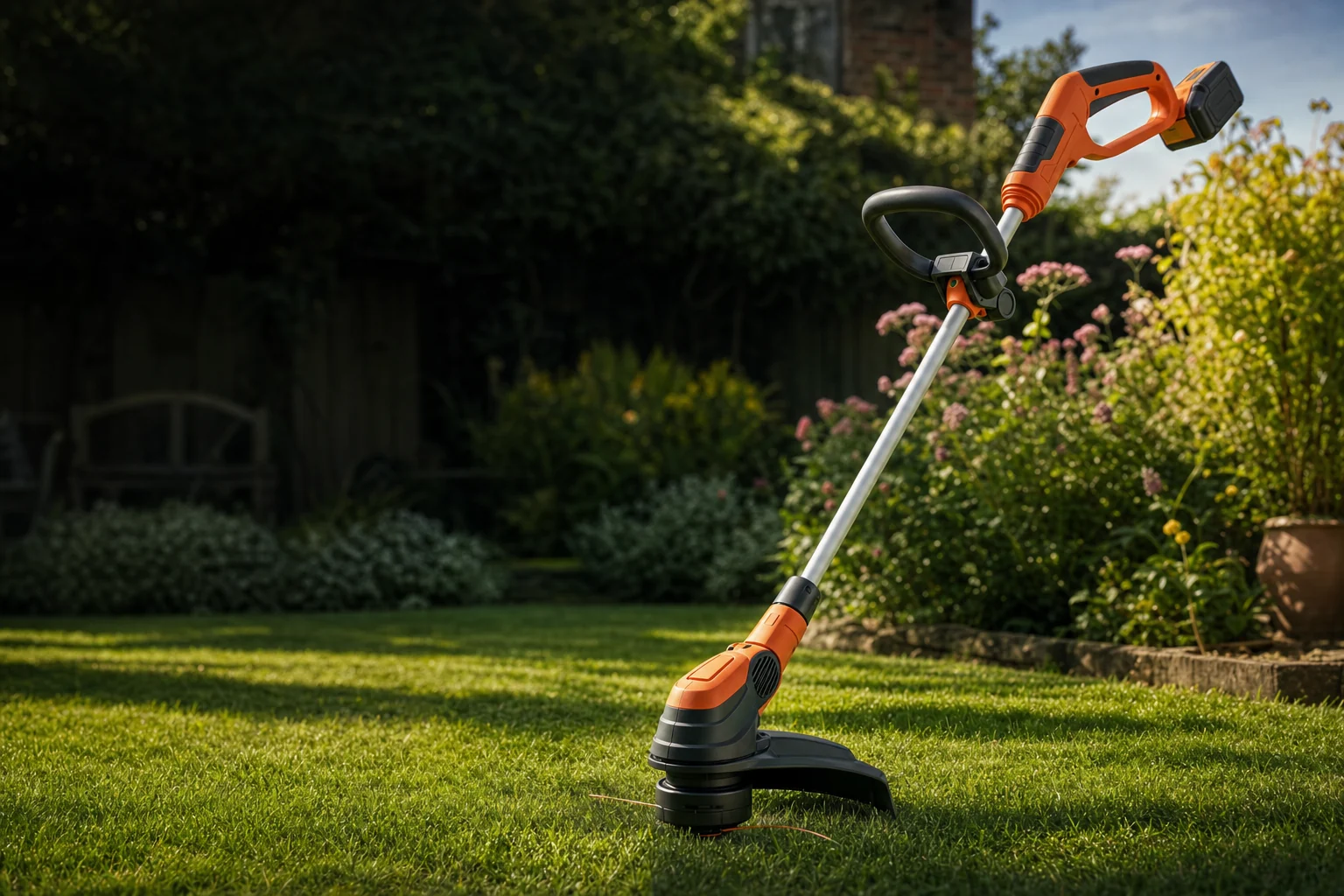
When a Strimmer Just Won't Cut It: The Case for Stepping Up
There is a particular sort of grass that makes ordinary gardening equipment look rather optimistic. It starts innocently enough: a strip behind the shed, perhaps, or the uncut perimeter of an orchard. Then a fortnight passes. Rain falls. The nettles develop ambitions. By the time you return, the area has become less "lawn maintenance" and more "small expedition into hostile territory".
Orchards, paddock edges, ditch banks and rough field margins all create this problem in slightly different ways. A mower may be too wide, too low or simply too vulnerable to get close to tree trunks, fence posts and uneven ground. A conventional strimmer can reach those places, certainly, but reaching is not the same thing as clearing. Long grass wraps around the head, wiry stems chew through line, and your arms eventually discover that holding a spinning tool at ankle height is a surprisingly effective upper-body workout.
That is where the choice between a cordless handheld grass trimmer and a wheeled trimmer becomes genuinely important. These are not interchangeable versions of the same idea. They are two responses to the same nuisance, but they solve it in very different ways.
A cordless handheld trimmer is the evolved strimmer: quiet, nimble, free of extension leads and increasingly capable. Models such as the Stihl FSA 57, DeWalt 60V FlexVolt, Milwaukee M18 Brushless and EGO Power+ ST1623T bring better motors, stronger batteries and wider cutting swathes than the lightweight garden trimmers many of us remember. They are built around precision. You carry the cutting head to the awkward bit.
A wheeled trimmer takes the opposite approach. Rather than carrying the machine, you guide it. The wheels support the working weight, whilst the cutting deck attacks open rough grass at a fixed height. It is the difference between cutting a hedge with secateurs and taking a hedge trimmer to it. Both have a place. Only one is likely to make sense when there are hundreds of metres of neglected margin ahead.
The useful dividing line
This is not a comparison for tidying lawn edges or snipping the grass around a patio pot. It is about vegetation from roughly 15cm upward, especially in places a mower cannot sensibly go: dense grass under fruit trees, rough strips beside stock fencing, bristly margins and the sort of ground that has roots, ruts and surprises hidden in it.
The temptation is to buy the smallest, lightest trimmer and hope enthusiasm will close the gap. It rarely does. A small cordless model can be delightful for a quick finishing pass, but it can become painfully slow once the growth is deep, damp or tangled. Equally, a wheeled trimmer can be wonderfully effective on open rough grass, then feel like a shopping trolley with ideas above its station when faced with tight gaps between trees.
The better question is not "which tool is more powerful?" It is "where will the cutting head need to go, and how much of that ground is there?" Get that right and the decision becomes much less mysterious.
Know Your Ground: Which Tool Type Belongs in Which Terrain
Rough grass is not one thing. It may all look equally uninviting from the kitchen window, but the terrain underneath changes the right tool more than most people expect. Before comparing volts, blades or battery platforms, walk the area. Properly walk it. Notice the roots, slopes, holes, posts and hidden obstacles. Your future shoulders will appreciate the reconnaissance.
1. Orchard floors with roots and undulating ground
A handheld cordless trimmer is usually the more useful finishing tool around tree trunks, low branches and exposed roots. You can lift the head over an obstruction, change angle and work carefully around bark. A wheeled machine is more persuasive in the open runs between rows, where there is enough room to make continuous passes without constantly manoeuvring around a trunk.
2. Paddock fence lines with dock, nettle and thistle
Fence lines reward reach and control. A handheld machine can work beside posts, beneath rails and around wire where a wheeled deck cannot safely sit. For the broad strip beside the fence, though, wheel support becomes attractive very quickly. The sensible answer is often not one tool but a division of labour: wheeled machine for the bulk, handheld trimmer for the fiddly final metre.
3. Ditch banks and steep slopes
This is handheld territory. A wheeled trimmer needs its wheels on the ground and enough stability for the operator to guide it. On a steep ditch bank, that relationship becomes awkward fast. A cordless trimmer lets you stand where footing is secure and present the cutting head to the slope rather than trying to persuade a wheeled machine to behave like a mountain goat.
4. Rough field margins beside hedgerows
Long, mostly open margins are where a wheeled trimmer earns its keep. A supported machine can cover broad ground without asking your forearms to hold the full working mass. The handheld trimmer remains valuable at the hedge base, around gateways and wherever brambles or low branches force a more precise approach.
The Stihl FSA 57 illustrates why cutting circle matters. Its 280mm cutting circle is a sensible size for controlled garden work, but it means each pass clears a relatively narrow strip. In vegetation above 30cm tall, the head must often be moved slowly and repeatedly, especially when the grass falls over rather than standing neatly to attention. That is not a criticism of the FSA 57. It is simply the geometry of the job.
Even a 300mm-class handheld trimmer can feel modest when the target is tall rough grass across a large area. You can absolutely clear it, but the work becomes a sequence of overlapping arcs. The operator has to hold the machine, judge the cutting height, manage the cable or blade, keep an eye on obstacles and move every bit of mass through every pass. After a while, you become very aware that grass is not cutting itself.
Wheeled trimmers gain their advantage not through clever marketing but through structure. Wheel support takes the working weight off your arms, and a deck holds the cut at a more consistent height across each pass. On flat, open rough ground, that combination is hard for a handheld tool to match.
There is a caveat, because there is always a caveat. Wheels are only helpful where wheels can travel. Rutted orchard ground, exposed roots, narrow gaps, low boughs and abrupt changes of level all limit a walk-behind machine. If the cutting area resembles an obstacle course designed by a bad-tempered badger, manoeuvrability matters more than theoretical coverage.
For most larger plots, the practical answer is a map rather than a verdict. Mark the broad, level sections in one colour and the intricate sections in another. The first colour points towards a wheeled trimmer. The second points towards a handheld cordless machine. The overlap is where you decide whether one versatile tool is enough, or whether the job has grown beyond a one-tool solution.
Cordless Handheld Contenders: The Full Line-Up Assessed
The cordless category is far broader than the phrase "battery strimmer" suggests. At one end sit compact, light machines intended for routine garden edges. At the other are brushcutters with wider cuts, metal blades, higher-voltage systems and handle arrangements designed for serious sessions. The important bit is not assuming that every cordless trimmer belongs in the same class. They do not.
The Stihl FSA 50 is the compact option here. At 2.9kg and with a sound power level of 82dB, it suits the gardener who wants low fuss and a manageable machine for lighter clearing. Its 25cm cutting width is correspondingly modest. That makes it composed in confined spaces, but it also means a large overgrown margin will take time. No amount of optimism changes a 25cm cut into a 35cm cut.
The Stihl FSA 57 moves into more useful general-purpose territory. It weighs 3.5kg with the AK10 battery attached and uses a 280mm cutting circle. With the AK10, working time is around 20 to 25 minutes; moving to the AK30 takes stated working time to 60 minutes. It accepts the AutoCut C 3-2 nylon head as standard, while the PolyCut 3-2 blade head is an optional alternative. For mixed gardens with banks, trees and the occasional rough corner, that flexibility is valuable.
The Stihl FSA 60 R brings a wider 35cm cutting width. That seemingly small step matters in practice: each sweep covers more ground, which reduces the number of overlapping passes needed across a long run. It sits naturally between garden maintenance and rougher regular clearing. The FSA 80 goes further with a bike handle and two-level variable speed control, making it the Stihl option here that most clearly acknowledges longer, more demanding work.
The Bosch GFR 18V-23 takes a different route. Rather than relying on nylon line, it uses a laser-cut metal blade with a 23cm cutting diameter. It weighs 3.6kg, runs on an 18V battery and reaches a maximum speed of 6400rpm. Its 76dBA noise figure is notably restrained. The smaller cutting diameter will not make it the quickest tool across open grass, but the blade changes what it can deal with when stems become tougher and more fibrous.
Then there are the more assertive North American-style platform tools. The DeWalt 60V FlexVolt uses a 60-volt 3Ah lithium-ion battery and delivers at least 40 minutes per charge. Its 14- to 16-inch cutting swath is adjustable. That upper setting translates to a far more substantial clearing pass than the compact garden models, whilst the lower setting helps when precision matters. It is, however, a heavier tool in use, and full-power work places noticeable demand on the battery.
Milwaukee's M18 Brushless Battery Grass Trimmer also offers an adjustable 14- to 16-inch cutting swath, together with an Easy Load head intended to make restringing quicker. Its variable-speed trigger is useful because rough grass does not always require maximum output. In thick grass and weeds, it has shown strong cutting performance without slowing down. That is exactly the trait to look for when your "grass" includes weeds that seem to have their own postal address.
The EGO Power+ Powerload with Line IQ ST1623T has performed especially strongly in testing, with good battery life and excellent weedeating ability. It is not a featherweight, but it is a good reminder that the strongest cordless trimmers are no longer merely quiet alternatives for suburban borders. They can be serious clearing tools, provided you accept the weight and organise batteries around the amount of work.
Finally, the WORX GT 3 is the lightest named model in this group at 2.4kg. Its adjustable shaft, handle and head make it adaptable and approachable. It is the obvious choice where comfort, modest scale and easy positioning come first. Its 30-minute runtime with a 2.0Ah battery is useful for smaller tasks, but it is not the machine I would select as the only answer to a thick orchard margin.
2.4kg
14–16in adjustable
76dBA
6400rpm
60 minutes
23cm diameter
| Model | Key working specification | Best rough-grass role | Useful consideration |
|---|---|---|---|
| Stihl FSA 50 | 2.9kg; 25cm cutting width; 82dB | Small, intricate areas and lighter regular trimming | Compact cut means slower progress over broad ground |
| Stihl FSA 57 | 3.5kg with AK10; 280mm cut; up to 60 minutes with AK30 | General orchard and garden edge work | Battery selection makes a major difference to session length |
| Stihl FSA 60 R | 35cm cutting width | Regular clearing where greater coverage helps | Wider cut reduces the number of passes |
| Stihl FSA 80 | Bike handle; two-level variable speed | Longer, more demanding handheld sessions | Handle format is better suited to sustained work |
| Bosch GFR 18V-23 | 3.6kg; 18V; 6400rpm; 23cm metal blade | Tougher stems and woody material | Blade prioritises stem handling over broad coverage |
| DeWalt 60V FlexVolt | 60V 3Ah; 40+ minutes; 14–16in swath | Dense grass and weeds across larger areas | Full-power work asks more of the battery |
| Milwaukee M18 Brushless | 14–16in adjustable swath; Easy Load head | Thick weeds and flexible coverage requirements | Variable trigger lets you match output to growth |
| EGO Power+ ST1623T | Powerload with Line IQ | High-performing cordless weedeating | Strong capability comes with a heavier tool |
Stihl's AK system deserves separate mention because batteries are part of the buying decision, not an accessory to think about later. The FSA 57 can use AK10, AK20 and AK30 batteries. With the AK10, working time is around 20 to 25 minutes. With the AK30, it reaches 60 minutes. If you already use compatible Stihl cordless tools, that shared platform is a practical advantage: batteries can move between jobs rather than sitting in a drawer waiting for their annual moment of glory.
There are confirmed UK prices for several Stihl machines: the FSA 57 has been listed from £143.10, the FSA 60 R from £179.00, and the FSA 80 at £294.00. The important comparison is not merely ticket price, though. It is whether the tool's cutting width, battery choice and handle arrangement actually suit the job you expect it to do. The cheapest option is not cheap if it turns a one-hour clearance into a three-hour grumble.
Wheeled Trimmer Territory: Walk-Behind Power for the Long Haul
A wheeled trimmer is a walk-behind rough-ground machine. It places a rotating blade or flail cutting system within a deck carried by large wheels, with power supplied by a petrol engine or, increasingly, a battery motor. The key idea is not lawn-striping perfection. It is controlled destruction of tall, uncut vegetation over ground that is open enough for the machine to travel.
That distinction matters. A wheeled trimmer is not simply a lawnmower with stronger opinions. It is designed for the unlovely jobs: grass that has gone over, tall patches beside fields, scrubby edges, long orchard alleys and areas where a conventional mower is likely to clog or struggle. Its deck is intended to cut rough vegetation at a set height, and its wheels allow the operator to walk behind rather than carry the mechanism.
The mechanical advantage is wonderfully unglamorous: the machine bears its own weight. That changes the shape of a long job. With a handheld trimmer, every second of cutting asks your wrists, arms, shoulders and core to support the tool. With a wheeled machine, your effort goes into steering, turning and controlling the pace. You still work. You simply stop holding several kilograms out in front of you for hours at a time.
That means wheeled trimmers shine on the sort of ground that rewards uninterrupted passes. A long paddock edge is the classic example. So is an orchard row with enough space between trees. You guide the machine forward, keep its wheels on reasonably stable ground and let the deck maintain a consistent cutting height. It is repetitive in the best possible way. Repetition is productive when it is not occurring inside your shoulder joints.
Battery-powered walk-behind machines are relevant to gardeners who want the quieter, lower-fuss character of cordless equipment but need the wheel support of a rough-cut machine. Petrol walk-behind brush cutters remain a familiar format for bigger, more demanding clearances. The category also includes various wheeled options associated with established garden machinery names. What matters more than the badge is the layout of your ground: width, slope, obstacle density and the proportion that can be cleared in straightforward forward passes.
There are limits. A wheeled trimmer cannot tuck its head precisely beneath a fence wire. It cannot gracefully step over a root. It will not enjoy being forced through a narrow gap between fruit trees. On rough terrain, wheel support can become wheel limitation. If the deck constantly catches, pitches or has to be lifted around obstacles, the advantage diminishes rapidly.
Think in zones, not acres
A large garden does not automatically demand a wheeled machine, and a small garden does not automatically rule one out. The decisive measurement is the size of the open, traversable zone. Ten uninterrupted metres of rough margin is one kind of job. Ten metres broken by trunks, posts, roots and slopes is another entirely.
For many owners of orchards and paddocks, the wheeled trimmer is best understood as the bulk-clearing tool. It deals with the broad middle of the problem. A cordless handheld trimmer then does the border work the deck cannot reach. That may sound like buying two tools, which is not always what anyone wants to hear. But it is often more honest than expecting a handheld machine to behave like a walk-behind brush cutter, or expecting wheels to perform delicate work around obstacles.
Power, Cut Quality and Vegetation Handling: Head-to-Head
Power is the headline figure everyone wants, but rough-grass performance is really six different questions wearing one muddy coat. Can the tool keep cutting in dense grass? What happens when it meets thistle, dock or woody stems? Does it leave an even finish? How often do you stop for line, clearing or recovery? Does damp vegetation change the outcome? And how quickly does the machine return to work after it has bogged down?
| Performance dimension | Cordless handheld trimmer | Wheeled trimmer |
|---|---|---|
| Dense, long grass | Strong models can cut aggressively, but progress depends on cutting width, battery capacity and operator pace. | Best suited to broad, open areas where the deck can travel continuously. |
| Dock, nettle and thistle patches | Excellent access around posts, trees and fences; blade-equipped tools offer an advantage on tougher stems. | Efficient through open patches, but less precise close to obstacles. |
| Uneven ground | Operator can alter angle and height instantly around roots and ruts. | Most effective where wheels can stay stable and move freely. |
| Cut consistency | Depends on the operator holding a steady working height. | Deck and wheels naturally help maintain a more consistent pass height. |
| Line or blade contact | Nylon line can wear quickly against hard stems and obstructions; metal blade systems are a different proposition. | Deck-based cutting avoids the constant sweeping contact pattern of a handheld line head. |
| Restarting after a struggle | Easy to lift, reposition and take smaller bites of the vegetation. | Works best when there is room to reverse, reposition and resume a clean pass. |
1. Cutting through dense grass
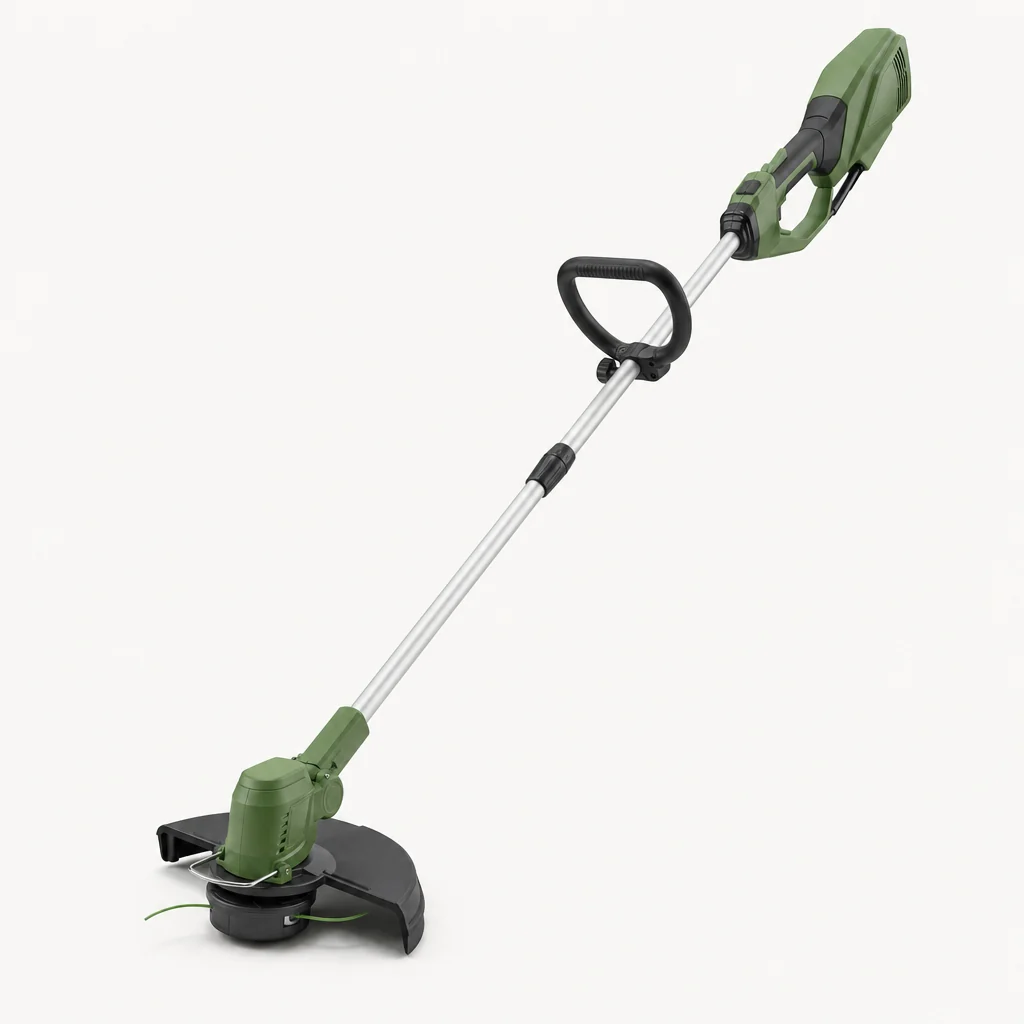
The DeWalt 60V FlexVolt and Milwaukee M18 Brushless are notable because they have shown the ability to power through thick grass and weeds without slowing down. That is meaningful. Many battery trimmers can spin line quickly in ordinary grass, then lose momentum when dense vegetation starts wrapping around the head. In a rough margin, maintaining cutting force matters more than looking lively for the first ten seconds.
Most battery-powered string trimmers reach at least 5000rpm, while the stronger examples can hit 6500rpm. The Bosch GFR 18V-23 reaches 6400rpm, and its electronic speed control is intended to maintain a constant rotational speed. Speed alone does not decide the result, but it affects how effectively the cutting system can slice rather than merely batter its way through tall growth.
2. Tough stems, woody growth and thorny enthusiasm
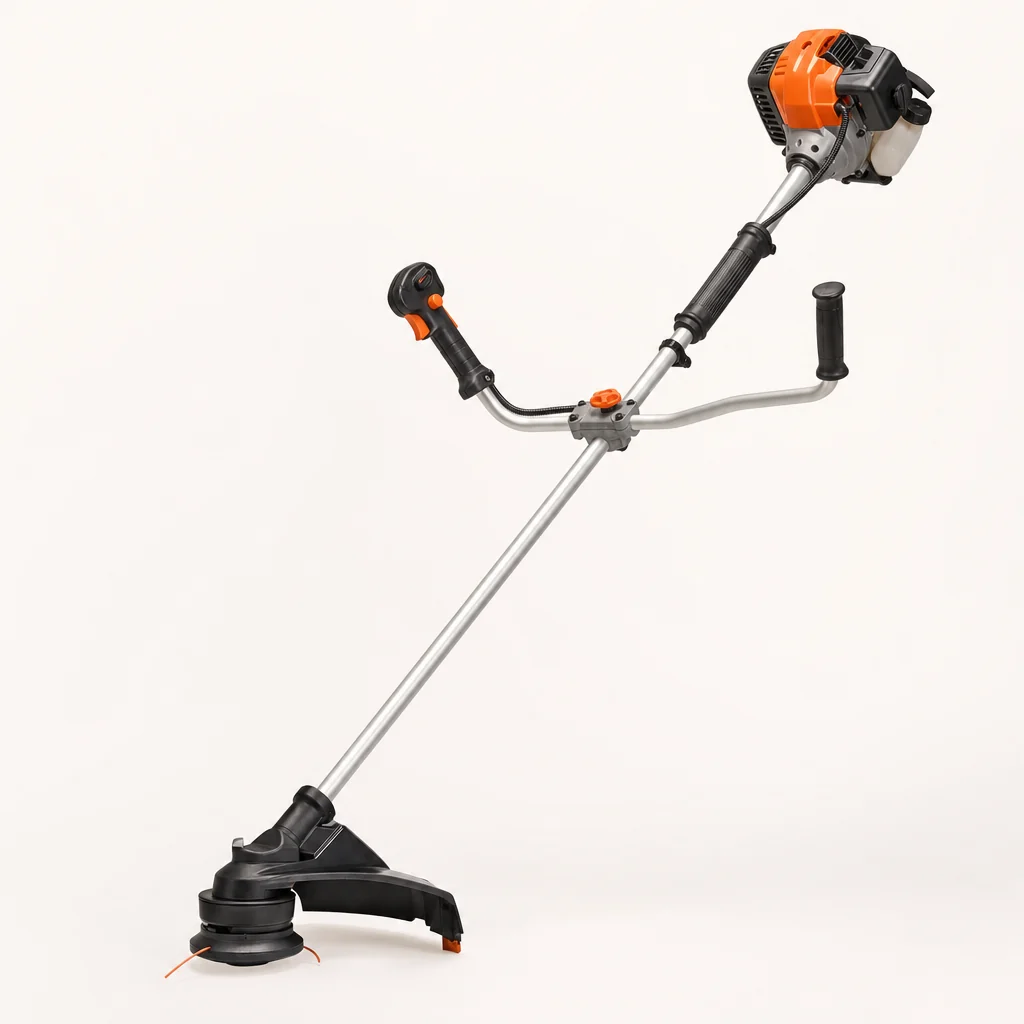
Nylon line is excellent at grass. It is also sacrificial by design. When it meets a bramble, thick dock stem or hard obstruction, it frays and shortens. That is normal, not a fault. The problem begins when the vegetation is dominated by material that asks more from the head than nylon line is suited to give.
This is where the Bosch GFR 18V-23 has a distinctive role. Its laser-cut metal blade is the important differentiator. A 23cm blade diameter is not built for sweeping broad expanses at speed, but it is better matched to tougher stems than a standard nylon-line system. In the right patch of ground, that can matter more than a big quoted cutting width.
3. Evenness across rough ground
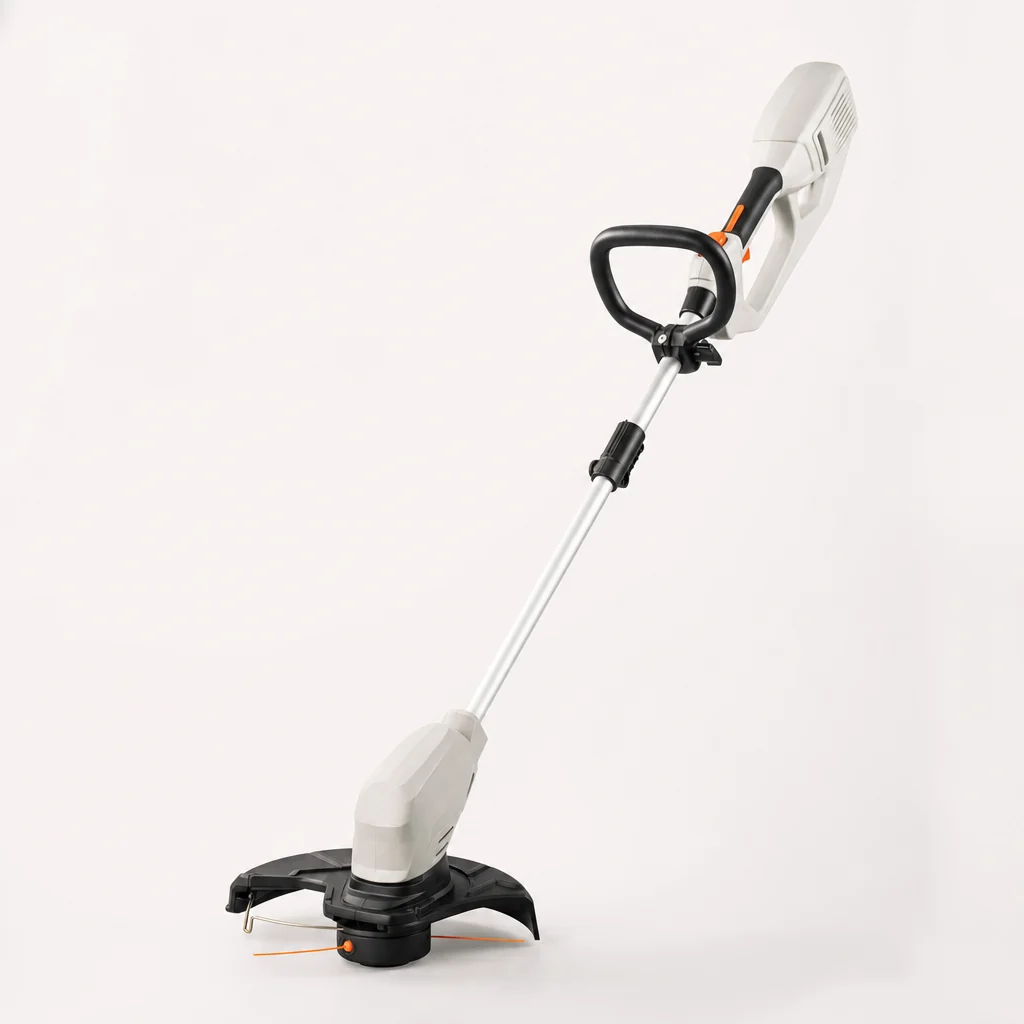
A wheeled machine has the structural advantage here. Its deck travels at a controlled height above the ground, so an open pass tends to be more even than a handheld pass made by a tired person trying to maintain the same arm angle for an hour. It is not magic; deeply uneven ground still affects the result. But wheel support removes one variable, and that variable is you.
4. Consumables and interruptions
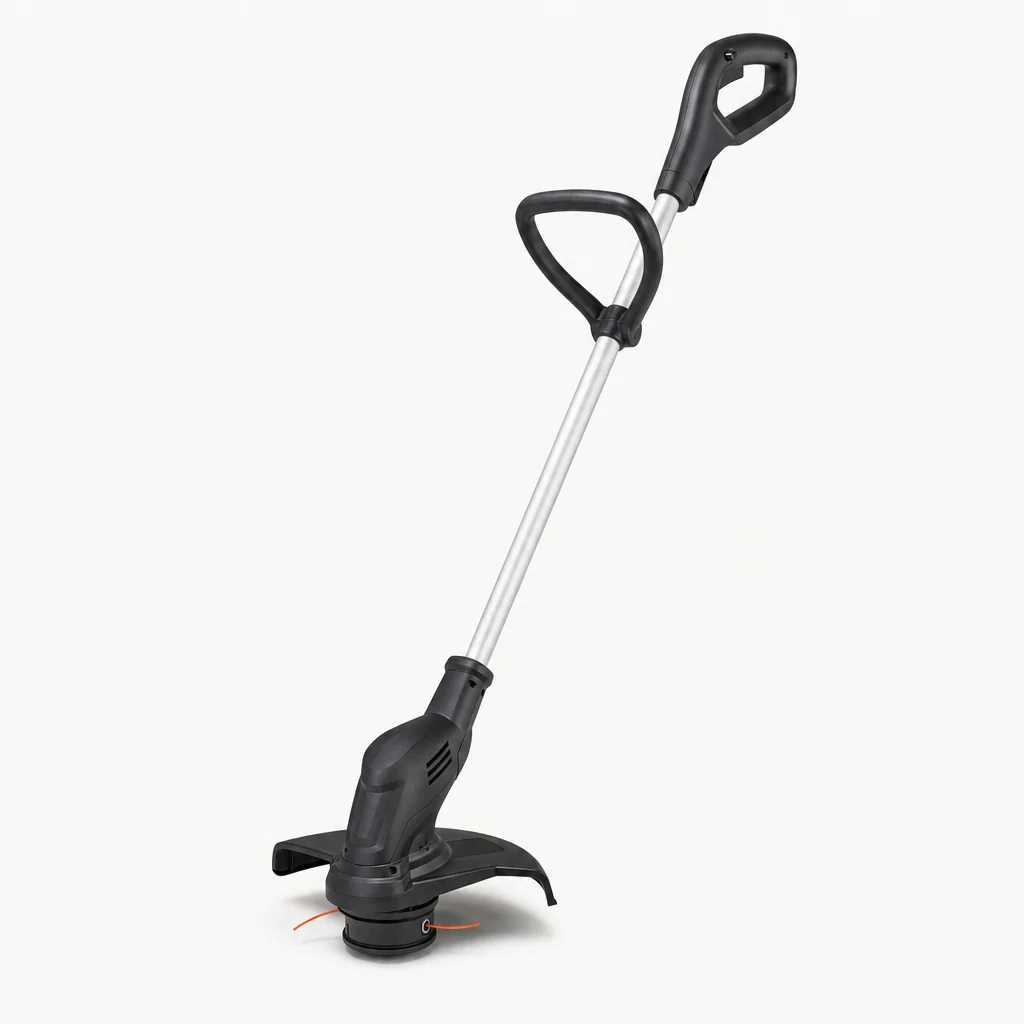
The Milwaukee Easy Load head is welcome because restringing is one of those little jobs that becomes disproportionately irritating when you are hot, scratched and halfway through a field edge. More generally, consider the cutting system as part of the workload. Nylon line is flexible and forgiving near hard surfaces, but it is a consumable. A blade offers better stem handling but requires more awareness of what lies in the grass.
5. Wet conditions and 6. recovery after bogging
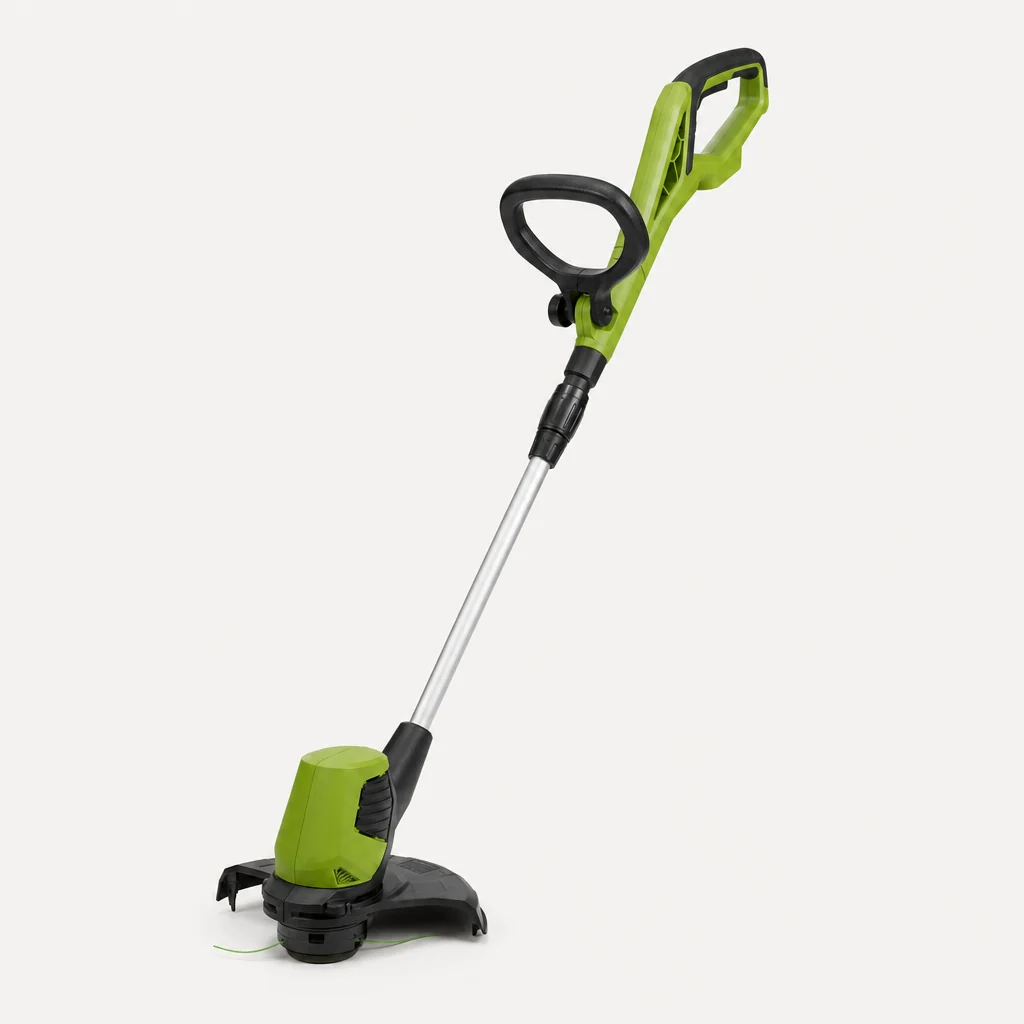
Damp long grass is heavier, clumps more readily and is simply less cooperative. A handheld tool can be lifted, angled and fed through in smaller sections. This ability to take smaller bites is one of its great strengths. A wheeled trimmer is happiest when its deck can continue forward through open material; if the vegetation is too tangled or the ground too awkward, you may need to reverse, re-approach and reduce the load.
Neither category has an automatic win. The handheld is more adaptable under pressure. The wheeled machine is more efficient when the terrain allows it to work as intended. The trick is recognising which sort of pressure your plot applies most often.
Battery Life and Runtime Reality Check for Rough-Grass Sessions
Battery runtime is one of those figures that invites wishful thinking. The quoted number is useful, but it is not a promise that every minute will involve attacking wet, dense grass at maximum effort. Rough vegetation increases the demand on the motor and cutting head. It is sensible to treat runtime as a planning figure, then build your working day around battery changes, charging and the fact that the final patch will somehow always be furthest from the shed.
The Stihl FSA 57 is one of the clearest examples because its battery options make the difference easy to see. With an AK10 battery, working time is around 20 to 25 minutes. With the AK30, it is 60 minutes. Those are two very different sessions. The smaller battery keeps the tool lighter and suits brief tidying work. The larger option turns it into a more realistic machine for extended cutting.
The DeWalt 60V FlexVolt offers at least 40 minutes per charge with its 60V 3Ah FlexVolt lithium-ion battery. The WORX GT 3 is stated at 30 minutes with a 2.0Ah battery. A Makita 36V brush cutter has delivered 30 minutes of nonstop cutting per charge. These figures are helpful reference points, but the important practical lesson is that tough work is battery work. If your target is a full orchard session, one battery is rarely a complete strategy.
Buy runtime for the job you actually have
If your work is ten minutes around a gate and a few fruit trees, a compact battery can be perfect. If it is repeated clearing across a long paddock edge, extra battery capacity is not a luxury. It is what keeps the work moving while the grass is still dry and your motivation remains vaguely intact.
Battery platforms also affect convenience. The Stihl AK family covers the FSA 50, FSA 57 and FSA 60 R, which can simplify ownership for anyone using more than one compatible tool. One set of batteries, one charging routine, fewer cupboards full of chargers that all look nearly identical but absolutely are not.
For rough-ground sessions, organise the work into manageable zones. Use a handheld cordless trimmer first for awkward tree bases, fence corners and slopes, then reserve the broad, accessible section for the tool best able to make uninterrupted progress. Good sequencing can save more time than chasing a marginal specification increase.
There is also a human side to runtime. A 20-minute battery can be entirely sufficient if it creates a natural pause to check line, inspect the ground and avoid pushing too hard. A 60-minute battery is useful if you have a clear block of work and a machine comfortable enough to use for that duration. Neither figure is inherently better. It depends whether the battery is setting the pace for a sensible job or interrupting a job that has barely started.
Ergonomics, Fatigue and the All-Day Working Test
A quick demonstration can make almost any trimmer feel manageable. Pick it up, swing it through a neat clump of grass, admire the result, hand it back. The real question is what happens after two hours. Or three. By then, the machine's balance, grip arrangement and working weight become more important than the first impression.
The WORX GT 3 is the clear lightweight figure here at 2.4kg. That makes it approachable for short jobs and frequent position changes. The Stihl FSA 50 follows at 2.9kg, while the FSA 57 weighs 3.5kg with the AK10 battery fitted. The Bosch GFR 18V-23 is 3.6kg. These may not sound like huge differences on paper, but they are carried differences. A kilogram held at arm's length is not the same kilogram as a bag of compost sitting on the ground.
Balance matters as much as weight. A tool that is slightly heavier but well balanced can be easier to control than a light tool that feels head-heavy. Battery placement matters too. Larger batteries usually support longer sessions, but they also change how the tool feels when you swing it side to side. The DeWalt is described as being on the heavier side, and that is worth taking seriously if your ground requires a lot of repeated sweeping rather than straightforward forward movement.
The Stihl FSA 80 deserves attention for its bike-handle configuration. This layout is designed for harness use, redistributing working load more effectively than a conventional single- or double-handed grip. For prolonged use, that is not a small ergonomic refinement. It can make the difference between steady, controlled cutting and the point where technique starts collapsing into a rather untidy shoulder-led shuffle.
Handheld cordless strengths
- Reaches beneath fencing, around trunks and into tight, irregular spaces.
- Can be lifted over roots and repositioned instantly on uneven ground.
- Generally quieter than petrol trimmers; cordless tools can operate around the low-80s dB range, with the Bosch listed at 76dBA.
- Battery power avoids cables and supports quick, targeted sessions.
- Blade-equipped options offer a useful route into tougher stem work.
Handheld cordless limits
- Your arms and shoulders carry the tool throughout the session.
- Narrower cutting circles mean more passes across open ground.
- Dense vegetation can demand slower, more deliberate cutting.
- Battery changes must be planned for longer clearances.
- Nylon line wears more quickly when it repeatedly meets tough stems and obstructions.
Wheeled trimmers reverse many of those strengths and weaknesses. Their major ergonomic win is that the wheels bear the working weight. On open ground, this is transformational. You still need to steer, turn and manage uneven surfaces, but you do not have to hold the machine aloft. That makes them much more comfortable for broad, sustained clearing.
Yet wheeled machines bring their own effort. Turning at the end of a pass, guiding over uneven ground and manoeuvring around obstacles can be tiring, especially where the terrain is lumpy. Their best environment is not "all rough ground". It is rough ground with enough space and stability for wheels to do their useful work.
My favourite practical test is brutally simple: imagine the final twenty minutes of the job, not the first five. Are you likely to be navigating tree roots and fence posts? Choose manoeuvrability. Are you likely to be walking a long, open strip that looks exactly like the previous hundred metres? Choose support and coverage. The body knows the answer before the brochure does.
Choosing by Job Size, Not Just by Tool Type
The most useful purchase decision begins with the work pattern. How often will you cut? How much of the ground is open? How much is intricate? What sort of growth appears between cuts? A machine that is perfect for monthly maintenance may be entirely wrong for twice-yearly recovery work, because the vegetation has had time to become denser, taller and less interested in compromise.
Small orchard owner
Choose a capable handheld cordless trimmer if tree trunks, roots and narrow spaces dominate. A Stihl FSA 57 or wider-cut FSA 60 R style of machine makes sense where precision is needed more often than broad coverage.
Paddock-edge manager
Favour a wheeled trimmer for the long open runs, then use a handheld tool at posts, gates and wire. This is the classic two-zone job.
Bank and ditch gardener
Use a handheld tool. The ability to work from secure footing and alter the cutting angle is more useful than deck support on a slope.
For occasional rough patches, the strongest cordless trimmer you can comfortably carry is often the sensible choice. It can edge, clear around trees, trim beneath obstacles and handle the awkward places that never disappear from a garden. In this role, battery power is a real pleasure: quieter operation, immediate starting and no cable trailing through the grass behind you like an unwanted tail.
For repeated open-area clearance, the logic changes. A wheeled trimmer can make the work more repeatable, more even and less tiring. Its value grows with every extra metre of open ground. If you are looking after broad margins or multiple orchard rows, it becomes less of a specialist machine and more of a time-saving workhorse.
There is a middle ground: a larger cordless handheld brushcutter with a wider cut, stronger battery arrangement or bike-handle layout. The Stihl FSA 80, DeWalt 60V FlexVolt, Milwaukee M18 Brushless and EGO Power+ ST1623T all belong in that conversation. They offer more authority than compact trimmers without demanding the storage space or turning room of a wheeled machine.
GardenScout's Practical Ratings
These are use-case ratings rather than a declaration of one universal winner. A cordless trimmer and a wheeled trimmer are both excellent when used where they belong. Asking either to impersonate the other is where disappointment begins.
The reason both score highly overall is that they solve different parts of the same problem. A cordless tool wins for reach, precision and complex ground. A wheeled machine wins for broad coverage and all-day comfort. Your plot decides the champion. Frankly, it has been making that decision for you for years.
Frequently Asked Questions
Yes, provided the tool is matched to the density and area. Stronger cordless machines such as the DeWalt 60V FlexVolt and Milwaukee M18 Brushless have shown strong performance through thick grass and weeds. For very broad, open areas, though, a wheeled trimmer is usually less tiring and more efficient.
No. A wider cut clears more ground per pass, but a narrower head can be easier to place accurately around trunks, roots and posts. The best width is the one that fits the tightest important part of your regular job without making the open sections unbearably slow.
Nylon line is effective for grass and forgiving near hard edges, but it wears when repeatedly hitting tough stems or obstructions. The Bosch GFR 18V-23's laser-cut metal blade is more appropriate where woody or fibrous material is a regular part of the job.
The AK10 is suitable for shorter work, with around 20 to 25 minutes of working time. The AK30 extends stated working time to 60 minutes and is the more practical choice for a longer clearance session. The right choice depends on whether your work is a quick trim or a sustained rough-ground job.
If your land combines broad open strips with detailed work around fences, trees and slopes, owning both can be a very practical arrangement. The wheeled machine clears the bulk; the handheld tool finishes the inaccessible areas. If storage, budget or usage frequency makes that excessive, choose the tool that best handles the part of the site you cannot reasonably avoid.
Final Verdict: Choose Reach or Choose Support
For tree roots, ditch sides, posts, wire, brambles and every awkward edge that makes a mower give up, a cordless handheld trimmer is the better tool. The Stihl FSA 57 offers a useful balanced route into the category, the FSA 60 R adds a wider 35cm cut, the FSA 80 brings bike-handle practicality, and models such as the DeWalt 60V FlexVolt, Milwaukee M18 Brushless, Bosch GFR 18V-23 and EGO Power+ ST1623T show just how capable modern cordless equipment can be.
For long, open rough grass where you can walk a clear line, a wheeled trimmer has the more convincing answer. Its wheels support the machine, its deck gives a more consistent cutting height and it saves the operator from carrying the whole job in their arms. That is not a minor comfort feature. Over a paddock edge or an orchard row, it is the point.
If your land is mixed, be realistic. Use a wheeled trimmer for the broad, level middle and a cordless handheld machine for the corners, trunks, slopes and edges. It may sound less romantic than finding one miracle tool. It is also much more likely to leave you with a clear margin, a functioning shoulder and enough energy to make a cup of tea afterwards. Which, in gardening terms, is a very respectable result.