
The Best Long-Reach Hedge Trimmers for Tall Hedges
The safer way to shape high privet, laurel and leylandii from solid ground, using extendable poles and genuinely useful pivoting heads.
Why Your Ladder Days Are Over: The Case for Long-Reach Pole Hedge Trimmers
Tall hedges are splendid things right up until they become your annual negotiation with a ladder. Privet is usually the first to get ideas above its station. Laurel follows enthusiastically. Leylandii, meanwhile, regards any attempt at restraint as a personal insult and carries on skywards.
By early September, most UK hedges have put on the bulk of their summer growth. This is a useful moment for a tidy-up, particularly where a formal boundary is creeping into paths, swallowing light or beginning to look as though it has been brushed with a very large hairdryer. A light late-summer trim can restore a clean outline before autumn properly settles in. It is not the moment for savage cutting into old wood, nor for disturbing active nests. But it is often exactly the right moment to deal with the fresh outer growth.
The awkward bit has always been the top. A hedge may only be a little above your reach, but "a little above" is enough to encourage some deeply questionable decisions: balancing on the top rung of a stepladder, leaning sideways with a running trimmer, or putting one leg into a border for stability. None of these becomes cleverer because the neighbour cannot see you.
The Health and Safety Executive has long highlighted falls from ladders as a serious source of injury. Garden work is not exempt from gravity, sadly. A ladder on uneven turf, damp paving or soft soil is already compromised; add an unwieldy powered blade held above shoulder height and the margin for error becomes very thin indeed.
That is where the long-reach hedge trimmer earns its keep. These machines put the motor and controls in your hands, a cutting blade at the end of an extended pole, and—most importantly for tall hedge tops—a head that pivots. Instead of trying to hold a conventional hedge trimmer horizontally above your head, you can stand back and angle the blade flat over the hedge crown.
The feature that changes the job
Reach matters, but articulation matters just as much. A head with a 180° pivot can be set broadly flat for the horizontal top of a hedge, angled for a tapered side, or moved towards vertical for a narrow edge. It turns an overhead wrestling match into a controlled, ground-level pass.
A pole trimmer will not make a 4.9 m (16.1 ft) hedge a casual five-minute chore. At maximum extension, every model becomes more demanding to guide. But it changes the risk equation in the right direction: your feet stay planted, your body can stay behind the blade, and you are not repeatedly climbing, descending and shifting a ladder along the boundary.
There is another benefit that becomes obvious once you have used one properly. You can see the line. When working from a ladder, your view of the hedge top is often dreadful: you are level with it, close to it and trying not to think about your footing. Standing several paces back lets you judge the overall shape. Formal hedges need that perspective. Even informal laurel looks better when the top has not been cut in a series of optimistic humps.
Think of these as hedge-top specialists rather than universal replacements for every pruning tool. A normal hedge trimmer is still more nimble for chest-height face work; loppers remain the sensible answer to branches that exceed a machine's stated capacity. For the high, broad, difficult-to-see bit, though, a long-reach trimmer is one of those tools that makes you wonder why you spent so many years doing things the hard way.
How We Assessed Pole Hedge Trimmers for Tall Hedges
It is tempting to reduce this category to one number: reach. Manufacturers know this, which is why reach figures tend to arrive in very large type. Yet a trimmer that can theoretically get to a tall hedge top is not automatically the trimmer you will enjoy using there. A long pole, a heavy battery and a vague pivot mechanism can make for a tool that reaches impressively but handles like a fishing rod with opinions.
For a useful comparison, I look at these machines as they would be used around a typical British garden: on 2.4 m (8 ft) privet, 3.7 m (12 ft) leylandii and 3 m (10 ft) laurel. Those three present quite different jobs. Privet usually asks for frequent, relatively light surface clipping. Laurel has thicker, broader growth and leaves that can make a ragged finish if you rush. Leylandii often combines height, dense outer growth and the requirement for a disciplined, even line.
The first category is cutting performance. Blade length matters because it affects how much hedge you can sweep in one controlled pass, whilst cutting capacity gives a clearer indication of the diameter of branch a tool is designed to tackle. It is not a suggestion that every branch should be pushed through at speed. It is a ceiling, not a challenge.
In practical terms, the BLACK+DECKER sits in the light-growth class, suited to regular clipping before stems become woody. The CRAFTSMAN moves into a useful middle ground for established hedge growth. Makita's 22 mm (7/8 in) maximum is the largest stated capacity here and is better aligned with heavier maintenance work. Even so, if you encounter a stubborn old stem, stop. A pair of loppers is cheaper than a damaged blade and far less irritating than a jam halfway through a Saturday morning.
Second is reach and manoeuvrability. We separate the physical length of the tool from the height at which it can be used. Your own height, arm position and the sensible distance you stand from the hedge all contribute. A very long reach is valuable, but only if you can guide the cutter accurately and bring it down without feeling as though you have just completed an upper-body workout designed by a Victorian prison.
Third is head articulation. Five positions over 180° can be entirely adequate. Six positions can provide an extra useful stopping point for sloping or rounded tops. A narrower range can still work beautifully if its settings match the angles gardeners use most often. What matters is positive, secure adjustment and a blade orientation that lets you cut the top rather than merely wave at it.
Fourth is battery arrangement and runtime. A quoted runtime is useful only alongside the battery used to achieve it. Makita states up to 80 minutes with an 18V LXT 5.0Ah battery, whilst Gtech quotes up to 60 minutes for the HT50. The job itself will alter results: light privet clipping is kinder to a battery than forcing through dense, thick growth. Battery-platform compatibility also matters if you already own tools in that family.
Finally, there is ergonomics and fatigue. Pole tools concentrate their mass away from the body. That is simply physics being thoroughly unhelpful. Weight, balance, grip comfort and the ability to set the blade at a sensible angle all determine whether you can make a smooth, safe cut before your forearms begin to complain.
Use stated branch capacities as a guide to the growth each tool is designed to cut, not as a reason to attack old hedge trunks. For thick, mature wood, use loppers or a pruning saw first, then return with the trimmer to refine the outside.
Anatomy of a Long-Reach Hedge Trimmer: What the Spec Sheet Actually Means
Product specifications can be oddly good at creating confidence without necessarily creating understanding. "Up to" is doing a great deal of work in most reach claims. So is the word "pivoting". Here is what to look for before deciding that a pole trimmer is right for your hedge.
Reach: pole length is not hedge height
The first distinction is between the length of a pole and the maximum working reach. BLACK+DECKER gives a particularly helpful illustration. Its LPHT120 has a usable 2 m (6.5 ft) pole and is described as allowing trimming up to 3.4 m (11 ft); another stated working figure is 3 m (10 ft). The difference is the operator. Your hands, arms and standing position add to the reach of the tool.
That does not mean you should stand directly beneath the blade and stretch until your shoulders are around your ears. The practical working position is normally a short distance back from the hedge, with the blade above the target and the pole held at an angle you can control. Your safe, comfortable reach will be lower than the most ambitious number on the box. That is normal. It is also why a pivoting head is indispensable for top cutting.
At the other end of the scale, AVADA claims reach of 4.9 m (16.1 ft). That is substantial. It will appeal where a tall boundary hedge has become difficult to manage from the ground. Yet the further the cutter is from you, the more leverage it has against your arms. Treat exceptional reach as a capability to use deliberately, in short measured passes, rather than something to hold fully extended for an entire afternoon.
The Makita XNU01Z takes a different approach. Its overall length is 211.5 cm (83.25 in), around 2.1 m (6.9 ft). It is an articulating hedge trimmer rather than the most extreme telescopic-reach design in this group. That may be exactly what suits you if your hedge is tall but not towering and you want a more compact, controlled machine.
Pivot range and positions: the overlooked specification
A pivoting head needs to do three jobs. First, it should let the blade lie broadly horizontal above the hedge for top cutting. Second, it should give you an angle for trimming a sloped or tapered face. Third, it should allow a more upright orientation for narrow ends and awkward sections beside a fence or shed.
BLACK+DECKER and CRAFTSMAN both use a five-position head across a 180° pivoting range. That gives clear, repeatable working angles. For most rectangular privet and laurel hedges, five positions are enough: choose the setting that holds the blade flat over the top, then change it as you work down the face.
GARCARE has a six-position pivoting head. One extra stop may sound like an absurdly small distinction—and sometimes it is—but it can help when a hedge is intentionally tapered or the top has a gentle slope. More positions give finer control over the blade's relationship with the hedge. They do not automatically make the cut better; a steady hand still has a starring role. But they make it easier to find an angle that is comfortable and repeatable.
Makita provides six angle settings over a 115° working range. It has less total articulation than the 180° models, but its adjustment is designed around practical cutting angles rather than theatrical flexibility. This is a good reminder not to compare numbers in isolation. A wide range is excellent for versatility; well-chosen working positions can be excellent for precision.
Blade length, blade action and cutting capacity
Blade length is usually expressed as the cutting bar itself. An 46 cm (18 in) blade, as fitted to the BLACK+DECKER and CRAFTSMAN models, is a sensible all-round length for domestic hedges. It covers enough ground to make progress without becoming unwieldy at the far end of a pole. GARCARE and Makita use 51 cm (20 in) dual-action blades, which can make a longer, cleaner sweep along a broad hedge top.
Dual-action blades have teeth moving in opposite directions. The benefit is smoother cutting and reduced vibration compared with a single-action arrangement. BLACK+DECKER specifically states 40% less vibration from its dual-action blade. That matters more than it may sound. Vibration becomes tiring when the machine is held out in front of you, and tired arms are less precise arms.
Cut new growth before it becomes a pruning problem
Regular light trimming suits a lower-capacity trimmer. Letting a privet hedge become thick and woody asks more of the blade, battery and your patience.
Measure your hedge, then add a comfort margin
Buy for the height you can safely work at, not the most ambitious reach claim. There is no prize for finishing the job with numb shoulders.
Choose a positive head setting
A defined angle is easier to repeat across the whole hedge than trying to hold the blade at a slightly different pitch with every pass.
Motor speed is most relevant on the Makita. Its brushless motor reaches up to 4,400 strokes per minute, with three selectable speeds: 2,000, 3,600 and 4,400. Low speed is useful for neat finishing work on fine growth. The middle setting suits ordinary hedge maintenance. The top speed is there for heavier cutting within the stated 22 mm maximum branch diameter. The best finish, as ever, comes from matching the pace to the material rather than treating every shrub like a hedge-shaped emergency.
The Lightweight Champion: BLACK+DECKER 20V MAX LPHT120 Review
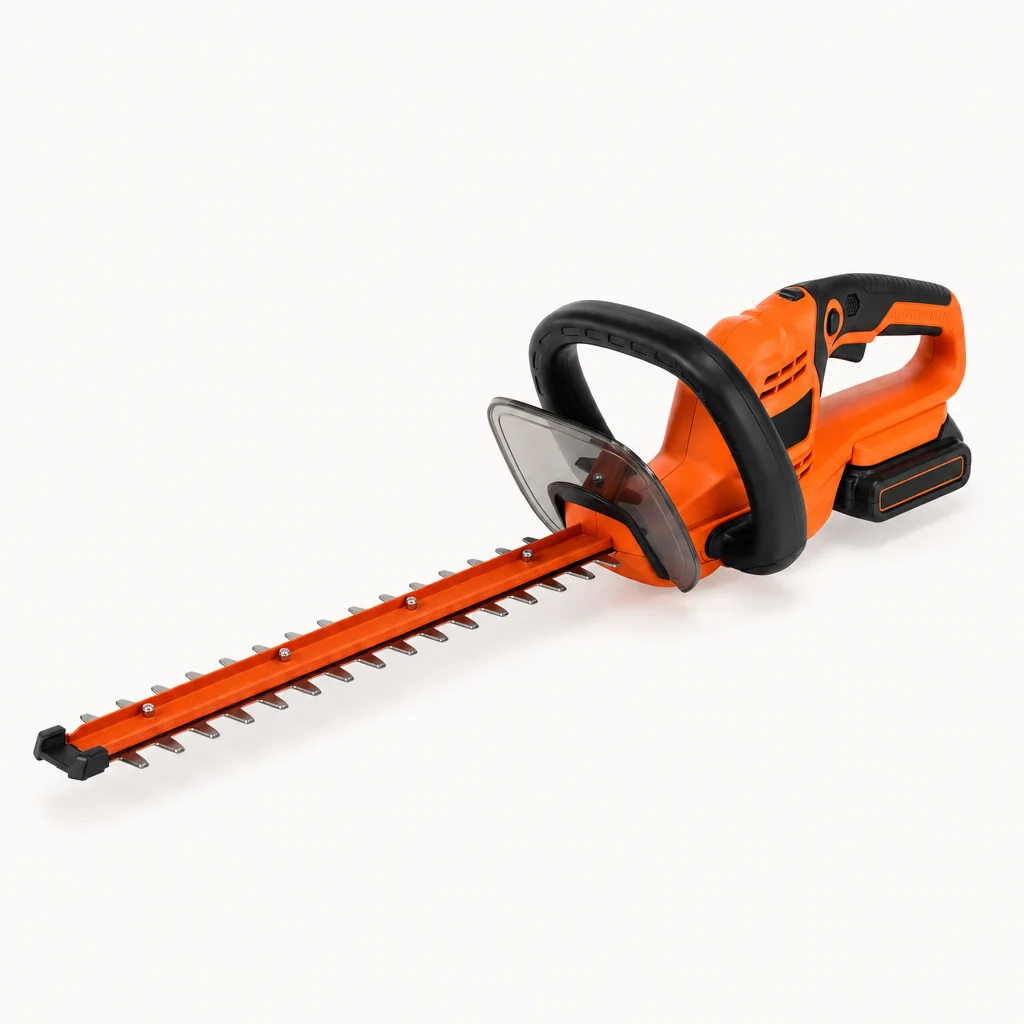
The BLACK+DECKER 20V MAX LPHT120 is the straightforward choice for the gardener who wants to keep a manageable hedge under control without buying a tool that feels like it belongs to a grounds maintenance crew. Its strengths are clear: it is light, it reaches high enough for many suburban boundaries, and its five-position head is designed around the central task of trimming from the ground.
At about 3.5 kg (7.7 lb), it is one of the lighter confirmed models in this comparison. That is a meaningful advantage. The difference between 3.5 kg and a heavier pole trimmer may not seem enormous in a shop, when the tool is held for roughly twelve seconds and everyone is being optimistic. It becomes very noticeable when the blade is extended over the top of a hedge and you are carefully working along several metres of boundary.
The 46 cm (18 in) dual-action blade is rated for branches up to 11 mm (7/16 in). That firmly places the LPHT120 in the routine-maintenance camp. Use it on annual or regular clipping of privet, young laurel growth and the soft outer layer of a conifer hedge. If your hedge has been left to become a thicket, start with loppers on the thick stems and let this machine do the shaping. That is not a weakness so much as sensible division of labour.
Its usable pole length is 2 m (6.5 ft), with trimming reach described up to 3.4 m (11 ft). For a hedge around 3 m (10 ft), that should allow a gardener to work the top from the ground with a sensible blade angle. The key phrase is "work the top". This is exactly where the 180° pivoting head earns its place. Five positions are enough to lay the blade flat across a level crown, tilt it for the face, or move it closer to vertical when tidying the end of a hedge.
BLACK+DECKER includes a 1.5Ah battery and charger. The lithium-ion battery is also stated to hold a charge for up to 18 months. For occasional users, that is quietly useful. A hedge trimmer is not a drill; many people will not touch it for months, then suddenly discover the hedge has acquired a fringe. A battery that has not entirely forgotten its purpose makes that moment less annoying.
The rust-proof fibreglass pole sections and soft-grip handle are practical details rather than headline-grabbers, but both suit a tool likely to live in a shed and be used for overhead work. The stated 40% reduction in vibration from the dual-action blade is another welcome fatigue-saving measure.
Pros
- About 3.5 kg (7.7 lb), making it easier to manage during overhead trimming.
- Up to 3.4 m (11 ft) trimming reach for many ordinary tall garden hedges.
- Five-position, 180° pivoting head is well suited to hedge tops and faces.
- Battery and charger are included.
- Dual-action blade is designed to reduce vibration.
Limitations
- 11 mm (7/16 in) branch capacity is for lighter growth, not neglected woody stems.
- The 1.5Ah battery is smaller than the 2.0Ah battery supplied with the CRAFTSMAN.
- It is best viewed as a regular-maintenance tool rather than a heavy restoration machine.
For a smaller garden with a privet hedge that is clipped a couple of times a year, this is the sensible, low-drama option. It will not reward bravado. It will reward regular use, light passes and the occasional moment of smugness as you put the ladder away untouched.
The Mid-Range Workhorse: CRAFTSMAN V20 CMCPHT818D1 Deep Dive
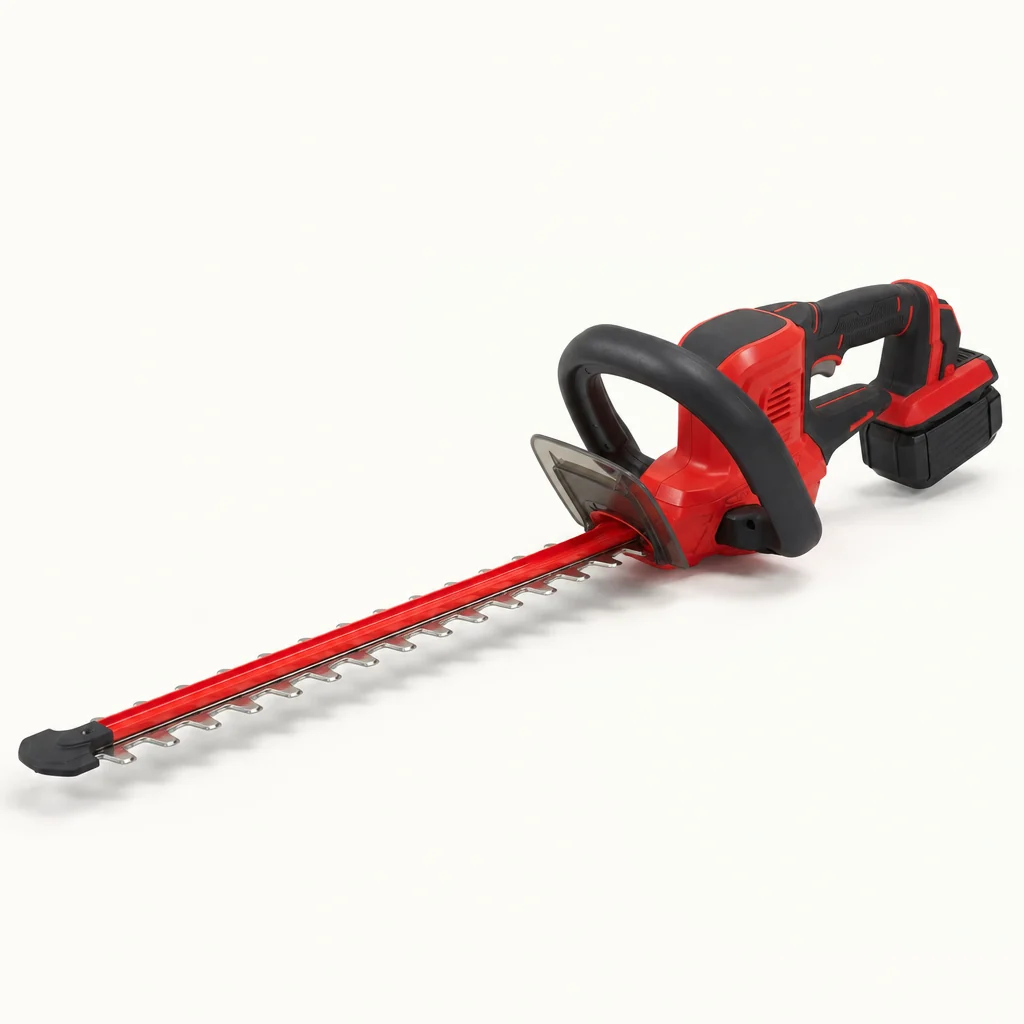
The CRAFTSMAN V20 CMCPHT818D1 takes the familiar 46 cm (18 in), five-position pole-trimmer layout and gives it more cutting authority. It is the model to consider where the hedge is established, maintenance is not always perfectly punctual, and the occasional thicker side branch is part of normal life rather than a shocking development.
Its headline advantage over the BLACK+DECKER is branch capacity: up to 19 mm (3/4 in), compared with 11 mm (7/16 in). That is a substantial step. It does not mean you should seek out 19 mm branches for sport. It does mean the machine is better placed to deal with the sort of sturdier material found inside mature privet and laurel, particularly where a previous year's growth has been allowed to harden.
The V20 uses an 18V nominal battery system, described as 20V MAX at maximum initial battery voltage. Its supplied battery is 2.0Ah, compared with 1.5Ah in the BLACK+DECKER package. That extra capacity is welcome for a longer boundary or denser hedge, although runtime is always shaped by the work being done. A clean, lightly maintained privet is kind. A dense, woody laurel that has been ignored since the last heatwave is rather less charitable.
Reach remains up to 3.4 m (11 ft), and the 180° pivoting head has five positions. In use, that makes its working geometry broadly similar to the BLACK+DECKER: set it flat for the top, choose a comfortable pitch for face trimming, and adjust towards vertical for ends and awkward changes of direction. The padded grip on the pole extension is a welcome touch when you are shifting your hand position through a long session.
The trade-off is weight. At 4.9 kg (10.73 lb), the CRAFTSMAN is noticeably heavier than the approximately 3.5 kg (7.7 lb) BLACK+DECKER. That extra mass may be worthwhile if your hedge genuinely needs the larger branch capacity. If it does not, there is no virtue in carrying more weight than necessary. Long-reach tools are not like wheelbarrows: the weight is out at the end, where it has more influence on fatigue.
| Feature | BLACK+DECKER LPHT120 | CRAFTSMAN V20 CMCPHT818D1 | Makita XNU01Z |
|---|---|---|---|
| Blade | 46 cm (18 in) dual action | 46 cm (18 in) dual action | 51 cm (20 in) dual-action, double-sided |
| Rated branch capacity | 11 mm (7/16 in) | 19 mm (3/4 in) | 22 mm (7/8 in) |
| Reach / length | Up to 3.4 m (11 ft) trimming reach | Up to 3.4 m (11 ft) reach | 211.5 cm (83.25 in) overall length |
| Head adjustment | Five positions, 180° | Five positions, 180° | Six settings, 115° working range |
| Weight | About 3.5 kg (7.7 lb) | 4.9 kg (10.73 lb) | 3.5 kg (7.8 lb) without battery; 4.2 kg (9.2 lb) with battery |
| Battery supplied | 1.5Ah with charger | 2.0Ah battery | Tool only |
The capacity jump is the point
Moving from 11 mm to 19 mm may look modest on a specification sheet, but it changes the kind of hedge maintenance the tool can reasonably take on. For mature privet and laurel, that extra margin is the CRAFTSMAN's real appeal.
The V20 battery platform is compatible with CRAFTSMAN V20 outdoor equipment and power tools. If you already use that platform, the appeal is obvious: shared batteries reduce clutter and can make a longer hedge session easier to manage. If you do not, judge it primarily on the hedge in front of you. This is the right sort of machine for someone who has a substantial but not extreme-height garden boundary, and who wants an upgrade in cutting capacity without moving into a more specialist professional setup.
Professional Precision: Makita XNU01Z 18V LXT Brushless Assessment
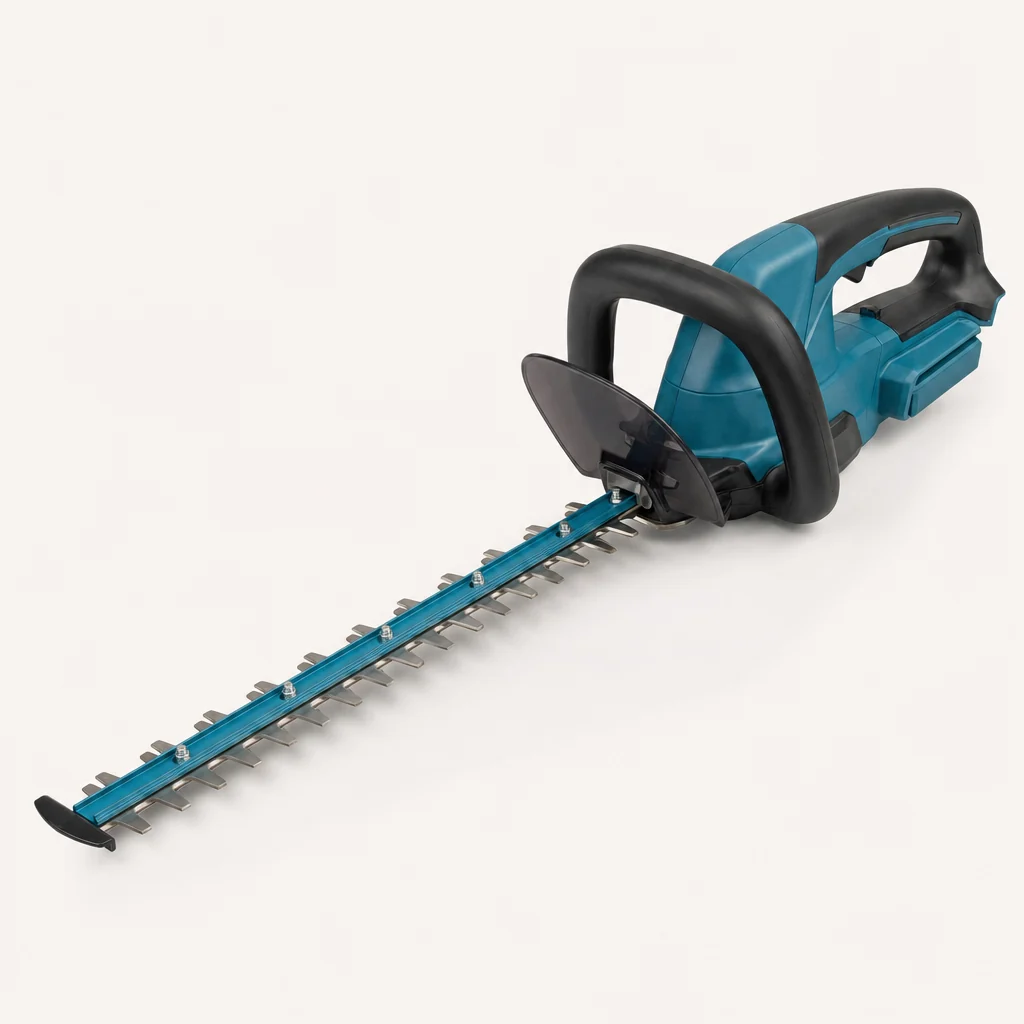
The Makita XNU01Z is the performance-led option here. Rather than chasing the longest stated reach, it focuses on blade speed, branch capacity, adjustable output and professional-minded durability. It is best understood as an articulating hedge trimmer for gardeners and regular users who value control and cutting ability, especially where a more compact overall tool is useful.
The brushless motor delivers up to 4,400 strokes per minute. Brushless motors are prized for efficient operation and reduced maintenance compared with brushed designs, but the practical point is simple: this machine has the pace to make clean progress through substantial hedge growth. It also has three speed settings—2,000, 3,600 and 4,400 strokes per minute—so you are not forced to use maximum aggression on every bit of greenery.
At 2,000 strokes per minute, the emphasis is on control. This is where you would work when refining fresh privet growth, easing the blade across a neat formal top, or tidying a section where you value finish over speed. At 3,600, the trimmer is better suited to general maintenance: the ordinary mix of leafy growth and firmer stems found in an established hedge. At 4,400, it is set up for the heavier end of its work, whilst staying within the stated maximum branch diameter.
That maximum is 22 mm (7/8 in), the highest confirmed figure in this guide. Combine it with a 51 cm (20 in) double-sided, dual-action shear blade and the Makita is clearly intended to do serious hedge work. The double-sided format is useful when shaping because it lets you sweep and work from different directions without repeatedly repositioning the whole tool.
There are six angle settings across a 115° working range. This is not the full 180° movement offered by the BLACK+DECKER and CRAFTSMAN, so buyers whose absolute priority is reaching over a very high hedge crown may prefer one of the more overtly telescopic designs. Yet six defined settings give useful precision for the angles that matter most in normal trimming: top work, side work, and shaping a tapered profile.
At 3.5 kg (7.8 lb) without a battery and 4.2 kg (9.2 lb) with one fitted, it remains competitive on weight despite the professional-oriented specification. Overall length is 211.5 cm (83.25 in), which makes it more compact than the giant-reach category. That compactness can be a virtue near fences, trees and narrow side passages where every extra bit of pole makes turning cumbersome.
It is sold as a tool-only machine, so the battery is separate. Makita quotes up to 80 minutes from a fully charged 18V LXT 5.0Ah battery. That is a strong stated runtime for a substantial hedge job, but remember that the figure is linked specifically to that 5.0Ah battery. The XPT protection system uses integrated seals engineered to channel dust and water away, whilst the commercial-duty gear case is intended for durability in regular professional use.
Pros
- Highest confirmed 22 mm (7/8 in) branch capacity in this guide.
- Three speed settings provide useful control across light and heavier work.
- 51 cm (20 in) double-sided blade covers a broad section of hedge.
- Up to 80 minutes quoted with an 18V LXT 5.0Ah battery.
- Brushless motor, XPT protection and commercial-duty gear case suit frequent use.
Limitations
- Tool-only format means a battery is not included.
- Its 115° working range is narrower than the 180° heads on some rivals.
- 211.5 cm overall length is not designed to rival extreme telescopic reach claims.
The Makita is the pick for a gardener who already has, or intends to build around, the LXT battery system and wants a serious cutting tool rather than merely maximum extension. It is particularly persuasive for established hedges that are dense, regularly maintained and full of the occasional branch that makes lighter machines pause for a quiet lie-down.
Extended-Reach Contenders: AVADA, GARCARE, EGO and Gtech HT50 Compared
Not every tall hedge needs the same answer. Some gardens have one exceptionally high leylandii boundary. Others have a lower but awkwardly shaped laurel hedge beside a fence. Some gardeners prioritise the lightest possible machine; others want the longest reach they can reasonably control. This group includes models that stand apart from the three main comparisons for exactly those reasons.
AVADA: the reach-first choice
AVADA's defining figure is a claimed reach of 4.9 m (16.1 ft), paired with a 180° adjustable cutting angle. That is the standout option for a hedge that has genuinely moved beyond ordinary pole-trimmer territory. For very tall leylandii, established boundary planting or a formal garden wall with a high crown, the potential to stay on the ground is compelling.
There is a caveat, and it is a sensible one rather than a criticism. Maximum extension creates maximum leverage. The longer the tool, the more carefully you need to work. Plan short sections. Keep both hands firmly positioned. Avoid reaching out to the side. Bring the tool down to assess your line rather than continuing blindly along the top. A long-reach machine is not a magic wand, though it can feel suspiciously like one when it saves you from a ladder.
The 180° adjustable cutting angle is the important partner to the reach claim. High access alone would not solve the top-cutting problem if the blade could not be positioned flat. On a high conifer hedge, that angle adjustment is what enables a controlled horizontal sweep rather than a series of diagonal nibbles.
GARCARE: an extra degree of angle control
GARCARE combines a 51 cm (20 in) dual-action blade with a six-position pivoting head. The longer blade matches Makita's cutting length, and the six head positions give a little more granularity than the five-position BLACK+DECKER and CRAFTSMAN designs.
Does one extra position transform hedge cutting? No. A poorly planned cut remains poorly planned in six positions. But for a hedge with a rounded crown, a deliberate taper, or an awkward transition around a gatepost, that extra adjustment point can make it easier to align the blade without holding your wrists at an uncomfortable angle. It is the sort of advantage that matters more after half an hour than it does in the first five minutes.
EGO PHTX2000: built around extended reach
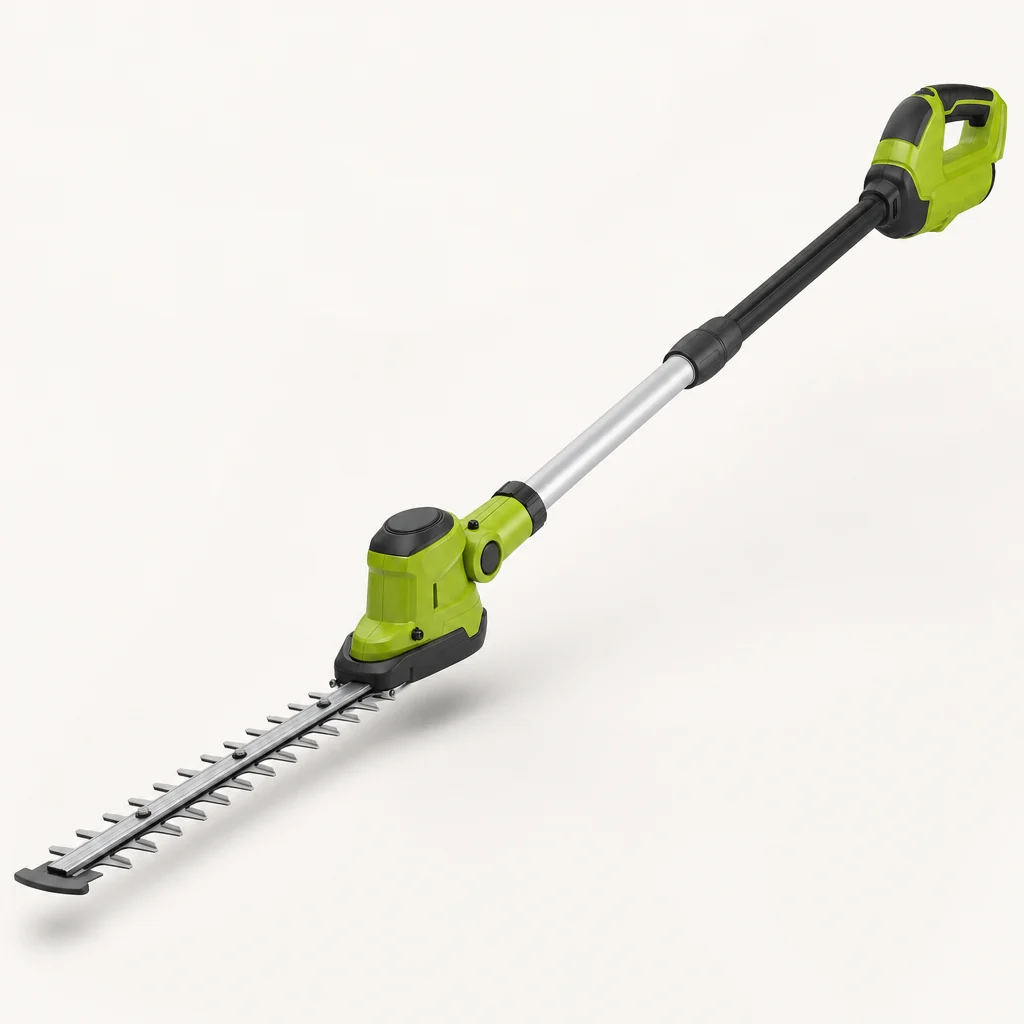
The EGO PHTX2000 belongs in the conversation for gardeners actively seeking an extended-reach option. The crucial question is whether your hedge demands that reach often enough to make a specialist long-reach machine worthwhile. If the answer is yes—perhaps you have a tall boundary that needs shaping every year—it makes sense to choose a tool designed around that task rather than repeatedly improvising with ladders or hiring help for what is fundamentally regular maintenance.
Before committing, walk the hedge line and consider access as well as height. Can you stand well back from the hedge? Is there a narrow border beneath it? Is the ground level? A long pole only works properly when there is room to use it. A 4.9 m (16.1 ft) claim is wonderful in an open garden and rather less useful in a cramped alleyway between a shed and a fence.
Gtech HT50: the lightest confirmed option
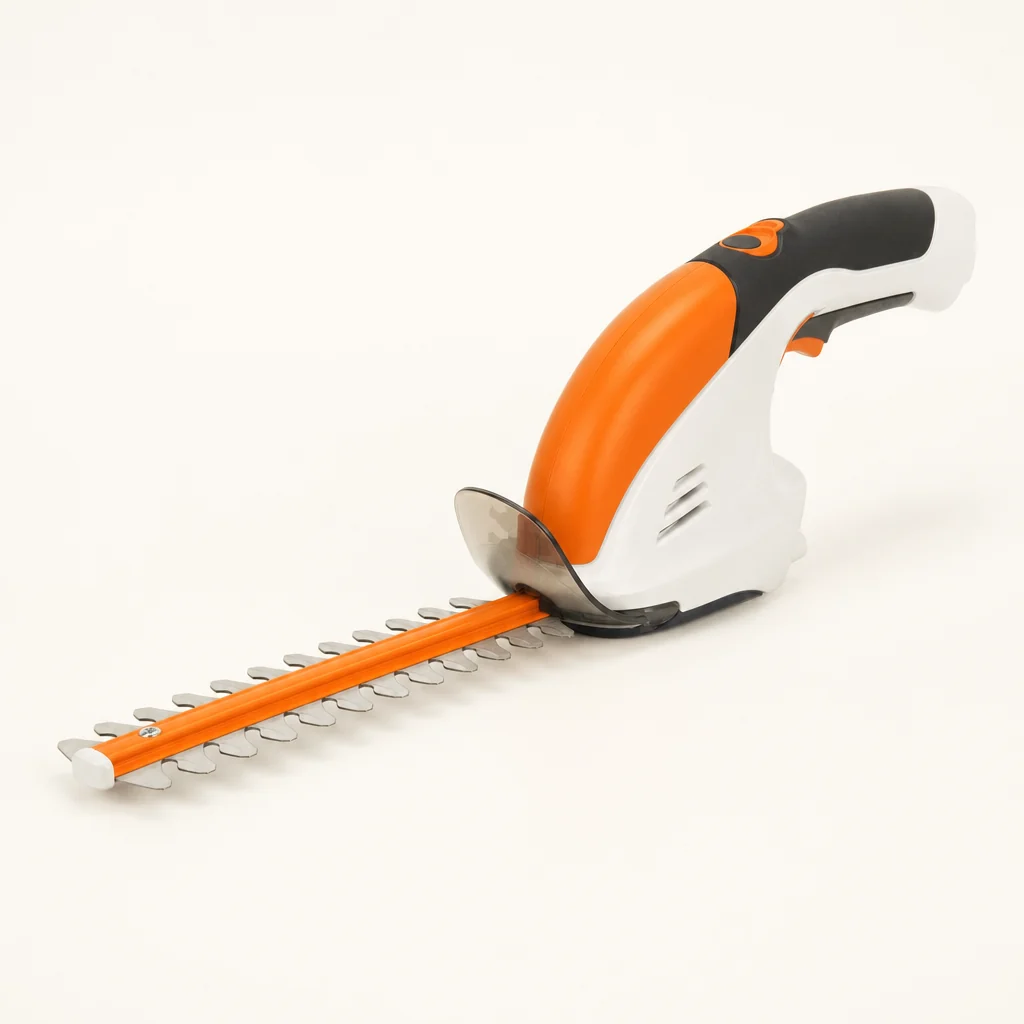
The Gtech HT50 has a quoted 3 m (10 ft) reach and weighs 2.9 kg (6.4 lb), making it the lightest confirmed model in this guide. It is also quoted for up to 60 minutes of runtime. For gardeners who find overhead work tiring, that low weight is not a minor luxury. It can be the difference between making a neat, patient cut and finishing with whatever line your shoulders can manage by the end.
Its 18V motor and light weight make it particularly attractive for routine trimming on a hedge that is kept in check, rather than a once-every-few-years reclamation project. This is a recurring theme because it is the truth of hedge care: the easiest hedge to trim is the one that has not been allowed to become a small woodland.
| Model | Key confirmed feature | Best fit |
|---|---|---|
| AVADA Pole Hedge Trimmer | Up to 4.9 m (16.1 ft) reach; 180° adjustable cutting angle | Very tall hedge tops where ground-level access is the priority |
| GARCARE Cordless Pole Hedge Trimmer | 51 cm (20 in) dual-action blade; six-position pivoting head | Awkward profiles requiring finer angle adjustment |
| EGO PHTX2000 | Extended-reach option | Gardens where hedge height is the dominant challenge |
| Gtech HT50 | 2.9 kg (6.4 lb); 3 m (10 ft) reach; up to 60 minutes runtime | Regular work where low weight and manageable reach matter most |
For a very high leylandii boundary
Prioritise genuine reach and a head that can lie flat over the top. AVADA's manufacturer-claimed 4.9 m (16.1 ft) reach (not independently verified) and 180° adjustment are the relevant combination here.
For a neat, shaped laurel hedge
Blade control and angle settings matter as much as reach. A six-position head, such as GARCARE's, can help with changing profiles and tapered sides.
For manageable seasonal maintenance
Low weight reduces fatigue. Gtech's 2.9 kg (6.4 lb) HT50 is the obvious model to consider where comfort is the priority.
How to Trim a Tall Hedge Safely From the Ground
The tool is only half the solution. A pole hedge trimmer makes tall hedge work safer than climbing a ladder with a conventional trimmer, but it still has a moving blade at the end of a long lever. Calm, methodical use is what produces a good finish and lets you enjoy it without discovering new muscles the following morning.
Start now, in early September, by checking the hedge carefully. Look for active bird nests before cutting. Check the ground beneath the hedge for toys, pots, hoses, loose paving and concealed changes in level. Clear the area you need to walk through. A clean route matters because you will naturally be watching the cutting head rather than your feet.
Then decide on the final line before switching anything on. Stand back far enough to see the whole hedge. If it is formal, use a taut line or another visual reference to guide the top. Remember that a hedge should generally be slightly wider at the base than at the top. This gentle taper allows light to reach the lower growth and helps prevent the bare, leggy bottom that makes an otherwise handsome hedge look as though it has forgotten its trousers.
For the top, set the pivoting head so the blade is broadly parallel with the surface you want to create. Stand back from the hedge rather than directly underneath it. Hold the pole with two hands, begin at one end, and work in shallow passes. Do not try to remove a season's worth of growth in one mighty sweep. It is tiring, it makes a rougher finish, and the blade is more likely to snatch on thicker material.
Work the face afterwards, changing the head angle to follow the desired taper. Use gentle upward or sideways sweeps according to what gives you the most control. Keep the cable-free convenience of cordless tools in perspective: you can move freely, yes, but you still need to avoid overreaching. Move your feet instead. It is less dramatic and considerably more successful.
Small garden, light privet
BLACK+DECKER suits regular, light clipping where lower weight and straightforward reach matter.
Established mixed hedge
CRAFTSMAN offers more branch capacity for tougher privet and laurel maintenance.
Dense or demanding hedges
Makita brings the highest stated cutting capacity, variable speed and a professional-minded build.
Wear eye protection and sturdy footwear. Gloves are sensible for handling clippings and rough hedge material, but keep them well clear of the blade. Avoid working in wet conditions or when strong wind is moving the hedge around. If a branch is too thick, stop and remove it with loppers. Pole trimmers are for trimming. The clue is mercifully right there in the name.
Once the top and faces are done, rake or collect cuttings promptly. Laurel leaves in particular have a talent for lying flat and looking harmless until they become a slippery little carpet. Clearing them also allows you to inspect the base of the hedge, where damage, gaps or encroaching weeds are easier to spot.
Care, Timing and the Small Habits That Keep Hedges Looking Better
Late summer and early autumn trimming is about refinement, not reinvention. By 5 September, a light shaping cut can neaten a hedge and reduce the amount of floppy new growth going into autumn. Avoid cutting hard into old, leafless wood unless you know the species responds well to it. Laurel and privet are generally forgiving, but leylandii is not a plant to cut back into bare brown interior growth and expect a cheerful recovery.
Come next spring, inspect the hedge before birds begin nesting in earnest and decide whether it needs structural pruning, feeding or simply another light clip later in the season. Formal hedges often benefit from regular modest trims during active growth. This keeps the outer foliage dense and means your trimmer spends its life cutting soft stems rather than struggling with small branches that have turned into timber.
After each use, isolate the battery, brush loose clippings from the blade area and wipe the exterior clean. Sap and leaf fragments can build up surprisingly quickly. Store the machine dry and protect the blade. The pole itself deserves a quick check too, especially telescopic sections and head-adjustment mechanisms. A pivot that moves crisply and locks positively is not a feature to take for granted.
Battery care is mostly about avoiding extremes. Store batteries somewhere dry, out of direct heat and away from frost. If you are on a shared battery platform, label or organise batteries so you know which are charged before the hedge decides to become a weekend project. A little preparation removes much of the faffing. Gardening contains enough faffing already.
A better hedge is trimmed little and often
The greatest upgrade is not always a larger motor. A hedge clipped before stems become thick needs less battery, less effort and less aggressive cutting. It also keeps a denser, cleaner outline all year.
Frequently Asked Questions About Long-Reach Hedge Trimmers
For trimming the top and upper faces of many hedges, it can remove the need to use a ladder. It does not make every high pruning job suitable for ground-level work, and it should not be used by overreaching or standing directly beneath the blade. The aim is safer access, not heroic stretching.
The Makita XNU01Z has the highest confirmed figure here, with a maximum branch diameter of 22 mm (7/8 in). CRAFTSMAN is rated to 19 mm (3/4 in), whilst BLACK+DECKER is rated to 11 mm (7/16 in).
Not automatically. A 180° range gives maximum versatility, especially for reaching over hedge tops. A smaller range with useful, positive settings can still be excellent for controlled trimming. Makita's six positions cover a 115° working range, for example.
The Gtech HT50 is confirmed at 2.9 kg (6.4 lb). Low weight is valuable where you expect to make repeated overhead passes or find heavier pole tools tiring.
A light tidy-up of fresh growth can be useful in early September, provided you check for active nests first. Avoid severe cutting into old wood, particularly on leylandii, and save major structural work for a time appropriate to the hedge species.
Final Verdict: Which Long-Reach Hedge Trimmer Should You Choose?
There is no single winner for every hedge because height, growth thickness and your own comfort with a long pole all matter. The right choice is the one that reaches your hedge safely, cuts the growth you actually have, and remains manageable after more than ten minutes of work. That last point deserves more attention than it usually gets.
For light, regular maintenance on a hedge around the 3–3.4 m (10–11 ft) mark, the BLACK+DECKER LPHT120 is the most approachable choice. At about 3.5 kg (7.7 lb), with a 180° five-position head, supplied 1.5Ah battery and up to 3.4 m (11 ft) trimming reach, it is built for the gardener who trims often enough to keep stems modest.
For a more established privet or laurel hedge where thicker branches are part of the job, the CRAFTSMAN V20 justifies its extra weight with 19 mm (3/4 in) cutting capacity and a supplied 2.0Ah battery. It retains the same useful five-position, 180° head arrangement and up to 3.4 m (11 ft) reach.
For serious cutting performance, Makita's XNU01Z is the standout. The brushless motor, 51 cm (20 in) double-sided blade, 22 mm (7/8 in) maximum branch diameter and three speed settings make it the strongest all-round cutting package, provided its 211.5 cm (83.25 in) overall length suits the hedge height you need to tackle.
And for exceptional height, AVADA's manufacturer-claimed 4.9 m (16.1 ft) reach (unverified in independent testing) with 180° angle adjustment is the figure that changes the conversation. Just use it with a clear understanding that the longest-reach tool also asks the most from your arms, your stance and your patience.
GardenScout's practical conclusion
Choose reach for the hedge you have, not the hedge you fear it may become. Choose branch capacity for the growth you normally cut, not the one stubborn stem you should remove with loppers. Above all, choose a pivoting head that lets you make a clean horizontal cut from the ground. Your hedge will look better, and your ladder can return to its proper role: holding Christmas lights and collecting dust.