
Bird Boxes: Where to Put Them and Which Birds They'll Attract
Choose the right kind of box, give it a calm and sensible position, and your garden can become a much more useful place for birds to investigate, shelter in and—if all goes well—raise a family.
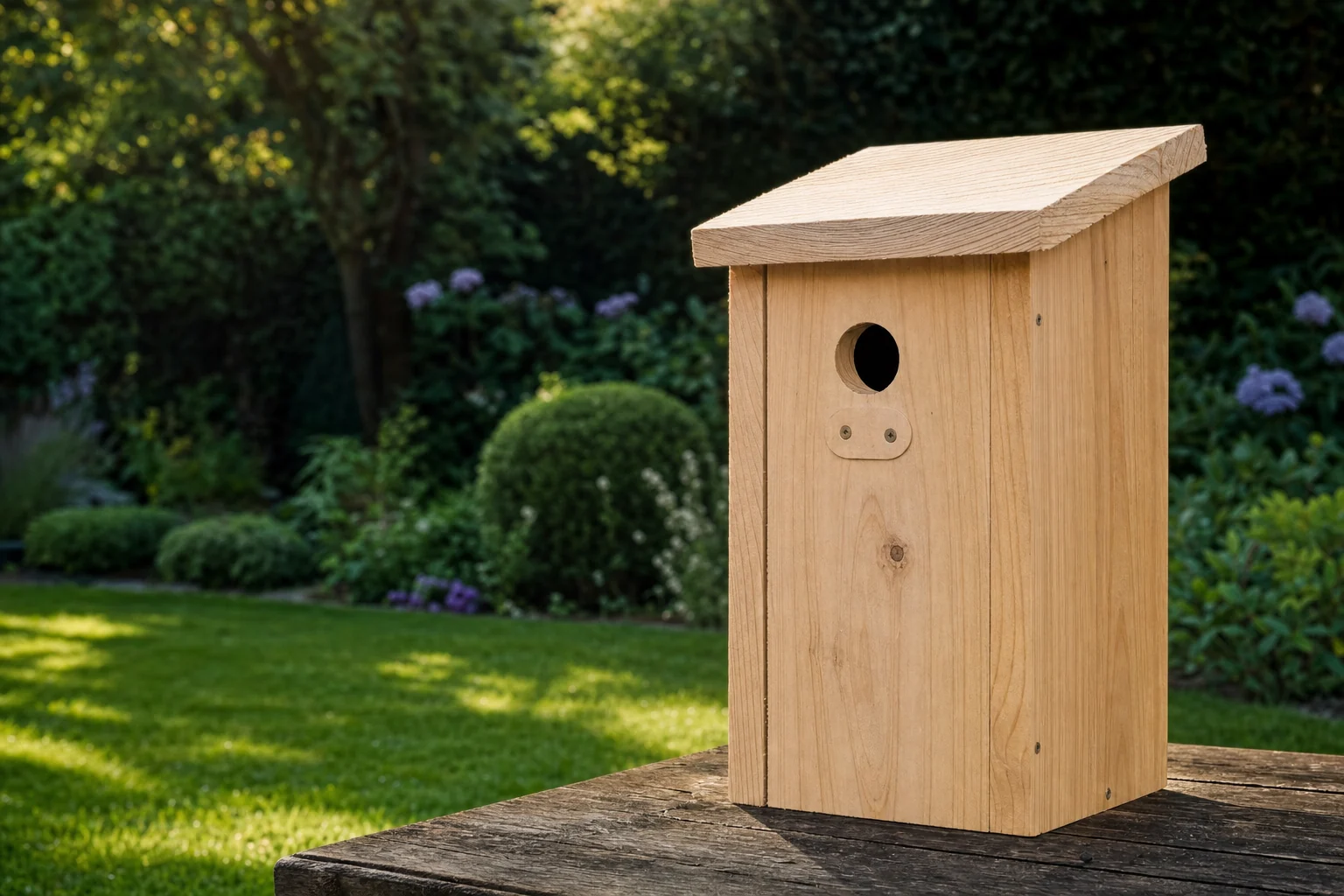
Why Every UK Garden Needs a Nest Box Right Now
It is late September, which means the garden is doing that quietly scruffy thing it does so well. Seedheads are leaning where they please, the lawn has slowed down, and every hedge seems to have acquired a slightly more complicated personality. It is also an excellent moment to think about nest boxes.
That may sound early if you picture nest boxes as a spring job. In reality, a box put up now has time to become part of the scenery. It can lose that just-installed look, settle into its position and, crucially, be noticed by birds well before the hectic business of nest-building begins. A bird does not need a brass plaque and a welcoming committee. It does need a place that feels safe, dry and convincingly permanent.
Gardens can offer plenty of food and cover, yet still be short of suitable cavities. Mature trees with natural holes, old boundary hedges, rough corners of sheds, gaps beneath eaves and undisturbed nooks in walls are not always plentiful in modern streets. A properly chosen nest box will not replace those things, but it can add one useful piece to the puzzle. Think of it less as a decorative wooden ornament and more as a tiny, weatherproof room with a very fussy prospective tenant.
The RSPB's A–Z directory lists 266 species entries, a figure that reflects that directory's coverage rather than a definitive count of every UK bird species. Not all of them belong in a back garden, and not every garden bird uses a box, but the number is a good reminder that "birds" are not one single audience. Different species favour different sorts of cover, different food, different nesting arrangements and different levels of bustle. The box that suits a small hole-nesting bird is not automatically the box for a bird that prefers an open-fronted space, and neither is necessarily suitable for a larger visitor.
Start with the garden you actually have
A nest box works best when it answers a real gap in your garden. Before buying or hanging anything, spend ten quiet minutes watching: where do birds already perch, feed, disappear into cover or avoid altogether? That small bit of detective work is usually more useful than choosing a box because it looked charming on a shelf.
There is another reason to act now: autumn is a forgiving season for practical jobs. The climbing plants are easier to see through, leaves have not yet hidden every fixing point, and you are less likely to disturb a busy nest site. You can stand back, move the ladder, look at the proposed position from the garden gate and decide whether it is sensible. This is considerably easier than doing the same thing on a cold March morning whilst being shouted at by a blackbird.
A box is not a guarantee. Wildlife rarely signs contracts. Some boxes are inspected for weeks and ignored. Some become a nighttime shelter. Some are used only after they have been up for a season or two. That is normal. The useful goal is not to force occupancy; it is to make a good opportunity available, then let the birds make the decision.
Keep the wider garden in mind. A nest box is most helpful alongside cover, clean water, planting and a little tolerance for untidiness. A clipped, exposed garden with a single box can look rather like a hotel in the middle of a car park.
Box at a Glance: Key Details Every Buyer Must Check
The words "bird box" cover a surprising amount of territory. There are small boxes with round entrance holes, open-fronted designs, multi-compartment styles, deeper boxes, boxes intended for walls and boxes intended for trees. There are handsome timber models, practical recycled-material versions and some very decorative offerings that appear to have been designed primarily for the enjoyment of humans with matching patio furniture.
Looks are not irrelevant—if you like a box, you are more likely to put it up and look after it—but they should not be the deciding factor. The important questions are structural and practical. Can rain shed away from the entrance? Does the roof protect the front face? Is there a safe way to inspect and clean it when it is empty? Is the fixing arrangement sturdy enough for the place you intend to use? And, perhaps most importantly, what sort of bird and nesting style is the box designed around?
For enclosed boxes, the entrance is the defining feature. A round hole is not merely a doorway; it is a filter. Its size changes which birds can enter comfortably, which birds may investigate and what kind of competition the box might experience. If a maker says a box is aimed at a particular species, check that the entrance arrangement and internal layout support that claim rather than taking the label as gospel.
Open-fronted designs are different. They give a bird a broader approach and a more open view, which may suit species that do not use a conventional small round entrance. They also demand more thought about cover and access. Put an open box where it is plainly exposed from every angle and it is unlikely to feel especially reassuring. Put it so deeply into vegetation that a bird cannot approach it, and you have created a lovely ornament for spiders.
Pay attention to the roof. It should overhang enough to help keep rain away from the entrance and front panel, and it should be robustly attached. A loose lid is not a charming rustic detail. It is a maintenance problem waiting for a windy afternoon. Equally, avoid boxes with features that make access easier for predators or invite water to sit where it should drain away.
Material matters largely because it affects weather resistance, insulation and longevity. Untreated, responsibly sourced timber is a familiar choice, and a solid build is generally preferable to thin, flimsy panels. Whatever the material, the box needs to remain sound through wet weather and changing temperatures. A box that warps, splits or develops a leaking roof quickly becomes less useful than the cardboard packaging it arrived in.
Finally, check how it mounts. A box should be firmly fixed, not dangling, twisting or clattering in the wind. Birds are remarkably alert to movement around a potential nest site. A secure box also protects the tree, wall or fence from repeated fiddling. You want to put it up once, assess it carefully and then leave it in peace rather than making monthly adjustments like a landlord with an unfortunate amount of spare time.
The Hole Truth: Matching Entrance Style to Your Target Species
If you take only one principle from this guide, make it this: do not buy a nest box first and decide who it is for afterwards. Start with the birds you see, the type of garden you have and the kind of nesting space you can offer. Then choose a box whose entrance, depth and placement make sense for that purpose.
A small circular entrance is designed for birds that naturally seek enclosed cavities. The exact entrance size is important because it governs access. Too restrictive and the intended bird cannot use it comfortably. Too generous and the box may become available to larger species than you had in mind. This is why a general "small bird box" description can be unhelpful: small is a relative word, and birds are rather more precise about doors than we tend to be.
It is tempting to assume that the biggest opening gives the widest choice. Usually, that is not a helpful way to think about it. The aim is not to create a universal bird property portal. The aim is to provide a space that feels appropriate for a particular type of bird. A carefully matched entrance is often more useful than an all-purpose one because it reduces the mismatch between the box and the bird you hope will investigate.
| Box style | What defines it | Where it tends to make sense | What to check before installing |
|---|---|---|---|
| Small-hole enclosed box | A compact enclosed chamber with a circular entrance. | A calm wall, mature tree or sheltered garden boundary with a clear approach. | Entrance suitability, secure fixing, rain protection and a maintenance panel. |
| Open-fronted box | A more open nesting space without a small round entrance. | A secluded position with nearby planting or structure that provides cover. | Whether the approach is sheltered, discreet and not exposed to regular disturbance. |
| Colony-style box | More than one nesting chamber within a single unit or grouped arrangement. | A larger wall face or building edge where social birds are already active. | Enough room for several separate entrances and a position away from constant traffic. |
| Larger specialist box | A more substantial box made for a larger bird or a particular habitat situation. | Mature gardens, established trees, outbuildings or suitable larger sites. | Whether you can mount it safely and whether the location suits the intended occupant. |
The design also affects how you position the box. An enclosed hole-fronted box can often work in a relatively open setting, provided there is a clear route in and out and the box is protected from the worst weather. An open-fronted design generally needs a little more discretion. Dense planting nearby can help it feel less conspicuous, but there must still be an uncluttered route to the entrance. The sweet spot is sheltered, not sealed in.
Look at the entrance from a bird's perspective. Is there a branch directly in front of it? Is a thick stem swinging across the opening? Is there a hanging basket that will turn the flight path into a slalom by May? Gardens change quickly during spring. What appears to be a wide-open approach in September may be a leafy obstacle course when climbers and shrubs wake up again.
Avoid adding a perch beneath a small entrance simply because it looks traditional. Birds that use these boxes do not need one to get in. Extra projections can create an unnecessary foothold for other animals and do little to improve the box for its intended user. This is one of those details where the more "cute cottage" version is not necessarily the more wildlife-friendly version. Gardening has enough unnecessary accessories already. We do not need to give the bird box a tiny porch swing.
A box is not a feeder
Do not position a nest box immediately beside a busy feeding station simply because birds are already there. Feeders can be lively, competitive places. A nesting bird needs a quieter proposition: a secure approach, reduced disturbance and the chance to come and go without running a gauntlet of squabbling visitors.
It is also worth resisting the urge to keep changing a box once it has been installed. A quick check from a distance is sensible. Constant repositioning is not. If you have chosen a sound design and a thoughtful location, give the garden time to respond. Birds may inspect a box repeatedly before using it, and a season without activity does not automatically mean it has failed.
Where Exactly to Put It: Height, Position and Microhabitat
Siting is where a good box becomes a useful box. You can have a beautifully made model with the right entrance style and a sturdy roof, then undo all that good work by placing it above a constantly used door, beside a floodlight or on the most exposed fence in the garden. Position matters. Birds do not read product descriptions; they read the landscape.
Start with a quiet area. This does not have to mean the wildest, furthest corner of the garden, although that can be ideal. It simply means somewhere without relentless daily disturbance. A spot you pass once or twice is very different from a spot beside a gate that bangs, a path used by the dog, a children's trampoline and a patio table where everyone gathers when the sun appears for seven minutes.
Walls can be excellent mounting places because they are stable and often easier to assess than trees. A sheltered wall may provide a consistent background and a straightforward fixing point. Trees can also work well, particularly where there is existing cover and a clear approach, but take care not to damage the tree. Use a method appropriate to the trunk and be prepared to inspect the fixing as the tree grows. A box should not become a tight belt around living bark.
Choose calm rather than hidden
A site can be discreet without being impossible to reach. The best positions often have nearby shrubs or climbers for shelter, whilst still leaving a clean route to the entrance.
Think about rain as well as sunshine
Stand in the proposed spot after wet weather if you can. Look for water running down walls, pooling around structures or wind-driven rain hitting one face of the garden repeatedly.
Watch the changing light
What feels pleasantly bright in autumn can become fiercely hot later in the year. Check how sun moves across walls, fences and trees before deciding a place is suitably sheltered.
Plan for safe maintenance
Install a box where you can eventually inspect it safely when it is vacant. A dramatic location at the top of an awkward tree is not automatically the wisest one.
For a box intended for birds that like enclosed cavities, aim for a position with a reasonably clear entrance path. Branches and foliage nearby can be useful cover, but avoid a direct blockage. It helps to imagine carrying a small, awkward parcel through the entrance repeatedly. Birds bringing nest material and food need a straightforward route, particularly once chicks are demanding meals at a rate that would make most of us reconsider parenthood.
Open-fronted designs benefit from more shelter. A quiet edge of a hedge, a wall partly softened by climbing plants, or a tucked-away section of a shed can be more appropriate than a bare post in the middle of the lawn. The key word is balance. Dense cover should make the site feel protected, not render the entrance inaccessible or perpetually damp.
If you are considering several boxes, give them room and purpose. Scattering a collection of nearly identical boxes across one small garden is not automatically generous. It may simply create a series of competing territories. Instead, think about different habitats within the plot: a sheltered wall, a mature tree, a quiet hedge line, a more open boundary. Different box styles can serve different parts of the garden without turning the whole place into an estate agent's window.
Do not overlook the view from inside the house. It is lovely to watch birds arriving at a box, but avoid placing it so close to a frequently used window that reflections, movement and indoor lights become part of the bird's everyday experience. A little distance is kinder. You can still enjoy the activity with binoculars, and the birds will have a better chance of treating the site as somewhere calm.
Keep nest boxes separate from bird baths where possible. Fresh water is valuable in a wildlife garden, but splashing, crowding and regular human attention make a bathing area a different kind of space from a quiet potential nesting site.
Face the Facts: Aspect, Orientation and Why It Is Not Just About the View
Orientation is one of those topics that can make nest-box advice sound rather like a property programme for birds. South-facing. Sheltered aspect. Good morning light. No through-draughts. Yet the basic idea is simple: a box should avoid extremes.
In a UK garden, harsh afternoon sun can heat a box more than you might expect, especially where a dark wall stores warmth or a sheltered courtyard has little airflow. At the other end of the scale, a box that faces straight into the prevailing weather can receive repeated wind and rain. Neither situation is ideal. The practical answer is usually to choose a direction that avoids the fiercest exposure in your own garden rather than treating one compass point as a universal rule.
North-east and east-facing positions are often considered sensible starting points because they can receive gentler early light while avoiding the strongest late-day heat. However, your garden may have a tall building that blocks the morning sun, a dense hedge that channels wind, or a wall that stays unusually cold and damp. Local conditions win. A box facing an "ideal" direction on paper is not ideal if it is under a dripping gutter or blasted by wind funnelled between houses.
Walk around at different times of day. Notice which walls warm first, which corners stay damp and which fence lines take the full force of weather. You are looking for an even-tempered place: neither baking nor permanently chilly, neither drenched nor completely stagnant. If this sounds a little Goldilocks, that is because it is. Wildlife gardening often comes down to creating a patch of "just about right".
Use the garden's own clues
Mossy damp patches, peeling paint, wind-battered foliage and sun-scorched fence panels are all useful evidence. They tell you more about a possible box position than a compass app alone ever can.
Angle can help too. A box should sit securely and upright, but a very slight forward tilt can assist rainwater in shedding away from the entrance rather than running towards it. The important thing is stability. Do not create a dramatic lean. You are not trying to recreate a picturesque crooked cottage; you are trying to stop water entering a small enclosed space.
Look above as well as ahead. A nest box placed under a roof edge might gain welcome shelter, but not if rainwater is concentrated into one regular drip line. Similarly, a box beneath a thick evergreen canopy may avoid direct rain yet receive very little light or airflow. A sheltered position still needs to dry after wet weather.
Finally, avoid placing a box where artificial light shines directly at the entrance night after night. Security lamps, decorative strings of lights and bright indoor windows can alter the character of a spot considerably after dark. The garden does not need to be pitch-black, but it should retain a sense of natural rhythm. A nest box is not improved by being lit like a garden sculpture.
Timing Is Everything: When to Put Up Your Box
The useful answer is: put a box up when you can do it well and without disturbing birds. The better seasonal answer, from where we are now in late September, is that autumn is particularly handy. The main rush of summer gardening has eased, the weather is often still workable, and birds have time to become familiar with a new feature before spring.
Putting a box up in autumn also allows it to weather naturally. Brand-new timber can look conspicuously fresh against an old wall or tree trunk. A little time outdoors softens that contrast. You are not trying to make the box look neglected; you are simply letting it become part of the garden rather than a bright new object that appeared overnight.
Winter can still be a suitable time for installation if conditions are safe and the location is clear. Choose a dry day, use a secure ladder arrangement and take your time with the fixing. There is no prize for installing a box during a gale whilst trying to hold screws in your teeth. If weather is unpleasant or access is unsafe, wait. A delayed box in a good position is better than a hurried box in a poor one.
As spring approaches, the priority shifts from installation to restraint. Birds may begin investigating possible nest sites well before you notice obvious activity. Once a box is in position, do not repeatedly open it to see whether anything is happening. Curiosity is understandable. It is also exactly the sort of disturbance you were trying to avoid by putting the box up in the first place.
In the UK, intentionally disturbing a nesting Schedule 1 species is a criminal offence under the Wildlife and Countryside Act 1981. More broadly, good garden practice is straightforward: leave any active nest site alone. Do not open a box, move it, photograph inside it or try to "help" an apparently quiet nest. Birds have their own rhythms, and a period when you see little movement does not mean a box has been abandoned.
If you miss the autumn window, do not write the whole idea off until next year. A carefully installed box can still be useful at another point in the year, provided you avoid active nesting and choose a safe time to work. The important thing is to install it with enough care that it can remain undisturbed afterwards. A rushed job in the wrong place is not redeemed by the calendar.
Before any work around a box, pause and observe from a distance. Regular visits, birds carrying material, food deliveries, calls nearby or an occupied entrance are all reasons to leave the site alone.
There is also a satisfying rhythm to doing this job in autumn. While you are cutting back only what needs cutting back, clearing fallen leaves from paths and deciding whether that last tomato is ever going to ripen, you can add something that will matter next spring. It is a modest task, but those are often the best sort. They make the garden more generous without making the to-do list ridiculous.
Pros, Cons and Pitfalls: What the Catalogues Do Not Tell You
Nest boxes are one of the most approachable wildlife additions you can make, but they are not magic objects. They work best when they are part of a thoughtful garden and when expectations are realistic. A box may be used quickly, slowly, as shelter rather than a nest site, or not at all. None of those outcomes means the idea was pointless.
What a box can do well
- Add a potential nesting or shelter space where natural cavities are limited.
- Encourage closer observation of the birds already using your garden.
- Give children a practical way to learn about seasons, habitat and careful wildlife watching.
- Offer a lasting garden feature that can be maintained between seasons.
- Complement planting, water and cover in a more wildlife-friendly garden.
- Make an overlooked wall, tree or quiet boundary do a little more useful work.
What can go wrong
- A poorly placed box can be too hot, wet, exposed or regularly disturbed.
- An unsuitable entrance style may not match the bird you hoped to support.
- Frequent checking can disturb an active nest site.
- Weak fixings can allow the box to move, rattle or fall.
- Overgrown vegetation may eventually block the entrance route.
- A neglected box can become dirty or damaged between seasons.
The biggest pitfall is treating a nest box as a standalone gesture. A box installed on a bare wall above paving may be technically a box, but it is not the same proposition as one in a garden with shrubs, seedheads, insects, water and a little shelter. You do not need a wildflower meadow the size of a county to make a difference. You do need to consider the wider setting.
Another common mistake is choosing the most visible place for human enjoyment. It is lovely to want a front-row seat, and there is nothing wrong with watching wildlife. But the best box position is not always the one visible from the kitchen sink. If there is a quieter wall or a more sheltered tree a little further away, choose the birds' preference over yours. They are the ones who may eventually need to sleep there.
Predator-proofing accessories can be useful in some situations, but do not let hardware become a substitute for siting. A well-positioned box with a clear, calm approach and sensible cover is a better starting point than a badly positioned box fitted with every gadget available. The garden equivalent is buying a very good lock for a shed you have left in the middle of the road.
The quietest improvement is often the best one
Leave some of the garden slightly less managed. A thick patch of planting, seedheads left until later, a log tucked beneath a hedge or a corner where leaf litter remains can make a nest box feel like part of a functioning habitat rather than an isolated wooden cube.
Be wary, too, of over-cleaning, repainting or decorating. A nest box does not need seasonal styling. Avoid strong-smelling treatments and unnecessary paints around entrances or internal surfaces. If the exterior needs protection, follow the maker's guidance and keep the job well away from any period of activity. The inside should remain a simple, safe cavity, not an arts-and-crafts project.
Finally, do not measure success only by whether you see a nest. A box might be inspected, used briefly as shelter or simply become one more potential refuge in the garden. Wildlife gardening is not always immediately visible. Sometimes the useful thing is that an option exists when it is needed. That is a quieter sort of success, but a very real one.
Annual Maintenance: The Cleaning Ritual That Keeps a Box Useful
Maintenance is a small task, but it matters. A box should be inspected only when you are confident it is vacant and there is no sign of activity. During the breeding season, leave it alone. Do not open a box to "just have a look", even if you are convinced nothing is happening. This is one of those gardening jobs where doing less is often the responsible choice.
Autumn is a practical time to think about checks and cleaning because many gardens are quieter and you can combine the task with other seasonal tidying. But do not treat a date in the diary as permission to open every box automatically. Watch first. If birds are still visiting regularly, using it for shelter or showing any interest around the entrance, leave it and come back later.
Observe before opening
Watch the box from a distance on more than one occasion. If there is any sign that it is in use, postpone maintenance and allow the birds space.
Remove old material carefully
When the box is definitely empty, remove old nesting material gently and dispose of it rather than adding it to your compost heap.
Keep cleaning simple
Use plain hot water for a basic clean, then allow the interior to dry fully. Avoid leaving strong chemical residues inside a nesting space.
Check the structure
Inspect the roof, joins, entrance and fixing. Repair or replace damaged parts only while you are certain the box is not occupied.
Old nesting material can harbour parasites and moisture, which is why a vacant box benefits from a seasonal reset. Wear gloves if that makes the job more comfortable, and keep the cleaning process straightforward. There is no need to saturate the interior or perfume it with disinfectant. Birds need a clean, dry cavity, not a freshly scented bathroom.
Once the box is dry, close it securely and check that it sits firmly in place. Look for loose screws, cracked wood, a warped roof, damaged hinges or a fixing that has shifted. On a tree, pay particular attention to anything that may be tightening as the trunk grows. On a wall or fence, check for rot, crumbling mortar or movement in the bracket.
Trim only vegetation that genuinely interferes with the entrance or prevents the box from drying. There is a difference between making a clear route and stripping away all surrounding shelter. A couple of carefully removed stems may be enough. Avoid turning a snug, discreet position into an exposed one simply because you have secateurs in hand and a dangerously optimistic attitude to "just one more job".
If a box has remained unused for several seasons, assess the whole picture rather than assuming the box itself is faulty. Is the entrance still clear? Has a shrub grown across the flight path? Has the garden changed, perhaps with a new extension, brighter security lighting, a more active patio or the loss of nearby cover? Sometimes a small adjustment made while the box is vacant is all that is needed. Sometimes the better decision is to leave it where it is and improve the wider habitat instead.
Keep a simple note of where each box is, when it was installed and when it was last checked. You do not need a wildlife spreadsheet worthy of a research station—unless that is your idea of fun—but a few notes stop maintenance becoming guesswork.
Making the Rest of the Garden More Useful to Birds
A nest box is one small part of a richer garden. The most rewarding approach is to make the whole plot feel a little more alive. That does not mean abandoning all order or allowing the shed roof to become a nature reserve against your will. It means making thoughtful choices about where you leave cover, how you garden through the seasons and how much space you allow for the natural messiness that wildlife often needs.
Shrubs and hedges are especially valuable because they offer cover, perching points and a sense of security. Choose a range of planting heights where possible: ground-level cover, lower shrubs, taller structure and climbing plants against walls or fences. Even a small garden can gain layers. A pot with trailing planting, a dense shrub in a border and a climber on a trellis can make a space feel considerably less exposed.
Water is another quiet essential. A shallow, regularly refreshed bird bath can be enormously popular, particularly when natural water sources are limited. Position it where you can clean and refill it easily, and where birds have a clear view around them. Keep it separate from the nest box itself, but make it part of the garden's overall offer.
Insects matter too. A garden with some flowering plants, leaf litter, decaying wood in an unobtrusive corner and fewer unnecessary chemicals supports more of the small life that sits beneath the food chain. This is not a plea to let every cabbage become a caterpillar banquet. It is simply a reminder that a garden can be productive and wildlife-aware at the same time. A few chewed leaves are usually a fair exchange for a garden that feels properly inhabited.
Seedheads are worth leaving through autumn and into winter where you can. They bring shape to borders, catch frost beautifully and provide a natural source of interest in the leaner months. Tidy paths and seating areas if you like; leave the back of the border a little less immaculate. It is often the compromise that makes the garden pleasant for both you and everything else trying to use it.
Build habitat gradually
You do not need to overhaul the garden in a weekend. Start with one nest box, one sheltered patch of planting, one water source and one decision to leave a small corner alone. Small changes become a much bigger invitation when they are allowed to build over time.
And keep watching. The real pleasure of a bird box is not simply whether it becomes occupied. It is the closer attention it encourages. You notice the route birds take through the garden. You spot which shrubs become busy at different times of year. You realise that the old fence line is not just a fence line; it is a corridor, a perch, a shelter and, sometimes, a small drama unfolding while you are meant to be making tea.
Bird Box Questions, Answered
Yes. Late September and autumn more broadly are useful times for installation because you can work before spring nesting activity and give the box time to settle into the garden. Choose a safe, dry day and install it securely.
There may be nothing wrong with it. Birds can take time to investigate a new feature, and occupancy depends on the entrance style, position, surrounding habitat and local bird activity. Avoid moving it repeatedly; assess calmly and give it time.
It is generally better to give a nest box a quieter position away from the busiest feeding activity. A feeder is a social, sometimes hectic part of the garden, whilst a potential nest site benefits from a calmer approach.
No. Leave any potentially active box alone. Observe from a distance and avoid opening, moving or interfering with it. Nesting Schedule 1 species have specific legal protection from intentional disturbance under the Wildlife and Countryside Act 1981.
Either can work if the box is secure, sheltered from extremes of weather, away from regular disturbance and suited to the surrounding habitat. Choose the most stable, calm and practical location in your own garden.
GardenScout's final thought
Put a bird box up this autumn, but do it with intention. Choose a design for the kind of nesting space you want to provide, site it where weather and disturbance are moderated, and let the surrounding garden offer cover, water and life. Then step back. The reward is not just the possibility of a nest next spring; it is a garden that feels more observant, more generous and altogether more alive.