
How to Stop Cats Fouling in Your Garden and Borders
Practical, humane ways to make your beds, veg patch and freshly raked soil far less inviting to neighbourhood cats.
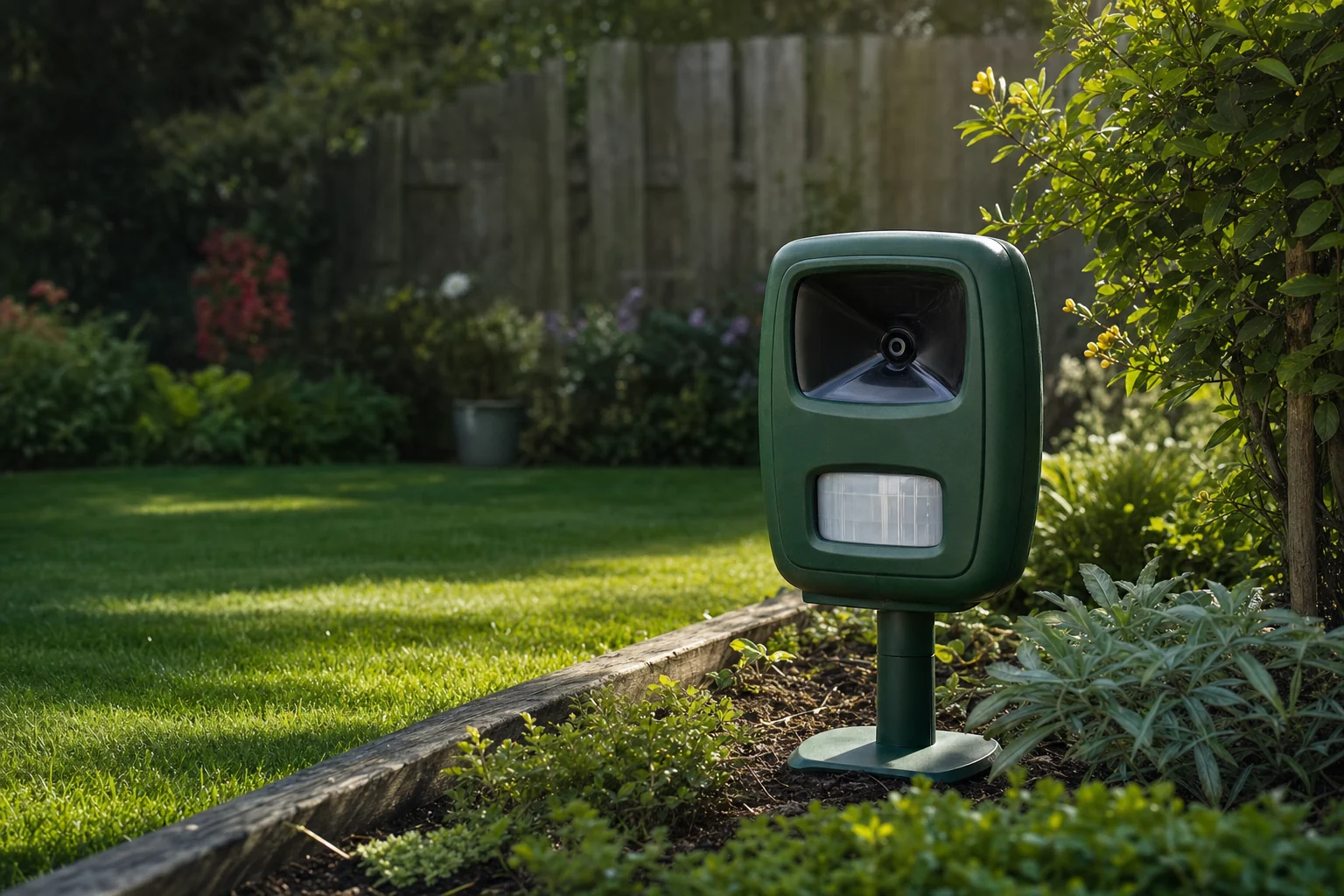
Why Your Garden Has Become the Neighbourhood Litter Tray
There are few gardening moments quite as deflating as kneeling down to plant a promising new perennial and finding that a cat has got there first. You wanted a calm hour with a trowel. Instead, you are reaching for gloves, a bucket and language that would make the compost heap blush.
Cat fouling is a remarkably common source of friction between gardens, particularly where small urban plots sit close together and several cats share the same network of fences, sheds and sunny paving. The trouble is not usually malice. To a cat, your carefully prepared border is not a border at all. It is a private, dry, loose-soiled convenience with excellent drainage and, if you are unlucky, a handy hedge beside it for a little discretion.
Freshly turned ground is especially tempting. So are newly filled raised beds, bare patches between young plants, soft compost around shrubs and sheltered corners that stay dry after rain. A cat is looking for somewhere that feels easy to dig, quiet enough to use and simple to leave afterwards. Unfortunately, these are also pretty much the qualities we aim for when making a good planting bed. Gardening is full of small ironies. This one smells worse than most.
The answer is not to turn your garden into a hostile obstacle course, nor to try to "teach" someone else's pet a lesson. Apart from being unpleasant, harsh approaches tend to create a worse problem. Cats are agile, determined and very good at returning when they believe an area remains safe. The useful goal is gentler and more realistic: make the places you care about feel inconvenient, unpredictable and physically unrewarding, whilst leaving the garden pleasant for you and safe for wildlife.
The useful mindset shift
Do not focus on repelling every cat from every square centimetre of the garden. Focus on protecting loose soil, new planting, vegetable beds and favourite sitting areas. Cats tend to choose the easiest available spot. Make yours awkward enough and many will simply choose somewhere else.
There is no single miracle solution. Scent deterrents can be useful but need renewing. Ultrasonic units can interrupt a cat's confidence in a route, but coverage and hearing vary. Plants are a handsome long-term supporting act, not an instant cure. Physical barriers are usually the strongest option for soil itself. The most successful gardens combine two or three of these rather than placing all their faith in one gadget and hoping for a small miracle.
The Science of Cat Deterrence: What Research Actually Tells Us
Cats are habitual animals. If one has used the same patch beneath your escallonia for weeks, it has already decided that the place is safe, quiet and available. That matters because deterrence is rarely about creating a dramatic one-off fright. It is about breaking a routine often enough that the cat stops treating the garden as part of its normal territory.
A useful peer-reviewed trial gives ultrasonic deterrents rather more credibility than the usual collection of cheerful packaging claims. Across 13 trial gardens, activity duration was reduced for 22 of 26 resident cats. That is 84.6% of the cats observed. The research concluded that CATWatch reduced cat intrusions, and that the longer the unit remained in place, the more effective it became.
It is encouraging evidence, but it is not a promise that a device will clear every garden overnight. Behaviour is wonderfully inconvenient like that. A cat may approach from outside a sensor's field, remain behind dense planting, or decide that a particular corner is worth a brief high-pitched interruption. Another may be hard of hearing. Another may simply be bolder than the average furry intruder. Cats have personalities. Anyone who has ever watched one ignore a closed door understands this.
The principle behind all sensible deterrents is straightforward. A toileting spot needs to feel safe and comfortable. Ultrasonic devices add an unexpected sound when movement is detected. Strong scents make an area feel unfamiliar or unpleasant. Spiky or uneven surfaces remove the comfortable digging experience. Dense planting and covered soil reduce access. None needs to hurt the cat; each merely changes the calculation.
Unpredictability is important. If a cat encounters the very same scent in the very same place for months, it may eventually accept it as background. If a sonic unit sits in one obvious position forever, a determined visitor may find a route around it. This is why the practical advice to layer defences is not just garden-centre folklore. It follows the way cats learn. Combining a movement-triggered interruption with an awkward surface and a changed scent gives the cat less opportunity to decide that the risk is imaginary.
Give a new system time. CATWatch may take up to four weeks to deter cats. During that settling-in period, remove any mess promptly and keep the protected bed consistently difficult to use. A half-protected border sends a rather muddled message.
There is also a wider garden benefit to taking this measured approach. A humane deterrent strategy avoids contaminating soil, avoids confrontations with neighbours and leaves you with better-looking borders rather than a collection of improvised traps. The best result is boring, really: you stop thinking about cats because the problem quietly fades away.
Ultrasonic Deterrents Reviewed: CATWatch, CATFree, ZeroCat and PestBye
Ultrasonic deterrents are the active part of the toolkit. A sensor detects movement and triggers a high-pitched sound intended to be unpleasant to cats but inaudible to humans. Unlike a scent treatment, which is simply present all the time, a properly positioned ultrasonic unit makes a cat's arrival itself the trigger. For a creature that values predictable routes, that can be quite persuasive.
Placement matters more than the badge on the casing. A unit facing into the middle of a lawn will not do much for the narrow soil strip where the trouble actually happens. Think first about access: the gap by the gate, the run along a fence, the passage behind a shed or the particular path from neighbouring paving. Aim the detector across that route, keeping foliage and pots from blocking its view.
CATWatch: broad coverage for a main problem area
CATWatch is a weather-resistant unit made in the UK. It is RSPB-approved and uses a motion sensor to trigger a frequency within the hearing range of cats. The stated coverage is up to 125 m², with a 12 m range in a 100° arc. It can run from mains power or batteries, which makes it suitable for gardens where a socket is either conveniently close or entirely fictional.
Its size is modest: 14.5 cm tall, with a 16.6 cm ground spike. That is helpful in a border, where you want the sensor to see over low planting but do not necessarily want it to become the garden's newest sculpture. The documented trial evidence is also a meaningful point in its favour. It is not proof of perfection, but it is a stronger basis than guesswork.
CATFree: a smaller option for compact gardens
CATFree covers up to 88 m² with a maximum range of 10 m. Like CATWatch, it can be mains- or battery-powered, though mains power is recommended for reliability. For a courtyard, front garden, narrow side return or a modest back garden, it is a sensible scale. There is little value in buying coverage for a huge expanse when the actual issue is one small, regularly visited border beside the patio.
It is available as a bundle with a mains adapter for £39.90. In a smaller plot, that plug-in reliability can be more useful than the theoretical freedom of batteries, especially during the darker, wetter months when you do not want a deterrent becoming another small maintenance job on the list.
ZeroCat and PestBye: alternatives with different coverage patterns
ZeroCat uses PIR motion detection, activating only when needed, and emits frequencies within the 16–60 kHz range. It has a 9.1 m range in a 110° detection angle, runs on three AA batteries with up to six months of autonomy, has an IPX4 waterproof rating, and is supplied with both a stake and wall hook. That stake-and-hook arrangement is useful where the problem route is at fence height or along a hard surface rather than through open soil.
PestBye Waterproof is a battery-powered option with stated coverage of 23 m² and a range of 7 m. It is better thought of as targeted protection for a small corner, a doorway bed or one newly planted patch rather than an all-garden answer.
| Feature | CATWatch | CATFree | ZeroCat | PestBye Waterproof |
|---|---|---|---|---|
| Stated coverage | Up to 125 m² | Up to 88 m² | — | 23 m² |
| Maximum range | 12 m | 10 m | 9.1 m | 7 m |
| Detection angle | 100° | — | 110° | — |
| Power | Mains or battery | Mains or battery | Three AA batteries | Battery |
| Weather protection | Weather resistant | — | IPX4 waterproof | Waterproof |
The coverage figures are useful for choosing scale, but do not treat them as a licence to place one unit at the furthest corner and forget it. Plants, walls and sheds create blind spots. A small garden with an L-shaped layout may benefit more from one well-positioned device and a physical barrier at the awkward corner than from a larger unit facing the wrong way.
Scent Deterrents: From Gel Crystals to Kitchen Cupboard Sprays
Scent deterrents are the low-tech, flexible part of the plan. They are particularly useful where you do not have power, where an ultrasonic sensor would be blocked by dense planting, or where you want to protect a freshly planted bed immediately. They also suit gardeners who would rather not add another electronic device to the collection of things requiring batteries, settings and occasional stern words.
GET OFF My Garden Cat and Dog Repellents use jelly-like crystals with a strong scent. They can be placed around plants and cover up to 120 m² per application. The practical advantage is that you can concentrate them where the problem is, rather than treating the entire garden as though it were an unfortunate crime scene. Lay them around the edge of the bed, beside the habitual entry point and around newly exposed soil.
The mechanism is not magic. Cats rely heavily on scent to understand their territory and to assess places they are comfortable using. An overwhelming unfamiliar smell can interrupt that confidence. It can make a border feel less like a safe, neutral patch of loose earth and more like somewhere another animal has already laid claim to. They may not write a complaint to the council. They will usually move on.
Citrus is the obvious homemade option. Orange and lemon peel can be tucked along the edge of a border, while citrus-based sprays can be applied around hard edges, fence bases and the rim of raised beds. Rosemary and vinegar spray are also often used as part of a homemade mix. A citrus, rosemary and vinegar spray is noted as a particularly effective homemade repellent.
Use scent at the entry point
A deterrent is more efficient along the fence gap, gate or route a cat uses than scattered lightly across a large lawn where it does nothing useful.
Renew after weather and watering
Rain, irrigation and ordinary garden life dilute or wash away scent. Reapplication is not failure; it is simply the nature of a surface treatment.
Protect the soil, not the foliage
Keep any treatment focused on the ground and perimeter of a bed. The aim is to discourage digging, not to drench your treasured plants.
A better way to use peel
Do not leave great heaps of citrus peel to rot in a border. Tuck small pieces beneath foliage along the edge of bare soil, refresh them regularly and remove them before they turn into a soggy buffet for slugs. The garden should still look like a garden.
Scent alone has limits. A determined cat may tolerate a smell if the soil beneath it remains soft, dry and easy to dig. This is why I think of crystals, peel and sprays as supporting players. They are excellent alongside a covered surface or an ultrasonic unit, and less convincing as the one thing standing between a cat and a freshly forked border.
Plant Your Defence: Garden Design Tricks That Cats Genuinely Hate
Planting is the patient gardener's answer. It will not solve an urgent problem in an afternoon, but it can transform the character of a troublesome bed over time. Cats prefer clear, accessible soil. A border filled with plants, stems and textured ground cover gives them fewer landing places and fewer bare patches to excavate. Happily, it also tends to look much better.
Coleus canina is often sold as the scaredy-cat plant. It belongs to the mint family and produces a scent that cats find unpleasant, whilst humans generally notice little unless the leaves are touched. That last detail is important. It is not a botanical force field. It is a useful scent layer, and it works best when planted with some strategy rather than plonked randomly in the middle of a bed and expected to patrol the premises.
Plant Coleus canina in a line along a vulnerable border edge, beside a fence run or around a raised bed. The aim is to create a scented threshold the cat meets as it enters, not an isolated plant that it can stroll around without a second thought. Fill the bare ground between young plants with a physical mulch or mesh until the planting has knitted together.
Lavender is another useful option. Its aromatic foliage can be unpleasant to cats, while its flowers are generous to pollinators. Lavender 'Hidcote' and 'Munstead' are both good choices for a sunny, well-drained UK garden. Position them along sunny border fronts, paths and patio edges, where their scent is easily released when foliage is brushed. They are not an excuse to ignore the soil behind them, but they can form a handsome, practical boundary.
September is a useful planning month. Sketch where cats enter and which beds are most exposed while the evidence is still obvious. Come next spring, plant up the edges you have identified and protect the open ground around young plants until they fill out.
Close the gaps in a border
The real enemy is exposed, workable soil. Use plants to reduce it. Even a generous planting scheme benefits from a temporary surface barrier during its first season.
Put lavender where it can thrive
Choose a sunny, well-drained position. A miserable lavender plant is not much of a deterrent, and it is certainly not the relaxed Mediterranean flourish one had hoped for.
Use aromatic plants as part of a system
Plant-based deterrents are most persuasive when the bed is also difficult to dig and the cat's usual approach route has been interrupted.
It is worth keeping expectations sensible. A cat that is very determined, or one that is already accustomed to a garden, may walk straight past a lavender hedge. The point is not that every plant is offensive to every cat. It is that attractive, densely planted borders give you fewer bare-soil problems and add a gentle scent obstacle at the same time. That is a far more useful promise.
Physical Barriers and Prickle Strips: The Most Reliable Line of Defence
If the problem is specifically digging and fouling in soil, physical barriers are the method I would start with. Prickle strips are described as the most reliable way to stop digging and fouling because they remove the comfort a cat is seeking. That gets to the heart of it. A cat does not need your border to be beautiful. It needs it to be soft enough to scratch, comfortable enough to squat in and open enough to leave without tangling its paws in anything awkward.
Prickle strips and spiky matting are pressed into the soil around plants. They should make the surface unpleasant to stand or dig on, not cause injury. In a newly planted border, position the pieces between plants and cover the obvious open areas. Once foliage spreads, you can usually reduce how much is visible. The ideal barrier does its job quietly and gradually disappears into the planting scheme. Like a good fence. Or a good neighbour.
Chicken wire laid flat over soil is another practical choice. Cut holes to allow plants through, secure the edges so it lies flat, then cover lightly with mulch if you want to disguise it. The cat meets an awkward surface when it tries to dig, while your plants remain accessible. It is especially useful in a vegetable bed between crops, where there may be long periods of bare earth that effectively advertise themselves to passing cats.
Natural-looking options include pine cones and holly cuttings pressed into the soil, though they need replacing as they break down or get moved. Stone mulch over exposed earth can also make a bed less appealing. The right choice depends on the style of your garden and how often you need to reach the soil. In a formal herb border, carefully placed prickle strips beneath the foliage may be tidier. In a woodland edge, cones and twiggy cuttings can look entirely at home.
Why physical barriers work
- They address the digging surface directly rather than hoping a cat dislikes a nearby smell.
- They remain effective in rain, unlike many scent treatments.
- They protect newly planted and freshly turned soil immediately.
- They can be combined easily with planting, mulch and ultrasonic devices.
What to plan for
- They need arranging carefully around plants and access points.
- Visible materials can look temporary before plants fill out.
- Cones and cuttings need renewal as weather and garden activity shift them.
- They protect soil, but do not necessarily stop cats crossing the wider garden.
Protect bare ground first
Do not wait until a cat has adopted a newly planted bed. Cover exposed soil as soon as you plant, sow or weed. Prevention is much easier than persuading an established visitor to break a comfortable routine.
For September, physical protection is particularly helpful around recently cleared beds, autumn planting and any patch you have opened up for bulbs. Loose soil is loose soil, whatever your plans for it. Cover it now, then review the arrangement in spring when new growth makes it easier to hide or remove temporary materials.
Layering Your Defences: How to Build a Strategy That Actually Works
The most effective cat-proofing plans do not rely on one grand gesture. They use two or three modest measures that cover different weaknesses. One changes the approach route. One protects the soil. One makes the bed less attractive over the longer term. It is a little less dramatic than a gadget promising instant salvation, but it is much more likely to survive contact with a determined tabby.
Start by walking around your garden as though you were a cat. Which fence has the obvious gap beneath it? Is there a shed roof that offers an easy descent? Does a gate remain slightly open? Which beds are dry, loose and screened from your windows? You do not need to identify every possible route. Find the common route and the favourite toilet patch. Those are your priority targets.
Tier 1: interrupt the perimeter route
This is where ultrasonic deterrents have their best chance. Position one to detect the cat as it enters through its normal corridor, rather than after it has already reached the border. For a small garden, a CATFree unit can cover up to 88 m² with a maximum range of 10 m. For a larger, more open main area, CATWatch reaches up to 125 m² with a 12 m range in a 100° arc. In either case, trim back foliage that blocks the sensor and check that pots have not quietly appeared in front of it. Pots have a way of multiplying when nobody is watching.
Tier 2: make the border surface unusable
Lay prickle strips, spiky matting or flat chicken wire across bare soil. This is the layer that solves the immediate fouling problem even if the cat still passes through the garden. Add scent crystals or a citrus-based treatment around the edge, especially near the entrance point. The surface says "not comfortable"; the scent says "not welcoming". Together, they are much more convincing than either alone.
Tier 3: build a long-term planted boundary
Use Coleus canina along a vulnerable edge and incorporate lavender in sunny positions where it naturally suits the design. Fill borders well enough that large, open soil patches become rare. Once planting matures, your cat deterrent becomes less visible and the garden becomes more resilient for entirely aesthetic reasons too.
Small gardens: keep the plan focused
For a garden under 50 m², one CATFree unit, scent crystals in the affected borders and a couple of Coleus canina plants can form a practical starting combination. Add a physical soil cover where fouling has already occurred.
Long borders: protect the vulnerable sections
You may not need to defend an entire border. Focus on the sheltered, loose sections beside hedges, behind shrubs and near regular entry points.
Reposition rather than surrender
Move devices every two or three weeks if cats appear to be learning around them. A small change in angle or position can restore the uncertainty that made the unit effective in the first place.
Layering also helps you avoid overdoing any one method. Instead of repeatedly applying a powerful scent over every surface, you can use a light, targeted scent layer because the soil is already covered. Instead of expecting an ultrasonic unit to defend awkward corners behind shrubs, you can use planting or mesh there. It is efficient gardening rather than escalation.
What You Might Spend on a Cat Deterrent Plan
The cost of a solution depends mainly on whether you need an active ultrasonic device or are protecting one troublesome bed with physical materials and scent. Battery-powered ultrasonic models sit in the £15–£30 range. CATFree is available with a mains adapter bundle for £39.90.
There is a practical point here beyond the ticket price: choose the method that you will maintain. A low-cost ultrasonic unit is less useful if batteries are allowed to fail. A bag of scent crystals is not much help if it stays unopened in the shed after rain. A pile of cones is only a barrier whilst it remains on the soil rather than scattered across the lawn by a keen blackbird.
Battery-powered ultrasonic models
A useful entry point for targeted active deterrence in a small area.
CATFree with mains adapter bundle
Up to 88 m² coverage with a maximum range of 10 m.
For many gardens, the best first spend is not necessarily the largest device. If fouling happens in one accessible border, begin by covering the soil and treating the entry route. Add an ultrasonic unit if the cat continues to visit or if there are several likely approaches. Conversely, if cats cut through the whole garden and the soil problem appears in several places, a movement-triggered deterrent can make a more useful first layer.
Autumn is a good time to spend modestly and strategically. Protect newly opened ground now, observe where cats still get through, then make more permanent planting changes next spring. That approach is kinder to your budget and much less likely to leave you with a cupboard full of abandoned "solutions". Every gardener has one of those cupboards. It is where good intentions go to hibernate.
Honest Limitations: What No Cat Deterrent Will Tell You on the Box
It is worth being blunt: no humane cat deterrent works perfectly for every cat, every garden and every situation. Anyone promising otherwise is selling a comforting story rather than a reliable gardening method.
The biggest limitation for ultrasonic products is hearing. Some white cats, older cats and certain exotic breeds may be hard of hearing, and ultrasonic devices may not affect them. In that situation, changing device brand or paying more for another sonic system is unlikely to solve the problem. Shift your effort to physical barriers, dense planting and scent-based approaches instead.
Habituation is the other issue. Cats can get used to sonic sounds and learn to ignore them. Some ignore them from the start. Some learn to walk around a coverage gap. This is not a reason to dismiss ultrasonic deterrents altogether; the trial evidence shows that they can reduce activity. It is a reason to use them intelligently, check their position and avoid treating any device as a permanent, hands-off solution.
Solar charging can also be unreliable in real garden conditions. If a solar-powered deterrent begins performing poorly, it may need a period of drying out before it recovers. This is another reason mains power can be attractive where it is practical, and why a physical surface barrier remains such a dependable companion. A piece of mesh has no batteries, no sensor angle and no mysterious mood after a wet week.
Do not judge a new ultrasonic device after a day or two. CATWatch may take up to four weeks to discourage cats. Keep the border covered during that period so the cat is not rewarded with an easy, familiar toileting patch while it works out the new arrangement.
A realistic expectation
- Fouling becomes less frequent and eventually stops in the protected bed.
- Cats choose an easier route or another location.
- Your border stays accessible and attractive for gardening.
- The approach remains humane and does not create risks for wildlife.
An unrealistic expectation
- One scent treatment solves every future visit.
- An ultrasonic device affects cats with impaired hearing.
- A barrier needs no adjustment after planting grows.
- A cat never finds a new route when its old one is blocked.
The final limitation is patience. Cats are creatures of routine, and changing that routine can take time. Remove fouling promptly, refresh scent treatments, maintain barriers after you weed or plant, and keep sensors clear. It is not glamorous work, but neither is cleaning up after cats. One of these jobs gives you a better garden at the end.
Common Questions About Keeping Cats Out of Borders
Lavender can contribute a scent cats may dislike, especially along a sunny path or border edge, but it is not a complete answer on its own. Use it alongside a covered soil surface and, where needed, an ultrasonic or scent deterrent at the entry point.
Cover bare soil immediately with prickle strips, spiky matting or chicken wire laid flat. These methods remove the soft digging surface that attracts cats. Add a scent treatment around the edge for an extra layer.
Position it to detect the route a cat uses to enter the garden or reach the problem bed. Keep foliage, pots and other obstructions from blocking the sensor, and consider moving the unit every two or three weeks if cats begin avoiding its main detection area.
Several modest layers are generally more effective than a single method. An ultrasonic unit at the perimeter, a physical barrier over exposed soil and aromatic planting or scent treatment around the border form a practical combination.
The GardenScout verdict
The most reliable way to stop cats fouling in borders is to make the soil physically awkward first, then add a second layer that interrupts the cat's usual route or confidence. Prickle strips or flat mesh deal with digging. Scent treatments add a flexible warning signal. An ultrasonic unit can make a regular approach feel unpredictable. Coleus canina and lavender help turn the solution into a proper planting scheme rather than a temporary stand-off.
Start now by covering bare ground and identifying the route cats use. Through autumn, maintain the barrier and adjust any device position. Come next spring, use dense, aromatic planting to remove the open spaces that made the border tempting in the first place. It is not instant magic. It is better than that: a calm, humane system that gives you your garden back.