
How to Mow a New Lawn: Timing, Height and First Cuts
The first mow is not a race, nor an excuse to set the mower to "tidy". Here is how to cut new seed or turf at the right moment, at the right height, without turning your promising green patch into a stripy regret.
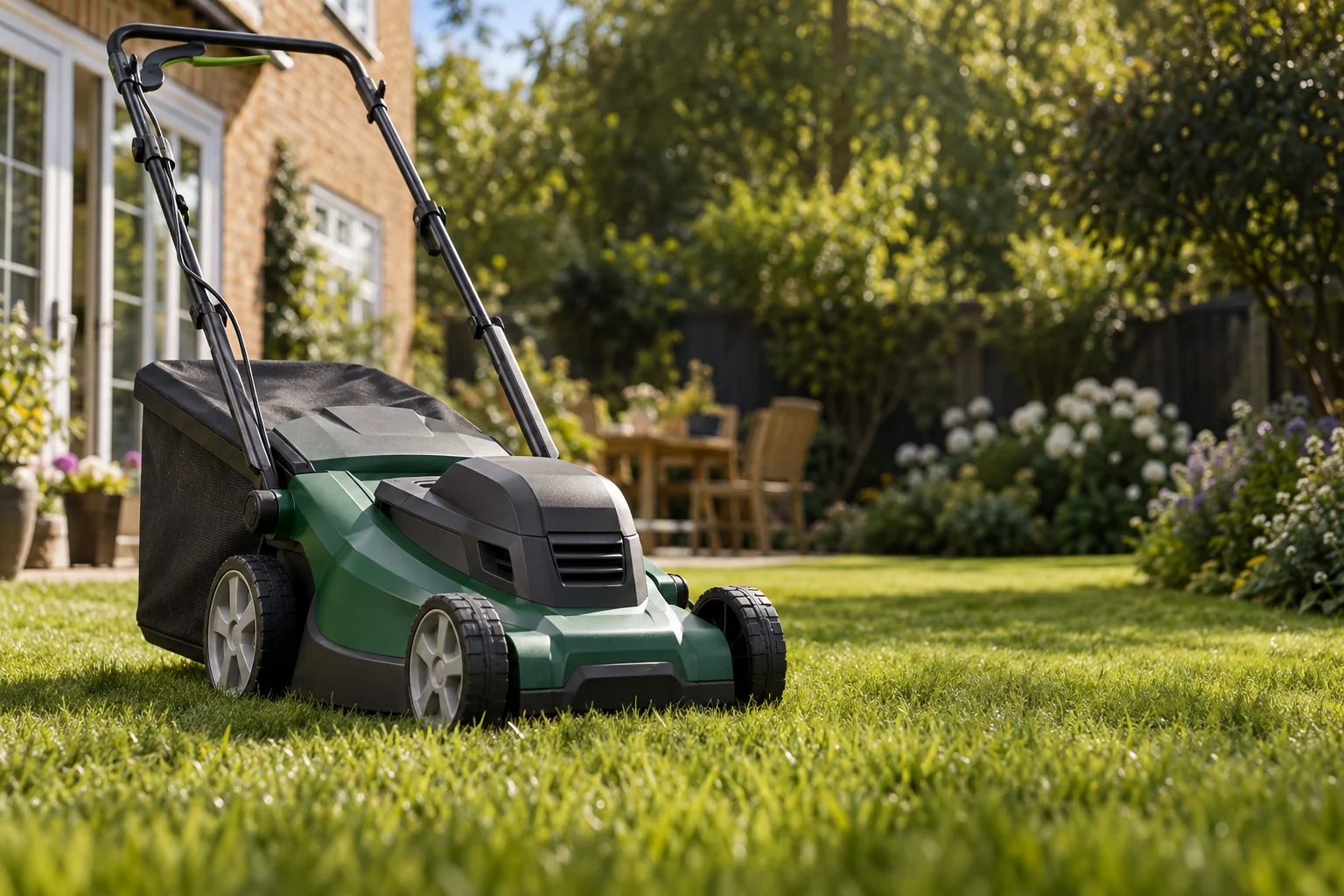
First Cuts, Real Consequences: Why New Lawn Mowing Is Different
It is mid-October, and a freshly made lawn can look deceptively ready for action. There may be a respectable wash of green across the garden. The neighbours have mown twice already. Your mower is sitting in the shed looking faintly offended. It is tempting to give the new grass "just a little trim". This is exactly the point at which patience earns its keep.
A mature lawn has a dense root system, established crowns and enough stored energy to recover from the occasional bad decision. A new lawn has none of that security. Whether it began as seed or freshly laid turf, it is still doing the quiet underground work that makes the visible green surface possible. Roots are finding their way into the soil. Individual plants are beginning to anchor. The ground itself may still be settling.
Mowing is not inherently harmful; it is one of the jobs that eventually helps a lawn become fuller and more resilient. But mowing too early, cutting too low or dragging a heavy machine over soft ground can pull plants loose, tear delicate blades and expose thin areas before they have had a chance to knit together. There is no dramatic soundtrack when this happens. The lawn simply starts looking patchy, pale and rather less confident than it did a week earlier.
This guide covers the first cuts of both seeded and turfed lawns, because they are related jobs but not identical ones. Seed must germinate, establish roots and reach a usable height. Turf arrives looking like a lawn, which can make it feel more robust than it really is. It still needs to root into the soil beneath it before it is treated as a normal lawn.
The useful rule to remember
Do not mow because a certain number of days has passed. Mow because the grass has reached the right height, the soil is firm enough to walk on without marking, and the plants are anchored well enough to tolerate a gentle cut.
At this point in the UK gardening year, growth usually slows as daylight shortens and conditions cool. If you sowed grass late in the season, there is no prize for forcing a first mow before it is ready. A late-sown lawn may be better left to establish quietly, with only a careful cut if it genuinely reaches mowing height in dry conditions. Come next spring, you can begin a steadier mowing routine as active growth returns.
Before you begin: wait for a dry day, check that the mower blade is sharp, and remove stones, twigs, labels and any stray bits of building material. New lawns have an uncanny ability to reveal one last brick fragment precisely when the mower arrives.
Seed vs Turf: Two Lawns, Two Very Different Clocks
The main difference between seed and turf is obvious when you look at them, but easy to forget once the garden starts to look green. Seed begins with individual grass plants emerging from the soil. Turf begins with an already-grown layer of grass, roots and soil that must connect with the prepared ground underneath. Both need care. They simply need it in different ways.
A seeded lawn usually needs around 4–8 weeks before its first mow. That is a broad window because lawns do not own calendars. They respond to growing conditions, evenness of germination, moisture and how quickly their roots establish. A lawn sown into kind conditions may fill in briskly. One sown when growth is sluggish can take longer to reach a point where mowing is sensible. The grass does not know that you had hoped to hold a barbecue.
Freshly laid turf generally needs around 3–4 weeks before its first cut. The surface may look finished from day one, but the roots beneath it are not yet joined to the soil below. Until that connection develops, turf can shift, lift or tear if it is walked on heavily or caught by a mower wheel. Treat it as an installation that is still settling, rather than a mature lawn in fancy dress.
| What matters | Seeded lawn | Newly laid turf |
|---|---|---|
| Usual wait before first cut | Typically 4–8 weeks, depending on establishment and growth. | Typically 3–4 weeks, once roots have begun to knit into the soil. |
| Primary readiness check | Grass should be consistently around 7.5–10cm (3–4in) tall across the lawn. | A gentle tug should meet clear resistance rather than lifting the turf. |
| Big early risk | Pulling out shallow-rooted seedlings or cutting sparse patches too hard. | Shifting seams, marking soft soil or lifting turf that has not rooted. |
| First-cut approach | Highest mower setting; one light, calm pass. | Highest mower setting; avoid tight turns and repeated passes. |
With seed, germination is only the beginning. Seeing green shoots does not mean the lawn is ready for machinery. At first, each blade is supported by a small and developing root system. If a mower wheel presses into soft soil, or a blunt blade tugs rather than slices, seedlings can be disturbed surprisingly easily. One overly enthusiastic cut can leave a lawn looking as though a small flock of sheep has had a disagreement in it.
With turf, the temptation is almost the opposite. The instant-lawn effect can make you feel that the hard work is over. Yet turf has been cut, lifted, transported and relaid. It needs moisture and time to recover from that upheaval. The first weeks are about encouraging the roots to move down into the prepared soil. Mowing comes after that, not before.
Seed needs evenness, not just height
A few tall blades do not make the whole lawn ready. Wait until the grass is broadly established across the plot, then deal with genuinely bare spots separately rather than shaving the stronger areas down to match them.
Turf needs a root connection
The top may look neat, but the important work is happening underneath. The turf should resist a gentle lift before a mower crosses it.
Both need firm, dry conditions
Wet grass clumps, soft soil marks and mower wheels sink. Waiting for a dry spell is not fussiness; it is one of the simpler ways to avoid damage.
The Tug Test and Height Rule: Knowing When to Pick Up the Mower
There are two reassuringly simple checks before a first cut. One is for turf, one is for seed. Neither requires a gadget, an app or a complicated ritual involving soil samples. You need your hands, your eyes and a willingness to wait a little longer if the answer is not yet clear.
The tug test for new turf
Kneel at the edge of the lawn, where a small test will be least conspicuous, and take hold of the turf with your fingertips. Lift or tug gently upwards. You are not trying to remove a section; you are checking whether it has started to anchor.
If the turf lifts readily, slides across the surface or feels as though it is still resting on top of the soil, give it more time. If it resists with a quiet, firm reluctance, that is what you want. The roots have begun to knit into the soil. Think of it less as a dramatic grip and more as the difference between lifting a loose mat and lifting something that has caught properly in the pile.
Test more than one area if the lawn is large or the ground varies. A sunny edge may root differently from a shaded corner. A section laid over softer soil may still need time even if the middle of the lawn feels secure. Turf is not always equally ready everywhere, which is another reason the first cut should be gentle.
The height rule for seed
For a seeded lawn, wait until the grass is consistently around 7.5–10cm (3–4in) tall before considering the first mow. "Consistently" is doing a great deal of work in that sentence. Do not judge the lawn by its tallest, most ambitious blades. Look across the whole area. Is most of it at a similar stage? Does it look rooted rather than wispy? Can you walk over it lightly without leaving obvious prints or pulling plants up?
(3–4in)
Patchy germination is the awkward bit. It is tempting to mow the whole lawn because the best area is ready, whilst hoping the weak areas will somehow take it personally and catch up. They will not. If most of the lawn is still sparse, wait. If the lawn is largely established but has a few small bare or thin places, keep the mower high and treat those patches gently. You can oversee thin areas later rather than cutting the rest of the lawn shorter in an attempt to make everything look even.
A first mow should barely look like mowing
The aim is not a crisp, finished-lawn appearance. The aim is to remove a modest amount of growth without stressing the plant. If you stand back afterwards and wonder whether the mower did very much, that is often a sign that you chose the right height.
Also check what lies underfoot. A lawn can be tall enough but still too soft to mow safely after watering or rain. If your shoe sinks, leaves a clear print or shifts a strip of turf at the edge, postpone it. Mowing on unsuitable ground is an excellent way to create ruts that remain long after the grass has forgotten why they happened.
Height Settings Decoded: What Numbers on Your Mower Actually Mean
Mower height settings are one of those garden things that feel self-explanatory until they are not. The setting refers to the distance between the blade and the ground, not the length of grass that will remain after cutting. On uneven ground, the actual result can vary further because the deck follows bumps, dips and changes in surface firmness.
For a new lawn, begin at the highest available setting. On many UK rotary mowers that is typically around 4–5cm. The precise number matters less than the principle: you are taking the tips off, not trying to produce a bowling-green finish during the lawn's first month of life.
Leaving more leaf behind gives the young grass more capacity to keep growing. The green blade is where the plant captures light and builds energy. Remove too much in one go and you reduce that useful surface just when the root system is still finding its feet. Longer grass also shades the soil a little, which can help it hold on to moisture rather than drying out quickly after a cut.
Then there is the one-third rule. It is one of the few bits of lawn advice worth repeating because it works in such a wide range of situations: never remove more than one-third of the grass height in a single mow. If the lawn has grown tall, do not solve the problem by dropping the mower deck to its usual mature-lawn height. Raise the deck, make a gentle cut, let the lawn recover and reduce height gradually through later cuts if needed.
Think in stages, not corrections. A lawn that has become too long needs more than one careful mow to return to a lower routine. Cutting it hard in one afternoon is where scalping, yellowing and weak recovery tend to begin.
Before starting, inspect the mower blade. A sharp blade makes a clean cut. A dull blade can tear and fray the grass, leaving ragged ends that look pale and tired afterwards. On a mature lawn, that is untidy. On a young lawn, it is an avoidable extra stress. If you have not looked at the blade since last season, this is your nudge.
Set your pace as well as your height. Go slowly over a new lawn, particularly if the ground is uneven. Rushing is how the mower bounces over a hump, digs lower at the far side and leaves a pale stripe that was not part of the plan. Keep turns wide and gentle. Avoid pivoting the mower on one wheel. Avoid repeated passes over the same narrow line. A new lawn does not need military precision; it needs a calm first introduction to being cut.
The One-Third Rule in Action: A Gentle Plan for the First Three Months
The first few months are when a mowing habit is established, and it is worth making it a forgiving one. There is no universal Tuesday-afternoon schedule because growth changes with weather, season and how quickly the lawn is settling. What you can follow is a sequence: cut little, observe recovery, then build a rhythm around growth rather than habit.
First cut: remove only the top growth
Once a seeded lawn is around 7.5–10cm (3–4in) tall, or new turf passes the tug test after its establishment period, use the highest setting and take only a modest amount off. Do not try to make it short. Do not double-cut because the result looks less dramatic than expected. One light pass is enough.
Emptying the grass box before you begin is sensible, but do not obsess over collecting every clipping if the mower leaves a very small amount behind. The important thing is avoiding clumps. Any clumps of cut grass can smother the young blades underneath, so lightly rake or lift them away if they appear.
The next two or three cuts: stay high and watch the lawn
Give the lawn time to respond. If it is growing strongly and the ground is dry and firm, mow again when the height means you can still follow the one-third rule. Keep the mower high, usually working towards a cut around 5–5.5cm only gradually, rather than dropping from a long first cut to a low finish in one leap.
At this stage, each mow is also an inspection. Look for areas that are thinner, softer or slower to recover. Check turf seams. Notice whether the mower wheels are creating marks. A lawn tells you quite a lot if you pause long enough to look at it, although it does insist on speaking in shades of green rather than complete sentences.
Weeks four to eight: establish consistency
Once the lawn is rooted, firm and responding well, regular mowing encourages the grass to thicken. Continue to respect the one-third rule. If growth is swift, mowing may need to happen more often at a high setting rather than less often at a lower one. That is the slightly counter-intuitive bit: a gentle, regular trim is often easier on grass than allowing it to get very long and then cutting hard.
Keep a little extra length if the lawn is newly established, shaded for much of the day, or growing into cooler autumn conditions. Short grass can look very smart in a photograph. It can also be much less forgiving in a real British garden that contains children, dogs, damp corners, clay soil and an occasional football.
Months two and three: lower only if the lawn earns it
After a series of successful cuts, you can adjust towards the height you prefer for normal use, but only one setting change at a time and only if the lawn is healthy and growing. There is no obligation to mow low. In fact, a slightly longer lawn is often easier to keep looking good, especially during dry spells or on uneven ground.
First cut
Highest mower setting, dry surface, single gentle pass. The goal is a clean introduction to mowing, not a finished-looking lawn.
Early follow-up cuts
Maintain a high cut and remove no more than one-third of the growth. Let the lawn's recovery dictate the pace.
Established routine
Only reduce the height gradually, and only when roots are secure, the surface is level enough and the grass is growing strongly.
If the lawn got away from you
Do not attempt to rescue an overgrown new lawn in one close cut. Raise the mower, remove a third or less, then wait for recovery before cutting again. The lawn may take a little longer to look polished, but it is much less likely to look punished.
Scalping: What It Is, Why It Happens and How to Stop It Ruining Your New Lawn
Scalping is the rather alarming result of cutting grass so short that you expose the brown or yellowish lower parts of the plant, thatch or crown rather than leaving a healthy covering of green blade. It often appears as straw-coloured patches, visible soil, rough stripes or areas where the lawn suddenly looks thinner and more uneven. It is not the same as ordinary wear. It looks harsher, because it is.
New lawns are especially vulnerable because their surface may not yet be perfectly level. Fresh turf can settle unevenly at seams or over dips in the prepared soil. Seeded ground can reveal small hollows and high spots as it consolidates. A mower deck that clears most of the lawn safely can clip too close over a hump. Add a low height setting and a brisk walking pace, and you have the classic recipe for a scalp.
Wet or soft ground makes matters worse. Wheels sink slightly, lowering the effective cutting height. The mower can then shave a section much more closely than you intended. This is one of the reasons a dry day matters so much. The lawn may look only a little damp from the kitchen window, but the test is what happens when you walk over it. If it gives underfoot, leave the mower where it is.
Habits that prevent scalping
- Start with the highest mower setting.
- Follow the one-third rule rather than trying to catch up in one cut.
- Mow only when grass is dry and the ground is firm.
- Walk steadily and slow down over visible humps.
- Keep the mower blade sharp for a clean cut.
Habits that cause it
- Dropping to a low setting because the lawn looks long.
- Mowing newly laid turf before it has rooted.
- Using the mower after rain or heavy watering.
- Taking tight, fast turns on soft surfaces.
- Assuming every area of a new lawn is equally level.
If you do scalp a patch, resist the urge to keep cutting it in an attempt to make the colour even. Raise the mower for the rest of the lawn and give the affected area time to recover. Keep foot traffic off it as much as practical. The first response to an ugly lawn patch is often to do more to it. Usually, the kindest response is to do less for a while.
Unevenness is not a personal failing. Nearly all new lawns have a few areas that settle differently. Mowing higher buys you time to spot and manage them without advertising every lump and dip to the entire street.
Mower Choice for New Lawns: Rotary, Cylinder or Robotic?
You do not need a specialist mower simply because the lawn is new. You do, however, need a machine that can make a light, clean cut without compacting soft ground or demanding a very short finish. In most gardens, the sensible first-cut choice is the mower you can keep high, control comfortably and move gently across the lawn.
A rotary mower is generally the most forgiving option for a new lawn. Its horizontal blade is well suited to grass that is still relatively long, and many rotary models offer a broad range of cutting heights. For the first cut, the key advantage is not cleverness; it is adjustability. Set the deck high, make a gentle pass and avoid trying to groom the lawn into a formal finish before it is ready.
Weight matters as much as cutting action. A lightweight mower is easier to guide without pressing deep wheel marks into soft turf or newly settled soil. That does not mean every heavier mower is automatically unsuitable, but it does mean you should be realistic about the state of the lawn. If the surface feels soft, a substantial machine can leave a surprisingly permanent-looking message behind it.
Cylinder mowers make a fine, precise cut on an established lawn kept at an appropriate height. For a brand-new lawn, however, they are usually not the first choice. They are designed for closer work and may be less forgiving if the lawn is uneven or the grass is long. Some also use a rear roller, which can press into soft turf. Save the striped, close-cut ambitions for later, when roots are secure and the surface has settled.
Robotic mowing can be useful on mature lawns where the set-up is correct and the grass is ready for frequent light cuts. It is not an automatic solution for the establishment period. A new lawn still needs you to judge softness, rooting, bare patches and readiness. The robot cannot perform the tug test, and it will not pause politely because a corner of fresh turf has not quite knitted in yet.
| Mower type | How it suits a new lawn | Watch out for |
|---|---|---|
| Rotary mower | Usually the most forgiving choice for a first cut, especially when set to its highest setting. | Do not use it low on uneven ground, and avoid mowing wet grass. |
| Cylinder mower | Better reserved for a well-established lawn that is being maintained at a suitable, even height. | Close cutting and rollers can be unforgiving on soft or uneven new surfaces. |
| Robotic mower | Potentially useful only after establishment, when the lawn is rooted and ready for a regular routine. | It cannot judge whether grass, soil or turf is ready for the first cut. |
Whichever mower you use, check the blade and height adjustment before the first outing. A sharp blade and a high setting are more important than a badge on the casing. If you are borrowing a mower, take an extra minute to find out where the height control is and make sure it has genuinely changed the deck height. This is not the occasion for discovering that "setting three" was lower than you thought.
Seasonal Mowing Calendar: Spring Starts, Summer Growth and Autumn Wind-Down
New lawns do not establish in a vacuum. The season affects how quickly grass grows, how wet the ground remains and how much recovery you can expect after mowing. The basic rules remain the same all year: mow only when the grass is ready, use a high setting at first, and do not remove more than one-third. The rhythm around those rules changes.
Autumn: where we are now
In mid-October, a new lawn may still be establishing, but the sensible approach is increasingly cautious. Growth tends to slow as days shorten. A newly sown area that has not yet reached a consistent 7.5–10cm (3–4in) should not be rushed just because you would like a neat finish before winter. If grass is genuinely ready, the ground is dry and the weather gives you a suitable window, make a very light high cut. Otherwise, let it continue settling and plan to reassess in spring.
Fallen leaves are the more immediate issue. Do not allow a thick, wet layer to sit on young grass for long periods, as it blocks light and holds damp against the surface. Remove leaves gently with a light rake or by hand where practical. The aim is to clear them without pulling up young plants or disturbing turf seams.
Winter: a pause is often sensible
Winter is not a season for forcing lawn jobs. Avoid mowing on frozen, waterlogged or soft ground. Young grass is not helped by repeated traffic when the soil is vulnerable to compaction and smearing. There may be occasional mild spells when grass looks as though it has grown, but readiness and conditions still matter more than the calendar.
Spring: return gently, not impatiently
Come next spring, inspect the lawn before restarting regular mowing. Look for lifted turf edges, bare seed patches, uneven settlement and debris left by winter weather. Do not assume the first bright weekend is automatically mowing day. Wait until grass is actively growing, the surface is firm and dry enough to walk on without damage, then return to the highest practical setting for the first cut of the season.
Spring is often when a late-autumn seeded lawn begins to show what it can do. Thin areas may become more obvious, but do not panic. Keep mowing high and gently as it gains strength. A young lawn benefits more from steady establishment than from a dramatic spring makeover.
Summer: protect the lawn from over-enthusiasm
When growth is stronger, you may need to mow more often to stay within the one-third rule. That is preferable to letting the lawn become long and then cutting it hard. In dry periods, keep the mowing height on the generous side. A little more leaf protects the soil and gives the grass more capacity to cope with stress. The very shortest lawn is rarely the happiest lawn.
Seasonal shortcut: adjust your mowing frequency to growth, but keep the first-cut principles intact. New grass does not become ready simply because the weather has become inconveniently busy.
Aftercare That Makes Mowing Work: Watering, Feeding and Overseeding Around Your Cuts
Mowing is only one part of establishing a lawn. It works best alongside sensible watering, light foot traffic and a willingness to leave the surface alone when it is soft. Most early lawn problems are not caused by mowing alone; they arise when mowing, watering and weather all combine at the wrong moment.
Do not water the day before or on the day you plan to mow. Wet grass is harder to cut cleanly, more likely to clump and more likely to leave a mower slipping or marking the surface. If the lawn needs water, do it with enough time for the blades and upper soil surface to dry before mowing. You want grass that is hydrated, not dripping.
After the first cut, allow the lawn to settle. If conditions are dry, a light watering around 24 hours after mowing can support recovery. The useful target is 10–15mm of water, including equivalent rainfall. Do not turn this into a flood. The object is to moisten the root zone, not create a soft surface that cannot be walked on without damage.
Feeding is another area where restraint is useful. A new lawn does not need to be pushed into a sudden rush of soft, lush growth just so it can demand another cut. Follow the guidance for the lawn product you used, and avoid treating fertiliser as a cure for mowing damage. If grass has been scalped or stressed, correcting the mowing height and allowing recovery are more important than trying to feed your way out of trouble.
Water for roots, not for appearances
Water enough to support establishment, then let the surface dry before mowing. A firm lawn is easier to cut without marks or ruts.
Keep clippings from smothering seedlings
A small amount of fine clipping is one thing; wet clumps sitting on young grass are another. Clear any obvious build-up after a cut.
Overseed thin patches separately
Do not lower the rest of the lawn to disguise uneven germination. Maintain the healthy grass gently and deal with bare areas as their own job.
The recovery check
Look at the lawn a day or two after mowing. Clean green tips, no wheel ruts and no pale shaved patches mean the height and conditions were broadly right. Ragged ends, flattened tracks or yellow areas are useful clues to slow down, raise the deck or wait for firmer weather next time.
Common Mistakes British Gardeners Make With New Lawn Mowing
Most first-mow mistakes are not reckless. They are entirely understandable. You have invested time and money, the lawn is finally green, and the garden would look much more finished if only it were a little shorter. Unfortunately, grass has no interest in our timetable.
Mowing by the calendar rather than the grass
A bag, a delivery date or a helpful relative may suggest that a certain number of weeks has passed, therefore the mower should come out. Use the time window as a guide, not a command. Seeded lawns generally need 4–8 weeks; turf generally needs 3–4 weeks. But the grass height, rooting and ground condition are the final decision-makers.
Using a heavy mower too soon
Soft soil and fresh turf do not enjoy a great deal of weight. This is especially worth remembering if you own a substantial petrol mower or a cylinder mower with a roller. If the lawn is still marking underfoot, waiting is usually kinder than attempting a cut simply because the machine is available.
Cutting low because "it will grow back"
It probably will grow back, but that is not the same thing as saying it will enjoy the process. Scalping strips away useful green growth and can expose weak, pale areas. Keep the mower high until the lawn is established and level enough to cope with gradual reductions.
Mowing wet grass for the sake of a free afternoon
Britain does not always make dry mowing windows convenient. Still, wet grass creates clumps, soft ground and uneven cuts. Waiting for a better day is usually less frustrating than cleaning a clogged mower and trying to explain the muddy wheel tracks afterwards.
Do this instead
- Judge readiness by rooting, height and firmness.
- Choose a dry spell and inspect the surface first.
- Use a sharp blade and the highest setting.
- Let the lawn thicken gradually through gentle cuts.
Avoid this
- Chasing a neat finish before the lawn is anchored.
- Removing more than one-third in one mow.
- Turning sharply or repeatedly crossing soft turf.
- Trying to correct a scalp by cutting lower again.
The good news is that new lawns are not impossibly delicate. They simply reward calm handling. Get the first cut right, and the following cuts become much less mysterious. Miss the mark slightly, and the lawn will often recover if you raise the mower, ease off the traffic and give it time. Gardening is generous like that, even when it does enjoy making us wait.
New Lawn Mowing FAQs
Seeded lawns usually need 4–8 weeks before their first cut. More importantly, wait until the grass is consistently around 7.5–10cm (3–4in) tall and the lawn is established broadly across the area.
New turf generally needs around 3–4 weeks. Before mowing, carry out a gentle tug test at an edge. If the turf resists lifting, its roots have begun to knit into the soil and it is much more likely to tolerate a careful high cut.
Use the highest setting available. On many UK rotary mowers this is typically around 4–5cm. The first cut should remove only a modest amount of growth, never more than one-third of the grass height.
If most of the lawn is still sparse, wait. If it is largely established but has a few thin areas, mow high and gently, then address the patches separately rather than cutting the healthier grass low to make everything look even.
It is best not to. Wet grass can clump and soft ground is more likely to mark, compact or scalp. Wait for dry grass and a surface that feels firm underfoot.
The GardenScout takeaway
The best first mow of a new lawn is a rather boring one: dry conditions, a sharp blade, the highest setting and very little removed. Wait around 4–8 weeks for seed or 3–4 weeks for turf, but let grass height and rooting make the final call. Keep to the one-third rule, avoid low cuts over uneven ground and give the lawn time to recover between passes. It may not look like instant perfection. It will, however, be far more likely to become the lawn you were hoping for.