
How to Make Your Garden Smell Amazing: 15 of the Best Scented Plants
A practical UK guide to building a garden that does not merely look the part, but smells glorious from the gate to the washing line.
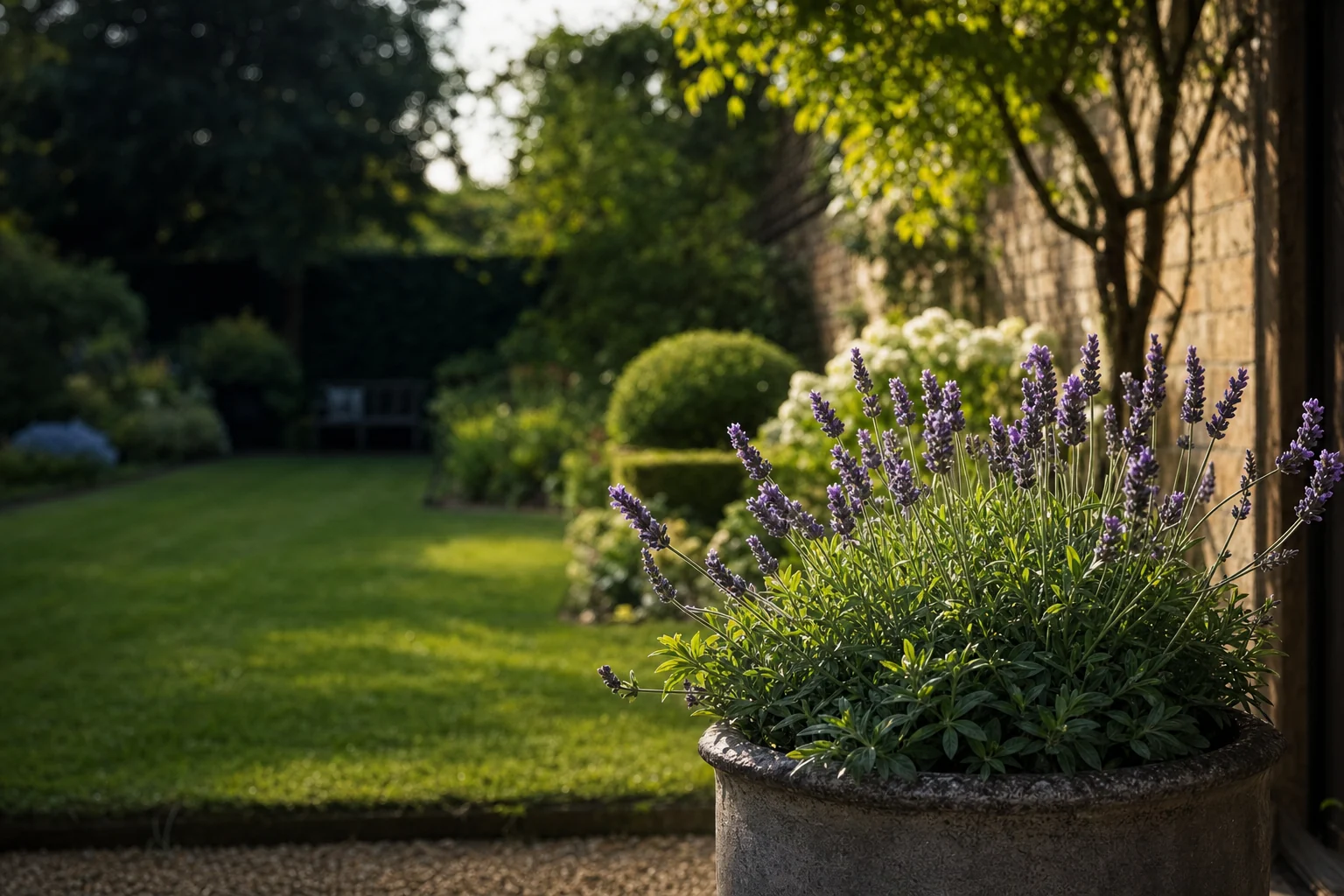
Why Your Garden Deserves to Smell as Good as It Looks
Gardens are often designed with the eyes doing nearly all the work. We talk about colour palettes, foliage contrast, structure, views and focal points. All worthwhile. But a garden experienced only visually is rather like a roast dinner with no gravy: perfectly respectable, perhaps, but missing the bit that makes you sit up and pay attention.
Scent changes the atmosphere of a place. It catches you before you have clocked the flower responsible, drifts through an open window, or follows you back inside on a sleeve. More importantly, it tends to stick in the memory. You may forget the exact shade of a neighbour's climbing rose. You will not forget walking past it on a warm June evening when the air smelled faintly of old roses and cut grass.
There is a useful bit of evidence behind the feel-good claim, too. Natural scents including lavender and jasmine have been associated with lower stress and improved relaxation. That does not mean a border of lavender is a substitute for sleep, a holiday or dealing with your inbox. Sadly, no plant has yet mastered that. It does mean fragrance is a sensible design tool if you want the garden to feel restorative rather than simply decorative.
The British climate helps. Our mild, damp conditions can intensify aromatic compounds in many plants, particularly when a warm spell follows rain. You will notice this most clearly on still summer evenings, when rose, mock orange, honeysuckle and jasmine seem to hang in the air. Equally, winter fragrance matters here because the cold months are long, grey and slightly rude. A scent at the front door in January can lift a garden far beyond its flower count.
Think in moments, not borders
The best fragrant garden is not necessarily packed with the strongest-smelling plants. Put scent where you pass, sit, eat, hang washing or open a window. One excellent shrub in the right place beats six stranded at the bottom of the garden.
There is another advantage: flowers with scent are often useful to insects as well as people. Fragrant plants can attract pollinators, and some gardeners value aromatic foliage or flowers as part of a more sensory, wildlife-friendly space. That is a pleasingly efficient bit of gardening. Your border gets personality. Pollinators get a reason to visit. Everyone wins, apart from perhaps the slug who has been told the buffet is now closed.
How We Scored Each Plant: Our Fragrance Framework Explained
"Best scented plant" is a slippery category. One gardener wants a perfume that reaches the patio table. Another wants something delicate that rewards a close inspection without making the entire garden smell like a department store fragrance counter. Growing conditions matter just as much. A magnificent rose that sulks in your soil is not a sensible recommendation; it is an expensive lesson in optimism.
So the plants in this guide are assessed using four practical categories, each marked out of 10. These are gardening scores, not laboratory measurements. They are intended to help you choose plants for real British gardens with damp spells, compact spaces, ordinary soil and the occasional moment of heroic neglect.
Scent Intensity is about reach. A score of 1–3 means subtle: you will detect it only close up, perhaps while cutting flowers or leaning in for a proper sniff. A score of 4–6 is moderate, enough to scent a small area such as a doorstep, container group or narrow path. At 7–8, fragrance carries several metres in favourable conditions. At 9–10, you are in exceptional territory: the scent can fill a garden and may be noticeable from the street.
Scent Quality is necessarily more personal, but not meaningless. We are considering whether the fragrance has depth and character, whether it feels balanced rather than cloying, and whether the plant offers something distinctive. Old roses, for example, have a perfume that many gardeners recognise instantly. Sarcococca is more surprising: small flowers, large olfactory ambition.
UK Growing Ease weighs hardiness, tolerance of average conditions and maintenance demand. RHS hardiness bands run from H1 to H7. Most of the strongest recommendations here sit at H4 or above, meaning they are suitable for much of the UK once established in an appropriate site. This is important. A winter-scented shrub is no use if it spends winter looking mortally offended by your garden.
Seasonal Value looks at flowering length, repeat flowering and whether the plant fills a quiet period. A spectacular two-week display still has value, especially in winter or early spring, but it cannot provide the same long-running contribution as a repeat-flowering rose.
Fragrance changes with temperature, wind and time of day. A score for scent describes potential, not a promise that every flower will perform identically in every garden. Warm, still conditions usually give you the full show.
The Magnificent 15: Every Plant Ranked and Reviewed
This is not a strict league table where plant number 15 should hang its head in shame. These are 15 different answers to the same question: how do you make a UK garden smell properly special? Some are sun worshippers, some earn their keep in shade, and some appear when the garden has very little else to say.
1. Lavender — Lavandula angustifolia 'Hidcote'
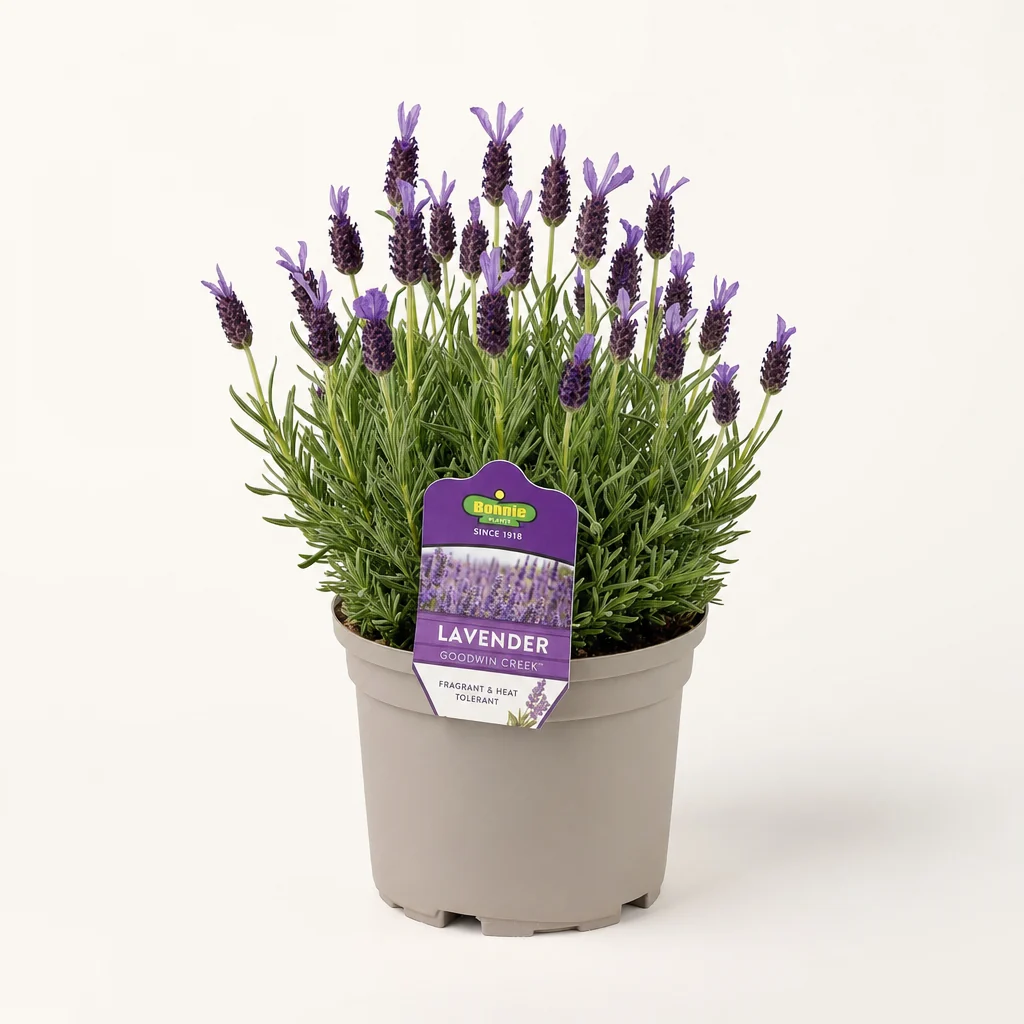
If scented planting had a greatest-hits album, lavender would be track one. 'Hidcote' brings the classic calming herbal fragrance, purple flower spikes and a compact habit that works in borders, gravel gardens and sunny container displays. It flowers from June to August, reaches around 60cm, holds an RHS Award of Garden Merit and is H5 hardy.
It is also one of the best all-round choices for ordinary gardeners, provided you can offer full sun and very well-drained soil. That last bit is not optional. Lavender hates sitting wet, especially in winter. On heavy clay, improve drainage with grit before planting, or grow it in a raised bed or container where you control the compost. It is a small amount of preparation for a plant that can scent a path every time you brush past.
2. Rosa 'Gertrude Jekyll'
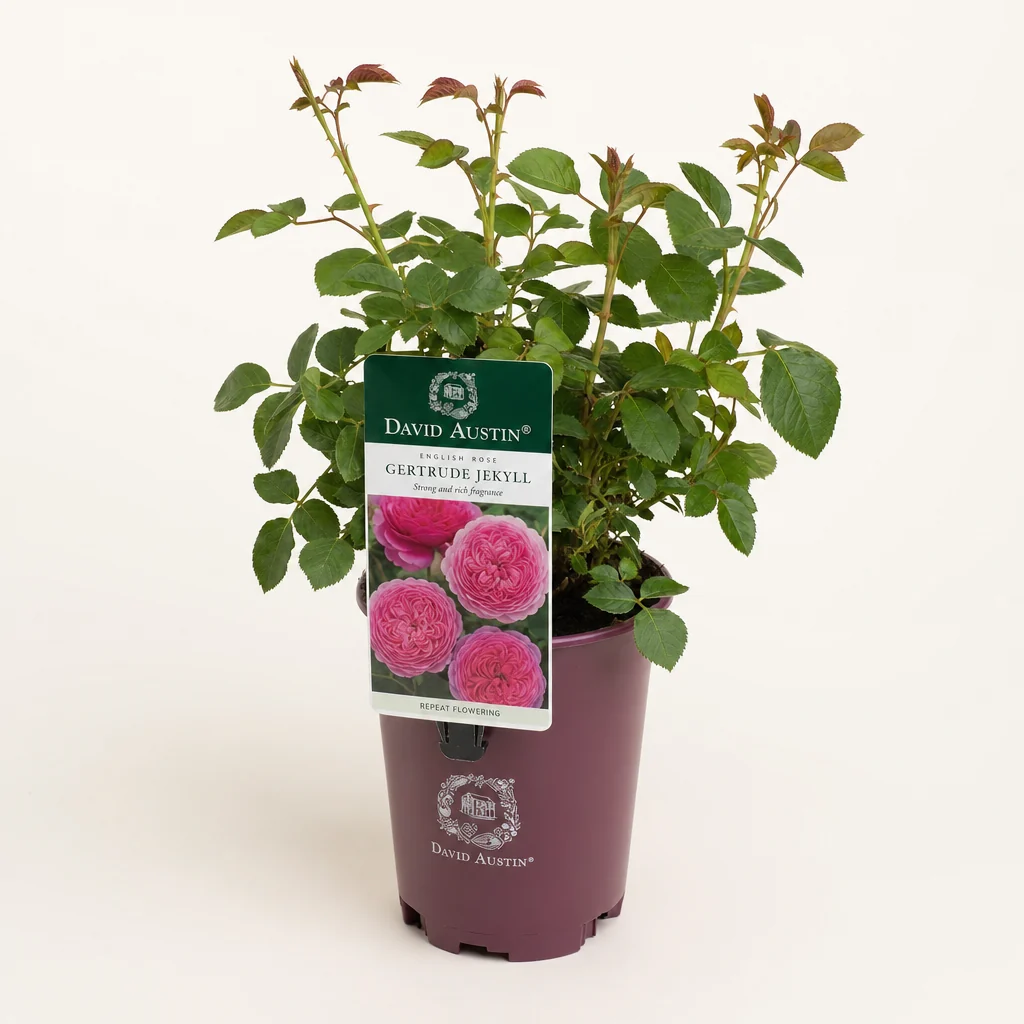
For pure floral perfume, Rosa 'Gertrude Jekyll' is the benchmark. Its old-rose fragrance is rich, recognisable and properly generous, rather than a faint suggestion detectable only by someone with their nose in the bloom. It repeat flowers from June to October, grows to around 1.5m, is H6 hardy and holds an RHS Award of Garden Merit.
This is a rose to plant near a sitting area, along a path or where you can cut blooms without dismantling half the border. It has the longest useful fragrance window of the headline plants here because it repeats through summer and into autumn. The compromise is that roses are a little more demanding than lavender or mock orange. Give it sun, reasonable air movement and the attention you would give any cherished shrub. In return, it makes the garden smell unmistakably like a garden.
3. Mock Orange — Philadelphus 'Belle Étoile'
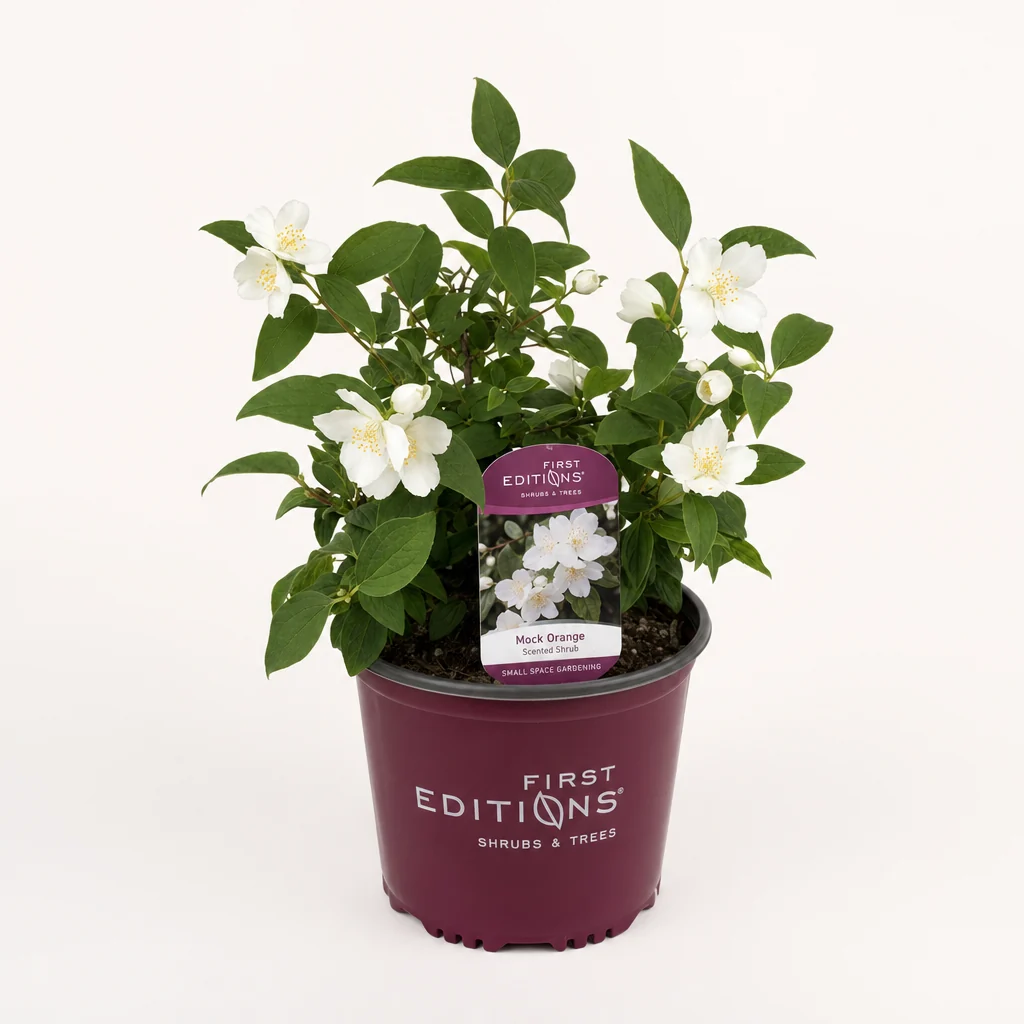
Mock orange is one of those plants that makes visitors ask, "What is that smell?" before they have spotted it. 'Belle Étoile' flowers from June to July with an orange-blossom-like fragrance that carries several metres. It reaches about 1.2m, is H6 hardy and has the welcome reputation of being a virtually no-maintenance shrub once settled.
Its flowering season is short, so do not choose it as your only fragrant plant if you are chasing year-round interest. Choose it because those early-summer weeks are glorious. Put it in full sun, leave room around it, and let it do its thing. It is hard to find a more straightforward way to make a sunny border smell expensive without turning gardening into a second job.
4. Daphne — Daphne bholua 'Jacqueline Postill'
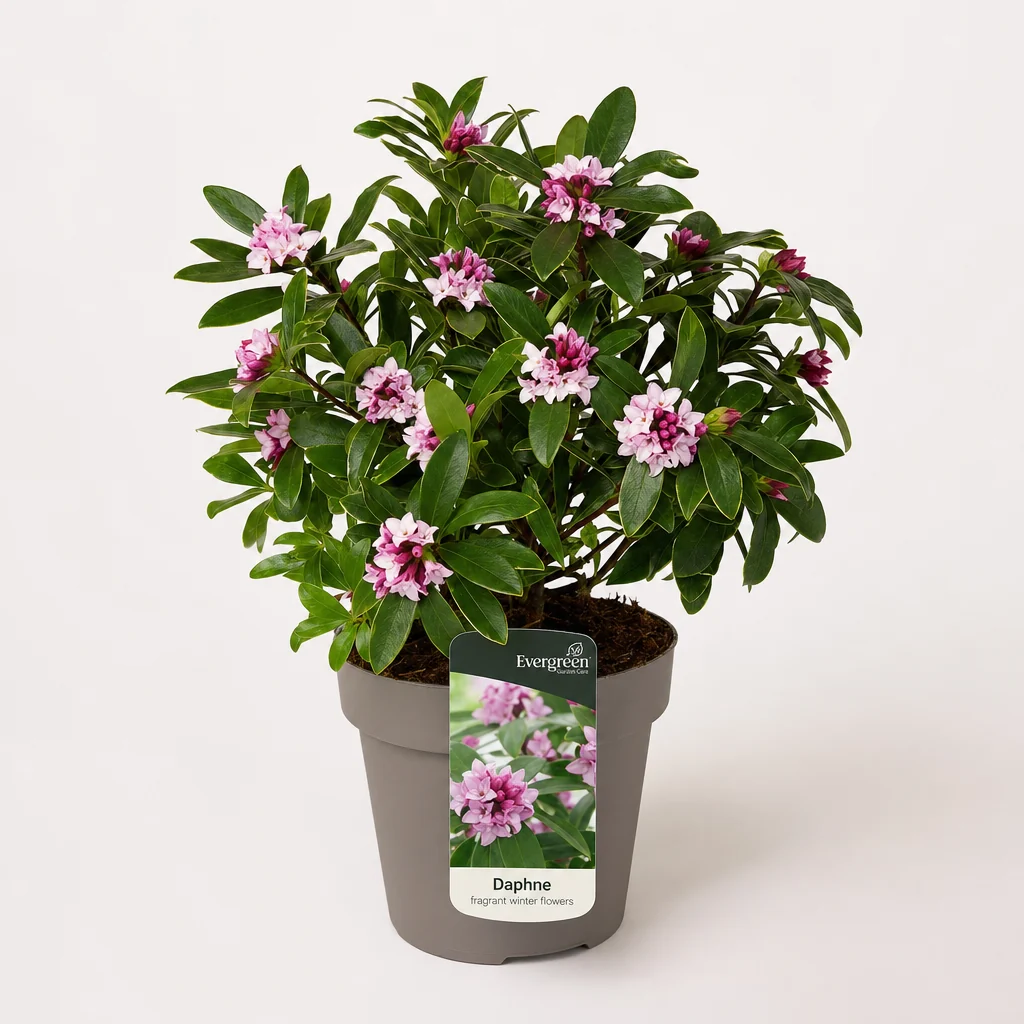
Daphne is the winter show-off. 'Jacqueline Postill' flowers from January to March, when the garden is otherwise relying heavily on wet paving and wishful thinking. Its scent quality is exceptional: sweet, powerful and startlingly welcome in cold weather. At around 2m, it has enough presence to anchor a border, but it is best positioned where you will actually encounter it: a front path, gateway or route to the bins. Glamour and practicality can coexist.
It is less forgiving than Sarcococca or Philadelphus, so site choice matters. Partial shade suits it, and it deserves a thoughtful position rather than being shoved into the last available hole after an enthusiastic nursery visit.
5. Sweet Box — Sarcococca confusa
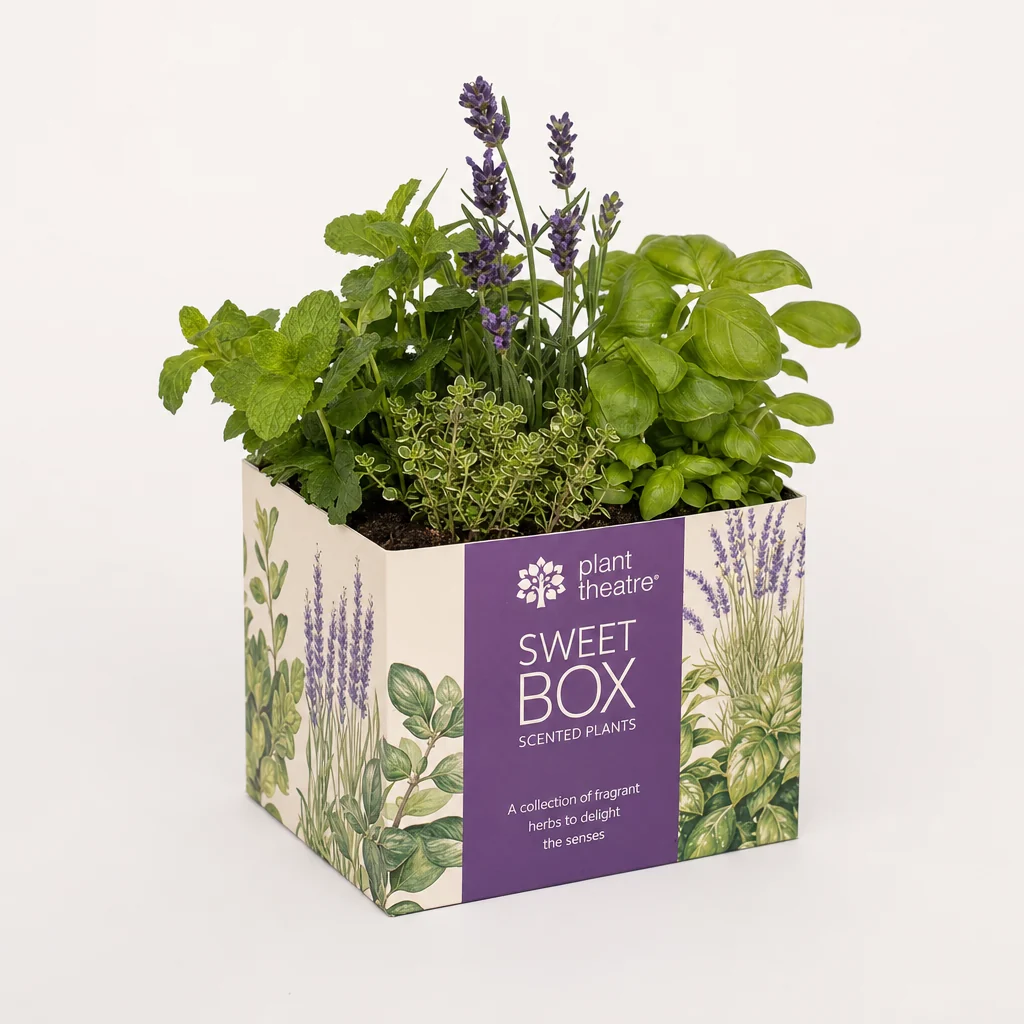
Sarcococca confusa is the answer to the dark, awkward corner where almost everything else looks faintly resentful. It flowers from December to February and can tolerate full shade, including under trees and against north-facing walls. Its mature height is around 1m, it is H4 hardy, and it holds an RHS Award of Garden Merit.
Do not judge it by its flowers. They are small. The fragrance is not. It has a sweet, rich perfume that seems wildly disproportionate to the shrub's quiet appearance. For difficult positions, it is the most useful plant in this entire guide.
6. Jasmine
Jasmine brings romance rather efficiently, especially when grown as a climber beside a seating space, doorway or warm wall. Star jasmine and climbing forms are the obvious route if you want scent at head height rather than confined to a border. The fragrance is particularly effective after a warm day, when you are still outside pretending it is not quite time to put a jumper on.
7. Honeysuckle
Honeysuckle is a superb choice for a fence, arch or trellis, particularly where you want to make vertical space work harder. Its perfume is sweet and familiar, often strongest later in the day. It also gives you a way to bring scent to a wall or boundary without surrendering valuable planting room at ground level. Partial shade is useful here, making it a flexible option where full-sun specialists would struggle.
8. Lilac
Lilac is a late-spring classic with the ability to perfume a whole garden on a warm, still day. It is especially useful for gardeners wanting a larger-scale scented shrub or small tree effect. Its H7 hardiness makes it a reliable choice even in colder parts of the UK, including Scotland. Plant it where its May display can be enjoyed from a window or seating area, rather than at the far end of the lawn where its best trick goes unnoticed.
9. Wisteria
Wisteria is for gardeners with a suitable support and a willingness to give a climber a proper job. In May, its scented flowers can dominate the garden on warm, calm days. It belongs over a pergola, across a robust wall or on a substantial structure, not balanced hopefully against a lightweight trellis that has already seen better years. Give it room, then enjoy the fact that fragrance is arriving from above.
10. Oriental Lilies
Oriental lilies are dramatic in every sense. Their fragrance is strong, their flowers are striking, and a few stems can make a patio or sunny border feel theatrical. They work especially well in containers near a seating area, where the perfume can be appreciated without needing to redesign an entire border. If you prefer scent with a little swagger, lilies are hard to ignore.
11. Lilium regale
For a sunny, well-drained setting, Lilium regale belongs in the same conversation as Oriental lilies. It is one of the plants that performs best when warmth and sunlight help build fragrance through the day. Use it where vertical flower stems can rise through lower planting, rather than placing it alone like a floral lamp post.
12. Hyacinths
Hyacinths offer some of the most intense fragrance of any spring bulb. They are a brilliant early-season intervention, particularly close to entrances and paths where you can enjoy them at close range. One or two bulbs look neat. A bold drift looks and smells intentional. There is a difference.
13. Night-Scented Stock
Night-scented stock is a small plant with a very clear brief: make evenings smell better. It is ideal near a patio, bench or open bedroom window, where its perfume can be noticed after dusk. Use it as part of a summer planting scheme rather than expecting it to carry a large border alone. It is atmosphere, not architecture.
14. Freesia
Freesia earns its place for a fragrance that is instantly recognisable and beautifully suited to containers or cutting. It pairs naturally with sunny, well-drained positions. Consider it where you can enjoy flowers close up: a courtyard pot, a cutting patch or near a back door. Tiny gardens benefit from plants that work at arm's length.
15. Peonies
Peonies are not a year-round fragrance solution, but during flowering they bring a generous, old-fashioned sense of occasion. They suit gardeners who want scent to be part of a lush early-summer border rather than the whole point of it. Plant them with other fragrant performers so that when their moment passes, the garden has another act ready to begin.
Best by an entrance
Sarcococca, Daphne and hyacinths turn ordinary comings and goings into a daily scented moment.
Best beside a seat
Rosa 'Gertrude Jekyll', jasmine, honeysuckle and night-scented stock reward time spent outside.
Best for walls and structures
Wisteria, jasmine and honeysuckle put fragrance at nose height without consuming a border.
Head-to-Head: The Best Scented Shrubs for Year-Round Fragrance
If you have room for only one fragrant shrub, the choice can feel surprisingly difficult. Daphne bholua 'Jacqueline Postill', Sarcococca confusa and Philadelphus 'Belle Étoile' are all excellent, but they solve very different problems. The good news is that they are more complementary than competitive. Together, they cover winter through to summer. The less good news is that gardens are not made of elastic.
| Feature | Daphne 'Jacqueline Postill' | Sarcococca confusa | Philadelphus 'Belle Étoile' |
|---|---|---|---|
| Flowering season | January–March | December–February | June–July |
| Scent intensity | 8/10 | 7/10 | 9/10 |
| Scent quality | 10/10 | 9/10 | 8/10 |
| UK growing ease | 6/10 | 10/10 | 9/10 |
| Shade tolerance | Partial shade | Full shade is suitable | Full sun |
| Mature height | 2m | 1m | 1.2m |
| RHS AGM | Yes | Yes | Yes |
| Best verdict | Winter wow-factor | No-fuss difficult spots | Maximum scent throw in sun |
Choose Sarcococca confusa if your priority is reliability. It is the winner for shade, low-fuss gardening and awkward spaces. It will not make the same visual spectacle as a flowering rose in June, but it does something more useful for many gardens: it solves a problem while smelling fantastic.
Choose Daphne 'Jacqueline Postill' if you want the most memorable winter scent and are prepared to give the plant a carefully selected position. Its perfume quality is hard to beat. A February morning becomes distinctly less miserable when you pass one in flower.
Choose Philadelphus 'Belle Étoile' if you have sunshine and want raw fragrance power with minimal fuss. It is the practical summer choice: H6 hardy, around 1.2m tall and unusually generous for such an undemanding shrub.
The sensible three-shrub plan
Where space allows, plant Sarcococca close to the house, Daphne along a frequently used path and Philadelphus near a summer sitting area. They overlap very little in season, which is exactly the point.
Scented by Season: Planning Fragrance from January to December
The secret to a fragrant garden is not cramming every scented plant into one border. It is spreading the pleasure through the year. Summer is easy: almost everything wants to join in. Winter and early spring are where planning pays off, because fragrance feels far more dramatic when it arrives against a backdrop of bare stems and cold air.
Winter: December to February
Sarcococca confusa and Daphne bholua are the backbone of winter scent. Sarcococca begins the relay from December into February, whilst Daphne takes over from January to March. Plant them near doorways, paths, gates and routes you use every day. There is no point hiding winter fragrance at the bottom of the garden, unless your daily routine includes wandering through freezing rain in slippers. Mine does not.
Sarcococca is especially valuable under trees, in narrow side passages and near north-facing walls. Daphne offers stronger drama and extraordinary scent quality, but benefits from a more considered site. Together, they turn the season most gardens merely endure into one with an actual sensory reward.
Early spring: March to April
Hyacinths take centre stage here. Their fragrance is intense enough that small groups can be impressive, but for a proper effect, plant drifts of 15–20 bulbs. This is one occasion when timid planting is not your friend. A large group creates impact visually and gives the scent enough mass to register as you walk past.
Daphne may still be flowering at the start of this period, giving you a useful overlap. Viburnum carlesii is another worthwhile fragrant shrub for early spring, peaking around this time and helping bridge the awkward gap between winter's specialists and the full arrival of May.
Late spring: May
May belongs to lilac and wisteria. Both can fill a garden with fragrance on warm, still days, and both make a strong case for placing scented plants where you can appreciate them from indoors. A lilac outside a kitchen or sitting-room window is much more valuable than one hidden behind a shed. Wisteria above a terrace or pergola makes an outdoor meal feel a little more celebratory, even if dinner is just baked potatoes and a packet salad.
Summer: June to August
This is peak fragrance season. Lavender flowers from June to August, Philadelphus 'Belle Étoile' flowers through June and July, and Rosa 'Gertrude Jekyll' begins its long repeat-flowering run from June to October. Jasmine, honeysuckle, lilies, peonies, freesia and night-scented stock can all contribute depending on the part of the garden you are designing.
The trick is to vary the type of scent. Lavender gives dry herbal freshness. Roses provide richer floral perfume. Mock orange has a bright orange-blossom character. Honeysuckle and jasmine add sweetness around walls and seating spaces. Layered well, it feels abundant rather than overwhelming.
Autumn: September to October
Autumn is quieter, but Rosa 'Gertrude Jekyll' remains useful because it repeat flowers until October. This is why repeat-flowering roses deserve space in a fragrance scheme: they stretch the garden's perfumed season well past the traditional summer peak. Plan now for winter shrubs, and the scent calendar starts again before the garden has entirely gone to sleep.
Do not chase continuous bloom from every plant. Aim instead for a succession of fragrant moments: winter by the door, spring near a path, and summer around the places where you linger.
Growing Conditions Decoded: Matching Plants to Your Garden
Fragrance is not a magic exemption from the rules of horticulture. A plant that wants sunshine will not become charmingly adaptable because you have bought it with enthusiasm. Start with the conditions you actually have, then choose plants that will be happy there. A happy plant flowers better. A better-flowering plant smells better. Gardening can be surprisingly logical when we let it.
Full sun and well-drained soil
The majority of big-hitting scented plants belong here: lavender, roses, wisteria, lilac, night-scented stock, freesia and Lilium regale. They all tend to produce their best fragrance in warm, sunny conditions. This is the group for south- and west-facing borders, open patios and sunny front gardens.
Lavender needs special attention if you garden on clay. Heavy, wet soil is the quickest route to disappointment. Improve the planting area with grit, use a raised position or choose containers. Do not simply dig a hole in clay, insert lavender and hope the plant develops a philosophical acceptance of its circumstances. It will not.
Roses want sun as well, and benefit from being placed where air can move around them. Wisteria needs a robust support from the outset. Lilac is excellent where you have more room and want fragrance on a larger scale. Night-scented stock and freesia are ideal for bringing perfume closer to seating areas in pots or the front of a sunny border.
Partial shade
Partial shade is not a gardening punishment. It simply requires a different shortlist. Daphne bholua, jasmine, honeysuckle and Hesperis matronalis all have a role here. These plants help soften north-facing walls, partially shaded borders and corners that receive sun only for part of the day.
Climbers are particularly useful in these positions because they let you take advantage of reflected warmth or a brighter upper section of wall. Honeysuckle and jasmine can bring scent to a fence line that would otherwise be visually useful but emotionally rather flat. Yes, a fence can be emotionally flat. You know the sort.
Full shade
Sarcococca confusa is the standout. It tolerates, and can thrive in, deep shade under trees or against north-facing walls. That makes it unusually valuable. Many garden lists promise options for shade and then quietly offer plants that would really prefer "bright dappled light, with a warm breeze and a small orchestra playing nearby". Sarcococca is genuinely useful in difficult shade.
Position scent at human height
For paths, choose lower planting such as lavender or bulbs. For seating spaces, use roses, lilies and containers. For walls, use climbers. The goal is not merely to grow fragrant plants, but to put their fragrance where people are.
Where to Put Fragrant Plants for the Greatest Effect
Placement is where a decent scented planting scheme becomes a very good one. Strong fragrance has a practical geography. Wind carries it away. Walls trap warmth. Paths bring people close to foliage. Outdoor chairs create opportunities to sit still long enough to notice what is happening. Design around those realities and your plants will feel far more generous.
Start with the route from the house to the garden. A scented shrub beside the back door earns its place several times a day. Sarcococca is superb here if the doorway is shaded. Daphne is wonderful near a front gate or entrance path. Hyacinths in spring can sit in pots by the threshold, where their scent is impossible to miss.
Next, look at seating areas. This is where summer fragrance should be concentrated. A rose nearby, jasmine on a wall, honeysuckle on an arch, lavender edging a path and night-scented stock in a pot will all reward the time you actually spend outdoors. Do not cram them all into a tiny patch. Give each plant enough air and space to grow well.
Finally, use fragrance to repair boring transitions. The narrow strip beside a fence, the route to the compost bin, the blank wall near the shed: these are excellent places for a climber or compact shrub. They turn functional journeys into small moments of pleasure, which is about as much as anyone can ask of a route to the compost bin.
Do
- Plant winter fragrance beside frequently used doors and paths.
- Use climbers to add scent without sacrificing ground space.
- Group bulbs in generous drifts for spring impact.
- Match lavender and lilies to warm, well-drained positions.
Avoid
- Placing all fragrant plants at the far end of the garden.
- Forcing sun lovers into damp shade.
- Planting lavender directly into waterlogged clay.
- Expecting one short-flowering shrub to scent the year.
Three Planting Plans That Actually Work
You do not need all 15 plants to create a fragrant garden. In fact, most gardens will be better with a small, well-chosen group than a random scented-plant collection assembled over several years of impulse purchases. Here are three sensible combinations.
The shaded doorstep
Use Sarcococca confusa as the anchor, add winter bulbs nearby and enjoy fragrance when the garden is otherwise quiet.
The sunny patio
Combine lavender, Rosa 'Gertrude Jekyll', lilies and night-scented stock around the seating area.
The vertical garden
Grow honeysuckle or jasmine on a fence, wall or arch, then underplant with spring bulbs or lavender where sun allows.
The four-season front garden
For a front garden, choose plants that make arriving home more enjoyable. Sarcococca near the door gives winter scent. Hyacinths cover early spring. Lilac or Daphne adds a stronger seasonal event, depending on sun and space. Lavender lines the path in summer. This scheme works because it puts fragrance on a route you will use, rather than asking you to remember to go and find it.
The small patio garden
Small gardens benefit from vertical layering. Put jasmine or honeysuckle on a support. Use a compact planting of lavender in sunny containers or along the edge. Add freesia and lilies in pots where you can move them close to seating. Night-scented stock earns a place near a chair or open window. The space may be compact, but scent gives it depth.
The generous sunny border
Here you can build succession. Start with hyacinths, follow with lilac and wisteria nearby, bring in Philadelphus for June and July, then rely on lavender and Rosa 'Gertrude Jekyll' through summer into autumn. Add lilies for a richer midsummer note. It is a lot of fragrance, admittedly, but in a large sunny garden that abundance feels luxurious rather than overwhelming.
Frequently Asked Questions About Scented Gardens
Rosa 'Gertrude Jekyll' scores 10/10 for scent intensity and 10/10 for scent quality. For shrub-scale scent throw in a sunny border, Philadelphus 'Belle Étoile' is also exceptionally strong at 9/10 for intensity.
Sarcococca confusa is the clear choice. It can thrive in deep shade under trees or near north-facing walls, flowers from December to February and brings a strong sweet perfume when little else is flowering.
Plant Sarcococca confusa and Daphne bholua near paths, doorways and gates. Sarcococca covers December to February, whilst Daphne flowers from January to March, giving useful overlap.
For real impact, plant a bold drift of 15–20 bulbs. A larger group gives both a stronger visual statement and a fragrance that registers as you walk past.
Yes, but drainage needs improving first. Amend heavy clay with grit, use a raised planting area or grow lavender in a container. 'Hidcote' needs full sun and well-drained soil to thrive.
Final Verdict: Build a Garden People Remember
The best scented garden is not the one with the most plants or the loudest perfume. It is the one with fragrance in the right place, at the right time of year. Start with a reliable anchor: Sarcococca for shade, lavender for sun, or Philadelphus for an easy summer shrub. Then add a climber, a rose or a bold group of bulbs to extend the season.
If you can only make one change, put one properly fragrant plant beside a route you walk every day. It is a modest alteration, but it changes the way the garden feels. And frankly, a garden that smells wonderful before you have even found the secateurs is already doing rather well.