
Greenhouse Shading: Blinds, Mesh and Paint to Beat Summer Scorch
The sensible ways to stop your greenhouse becoming a very expensive plant oven — and choose shade that suits both your crops and your patience.
UK pricing notice: All prices shown are in pounds sterling and reflect UK retail availability. Prices have not been verified for other regions and will vary outside the United Kingdom.
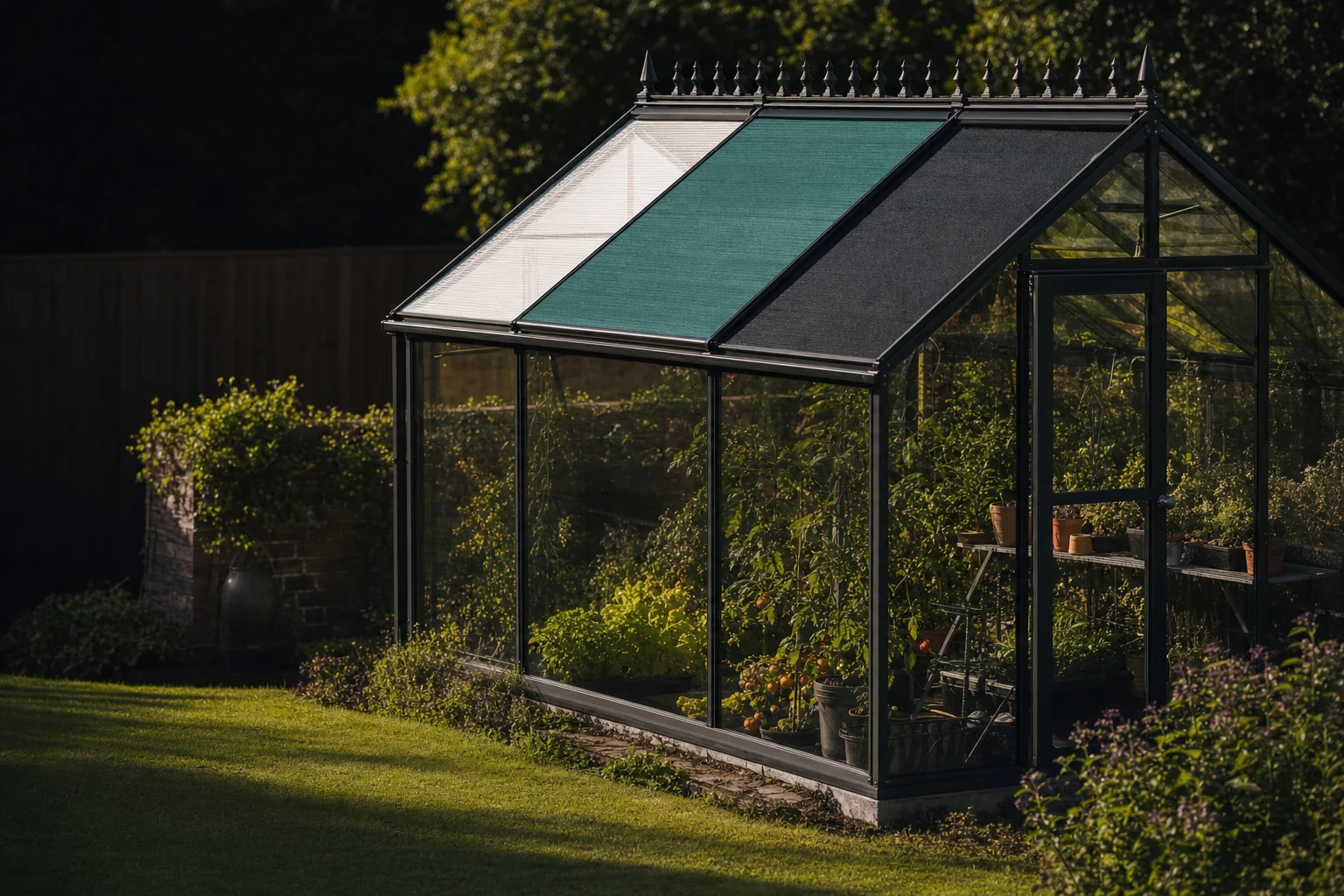
When the glass becomes a furnace
It is mid-September, which means most of us are beginning to think about clearing tired tomato plants, giving the greenhouse a proper sweep and wondering where the summer went. But this is also exactly the right moment to make a note of what went wrong when the sun was at its fiercest. If your peppers sulked, your cucumbers looked permanently offended, or every tray of seedlings seemed to need rescuing by lunchtime, greenhouse shading belongs on next spring's to-do list.
In a sunny spell, an unshaded greenhouse can reach 50°C. That is not a cosy Mediterranean holiday for your plants. It is a crisis. Many common greenhouse crops begin to struggle long before that point: fruit set can fail above 30°C, and warm nights above 21°C can be particularly troublesome. A hot afternoon may make leaves droop dramatically, but repeated hot nights prevent plants from recovering properly. Tomatoes, peppers, cucumbers and aubergines are all warm-weather plants; none of them asked to be slow-roasted.
The reason is simple, if slightly rude. Glass and polycarbonate let in sunlight, then hold on to heat. Direct solar radiation falls on foliage, compost, pots, staging and paths. Those surfaces warm up, then give the heat back to the air around them. Add still air and a closed door, and the greenhouse starts behaving less like a growing space and more like a car park in July.
There are three jobs shading has to do. First, it reduces the intensity of direct sun falling on leaves. Secondly, it limits the amount of heat reaching the hard surfaces inside, so there is less stored heat to radiate back later in the day. Thirdly, it gives ventilation a fighting chance. Shading alone is not ventilation, of course. It cannot replace opening roof vents, louvre vents and doors. But it makes every bit of moving air more useful.
Think "filter", not "blackout"
The aim is not to make the greenhouse gloomy. Plants still need light for photosynthesis. Good shading takes the hard edge off peak sun whilst leaving the building bright enough for healthy growth.
There is another reason to plan this before a heatwave arrives. The first very hot day is a terrible time to be standing on a step stool with a brush, a roll of mesh caught in the guttering and an increasingly expressive cucumber looking on. Choose your method in the calm months, store the fittings where you can find them, and you will be ready when next summer decides to become ambitious.
Three solutions at a glance
The short version is that paint is the cheapest seasonal answer, netting is the dependable workhorse, and blinds or internal curtains give you the most day-to-day control. None is universally "best". The right one depends on the greenhouse, what you grow, whether you can reach the outside safely and how likely you are to adjust things when the forecast changes.
Shade paint is applied to the outside of glass, acrylic or polycarbonate. It is wonderfully direct: it reflects sunlight before much of the heat reaches the greenhouse. The trade-off is that it is a seasonal coating, not something you pull aside when clouds roll in. Some paints are designed to respond to weather conditions, becoming whiter in dry sunshine and clearer in damp conditions, which is a clever little bit of gardening engineering.
Shade netting or mesh sits either inside or outside the structure. It softens the light, allows air movement and can also reduce the drying, physically damaging effect of wind. External netting is more effective because it intercepts sun before it hits the glazing, but internal fitting is usually easier and less exposed to weather. It is also easier to remove, adjust or rescue when you have made a slightly optimistic measurement. We have all done it.
Roller blinds and curtain systems are the most flexible option. You can pull them across when the sun is high, then open them again when clouds arrive or the late afternoon light becomes gentler. Internal versions are commonly fixed to glazing bars with clips or screwhooks. They do allow heat to enter through the glazing before diffusing the light, so they are not as effective at cooling as external shade. Their great advantage is control — and some can earn their keep in winter by helping retain warmth overnight.
One useful benchmark applies across every option: greenhouse shading can reduce up to 40% of the sun's rays. That does not mean you should chase the darkest possible cover. It means you can reduce the punishing part of strong sunshine whilst still providing a productive, bright environment. Your plants want a sensible summer hat, not a cave.
Whatever shading you choose, keep ventilation moving. Open vents and doors early on warm days rather than waiting until the greenhouse already feels uncomfortable. Shade reduces heat gain; ventilation carries heat away.
Shading paint: the seasonal, low-fuss option
If you want an inexpensive way to make a greenhouse noticeably more forgiving in hot weather, shade paint is hard to ignore. It does not require tracks, clips, measuring or any serious hardware. You mix it, apply it to the outside of the glazing and let it do its job. For an older glasshouse, or a greenhouse where the roof is awkward to reach from inside, that simplicity can be extremely appealing.
Vitax Summer Cloud is a useful example of how modern shading paint works. The 500 ml bottle dilutes to 4 litres of solution, enough to treat two standard 2.4 m x 1.8 m (8 ft x 6 ft) glasshouses. For one such greenhouse, mix 250 ml of Summer Cloud with 2 litres of water at a 1:8 ratio. It can be used on glass, acrylic and polycarbonate surfaces, so it is not restricted to traditional greenhouse glazing.
The particularly clever part is its response to weather. In dry conditions, the coating turns white and reflects the sun's rays, giving plants protection from direct glare. In damp or wet weather, it becomes clearer, allowing better light transmission. That is valuable in Britain, where a day can begin with hard sunshine, turn overcast by lunch and finish with rain tapping on the roof. The paint cannot open a roof vent for you, sadly, but it can avoid being quite as blunt an instrument as older whitewash-style coatings.
How to apply it without making a sticky afternoon of it
Wait for a dry day and make sure the glazing itself is dry. Start at the highest point and work down. A garden sprayer is quick for larger areas, whilst a wide paintbrush gives more control around glazing bars and awkward edges. Keep the coating even rather than trying to build a thick opaque layer in one place. The point is consistent light diffusion across the roof and sunward sides, not a patchwork effect that makes the greenhouse look as though it has lost an argument with a seagull.
It dries quickly, and one coat is generally sufficient. Work methodically, particularly on the roof. In many gardens, the roof catches the fiercest overhead sun, whilst the sun-facing side becomes more important later in the day. If a greenhouse receives intense sun from one direction, it is possible to concentrate coverage there rather than treating every panel equally. That is a practical advantage over a fixed interior curtain: paint can be targeted according to how the sun actually moves across your plot.
Summer Cloud is formulated to stay in place through rain and wind, but it can be wiped away with a duster when cooler weather returns. As September moves along, that removal matters. Light levels are falling, the sun is lower, and a coating that was essential in July can become unnecessarily restrictive for overwintering plants. If you still have tender plants under glass, remove seasonal shade once the risk of sustained scorching has passed and keep the glazing as clean as possible for the darker months ahead.
Why paint works
- It is an external solution, so it reflects heat before it gets through the glazing.
- It is inexpensive for seasonal use.
- It suits glass, acrylic and polycarbonate surfaces.
- Weather-responsive formulations can give more shade in dry sun and more light in damp conditions.
- It can be removed when cooler weather returns.
Where paint falls short
- You cannot open it on a cloudy afternoon in the way you can open a blind.
- Application involves reaching the outside of the roof safely.
- It needs reapplying for a new hot season.
- It is less convenient if your greenhouse shading needs change from day to day.
- Some formulations can cause an allergic reaction, so follow the product safety information carefully.
Best timing for paint
Make shade paint part of your spring greenhouse preparation, before sustained hot weather arrives. In September, concentrate on cleaning it away if you no longer need it, then note whether the coverage was sufficient for next year.
Paint is especially good for gardeners who want a simple answer rather than another daily greenhouse job. If your greenhouse is at the bottom of the garden and you do not visit it three times a day, a passive coating is reassuring. It will not give the fine control of curtains, but it is there when the sun appears unexpectedly. In a British summer, that is rather more useful than it sounds.
Netting and mesh: the workhorse solution
Shade netting occupies the useful middle ground. It is more durable than paint, more affordable than a fully fitted blind system and adaptable enough to suit greenhouses, polytunnels, cold frames and even a temporary shelter over vulnerable plants. It also looks less fussy than you might expect once it is properly tensioned. The key word there is "properly". A loose flap of mesh that catches every gust is not a shading system; it is a garden flag with ambitions.
Good greenhouse shade netting is made from UV-stabilised monofilament polyethylene. That matters because this material sits in bright light, fluctuating temperatures and humidity for long periods. The better examples are made to withstand those conditions and can have a service life of around 8–10 years. For something that spends much of its life being warmed, wetted, dried, tugged and occasionally pecked at by an opportunistic bird, that is a respectable run.
Harrod Horticultural Superior Windbreak & Greenhouse Shade Netting is a helpful benchmark for this style of product. It provides 50% shade and is made from strong, UV-stabilised monofilament polyethylene. Eyelets are woven into the seam every 2.5 cm (1 in), making it much easier to secure neatly to posts or greenhouse glazing bars. It is available in 1 m, 2 m and 3 m widths, which gives you useful options for roof runs, side panels and broader exposed areas.
That 40–50% range is worth understanding before you buy anything. Green garden shade netting is often around 40% shade, reducing the harshness of direct sunshine whilst retaining a bright growing environment. Denser netting can reach 50%, which is more useful where the greenhouse receives fierce afternoon sun or contains plants that burn readily. In broad terms, cucumbers and peppers generally appreciate more protection from scorching conditions than tomatoes. Tomatoes still benefit from avoiding extreme heat, but they also need good light to crop well.
Consistent 40–50% light reduction
Mesh gives a fixed degree of shade. Once fitted, it creates a more even growing environment rather than a sequence of sharp bright patches and deep shadows.
Useful wind protection
Windbreak-style netting can reduce the drying and destructive effects of wind, which is particularly useful for exposed gardens and freestanding structures.
Flexible fitting
Eyelets along the reinforced seam allow the mesh to be secured to glazing bars or other support points without relying on a complicated track system.
Air can still move
Unlike an opaque solid cover, open mesh reduces light intensity whilst allowing air circulation through the material.
Where should it go? If you can arrange it safely, external netting is the cooler option because it stops a portion of solar energy before it meets the glazing. External shading is around 20–30% more effective than internal shading for exactly this reason. However, outside fitting takes more planning. The net needs to be secure without blocking vents, snagging on door runners or becoming a sail in windy weather.
Internal netting is simpler to live with. It can be clipped inside the glasshouse, tidied away more easily and remains protected from the worst of the weather. The compromise is that sunlight has already travelled through the glass or polycarbonate, so some heat has already entered. For many gardeners, this is entirely acceptable. A practical system that gets fitted and used is better than a theoretically superior system still folded in its packet in August.
Measure the area you want to shade before cutting. Leave enough material to attach the mesh securely without stretching it drum-tight. Keep roof vents, automatic openers, doors and gutters clear so your shading does not interfere with the greenhouse's other jobs.
Netting also has a useful advantage for mixed greenhouses. You can shade only the roof above a propagation bench, only the hottest side wall, or the section holding more sensitive plants. That is harder with paint, which is generally applied in broader sweeps, and easier than buying a bespoke blind for every small area. If you like tinkering with the layout through the season — perhaps moving tender bedding plants in for a fortnight, then back outside — mesh is obliging.
Come autumn, remove or fold back anything that is no longer required. As daylight shortens, even shade-loving greenhouse plants benefit from the available light. Dry the netting, check the eyelets and clips, and store it where mice cannot turn it into a boutique nesting material. Next spring, you will be grateful to your organised former self. It is a rare and satisfying gardening feeling.
Roller blinds and internal curtains: flexible shade on demand
Blinds and curtain shading are for gardeners who want control. Not theoretical control. Actual, useful control over the greenhouse environment as the day changes. Pull the fabric across on a bright morning, open it again when cloud cover arrives, and adjust it around whatever the weather is doing. It is the closest thing to putting the greenhouse in a sun hat that can be lifted on and off as required.
That flexibility is why blinds remain attractive despite costing more than a tub of paint or a basic roll of mesh. On a mixed day, the difference can be considerable. At the height of a sunny summer day — often roughly 11 am to 3 pm — direct overhead light is at its strongest. That is when you want shading to be doing the most work. Later, when light becomes less intense, drawing the blind back allows crops to make the most of it.
Purpose-made internal systems are typically fixed to the glazing bars with clips, screwhooks or dedicated fittings. Vitavia Curtain Shading measures 183 cm x 259 cm and fits internally using screwhooks. Its rot-proof, UV-stabilised fabric diffuses direct sunshine rather than blocking it entirely, so the greenhouse remains bright enough for plants to photosynthesise. It can be attached and working in less than a minute, which is the sort of installation claim every gardener can get behind.
Palram Canopia's Shade Kit measures 240 cm x 265 cm and clips directly onto narrower 16 mm polycarbonate glazing bars. It installs in around ten minutes. Elite's netting kit includes 30 clips and is designed to cover most standard greenhouses in under 30 minutes. Halls also offers internal shading blinds. The important thing is compatibility: greenhouse glazing-bar dimensions, roof shape and available fixing points determine whether a particular kit is a tidy solution or an expensive exercise in creative swearing.
Internal blinds are not as effective at reducing heat as external shading. The sun has already passed through the glass by the time the blind intercepts it. But they can still diffuse hard direct light, protect foliage and provide very worthwhile comfort for both plants and gardeners. They also have a second season. In cooler months, an internal curtain can help keep warmth inside the greenhouse overnight, making it a more year-round investment than paint or exterior mesh.
External cools best; internal controls best
If maximum cooling is the priority, use external shade where practical. If you want to respond to cloud, sun and crop changes through the day, an internal blind or curtain gives the greatest flexibility.
There is a behavioural point here, too. Blinds only offer daily adjustment if you will genuinely adjust them. If you leave the house early, travel often or prefer a greenhouse that looks after itself for a few days, paint or fixed netting may serve you better. If your greenhouse is close to the kitchen and you enjoy the small ritual of opening and closing it, curtains can be a pleasure rather than a chore.
For September, consider whether your blinds can now stay open more often. Lower light is becoming the limiting factor, not excess heat. Clean any dust from the fabric, check clips and hooks, and make a note of where direct sun was strongest. Next spring, fit the system before plants are crowded and tall. It is much easier to install anything at roof level before the tomatoes have turned the path into an obstacle course.
Paint vs netting vs blinds: the honest comparison
It is tempting to declare one winner, but greenhouse shading is one of those subjects where the boring answer is also the right one: it depends. A small glasshouse full of tomatoes on an exposed sunny plot has different needs from a larger structure used for propagation, orchids or a rotating collection of tender plants. The best choice is the one that makes your particular greenhouse safer in heat without making it too dark during ordinary weather.
| What matters | Shading paint | Netting or mesh | Blinds or curtains |
|---|---|---|---|
| How it shades | Reflects sunlight from the outside surface. | Filters light through a fixed woven layer. | Diffuses direct light behind the glazing. |
| Heat control | Strong external approach: heat is reflected before entering. | Best externally; internal fitting is easier but less effective. | Less effective for cooling than external solutions, but still protects from direct glare. |
| Adjustment | Seasonal rather than daily; remove when conditions cool. | Can be repositioned, but usually remains fixed once installed. | Highest level of day-to-day adjustment. |
| Typical shading level | Weather-responsive coating becomes white in dry sun. | Commonly 40–50% shade. | Varies according to how much of the curtain is drawn. |
| Fitting style | Brush or sprayer on dry external glazing. | Eyelets, clips and ties on glazing bars or supports. | Clips, screwhooks or purpose-made fittings. |
| Cool-season role | Remove to maximise available light. | Remove or fold away to maximise available light. | Can also help retain warmth overnight. |
Cost is part of the decision, but should not be the entire decision. Shading paint costs around £5–£10 per season. Budget green netting begins around £10–£15 for a 2 m x 5 m roll, while purpose-made internal and specialist systems cover a broader range. Purpose-made curtain shading starts at £36 in the examples here, with larger or more comprehensive systems reaching £99. Netting's potential 8–10 year service life means a durable, well-fitted piece can be a long-term solution rather than a recurring purchase.
Installation is where the practical differences become obvious. Paint is straightforward once you can safely access the glazing: mix, apply, dry. Netting takes a little more preparation because you need to measure, cut and secure it so it does not interfere with the greenhouse. Blinds demand the most attention to compatibility and alignment, particularly if there are several roof sections. Yet once fitted, they are very convenient. The work is front-loaded.
My own rule is simple. If the greenhouse regularly overheats and you want a low-cost, low-maintenance answer, start with paint. If it is exposed, you want a longer-lasting solution, or you need partial shade over selected sections, choose netting. If you use the greenhouse intensively and enjoy adjusting conditions around the weather, invest in curtains or blinds. There is no medal for choosing the fanciest system if it is a nuisance to use.
What your plants actually need
Shading is not one-size-fits-all because greenhouses are not one-crop places. A tray of young plug plants, a bench of orchids and a row of ripening tomatoes are all likely to be asking for different things from the same patch of sunlight. The art is not simply reducing heat. It is softening the strongest light without depriving productive plants of what they need.
Plants usually tell you when conditions are becoming too intense. Leaves may wilt even when compost is moist. Pale or bleached patches can appear on foliage. Flowers may drop, growth can stall and tender new leaves may look thin, curled or papery. Do not assume every droop means a plant needs more water. In very high heat, a plant may be trying to protect itself by reducing water loss. Drenching hot compost repeatedly can create a second problem without solving the first.
Check plants early in the day and again during the hottest period. Look at leaf colour, flower drop and compost moisture together. A greenhouse problem is rarely caused by one thing alone: heat, dry air, restricted roots and poor ventilation often arrive as a package deal.
Plants that appreciate deeper shade
Ferns, orchids, begonias, propagating seedling trays and young plug plants are among the groups that can benefit from heavier protection in bright conditions. For these, a denser netting arrangement or a blind that can be closed across the brightest roof section makes sense. New growth is particularly vulnerable because it has not yet developed the toughness of mature foliage. If you have ever watched a tray of tiny seedlings go from perky to tragic between breakfast and lunch, you will know exactly why shade matters.
For propagation, think beyond direct sun. Young plants also dislike the rapid swings that come with a greenhouse heating fiercely and cooling sharply later in the day. Diffused light from mesh or curtain fabric can create a steadier environment. That does not remove the need to ventilate or water carefully, but it stops the sun turning every small tray into a miniature emergency.
Plants that need moderate protection
Cucumbers, peppers, aubergines and tender bedding plants usually fit more comfortably into a moderate shading approach. Standard 40–50% netting or weather-responsive shading paint can be a sensible starting point. Cucumbers and peppers can be particularly grateful for relief from harsh sun, especially when the greenhouse is hot and still. Their leaves are working hard enough already; they do not need to audition for a crisp packet.
Tomatoes need a slightly more careful hand. They benefit from protection against extreme greenhouse heat, especially because fruit set can fail above 30°C, but they also need strong light to crop and ripen well. Rather than wrapping a tomato house in the densest possible mesh, use a lighter touch: shade the roof, reduce the fiercest side sun, keep the air moving and avoid turning the whole greenhouse dim. In many cases, paint that responds to bright dry conditions or a curtain that can be opened on dull days offers a useful balance.
Propagation benches and young plants
Prioritise protection from direct sun and rapid temperature swings. Dense mesh or a closeable blind is particularly useful over the vulnerable area.
Cucumbers, peppers and aubergines
Use moderate shade in hot spells, with good ventilation. A 40–50% netting approach can reduce harsh light without making the greenhouse excessively dark.
Tomatoes
Protect against exceptional heat but retain plenty of light. Targeted roof shade and airflow are often more useful than heavy all-over cover.
For a mixed greenhouse, use zones. A curtain can be drawn over seedlings but left open above tomatoes. Mesh can cover one roof panel rather than every panel. Paint can be applied most heavily on the side that takes the fiercest afternoon sun. This is far more effective than trying to make every plant accept the same conditions. Plants are tolerant, but they are not endlessly diplomatic.
What greenhouse shading costs
There is no need to spend heavily to make a meaningful improvement. The least expensive shading methods are also some of the most effective because they work outside the glazing, where they can intercept sunlight before it becomes trapped heat. The more expensive systems tend to buy convenience and adjustability rather than a completely different type of physics.
Seasonal shade paint
Vitax Summer Cloud 500 ml dilutes to 4 litres, sufficient for two standard 2.4 m x 1.8 m glasshouses. Application needs a sprayer or brush.
Budget shade netting
A 2 m x 5 m roll of green garden shade netting is a practical entry point, typically providing around 40% shade.
Purpose-made curtain shading
Vitavia Curtain Shading is designed for internal fitting using screwhooks and diffuses direct sunlight rather than blacking it out.
Fitted shade kits
Examples include Palram Canopia's shade kit, Halls internal blinds and Elite's netting kit with 30 clips.
For shade netting, pricing depends heavily on size and construction. Internal shade netting is available from £14–£99 depending on the area covered. At the more durable end, the appeal is longevity: UV-stabilised polyethylene netting can last around 8–10 years. If your greenhouse suffers the same hot conditions every summer, a longer-lasting mesh system can make good practical sense even if the initial purchase is greater than a bottle of paint.
It is worth separating cost from waste. A cheap solution that is poorly fitted, too dark for your crops or abandoned after one hot week is not actually economical. Equally, there is no reason to buy a sophisticated adjustable blind system if you are happy with seasonal paint and only need to take the sting out of a south-facing roof. Spend on the problem you actually have.
Also account for the greenhouse itself. A compact greenhouse may need only one curtain or a modest area of mesh. Larger houses, particularly those with multiple roof sections, may need several pieces of shading fabric. A purpose-made kit may be neat and convenient, but check where it fits and what it covers before assuming one pack will shade the entire structure.
As ever, the boring preparation is the money-saving bit. Measure roof and side sections, identify vents and doors, and decide whether shade needs to be external, internal or restricted to particular growing areas. Then buy once, fit once and avoid that familiar July experience of buying a second roll because the first one was somehow three centimetres short. Gardening has enough opportunities for improvisation already.
A sensible plan for next spring — and what to do now
In September, the immediate task is usually to remove or open shading rather than add it. Light is becoming more precious, nights are cooling and most greenhouses no longer need to be defended from relentless high sun. If you have shade paint still on the glass, wipe it away when the hot period has passed. If mesh is still in place, clean it, inspect it and store it dry. Open blinds and curtains more often, then check their clips, hooks and fabric before putting them away or leaving them ready for winter insulation duties.
But do not throw away the lessons of the summer whilst they are fresh. Make a quick note now. Which side of the greenhouse was hottest? Did the roof scorch plants whilst the walls were fine? Did the problem occur only on still days, suggesting ventilation needs attention as much as shade? Did seedlings struggle whilst mature tomatoes coped? This small bit of observation will make next year's choice much easier.
Choose paint if…
You want the lowest-cost seasonal option, your greenhouse overheats consistently, and you prefer a passive solution that does not need daily adjustment.
Choose mesh if…
You want durable, flexible shade, some wind protection and the ability to cover selected areas rather than coating every pane.
Choose blinds if…
You visit the greenhouse often, want to respond to changing weather, and value a system that can also help retain warmth overnight.
Come next spring, prepare the greenhouse before it fills up. Wash the glazing first. Clean glass improves light transmission when you need it; it also gives paint a clean surface and helps clips or fittings sit properly. Check automatic vent openers, clear gutters, lubricate stiff door runners and make sure roof vents are not obstructed. Shading works best as part of a system, alongside air movement, sensible watering and enough space between plants.
Then fit your chosen shade early, before the first prolonged hot spell. You do not need to cover everything immediately if the season begins cool, but have the paint mixed-ready, mesh cut and clips located, or blinds fitted and working. The greenhouse is far easier to manage before it becomes packed with tall plants, canes, trays and the mysterious pile of pots that somehow appears every April.
Outside is more effective for cooling because it blocks heat before it reaches the glazing. Internal shade is easier to fit, protected from weather and often more adjustable. The best option is the one that suits your greenhouse safely and can be used consistently.
No. Shade reduces the amount of heat entering the greenhouse, whilst ventilation helps move hot air out. Use both together, opening vents and doors early on warm days where conditions allow.
Remove paint, fold away mesh or leave blinds open when the risk of sustained summer scorch has passed and light levels are declining. In the UK, that often means reviewing shading in late summer or early autumn rather than leaving it in place by habit.
Yes, and it is often the most sensible approach. Shade the roof above propagation trays, the side receiving fierce afternoon sun, or a bench of more sensitive plants whilst leaving brighter areas available for crops that need strong light.
GardenScout verdict
For straightforward, low-cost protection, shade paint remains hard to beat. For a durable and versatile middle ground, 40–50% mesh is the practical favourite. For gardeners who want to fine-tune light through the day, internal curtains and blinds offer the most control. Whichever route you choose, pair it with good ventilation and fit it before the first proper heatwave. Your plants will be happier, your greenhouse will be easier to manage, and nobody will have to spend July apologising to a cucumber.