The short answer
The Palram Canopia Harmony 6x8 is a sensible, well-sized hobby greenhouse, not a Mythos, with clear polycarbonate panels and about 4.6m² of floor space. Use it unheated for hardy winter salads, herbs, overwintering pots and spring sowing, not tender summer crops through winter. Build it on a solid, level base and anchor it immediately.

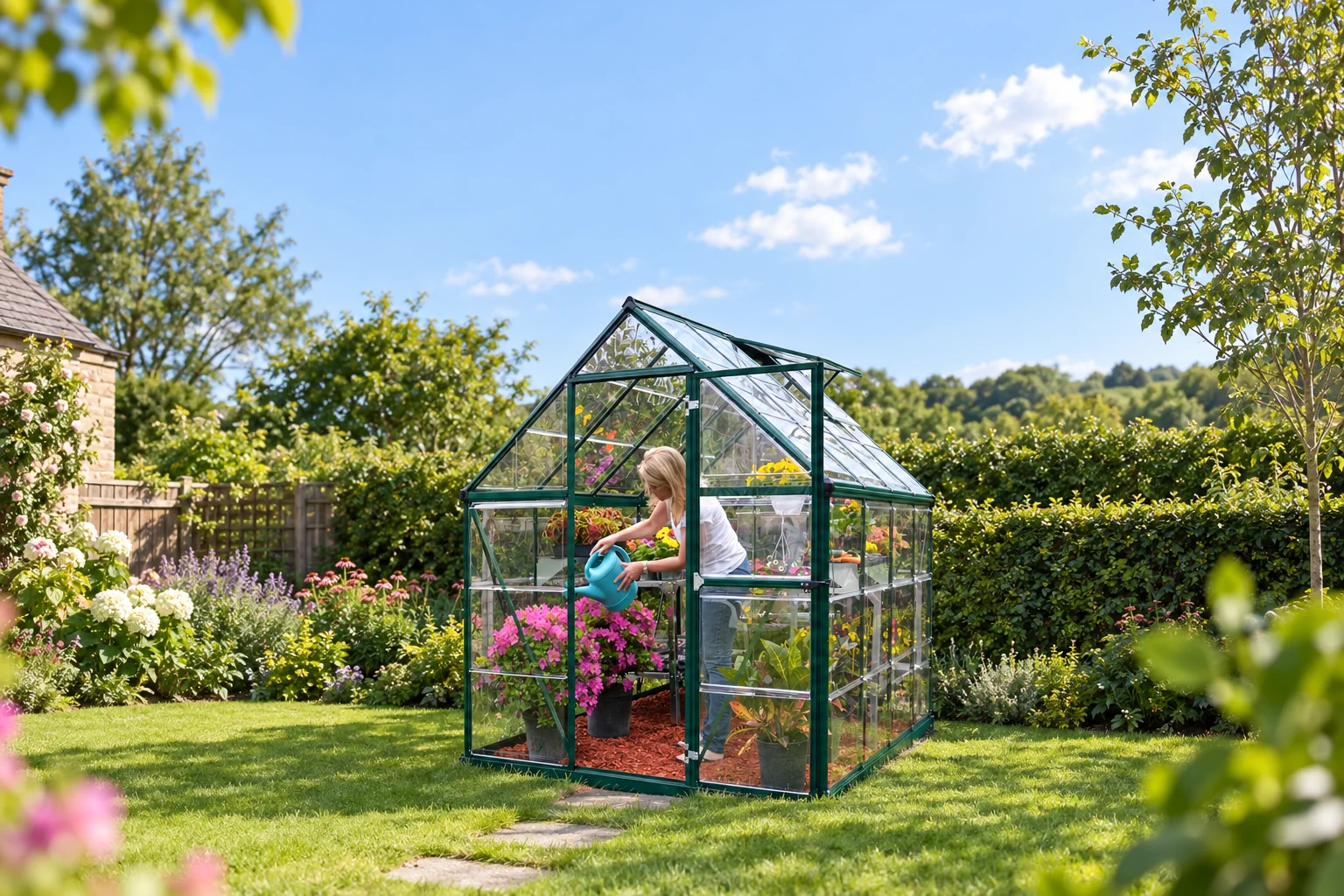
A compact walk-in Harmony greenhouse with clear polycarbonate panels, roof ventilation and useful space for protected winter growing.
Check price on AmazonWe link to the exact model on Amazon UK. Prices change often, so check the live price before you buy. As an Amazon Associate we earn from qualifying purchases.
Can a Polycarbonate Greenhouse Really Extend Your UK Growing Season?
By early November, the garden has usually made its position fairly clear. The tomatoes have slowed to a sulk, the basil has turned theatrical at the first cold night, and every unprotected pot appears to collect twice as much rain as it did in July. The useful part of the gardening year is not over, though. It has simply moved indoors.
A greenhouse at this point in the season is less about producing heroic quantities of fruit and more about buying time. Time for winter salads to establish. Time for parsley to keep going. Time to tuck away a few tender pots before a sharp frost catches them. It is also a dry, workable place in which to pot up bulbs, sort seed trays and escape the sort of drizzle that gets through every supposedly waterproof coat you own.
That is the promise of a compact walk-in greenhouse such as this 6 x 8 model. Its roughly 4.6m² footprint is large enough to be a genuine growing space rather than a glorified cloche, yet it is not so enormous that it demands a country estate and a small planning committee. For a typical UK garden, that is a sensible middle ground.
First, an important name check
Palram Canopia Harmony 6x8 Green Greenhouse. They are visually similar products in the same broad family, but they are not the same greenhouse. The Harmony examined here has clear polycarbonate glazing; the Mythos range uses a different glazing approach. If the twin-wall Mythos is what you had in mind, check the model details carefully before ordering.
That distinction matters most in winter. Greenhouse glazing is not just a transparent wall. It shapes how light enters, how quickly heat escapes after sunset and how forgiving the space feels on a gloomy January day. The Harmony's clear panels aim to admit plenty of direct light. That is useful for seedlings and hungry summer crops, but it also means this should be approached as an unheated hobby greenhouse, not as a magically warm conservatory for vegetables.
In other words: it can extend the season. It cannot repeal the British winter. A sensible crop list, good ventilation, a solid base and a little extra protection on frosty nights will do more for success than any optimistic label on a box.
Palram Canopia Harmony Greenhouse Green 6x8: What You're Actually Buying
The product covered by the listing is the Canopia by Palram Harmony 6x8 Greenhouse, green version, model 701550. Its full listing description identifies a green aluminium frame, clear polycarbonate panels and a base included with the kit. It is a freestanding, walk-in hobby greenhouse intended for home growing rather than a heavy commercial structure.

Check today's price: Palram Canopia Harmony Greenhouse Green 6x8 on Amazon UK
The practical takeaway: buy this as a Harmony 6x8 with clear polycarbonate glazing, not as a Mythos. The names are close enough to cause confusion, especially when you are comparing photographs rather than detailed specifications.
Canopia makes the Harmony range in several sizes and frame colours. This is the green-framed version, which will suit gardeners who prefer a structure that settles into a border or hedge line rather than flashing silver in every photograph. That is a small consideration, perhaps, but a greenhouse is a fairly prominent garden resident. You will be looking at it in every season, including the bleak bit in February when the rest of the garden is mostly mud and optimism.
The supplied kit specification includes a rust-resistant aluminium frame, clear UV-protected polycarbonate panels, one opening roof vent, a hinged lockable door with magnetic catch and integrated guttering. The Amazon listing states a galvanised-steel perimeter base is included, though Canopia's own FAQ has indicated otherwise; check the contents against the dispatch paperwork as soon as the kit arrives to confirm all base components are present before assembly begins.
Clear polycarbonate glazing
Canopia describes the panels as UV-protected and highly impact-resistant, with up to 90% light transmission. Clear glazing makes sense where maximum direct light is the priority.
Green aluminium frame
Aluminium avoids the rot worries of timber and is designed to resist rust, which is rather useful in a damp British garden.
Guttering built into the structure
The integrated gutters give you a route to collect rainwater if you add suitable containers and connections to your own setup.
One opening roof vent
Useful for releasing warm, damp air, although one vent is modest provision for a greenhouse that may become surprisingly hot on a bright day.
The door is hinged and can be arranged to open from either the left or right, according to the retailer specification. That flexibility is genuinely useful when siting the greenhouse. You may want the door to open away from a fence, shed wall, water butt or the rose that has quietly colonised more territory than it was ever offered.
There are a few things not included in the standard specification: shelving, automatic vent opening, shading and heating equipment. None is a deal-breaker. Most gardeners have strong preferences about staging anyway. But it is worth budgeting space and effort for those additions because the bare shell is only the beginning of a productive greenhouse.
Dimensions and Footprint: How Much Growing Space Does 6 x 8 Actually Give You?
"6 x 8" is a familiar greenhouse shorthand, but the assembled dimensions are more useful when you are standing in the garden with a tape measure and trying not to put the structure exactly where the cat likes to sunbathe. The Harmony measures approximately 247cm long, 185cm wide and 208cm high.
That works out to a floor area of about 4.6m². It is a practical size for a domestic garden: enough room for a central route and growing surfaces around it, but compact enough to keep watering, cleaning and winter organisation manageable. It is not a space in which you will be holding garden parties. It is, however, ample room for a very useful amount of food and plant care.
The 208cm peak height is welcome. A greenhouse with adequate headroom feels calmer to work in, particularly when you are checking upper shelves or tying in tall crops. Come late spring and summer, it also gives room for tomatoes trained vertically, cucumbers grown up supports and hanging baskets positioned high enough that they do not swat you in the face every time you walk in.
Width is where sensible layout matters. At 185cm, this is not a cavernous structure. A broad bench on both sides plus a generous central aisle would make it feel crowded very quickly. For most gardeners, a narrower bench or staging run on one side, with lower growing space or containers on the other, will be the most flexible approach. Keep a straightforward route to the roof vent and back corners. Your future self, carrying a watering can in poor light, will appreciate the lack of obstacles.
Plan the inside before you build the shell
Mark out 247cm by 185cm on the intended site using string, canes or empty pots. Then put down the size of the bench, shelves and containers you expect to use. It is a remarkably cheap way of discovering that your favourite potting bench is not, in fact, "quite compact".
The 56.5cm door is sufficient for a person carrying seed trays, pots and ordinary watering cans. It is narrower than some gardeners expect, though. Wide wheelbarrows, bulky planters and pre-built furniture may need to stay outside or be assembled inside. If access is important for mobility reasons, measure carefully before committing.
For autumn and winter use, the modest footprint can actually be an advantage. A smaller enclosed air volume is easier to protect with horticultural fleece around plants, and you are less likely to lose precious warmth through a door left open whilst hunting for a pair of secateurs. The compromise is that a crowded greenhouse is a damp greenhouse, so leave breathing room around plants.
Glazing and Thermal Performance: What Clear Polycarbonate Means for Winter Growing
The Harmony uses clear, UV-protected polycarbonate panels. Polycarbonate is a sensible material for a family garden greenhouse because it is far less vulnerable to shattering than traditional horticultural glass. It is also relatively light, which makes handling the panels during assembly less nerve-racking than manoeuvring glass on a windy afternoon.
What it does not do is make an unheated greenhouse frost-proof. That point is worth underlining because greenhouse marketing can occasionally make a dry shelter sound as though it comes with its own tiny weather system. It does not. When outside temperatures fall sharply on a clear night, an unheated greenhouse can become very cold too. The panels slow the exchange between indoor and outdoor conditions; they do not stop it.
The clear glazing is designed around light transmission. Canopia states that it allows up to 90% of light through, whilst protecting the material from UV-related yellowing under normal use. For growing, clear panels are especially helpful in the low-light months. There is less winter sun to begin with, the sun sits lower, and every bit of clean glazing matters.
That last detail is easy to neglect. By November, clear panels often carry a film of algae, dust, leaf debris and the faint remains of summer insect life. A gentle wash on a mild day can improve the light reaching plants substantially in practical terms, without buying anything or rearranging the garden. It is not glamorous. Neither is cleaning the inside of a greenhouse roof. Gardening has never promised glamour.
What UV protection means here
UV protection refers to the panel material's resistance to damage from sunlight and helps the glazing remain serviceable rather than becoming brittle or discoloured rapidly. It does not mean plants are starved of the useful light they need for growth. Crops primarily rely on the visible spectrum for photosynthesis, and the purpose of greenhouse glazing is to admit that growing light whilst giving plants a calmer, drier environment.
For winter crops, the biggest benefit may be steadiness rather than warmth. A protected environment shields leaves from driving rain, reduces wind stress and lets you control watering. That makes a noticeable difference to winter salad leaves, herbs and young plants. Less battered foliage is usually healthier foliage.
What clear polycarbonate does well
- Admits plenty of direct light for seedlings and productive summer crops.
- Offers impact resistance that suits busy family gardens and exposed everyday use.
- Creates a dry working and growing space through the wettest part of the year.
- Needs no special treatment in the way a timber frame might.
Where expectations need managing
- It is not a substitute for heating when tender crops need protection from winter cold.
- Clear panels can allow rapid warming on sunny days, so ventilation still matters.
- Winter light remains limited even in a bright greenhouse.
- Condensation can build up when plants are crowded and the greenhouse stays shut.
If your aim is to overwinter hardy plants, grow leaves and get a useful head start next spring, the Harmony's glazing is well suited to the job. If your aim is to keep tomatoes, chillies, cucumbers and aubergines actively growing through December, you are looking at a heating and energy question rather than a glazing question.
Use layers on frosty nights
For hardy but vulnerable pots and young plants, group them together and cover them with horticultural fleece inside the greenhouse when a frost is forecast. It is a simple extra barrier that uses the greenhouse as its first line of defence rather than asking it to do every job alone.
Frame, Build Quality and Weather Resistance in a British Winter
The Harmony has a rust-resistant aluminium frame. Aluminium is a familiar greenhouse material for good reason: it does not rot, it is not troubled by damp in the way untreated timber can be, and it keeps the structure relatively light. In a garden that experiences rain, wind, frost, pollen, leaf litter and the occasional football, that is useful.
Lightweight is not the same thing as weak, but it does make foundations and anchoring non-negotiable. A greenhouse is effectively a large, flat-sided object exposed to wind. If it is not square, level and firmly fixed down, a gust can find every small weakness in the build. Autumn is not the season for discovering that the base was "probably heavy enough".
Canopia specifies that the greenhouse must be built on a solid, level surface and anchored immediately after assembly. Suitable surfaces include concrete, pressure-treated timber, a timber deck and paving blocks. The necessary screws, plugs, masonry anchors or ground pegs are not supplied, so plan for your chosen fixing method before the kit arrives.
Level first, assemble second
A level base helps the frame sit square, the door close correctly and the panels fit as intended. A greenhouse built on a slight slope can turn into an irritatingly complicated geometry lesson.
Gutters help manage runoff
Integrated guttering directs rainwater away from the roofline. Keep it clear of leaves so water does not overflow down the panels and around the foundation.
Anchoring is essential
Use fixings appropriate to the ground beneath the greenhouse. The structure needs to be secured to its finished foundation, not merely placed on top of it.
The formal manufacturer documentation gives a maximum permitted wind value of 21m/s and a snow-load declaration of 0.50kN/m² under its stated conditions. Those figures should not be read as a licence to ignore site conditions. An open hill, coastal plot or garden corridor between houses can experience wind very differently from a sheltered suburban corner.
Customer experience reinforces the obvious but important point. Some owners report straightforward assembly and a solid feel once complete. Others have reported frame flexing in storm conditions and added extra bracing after the event. That does not make the greenhouse unsuitable; it makes careful installation, a sheltered site and rigorous anchoring central to the purchase decision.
Where to place it now
For autumn and winter growing, give the greenhouse the brightest practical position. A south- or south-west-facing area usually makes best use of the low sun. Avoid placing it beneath overhanging trees. Leaves block light, drip water onto the roof, clog gutters and can bring down branches in storms. The greenhouse may look charming nestled under an old apple tree in June. It will look less charming when you are clearing wet leaves from the roof in November.
Also leave enough circulation space around the outside to clean the panels, inspect fixings and clear debris. Squeezing it hard against a boundary fence may feel space-efficient on day one, but it makes maintenance needlessly awkward later.
What Can You Grow? A Practical Autumn and Winter Crop Guide for This Size
This is where the Harmony makes its strongest case. A 6 x 8 greenhouse is genuinely useful for UK autumn and winter growing, provided you work with the season rather than against it. It offers protection from rain and wind, a more controllable root environment and a place where hardy plants can keep ticking along when outdoor beds are saturated.
Right now, in November, the sensible priorities are crops that cope with low light and cool conditions. Winter lettuce, spinach, rocket, mustard greens, mizuna and pak choi can all make good use of covered space, especially if they were started earlier in autumn or bought as young plants. Growth will be slower than it was in September. That is normal. You are growing for steady picking, not a speed record.
Parsley, chives and coriander are useful candidates too, although coriander may still sulk if it is hot and dry in summer. In cool weather, it is often more agreeable. Keep herbs in pots where they can be moved together during very cold spells, and do not overwater simply because they are under cover. A greenhouse excludes rain. It does not remove the gardener's tendency to reach for the watering can out of habit.
The salad grower
Good for overwintering and succession-sowing cool-season leaves, with room for trays and a modest bench.
The plant protector
Useful for hardy cyclamen, bulbs and tender container plants that need shelter from wet and frost.
The spring starter
A practical home for seed trays and young plants when light and temperatures improve next spring.
Hardy cyclamen and pots of spring bulbs also benefit from being kept out of relentless rainfall. The aim is not to keep everything warm. It is to prevent waterlogging, reduce physical damage and give you control over exactly when each pot is watered. Bulbs especially dislike sitting in cold, sodden compost for weeks on end.
For overwintering plug plants, use the brightest shelves and keep air moving on milder days. Check regularly for grey mould, which can creep through dense trays when moisture stays trapped around foliage. Remove dying leaves promptly. It is one of those slightly fussy jobs that takes minutes now and saves a dismal clean-up later.
Crops to finish, not carry through winter
Tomatoes, cucumbers, aubergines and peppers are summer crops. In an unheated greenhouse, they may continue to ripen or hold on into early autumn, depending on weather and variety, but they are not realistic plants to keep productive through the coldest months without supplementary heat. Tomatoes in particular need temperatures of at least 10°C for reliable growth.
Use the greenhouse to finish fruit already formed, protect plants from rain and extend the tail end of the harvest where weather allows. Then clear the spent plants, wash pots and make room for winter leaves. It can feel ruthless to compost a tomato that still has flowers, but November flowers are not the same promise as July flowers.
A productive winter layout
Reserve the brightest central and upper areas for trays of leaves and young plants. Keep heavier pots low around the perimeter. Leave a clear path to the door and roof vent, and avoid packing foliage against the glazing where condensation is most likely to form.
Come next spring, the same space becomes even more versatile. Clear panels, a tall roofline and sheltered growing conditions will be useful for starting tender crops before they move outside. The greenhouse earns its place not because it produces everything in every month, but because it makes the handover between seasons much smoother.
Assembly, Siting and First-Season Setup: Getting It Right from Day One
There is no gentle way to put this: build quality starts with the build. Aluminium-and-polycarbonate greenhouse kits reward patience, a level foundation and a second pair of hands. They do not reward attempting the whole job alone between breakfast and a forecast of afternoon rain.
One owner reported that assembly took two people a long day. Another described it as relatively straightforward, which is encouraging, but "straightforward" in flat-pack gardening usually means following the instructions in sequence, laying out components carefully and resisting every urge to skip ahead because a section looks obvious. It is nearly always less obvious than it looks.
- Prepare the foundation first. Choose concrete, paving blocks, a stable timber base or another solid, level surface suitable for anchoring. Do not build directly on grass and hope the ground will remain firm.
- Check the kit before beginning. Confirm the frame pieces, glazing panels, door components, vent hardware and base sections are present before construction starts.
- Read the assembly instructions all the way through. This is not defeatist. It is how you avoid fitting a component in a way that later prevents the roof panel or door from aligning.
- Keep the frame square as it goes up. Measure diagonals and make adjustments before fitting everything permanently. Small inaccuracies compound quickly.
- Anchor as soon as the structure is complete. Use fixings suited to the foundation. A greenhouse waiting "until the weekend" to be secured is vulnerable during exactly the sort of blustery weather that turns up without an invitation.
The greenhouse should be situated with enough room for the door to open freely and for you to access the gutters. Think about the route from house to greenhouse too. In winter, you will appreciate a path that does not turn into a skating rink or a mud bath every time you carry out a tray of seedlings.
Inside, avoid starting with too much furniture. A narrow bench, a few removable shelves and robust hooks or supports where appropriate will reveal what the space really needs over its first season. Many greenhouse interiors become cluttered because every available horizontal surface gets filled. It is an understandable instinct. It is also how you end up watering plants in the back with a shoulder wedged against a bag of compost.
Ventilation begins from day one. The Harmony includes one opening roof vent and a door. In cool weather, open the vent or door briefly on mild, dry days to reduce humidity, then close them before temperatures fall. In spring and summer, ventilation becomes more urgent as sunshine can raise temperatures quickly even when outdoor air feels cool.
Winter watering rule: check compost rather than watering by routine. Plants under cover receive no rainfall, but cold, low-light conditions mean they use water much more slowly. Water in the morning where possible, and avoid leaving pots sodden overnight.
The five-year limited warranty applies to material or manufacturing defects subject to Canopia's installation, handling, cleaning and maintenance terms. It does not replace sensible siting or protect against storm damage caused by unsuitable installation. Think of the warranty as reassurance about the product, not as a substitute for anchors, foundations and common sense.
Daily Greenhouse Habits That Make Winter Growing Easier
Once the greenhouse is standing, the routine is pleasantly simple. Winter greenhouse gardening is less about doing lots and more about noticing small things early. A patch of condensation, a limp lettuce, a blocked gutter or a pot sitting in standing water is easy to fix when spotted promptly.
Start by visiting the greenhouse regularly, even if there is no obvious job. Open the door, look at the roof vent, inspect plants and touch the compost. Five calm minutes prevents plenty of trouble. You will quickly learn how the space behaves after rain, frost, sunshine and a windy night.
Keep the floor reasonably clear. Sweep up old leaves and spilled compost. Remove dead plant material rather than allowing it to linger in corners. Fungal problems thrive on stale, damp debris, and slugs are extremely grateful for a sheltered pile of neglected pots. Do not make their winter accommodation too luxurious.
Use clean pots for new sowings and avoid crowding trays. Good airflow is one of the least expensive forms of disease prevention. If you have enough room to separate plants slightly, do it. Leaves that are constantly touching stay wetter for longer, particularly in a greenhouse closed against cold weather.
Finally, keep the panels clean. It is easy to see this as cosmetic, but in November and December light is a limited resource. Clean glazing is part of the growing setup in exactly the same way that decent compost and sound seed are.
Frequently Asked Questions
No. The listing covered here identifies the product as the Canopia by Palram Harmony 6x8 Greenhouse in green, model 701550. The Mythos and Harmony are separate Canopia greenhouse ranges.
No unheated greenhouse should be assumed to remain frost-free through a UK winter. The structure provides shelter and a useful buffer from rain and wind, but hardy crops and extra fleece protection are still the sensible approach when frost is forecast.
Yes, provided the layout is disciplined. Around 4.6m² is enough for winter salad crops, herbs, seed trays, pots and a small amount of staging. In warmer months, it can also support tender crops such as tomatoes and peppers.
Yes. Canopia specifies a solid, levelled surface and immediate anchoring after assembly. Choose anchors and fixings that match the foundation you have built.
The door is 56.5cm wide. That is fine for ordinary access and smaller pots, but measure your wheelbarrow and any large furniture before assuming they will fit through.
Final Verdict: A Sensible Autumn Growing Upgrade, With One Crucial Caveat
The Palram Canopia Harmony 6x8 Green Greenhouse is a credible choice for gardeners who want a proper walk-in growing space without taking over the entire garden. Its clear polycarbonate panels, rust-resistant aluminium frame, roof vent, guttering and approximately 4.6m² footprint make a useful foundation for season extension.
For the UK gardener in November, its value is in shelter rather than heat. It can keep winter salads drier, give herbs and bulbs a calmer home, protect selected pots from harsh weather and provide a head start when sowing begins again next spring. That is plenty. A greenhouse does not need to grow Mediterranean vegetables in a January frost to be useful.
The main caveat is identity.Harmony, not a Mythos. Anyone specifically seeking the different glazing design associated with the Mythos should not assume that the names are interchangeable. Confirm the model and glazing before purchase.
GardenScout verdict
A well-sized, clear-polycarbonate hobby greenhouse for gardeners prepared to install it properly. Best used as a dry, protected growing room for hardy winter crops, overwintering and spring propagation—not as an unheated home for tender summer vegetables through the coldest months.
The strongest first-season investment is not more plants. It is a level foundation, suitable anchors, sensible staging and a little room left clear for you to move around.
- Palram Canopia Mythos Greenhouse Green 6x8Best autumn shelterView on Amazon
Buying for a gardener? See our gifts for gardeners, checked on Amazon every day.