
The Best Manual Push Mowers for Small, Neat Lawns
Three quiet cylinder mowers for gardeners who want a proper cut, a calmer Saturday morning and no petrol fumes drifting towards the washing line.
Why Your Lawn Might Be Crying Out for a Manual Cylinder Mower
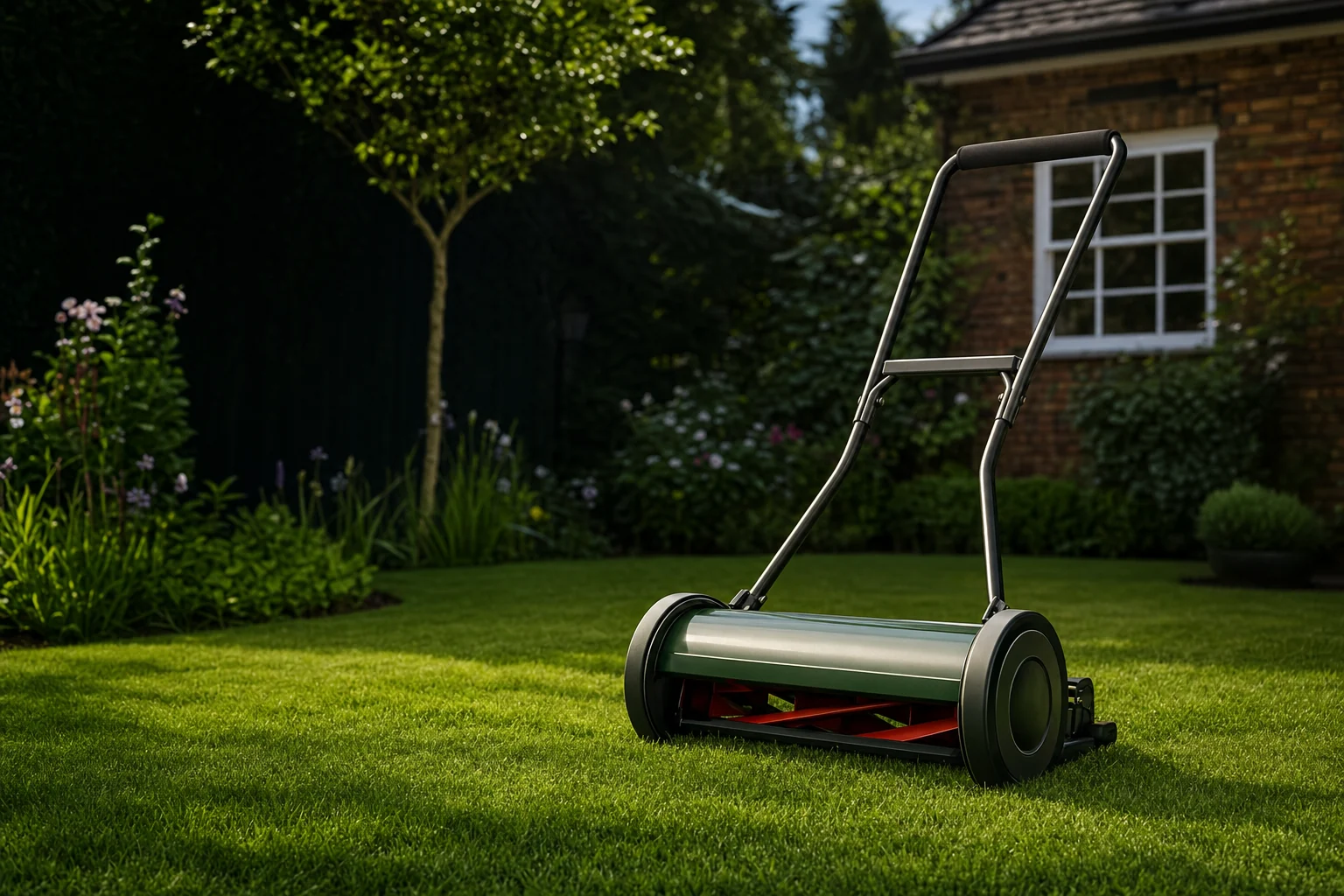
There is a particular sort of lawn that does not need a giant machine. It does not need a roaring engine, a complicated starting ritual or a shed full of fuel-smelling paraphernalia. It needs a careful trim every so often, a reasonably straight line along the border, and perhaps the odd admiring glance through the kitchen window. Small, neat lawns are wonderfully low-drama things. The mower should be too.
That is where cylinder mowers come in. Rather than swinging a blade underneath a deck and battering through whatever happens to be in its way, a cylinder mower uses a rotating reel and a fixed bed knife. The grass is cut with a scissor-like action. On a lawn that is cut regularly, the result can look remarkably tidy: clean tips, a close and even finish, and the sort of gentle stripe that makes an otherwise ordinary patch of green look as though somebody has taken it seriously.
There are two sensible ways to approach this category. The first is the true manual reel mower. You push it; the wheels turn; the cylinder turns; the grass is cut. No battery, no cable, no charging and no motor. It is gardening in its most literal form. The second is the cordless battery cylinder mower. You still guide it around the lawn yourself, but a battery-powered motor drives the cutting system. That reduces the effort involved whilst retaining the tidy cylinder-mower finish.
Both approaches belong in a conversation about quiet, low-impact lawn care. The manual models are entirely human-powered. The cordless Webb removes the need for mains power and petrol, whilst offering the convenience of a 20V battery and brushless motor. Neither is pretending to be the right answer for a rough field, a neglected jungle or grass that has reached ankle height and developed its own weather system. But on a compact lawn kept in decent order, they are unusually satisfying tools.
The important distinction
"Cordless" and "manual" are not quite the same thing. The American Lawn Mower Company 1304-14GC and Husqvarna HiCut 64 are fully manual push reel mowers. The Webb WEV2012RB4 is cordless and pushed by hand, but its cylinder is battery-powered. All three are quiet-minded alternatives to petrol machinery; they simply ask different things of the person holding the handle.
The appeal goes beyond noise. A manual mower is ready whenever you are. There is no battery to charge before a quick tidy-up and no extension lead to drag around a patio chair, a bird feeder and the plant pot you forgot was directly behind you. A cordless cylinder mower adds some useful mechanical assistance without turning the job into a full-blown equipment operation. For little lawns, that middle ground is rather attractive.
There is also a practical point that gets lost when mower shopping becomes a game of ever-larger cutting decks. A wide mower is not automatically a better mower. It is only better if your lawn gives it room to work. Tight turns, narrow side passages, curved beds and close-planted borders can make a compact deck far more useful than an imposing machine that looks capable of maintaining a municipal park.
What "Best" Actually Means for a Small, Neat Lawn
Choosing between these mowers is less about finding one universal winner and more about matching the tool to the way you garden. A cylinder mower rewards routine. If you like cutting often enough that the lawn never looks unruly, its clean cutting action and tidy finish are the main event. If mowing tends to happen when the grass has become an awkwardly enthusiastic shade of long, a cylinder mower can still be useful, but the model's cutting-height flexibility becomes much more important.
Cutting width is the first number worth noticing. The American Lawn Mower Company has a 14-inch cutting width. The Webb has a 30cm width. The Husqvarna reaches 40cm. On a large, open rectangle, the wider Husqvarna will cover more ground with every pass. On a little garden woven around beds and edging, the more compact American or Webb can be easier to place exactly where it needs to go. Width is efficiency, yes. It is also manoeuvrability.
Then there is the question of finish. Cylinder mowers are at their happiest when they are asked to maintain, not rescue. The Webb offers five cutting heights from 13mm to 23mm, a distinctly lawn-focused range for gardeners who like a close, formal surface. The Husqvarna has a much broader 12mm to 56mm range. The American Lawn Mower Company adjusts from 1 inch to 2.25 inches, which is roughly 25mm to 57mm. That makes the latter pair more forgiving for a relaxed domestic lawn that is not always kept short.
A close cylinder cut looks excellent on grass that is maintained regularly. For the best result, avoid removing an enormous amount of growth at once. Several lighter cuts are kinder to the lawn and much less likely to turn a peaceful mow into a vigorous upper-body workout.
Collection is another small but meaningful divider. The American Lawn Mower Company 1304-14GC includes a grass catcher. The Webb has an 18-litre collection bag. Husqvarna offers a grass catcher separately. That does not make the HiCut 64 less capable, but it does mean you should decide before buying whether you prefer a swept-clean finish or are happy to deal with clippings another way.
Finally, think honestly about effort. A manual reel mower is beautifully simple, but it is not self-propelled. You provide the momentum. On a compact, flat lawn that can feel pleasantly direct rather than arduous. On uneven ground, or when the grass is too tall, the same simplicity can become a limitation. The Webb sits at the more relaxed end of the spectrum because its brushless motor runs the five-blade cylinder, although you still push and steer the machine yourself.
Choose cylinder cutting for polish
All three models use a reel-and-bed-knife approach designed to cut grass cleanly rather than tear through it. That is the defining attraction of the category.
Choose width for your actual layout
A 40cm deck is efficient in open space. A 30cm or 14-inch deck makes more sense when paths, borders and awkward corners dominate the plot.
Choose a height range that suits your lawn habits
The Webb is aimed at a close, neat finish. The Husqvarna and American Lawn Mower Company models accommodate taller settings as well.
American Lawn Mower Company 1304-14GC: The Featherweight Purist
The American Lawn Mower Company 1304-14GC is the uncomplicated choice in this group. It is a true push reel mower with a 14-inch cutting width, a five-blade ball-bearing reel and a grass catcher included in the box. At 21 pounds, or roughly 9.5kg, it is light enough to suit gardeners who do not want the mower itself to become the day's main lifting project.
Its proportions are very much in its favour if your garden is compact, irregular or bordered closely with plants. The mower measures 23 x 8 x 13 inches overall, and the 14-inch cutting path is narrow enough to work its way around the practical realities of an urban lawn: a curving bed, a shed corner, a small tree, the inexplicable ornamental stone you inherited from the previous owner. A wider mower covers more per pass, but it also leaves less room for imperfect geometry.
The five blades are made from heat-treated alloy steel, and the mower's scissor action is precisely what gives it the gentle, well-kept character people want from a reel machine. There is no claim here that it will magically transform a bumpy, overgrown lawn into a bowling green. Nothing will do that by lunchtime. But keep a modest lawn under control and it offers a straightforward route to a clean cut without noise, fuel or cables.
The height range runs from 1 inch to 2.25 inches. In metric terms that is approximately 25mm to 57mm, making it a more relaxed proposition than the Webb's close-cutting 13mm to 23mm range. A higher setting gives you a lawn with a little more cushion and tolerance, particularly useful when the weather turns dry or mowing has been delayed. At its lower end, it can still deliver the more formal appearance expected from a cylinder mower, provided the lawn is maintained accordingly.
The included catcher is a genuine convenience. Tiny lawns can look messy surprisingly quickly after a cut, chiefly because there is nowhere for clippings to hide. If you like stepping back and seeing a lawn that is immediately presentable, collection saves a final round with the rake. It also gives this model a pleasingly complete feel for gardeners who want an all-in-one manual option rather than an extra accessory to think about later.
The trade-off is speed. A 14-inch cutting width means more passes than the Husqvarna's 40cm deck. That is not a criticism so much as basic arithmetic wearing gardening gloves. For a small lawn, it is unlikely to be a deal-breaker; for a broad, open lawn, it may become tedious. This mower is most persuasive where precision and easy handling matter more than covering the maximum possible area in one sweep.
Pros
- Fully manual operation means no battery, cable or fuel.
- 21lb weight keeps carrying and turning manageable.
- Included grass catcher supports a clean finish.
- Five-blade, ball-bearing reel is designed for a smooth scissor cut.
- 25–57mm approximate height range is useful for less closely cropped lawns.
Considerations
- The 14-inch width requires more passes than the larger Husqvarna.
- You supply all the pushing power.
- It is best used as a regular-maintenance mower, not an overgrowth remedy.
- The height range does not reach the very close 13mm setting offered by the Webb.
For many people, that is exactly the point. The 1304-14GC is for the gardener who wants to take ten or fifteen quiet minutes with the lawn, not organise an expedition. The mower is built around mechanical simplicity, and its stated sharpening interval of at least once every three to five years underlines that low-fuss character. Treat it as a maintenance tool for a compact lawn and it has a very clear role.
Husqvarna HiCut 64: The Thoroughbred for Serious Lawn Lovers
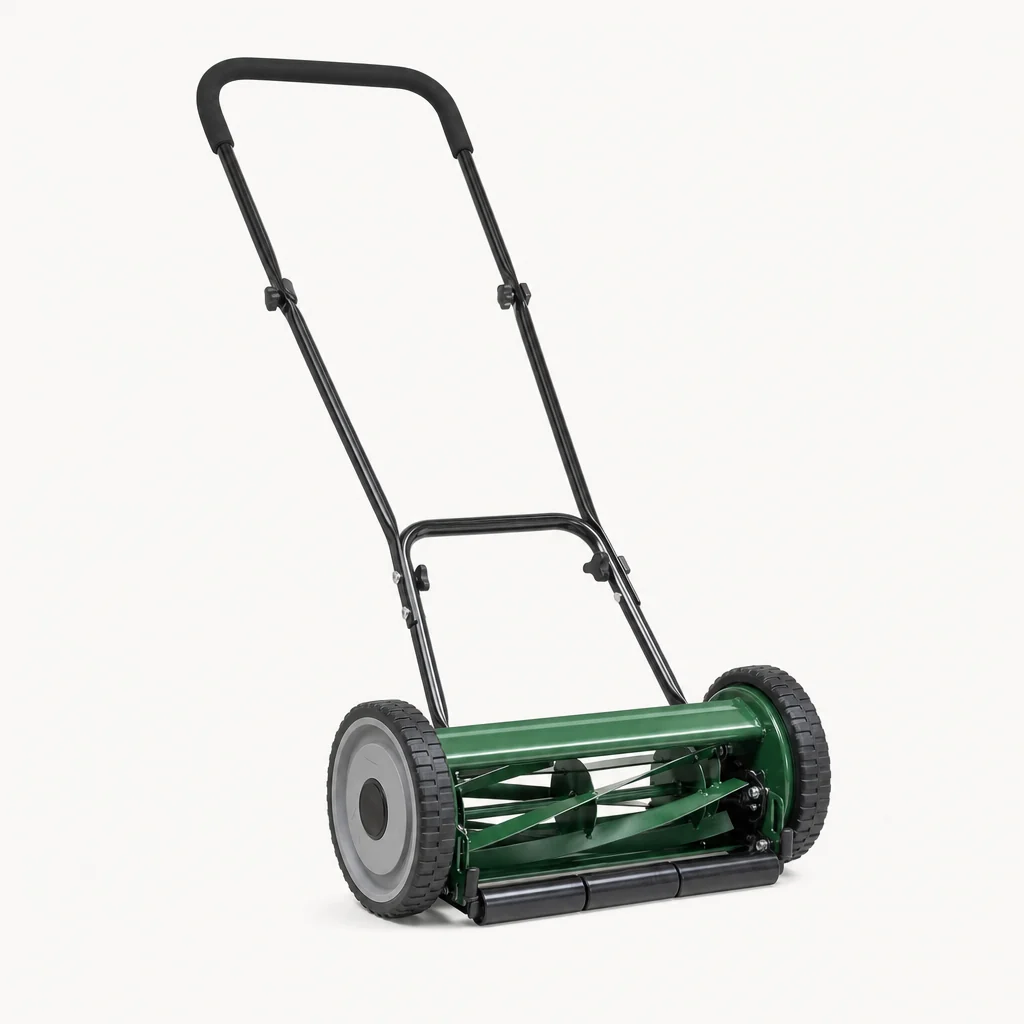
The Husqvarna HiCut 64 is the manual mower for gardeners who want more coverage and more adjustment without leaving the quiet, human-powered category. With a 40cm cutting width and a working-area capacity of 500m², it is the largest-capacity machine in this trio. Yet at 8.7kg, it is also lighter than the 21lb American Lawn Mower Company model. That is an unusually appealing combination for anyone who likes the idea of a wide manual mower but not the idea of wrestling one around the garden.
Its key feature is Husqvarna's Novocut cutting system. The design combines an extra-hardened reel blade with a bed knife, providing the close, clean interaction on which a cylinder mower depends. Hardened components are not exciting in the way a giant motor or a screen might be exciting. They are, however, the bits that do the actual cutting. In a mower designed around a precise finish and long-term use, that is where attention should be paid.
The 12mm to 56mm cutting-height range is the HiCut 64's great practical advantage. At the low end, it can suit a gardener pursuing a sharper, formal look. At the high end, it can handle a more relaxed lawn where a little length is desirable. This flexibility matters because lawns are not static. Spring growth, dry spells, family holidays and the occasional fortnight when every other job appears more urgent all change the mowing schedule. A mower with a broader range is less likely to become the wrong tool when your routine changes.
Husqvarna describes the Novocut setup as allowing use on grass that is cut less often. It is still wise to work progressively rather than attempt a drastic haircut in one pass. Cylinder mowers are at their most elegant when they are maintaining a lawn's condition. The HiCut 64 simply gives you more breathing room than a close-cut specialist when the lawn has been allowed to grow on a little.
The two large, high-traction wheels are another sensible detail. With any non-powered mower, your push becomes the driving force for the wheels and cutting reel. Traction matters. So does predictable movement when you turn at the edge of a bed. The HiCut 64's modest 8.7kg weight should make those regular changes of direction less of a chore than you might expect from a 40cm mower.
It is worth pausing on what the HiCut is not. It does not include a grass catcher as standard; collection is available separately. For some gardeners that will be a non-issue, particularly if they prefer to deal with modest clippings after mowing. For others, especially those keen on a fast, immaculate finish, the American and Webb options are more immediately complete. There is no right answer, only your preferred end-of-mow ritual.
Pros
- 40cm cutting width is the broadest in this guide.
- 12–56mm height range covers formal and relaxed lawn styles.
- 8.7kg weight is low for a manual mower of this width.
- Extra-hardened reel blade and bed knife focus on cutting durability.
- Rated for working areas up to 500m².
Considerations
- Grass collection requires the optional catcher.
- Its wider deck is less nimble than the American's 14-inch format in very tight spaces.
- Manual pushing remains part of the deal, however light the mower itself may be.
- For a tiny lawn, its coverage potential may be more than you need.
This is the pick for someone who genuinely enjoys a good lawn and wants a manual mower that can keep pace with it. It has the width to get through a reasonably generous patch quickly, the range to cope with changing conditions, and a low enough weight to keep the whole proposition civilised. The HiCut 64 is not trying to be the smallest mower. It is trying to be the capable manual one.
Webb WEV2012RB4: The Cordless Cylinder That Bridges Both Worlds
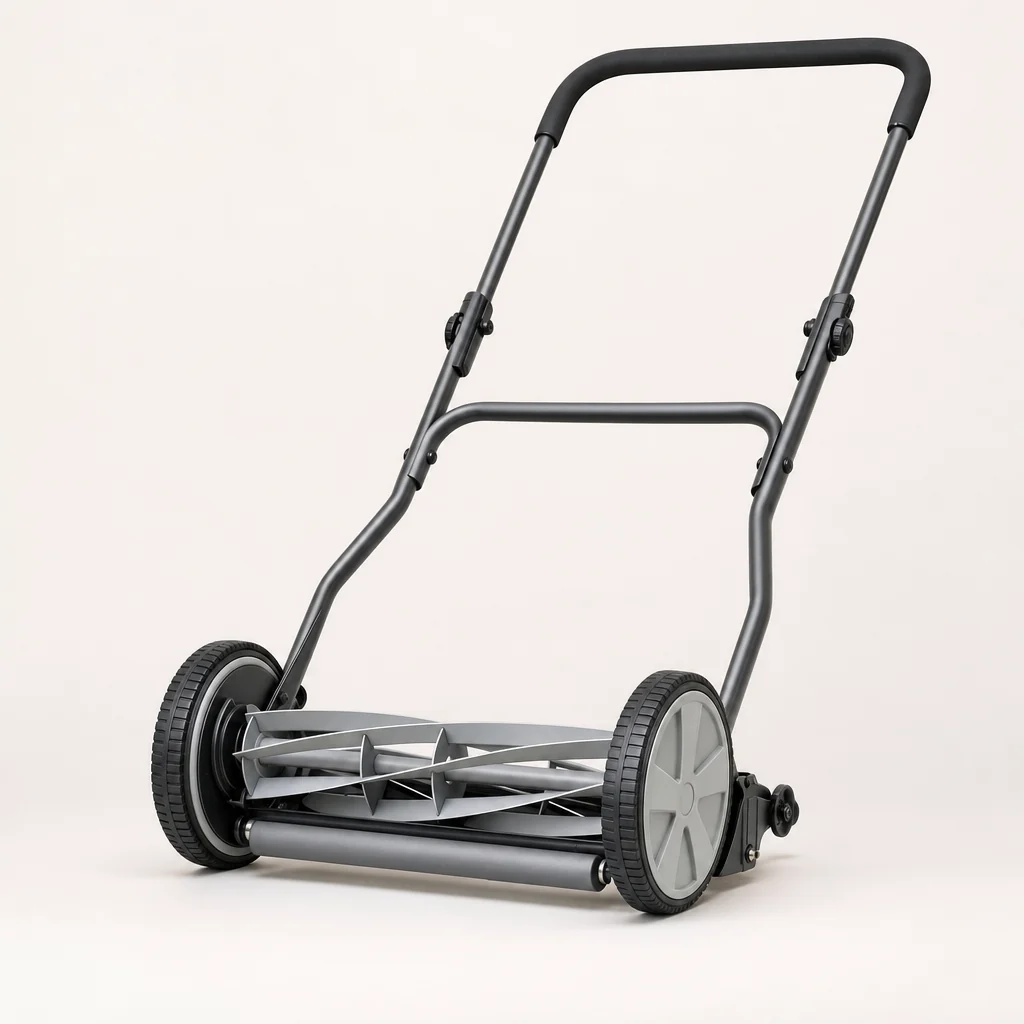
The Webb WEV2012RB4 is the outlier here, in the most useful sense. It is not a fully human-powered reel mower. It uses a 20V, 4Ah Webb ECO lithium-ion battery and a brushless motor to operate its five-blade cylinder. But it remains a compact mower that you guide by hand, and it retains the scissor-like cutting quality that makes cylinder mowing appealing in the first place.
For many small-lawn gardeners, this may be the most approachable route into the category. The battery provides up to 60 minutes of runtime on a full charge, which is a substantial amount for a small or medium lawn. There is no cable to manage and no petrol engine to start. You still get the calm, deliberate feel of mowing with a cylinder, but you do not have to create the cylinder's cutting momentum entirely through your own pushing.
The 30cm cutting width puts the Webb neatly between the two manual alternatives. It is more compact than the 40cm Husqvarna and therefore easier to guide around a small lawn with obstacles, but it provides a little more coverage than the American Lawn Mower Company's 14-inch deck. That middle position is helpful. It feels designed for gardens that are small enough for close attention but large enough that you would rather not make endless passes.
The cutting-height range of 13mm to 23mm tells you exactly what sort of lawn this mower wants to maintain: a neat one. It offers five height settings within that close-cut range, so it is well suited to gardeners who like a short, consistently groomed finish. It is not the flexible choice for long grass or a loose, meadow-like treatment. In that comparison, the Husqvarna's 12–56mm range and the American's approximately 25–57mm range give far more latitude.
The roller arrangement is central to the Webb's appeal. A large rear roller and zinc front roller are designed to lay down crisp stripes. Stripes are not essential, obviously. Your lawn will remain a lawn without them. But they add a pleasing sense of order, and this is one of the few garden upgrades that can make even a modest patch look more considered without adding a single plant, pot or ornament.
The machine uses a chain-driven cylinder system and five sharp blades to create that clean scissor-like cut. Its brushless motor is another thoughtful inclusion, matching the quiet, lower-maintenance spirit of the overall design. The compact folding form is useful where storage is tight, and the tool-free height adjustment removes one of those tiny obstacles that can otherwise make a simple job feel unnecessarily fiddly.
Webb includes the charger and one 4Ah battery, while the battery's integrated USB-C port allows it to double as a power bank for a phone or tablet. That will not determine anyone's mower purchase on its own, nor should it. Still, it is the kind of sensible little extra that feels rather handy when you are in the garden and your phone is making the low-battery face at you.
The WEV2012RB4 also arrives with serious recognition behind it. It was named Garden Tool of the Year at the 2026 DIY Week Awards and was selected as a BBC Gardener's World Magazine Best Buy Cordless Mower for 2026. Awards should never replace a clear look at the specifications, but these are strong endorsements for a model that takes a slightly different route through the cylinder-mower category.
Pros
- Up to 60 minutes of cordless runtime from the supplied 20V 4Ah battery.
- 30cm deck is a practical middle ground for compact lawns.
- Rear roller and front roller provide confirmed striping capability.
- 18-litre collection bag is included.
- Brushless motor, folding design and tool-free height adjustment make ownership straightforward.
Considerations
- It is cordless, not fully manual: battery charging is part of ownership.
- 13–23mm cutting range is aimed at closely maintained lawns.
- At 30cm, it cannot match the Husqvarna's 40cm coverage per pass.
- It is manually pushed rather than self-propelled.
Head-to-Head: How These Three Mowers Compare
The neatest way to separate these machines is to begin with their personalities. The American Lawn Mower Company 1304-14GC is the compact, all-manual purist with a catcher included. The Husqvarna HiCut 64 is the wide-cut manual option for gardeners who want more capacity and a far-reaching height range. The Webb WEV2012RB4 is the low-effort cordless choice for a closely maintained lawn, with striping and collection built into the proposition.
| Feature | American Lawn Mower Company 1304-14GC | Husqvarna HiCut 64 | Webb WEV2012RB4 |
|---|---|---|---|
| Power type | Manual push | Manual push | 20V cordless battery, manually pushed |
| Cutting width | 14 inches | 40cm | 30cm |
| Cutting height | 1–2.25 inches | 12–56mm | 13–23mm |
| Blade system | 5-blade ball-bearing reel | Extra-hardened reel blade and bed knife | 5-blade chain-driven cylinder |
| Weight | 21 lb | 8.7kg | — |
| Collection | Grass catcher included | Optional grass catcher | 18-litre bag |
| Runtime | Human-powered | Human-powered | Up to 60 minutes |
| Standout strength | Compact, simple and catcher-equipped | 40cm width and 12–56mm flexibility | Close cut, stripes and cordless convenience |
The figures below show cutting width relative to the Husqvarna's 40cm deck. They are not a performance score; they simply make the coverage difference easy to see. The American's 14-inch width is approximately 35.5cm, so it sits closer to the Husqvarna than the raw number might initially suggest. The Webb's 30cm deck is the narrowest measured in centimetres, but it gains something back in compactness and battery-driven cutting.
There is an equally revealing difference in cutting-height ambition. The Webb's 13–23mm range is tightly focused around a very neat lawn. That is ideal if you enjoy keeping the grass short and orderly, but it makes the Webb less adaptable if you routinely prefer a longer finish. The Husqvarna spans from 12mm through to 56mm, which is the broadest confirmed range here. The American starts higher, at 1 inch, but reaches approximately 57mm at its upper setting.
On collection, the American and Webb are ready to produce an immediately clear lawn surface. The included catcher on the American and 18-litre bag on the Webb suit gardeners who dislike seeing loose clippings after mowing. The Husqvarna asks you to add its optional grass catcher if that is your preferred arrangement. It is not a huge complication, but it is an important distinction between a mower that arrives ready to collect and one that gives you that choice separately.
Weight is available for the two manual models, and it is worth noting that the Husqvarna's 8.7kg figure is lower than the American Lawn Mower Company's 21lb, which is approximately 9.5kg. The difference is not dramatic, but it is notable considering the Husqvarna has the wider 40cm cutting deck. Both should be manageable for routine movement around a small garden; the deciding factor is more likely to be deck width and lawn layout than the modest gap between their weights.
Getting That Crisp Cylinder-Mower Finish
A cylinder mower is not a shortcut to a perfect lawn. It is a tool that makes a good routine look better. The real secret is consistency. If you mow when the grass is still reasonably short, the reel can make its clean, precise cut with minimal fuss. Wait until the lawn has become a miniature grassland and any mower will have a harder time. A manual one will make this very clear to you, usually halfway through the first pass.
Start with the height setting that fits the condition of the lawn, rather than the setting that looks best in an idealised photograph. The Webb's 13mm to 23mm range is for close turf, so it makes sense to use it when the lawn is already being kept short. The Husqvarna's 12mm to 56mm range lets you begin a little higher and lower it gradually as the season and lawn condition allow. The American's 1-inch to 2.25-inch range likewise makes it more comfortable for a lawn with a little more length.
For stripes, overlap each pass slightly and try to keep a steady walking pace. The Webb has the clearest advantage here because its large rear roller and zinc front roller are specifically intended to lay down defined stripes. A striped finish is largely about direction and light: grass blades bend one way, then the other, reflecting light differently. It is pleasantly old-fashioned garden theatre, and there is absolutely nothing wrong with that.
A simple mowing pattern
Make the first pass along the longest clean edge of the lawn, then work back and forth with a modest overlap. On the return pass, avoid turning sharply on one spot if the lawn is soft. A gentle turn at the edge is kinder to the turf and keeps the finish looking less like it has been negotiated by a shopping trolley.
Before mowing, clear obvious sticks, stones and toys. Cylinder blades and bed knives are precision-cutting parts, not a challenge issued to gravel. This is especially important with manual mowers because an unexpected obstacle interrupts the smooth momentum that makes them easy to use. It is a thirty-second task that can save a lot of annoyance.
Do not overlook the edges. A cylinder mower is excellent at the main expanse of lawn but naturally leaves the final close strip beside a wall, border or fence for another tool. This is normal, not a flaw. A small amount of edging after the main mow is often what separates "tidy" from "somebody clearly cares about this lawn". On a tiny garden, that finishing job may take less time than making a cup of tea.
Which Mower Suits Which Type of Gardener?
All three mowers can make sense for an eco-minded small-lawn gardener. The useful question is what you want to optimise: absolute simplicity, coverage and flexibility, or reduced effort with a close-cut cordless finish. This is the bit where being honest about your habits saves you from choosing the wrong sort of excellent mower.
Choose the American if...
Your lawn is compact and full of corners, you want a grass catcher included, and you like the complete independence of a truly manual mower.
Choose the Husqvarna if...
You have a more open lawn, appreciate a 40cm deck, and want the greatest confirmed cutting-height range for changing lawn conditions.
Choose the Webb if...
You want cylinder stripes and a close formal cut but would rather let a 20V brushless motor handle the cutting cylinder.
The American Lawn Mower Company is probably the most emotionally straightforward choice. It is a mower in the classic sense: you take it out, push it, empty its catcher and put it away. The fact that it only requires sharpening at least once every three to five years reinforces that uncomplicated appeal. It is best for gardeners who see mowing as a small, satisfying task rather than an inconvenience to be engineered away.
The Husqvarna is the choice for the person who has progressed from merely owning a lawn to actively having opinions about it. That is not meant as a criticism. Lawn opinions are perfectly respectable. Its 40cm width, 500m² working-area capacity and 12–56mm range make it the most versatile manual option here, particularly if your garden is not microscopic and you do not always mow at precisely the same interval.
The Webb is ideal for someone who wants a tidy, striped result but recognises that manual reel mowing is not always appealing after a long week. Its up-to-60-minute runtime and 18-litre collector make it particularly convenient for small and medium lawns. Its narrower cutting-height range means it should be chosen by people happy to maintain a short lawn, rather than gardeners who want to let the grass grow longer between cuts.
Manual and Cordless Cylinder Mower FAQs
Yes. The American Lawn Mower Company 1304-14GC and Husqvarna HiCut 64 have no motor because they are powered entirely by pushing. Their sound comes from wheels, reel and grass rather than an engine. The cordless Webb uses a brushless motor, but remains a quiet-minded alternative to petrol mowing.
The Husqvarna HiCut 64, with its 40cm cutting width. The American Lawn Mower Company has a 14-inch width, approximately 35.5cm, and the Webb has a 30cm width. A wider cut is most useful on an open lawn; it is not automatically best in a tight layout.
The Husqvarna offers the broadest range at 12–56mm and is designed with its Novocut system for grass cut less often. The American Lawn Mower Company runs from 1 inch to 2.25 inches. The Webb's 13–23mm range is intended for a closely maintained lawn.
The American Lawn Mower Company includes a grass catcher, and the Webb has an 18-litre collection bag. A grass catcher is available separately for the Husqvarna HiCut 64.
No. It is a cordless battery-powered cylinder mower that you push manually. Its battery and brushless motor operate the cutting system, rather than providing self-propelled drive.
The GardenScout Verdict
Small lawns do not need to be treated as miniature versions of large ones. They benefit from tools designed for close attention: compact enough to navigate, quiet enough not to dominate the afternoon, and capable of leaving grass looking properly cared for rather than merely shortened. These three mowers each take that idea seriously.
The American Lawn Mower Company 1304-14GC is our recommendation for the purist with a very compact lawn. Its 14-inch deck, 21lb weight, five-blade reel and included catcher make it a wonderfully direct tool for neat, regular mowing. It asks for your effort, but not your electricity.
The Husqvarna HiCut 64 is the strongest all-round manual choice if you have more open space and want broad adjustment. Its 40cm cutting width, 8.7kg weight, 12–56mm height range and 500m² working-area capacity give it the most ambitious manual brief in this guide. It is the one for gardeners who enjoy maintaining a lawn as a proper part of the garden.
The Webb WEV2012RB4 is the most compelling bridge between traditional cylinder mowing and modern convenience. Its 20V 4Ah battery, up-to-60-minute runtime, 30cm deck, five cutting heights, 18-litre collector and striping rollers make it a strong fit for a short, polished lawn. The 2026 DIY Week Garden Tool of the Year and BBC Gardener's World Magazine Best Buy recognition only strengthens the case.
The short version
Pick the American Lawn Mower Company 1304-14GC for compact, fully manual simplicity with collection included. Pick the Husqvarna HiCut 64 for the widest manual cut and the most flexible height range. Pick the Webb WEV2012RB4 for a quiet cordless cylinder mower with a close cut, an 18-litre collector and satisfying stripes. Whichever route you take, regular mowing is the real secret ingredient. Slightly annoyingly, lawns do not maintain themselves.