
15 Plants That Come Back Every Year – Plant Them Once and Enjoy Them for Years
The practical UK case for building borders with plants that settle in, bulk up and reward you long after the bedding display has packed its bags.
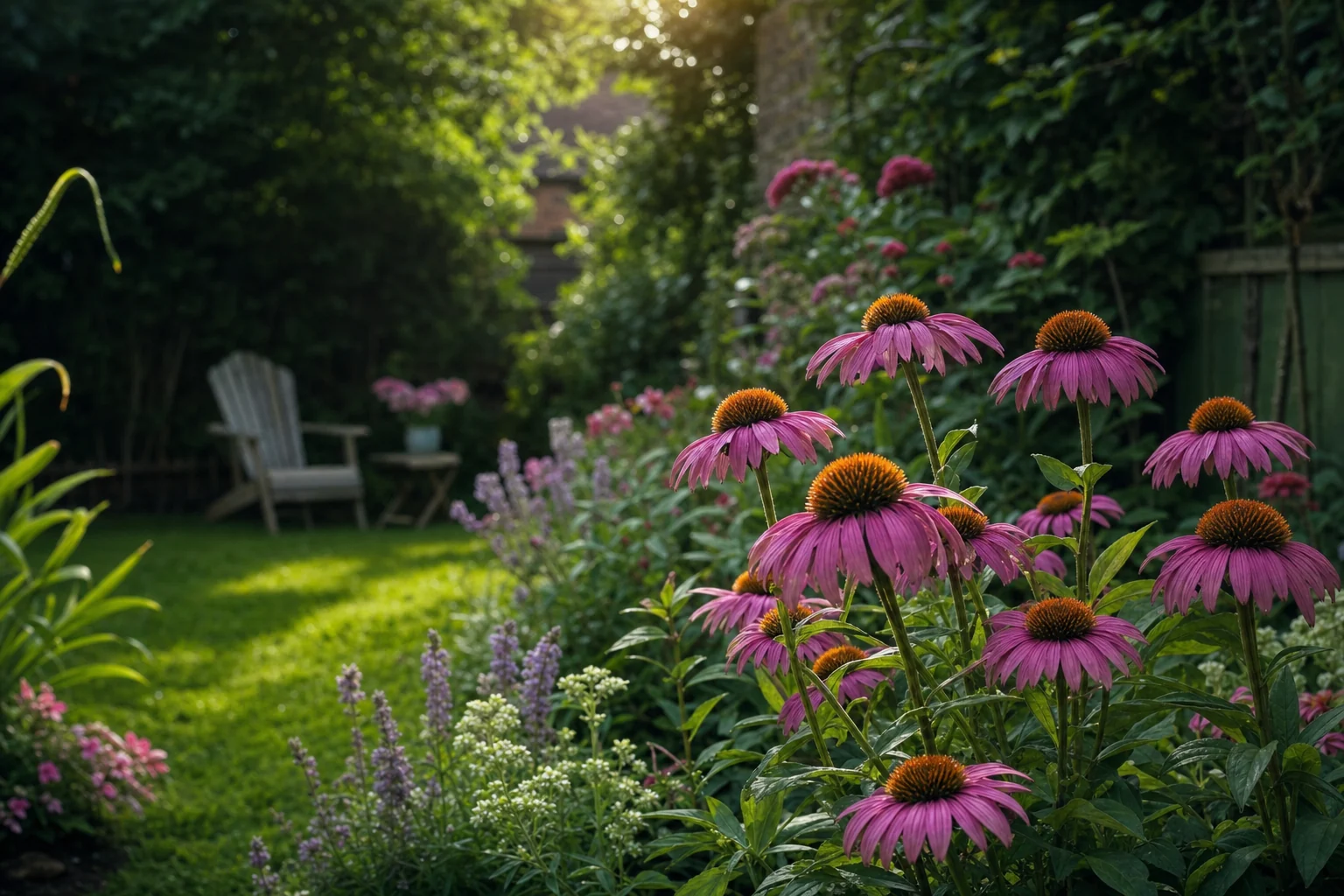
Why Perennials Are the Smartest Investment You Can Make in Your Garden
There is a particular sort of satisfaction in planting something small, slightly unpromising and rather expensive-looking for its size, then watching it become a proper presence in the garden. Not a temporary splash of colour. A resident. Perennials are the plants that make this happen: their top growth may retreat in winter, but the living root system remains in the soil and sends up fresh growth again as temperatures rise in spring.
That simple habit changes how a garden feels. Instead of beginning from bare earth every year, you start with a framework. A clump is already there. It knows where it lives. It has roots down, a little history, and often a far stronger opinion about the weather than the gardener hovering nearby with a watering can.
Some perennials are remarkable long-haul plants. Peonies, for example, can live for up to 100 years. That is not a typo, nor is it an invitation to start leaving instructions for your great-grandchildren. It is a useful reminder that a perennial border can be a genuine long-term project. A good plant in the right place may outlast paint colours, patio furniture and several attempts to "tidy up" the garden.
The catch is patience. Gardeners have a saying for it: sleep, creep, leap. In the first year, many perennials concentrate on making roots and can look modest. In the second, they begin to fill their allotted patch. By the third season, they often make the sort of display you thought you had bought on day one. There is another version, "walk, creep, run", which is considerably less poetic but very useful when dealing with enthusiastic spreaders.
The useful mental shift
Think of a perennial border as a three-year plan, not a weekend makeover. The first season is about establishment. The second is about shape. The third is where the garden starts taking some of the credit for itself.
For UK gardens, March and April are particularly useful planting months. March suits plants including primulas, bergenias and salvias. April is a good time to add hostas and daylilies. Planting in spring gives roots an opportunity to establish whilst the soil is waking up and before the fuller demands of summer arrive. It is not glamorous work, admittedly. March soil has a habit of sticking to everything you own. But it pays back.
The bigger point is that perennials are not simply "low-maintenance flowers". They are a way of designing with time. You can choose plants for flowers, foliage, height, shade tolerance, late-season interest and wildlife value, then allow the border to become fuller rather than repeatedly replacing it. That makes them especially persuasive in gardens where time is limited, budgets are being watched or annual replanting has begun to feel like a slightly elaborate form of ground-level theatre.
"Comes back every year" does not mean "needs no attention whatsoever". New plants need regular watering as they establish, and every perennial benefits from being placed where its preferred light, soil and moisture conditions make sense. The plant cannot read the label after all.
At a Glance: Everything You Need to Know Before You Plant
Perennials cover a huge range of garden personalities. Some are tidy, clump-forming and quietly dependable. Others travel. Some make their case with flowers, others with leaves, seed heads or a strong silhouette at the back of a border. The shared characteristic is longevity: they are planted to remain, returning from their roots rather than needing to be replaced as an annual display does.
This guide is for beginner gardeners who would like reliable colour without a complete annual reset, as well as experienced gardeners extending an established border. It is equally useful for wildlife-minded gardeners who want more flowers available to visiting insects, and for anyone who has looked at a tired row of seasonal bedding in late autumn and wondered whether there might be another way. There is.
It is also for people with awkward bits of garden. Shade under shrubs. A border that dries out. A damp edge where conventional bedding looks increasingly offended. The plants below are not interchangeable, and that is exactly the point. A good perennial scheme works because it gives each plant a job suited to the place.
New gardeners
Build a forgiving framework instead of starting again from scratch every spring.
Border builders
Add layers of height, foliage and flowering interest that settle in over time.
Wildlife gardeners
Choose flower-rich plants that offer bees and butterflies somewhere worthwhile to visit.
Busy households
Put effort into establishment, then enjoy a garden that asks less of you each year.
The Full List: 15 Perennials Rated for UK Gardens
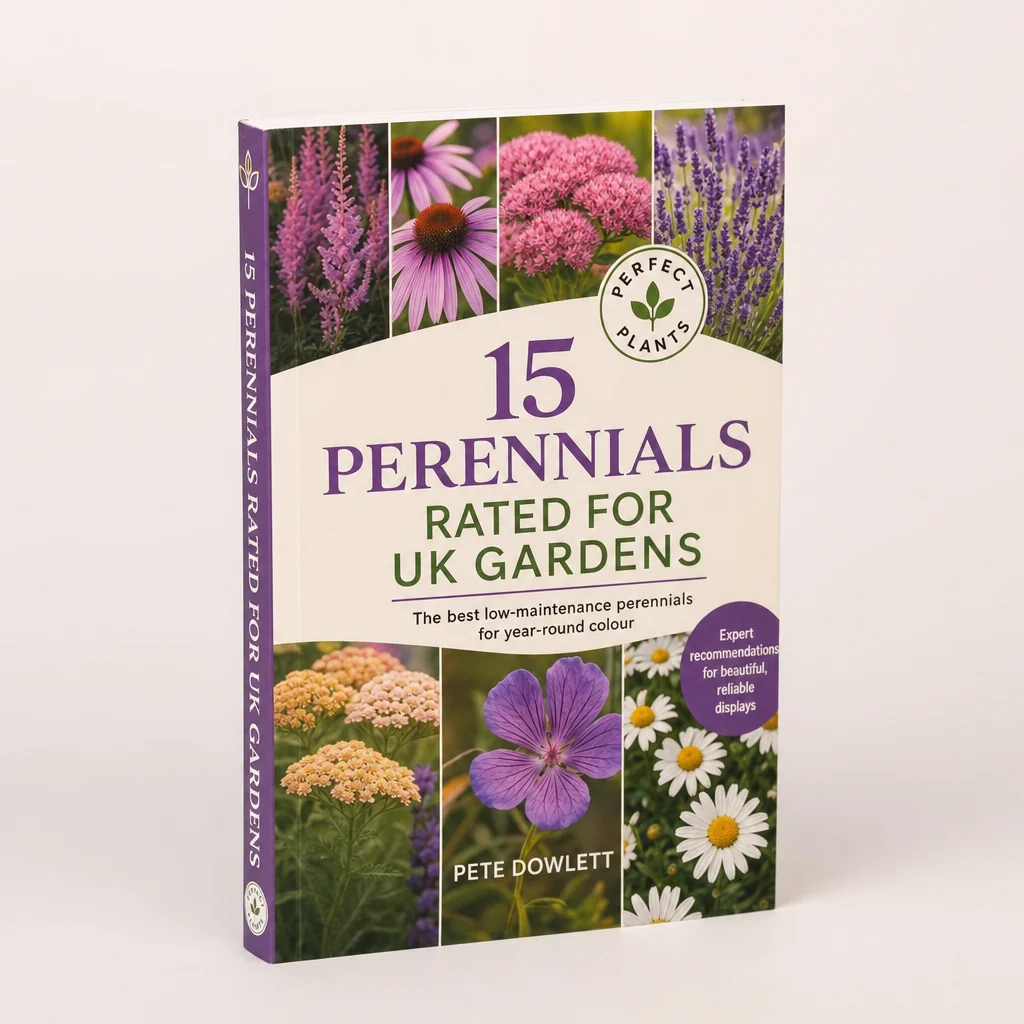
There is no single "best" perennial because gardens are not single things. They are sunny, shady, dry, damp, exposed, enclosed, newly planted, mature and occasionally home to a dog with very definite running routes. What follows is a practical starting list: fifteen useful plants with different strengths, all capable of forming part of a long-lived UK planting scheme.
1. Peony (Paeonia)
Peonies are the patient gardener's trophy plant. They flower in May and June, suit full sun to partial shade, and reach around 60–90cm in height. Bare roots are planted from November to March. Most importantly, a well-sited peony can live for up to 100 years, which makes it less a purchase and more a botanical inheritance.
2. Joe-Pye Weed (Eupatorium)
Joe-Pye Weed brings scale and wildlife value. It forms tall clumps with mauve flower heads that attract bees and butterflies, flowers in August and September, and can reach up to 150cm. This is a back-of-border plant with presence. Give it room rather than attempting to tuck it behind a low edging plant and hoping nobody notices.
3. Primula
Primulas are a cheerful early-season choice for moist soil and partial shade. They are particularly useful along woodland-style edges, beneath deciduous shrubs and in parts of the garden that naturally hold a little more moisture. Planting them in March sets them up for a gentle, naturalistic contribution rather than a shouty display.
4. Bergenia
Bergenia is one of those plants gardeners learn to appreciate after seeing it quietly survive conditions that have defeated much fussier things. It tolerates dry shade and works as evergreen ground cover, making it useful where a border needs reliable foliage as much as flowers. March is a sensible planting time.
5. Salvia
Salvias belong in a sheltered sunny border with well-drained soil. They are a fine choice where you want a flower-rich planting that feels light rather than bulky, and they can be especially useful in a pollinator-minded scheme. A mulch in the first winter is sensible in colder regions. They are rewarding, but not invincible.
6. Hosta
Hostas earn their place through foliage rather than chasing a brief floral moment. They suit shade to partial shade and appreciate rich, moist soil. Pot culture can be a practical option where slugs are a persistent problem, although no container should be mistaken for a diplomatic treaty with every snail in the neighbourhood.
7. Daylily
Daylilies suit full sun to partial shade and grow well in well-drained soil. They can be divided every three to four years to maintain vigour, which is useful both for refreshing a mature clump and for producing more plants for another part of the garden. April is a helpful month for getting them started.
8. Echinacea
Echinacea is a classic choice for a flower-rich summer border. Its strong, daisy-like form gives a planting rhythm and helps bridge the gap between softer meadow-style plants and more formal clumps. It is especially effective when allowed to repeat through a border rather than appearing once, isolated and slightly bewildered.
9. Rudbeckia
Rudbeckias bring bold late-season colour and are useful when a border needs to keep moving after the earliest summer flowers have faded. They work well with finer-textured companions, preventing the overall effect from becoming too uniform. Think of them as punctuation: generous, confident punctuation.
10. Agapanthus
Agapanthus offers a rounded, architectural flower form and sits comfortably in a sunnier scheme. It is worth remembering that it may need protection in colder UK regions, particularly in exposed northern gardens. This is one to place thoughtfully rather than assuming every corner of Britain offers the same winter arrangement.
11. Astrantia
Astrantia is a valuable choice for softer, more detailed planting and is especially useful in shadier parts of a garden. It has a refined look that works beautifully amongst foliage, ferns and other woodland-edge plants. In a mixed border, it often provides the delicate middle notes that stop bolder flowers from doing all the talking.
12. Kniphofia
Kniphofia brings vertical energy to a border. Its upright flowering form is useful where planting has become a little too rounded and polite. Use it to create contrast against mounded foliage or broad-flowered companions, and let the shape do the work rather than crowding it with too many equally dramatic neighbours.
13. Verbena bonariensis
Verbena bonariensis can reach 180cm, yet its airy stems allow it to weave through a planting rather than forming an opaque wall. It is excellent for height without heaviness and helps link low and medium perennials into a more layered picture. The effect is relaxed. The planning behind it need not be.
14. Achillea
Achillea offers flat-topped flowers that give a border a useful horizontal plane, contrasting with spires and rounded blooms. It can be vigorous, so it suits gardeners happy to keep an eye on the direction a clump is travelling. "Walk, creep, run" is not merely a proverb when a happy plant has decided the border next door also looks pleasant.
15. Hardy Geranium
Hardy geranium is a flexible, gap-filling perennial with an easy-going character. It is useful around the feet of taller plants, where it can soften bare soil and help a new border look more joined-up. Like Achillea, it can spread enthusiastically, so consider its eventual role before planting it in a very confined space.
Head-to-Head: How These Perennials Stack Up Against Annual Alternatives
Annual bedding has its place. It produces immediate colour, lets you change direction quickly and can rescue a bare patio pot with indecent efficiency. Biennials also have their uses, often bridging seasonal gaps and providing a different rhythm. But neither creates the same long-term framework as a perennial planting.
The central difference is not that one approach is superior in every situation. It is that each asks something different of you. Annuals ask for repetition: choosing, planting, watering, deadheading and replacing. Perennials ask for patience and a little early care. Once established, they can become the dependable architecture around which you add temporary seasonal flourishes if you fancy them.
| Garden question | Perennial planting | Annual bedding plants | Biennial planting |
|---|---|---|---|
| How long does it stay? | Returns from the root system over multiple years. | Designed for a single growing season. | Works across a two-year life cycle, then needs replacing. |
| First impression | Can look modest while roots establish. | Usually offers immediate, concentrated colour. | Often takes time before flowering strongly. |
| Display over time | Clumps can become fuller and more floriferous as they mature. | Starts again from the same point each year. | Has a set life cycle rather than a permanent border role. |
| Routine work | Early watering matters; later care is generally simpler. | Repeated watering, deadheading and seasonal replanting are common. | Requires planning ahead for the next stage of the cycle. |
| Wildlife contribution | Many choices, including Joe-Pye Weed, Salvia, Echinacea and Verbena, are valuable to pollinators. | Can provide flowers, but the planting is temporary. | Can help fill seasonal gaps, depending on the plants chosen. |
| Winter character | Roots remain alive; some plants leave seed heads or evergreen foliage. | Usually removed once the display finishes. | Varies with the plant and its stage in the cycle. |
The most successful gardens often use both strategies. Use perennials for the bones: the plants that give a border form, repeat and presence. Then use annuals sparingly in containers, gaps or places where a one-season burst of colour genuinely makes sense. You do not need to swear an oath against bedding begonias to appreciate the merits of a peony.
A practical mixed approach
Build the main border from perennials first. Once those clumps are established, add annuals only where they solve a specific problem: a newly created gap, a bare container, or a patch where you want to experiment with a colour before committing to it.
The Honest Truth: What Perennials Do Brilliantly and Where They Fall Short
Perennials are often sold as the effortless answer to gardening. That is overselling it. They are lower maintenance after establishment, not maintenance-free. They will not correct unsuitable soil, shade themselves in a blazing border, or convince slugs that a hosta is suddenly unappetising. Still, their strengths are substantial, especially when you work with their natural habits rather than against them.
What they do brilliantly
- They offer years of return from one planting rather than a single-season display.
- Roots survive underground through winter even when the top growth disappears.
- Mature clumps can produce fuller foliage and more flowers year by year.
- Many choices are excellent for bees and butterflies, including Joe-Pye Weed, Salvia, Echinacea and Verbena.
- They provide a broad range of heights and shapes, from ground-covering Bergenia to tall Verbena bonariensis.
- Hosta, Astrantia and Bergenia can bring useful planting options to shade.
- Mature clumps can often be divided, helping fill gaps or supplying plants to friends and neighbours.
- Peonies offer extraordinary longevity, with the potential to live up to 100 years.
Where they need realism
- The first-year display can be restrained whilst a plant puts energy into roots.
- Vigorous plants such as Achillea and hardy geranium may need managing in a compact border.
- New plants need watering through dry periods as they settle in.
- Agapanthus can need protection in colder regions or exposed northern sites.
- Hostas are famously tempting to slugs and snails, particularly in wet spring weather.
- Woody-based Salvias need sensible cutting back rather than indiscriminate pruning.
- Not every perennial suits every position, regardless of how persuasive it looked at the garden centre.
That final point matters more than it sounds. A perennial is not a generic unit of "garden plant". It has preferences. Primulas suit moist soil and partial shade. Salvias want shelter, sun and drainage. Hostas appreciate rich, moist conditions. Daylilies suit full sun to partial shade and well-drained soil. Matching plant to place is the least glamorous gardening advice in existence, which is probably why it remains true.
If you want an instant block of colour for a summer party, annual bedding may still be the better tool. If you want a border that grows more convincing with each passing season, perennials are hard to beat. They are a patience investment. The gardeners who enjoy them most are not necessarily the most experienced; they are simply the ones willing to plan beyond the first photo.
Performance Across the Seasons: How These Plants Work in UK Conditions
A perennial scheme earns its keep by handing interest from one season to the next. This does not mean every plant flowers constantly. No plant should be expected to perform like a small municipal fireworks display. Instead, the aim is overlap: foliage here, early flowers there, taller stems arriving later, seed heads and evergreen leaves holding the scene together when summer has moved on.
The bars below are a practical indication of where this group of fifteen is strongest when used together as a mixed garden scheme. They describe the collective planting, not a promise that any single plant will cover every season or condition.
Spring is where primulas, bergenias and peonies begin to define the mood. Primulas bring colour to moist, partially shaded spaces; Bergenia contributes robust evergreen ground cover; peonies then arrive in May and June with the sort of bloom that makes visitors assume you have been far more organised than you actually have.
Summer is the fullest period. Salvias, daylilies, hosta foliage, Echinacea, Rudbeckia, Agapanthus, Astrantia, Kniphofia and Verbena can all play a part. The trick is variety of form. Use broad hosta leaves against finer Astrantia detail. Let upright Kniphofia break through lower planting. Thread Verbena bonariensis through the middle and back of the border. Pair the more emphatic flowers with softer foliage so the scene feels abundant rather than crowded.
Late summer is where Joe-Pye Weed earns its space. Its tall clumps and mauve flower heads have considerable appeal to bees and butterflies, while its height prevents the back of the border from simply fading away after the earlier flowers finish. Verbena also helps maintain vertical movement at this point, making a garden look lively even when many plants are beginning to slow down.
Use seasons as a design tool. Rather than choosing fifteen plants you like individually, choose plants that take turns. A border with a handover plan always looks more considered than one where every flower has been asked to perform in June.
Planting Calendar: The Month-by-Month UK Guide to Getting Started
The best time to plant is often when you have a free afternoon, decent soil conditions and the determination not to put it off for another fortnight. But if you are planning a new perennial border in the UK, March and April are especially useful starting points. They give plants a chance to establish before the main growing season gets into its stride.
March: start with reliable foundations
Primulas for moist, partially shaded edges
March is a suitable month for primulas. Use them where soil remains moist and light is softened: woodland-garden edges, beneath deciduous trees or alongside paths that receive only part-day sun. They are particularly helpful where you want spring colour without forcing a sunny-border plant into reluctant shade.
Bergenia for sturdy, evergreen ground cover
Also plant Bergenia in March. It tolerates dry shade and makes a dependable evergreen ground cover, which is useful around shrubs, along awkward edges and in spots where bare soil has become a recurring visual problem. Give it enough room to establish, then let its foliage do some quiet, reliable work.
Salvias for sheltered, well-drained borders
Plant Salvias in a sheltered sunny border with well-drained soil. Their first winter deserves a little thought in colder areas, where a mulch can offer added protection. Resist the temptation to put them in a cold, wet corner simply because it happens to be empty. Empty is often trying to tell you something.
April: expand into foliage and summer colour
Hostas for rich, moist shade
April is a good planting month for hostas. Choose shade to partial shade and rich, moist soil. Their foliage brings a sense of generosity to a border, particularly where flowering plants are less reliable. Consider growing them in pots if slug pressure makes the ground border feel like an all-inclusive buffet.
Daylilies for sun or partial shade
Daylilies can also go in during April. They suit full sun to partial shade with well-drained soil. As clumps mature, divide them every three to four years to maintain vigour. That division is one of the pleasant practicalities of perennial gardening: a healthy plant can become more than one plant without another trip to the nursery.
Establishment-year routine
Water newly planted perennials regularly during dry spells, especially in dry springs and summers. The aim is not to fuss indefinitely; it is to help roots reach into the surrounding soil. A plant that establishes well is far more likely to become the low-maintenance resident you hoped for.
When planting a whole border, start with the larger structural plants and work down. Tall Joe-Pye Weed and Verbena belong toward the back or through a deep border. Mid-height flowering plants build the main display. Lower Bergenia, hardy geranium and foliage plants can soften the front and fill transitions. Avoid arranging every plant in single-file ranks. Nature rarely does, and your border need not either.
Leave a little room between plants even if the border looks sparse at first. This is one of the hardest things to do when planting day arrives. A newly planted bed can look as though somebody forgot half the order. Yet crowding perennials for instant fullness makes later maintenance harder and prevents each plant from becoming the shape it is meant to be. The garden will fill. That is, after all, the plan.
How to Build a Border That Does Not Run Out of Steam
A list of good plants is useful. A border that works is better. The difference lies in arrangement: height, repetition, foliage contrast and an honest reading of your garden's conditions. Before planting, stand where you are likely to look at the border most often. From the kitchen window? The patio chair? The path you rush down in the rain? Design for that view first.
Start with the backbone. In a sunny border, use height-makers such as Joe-Pye Weed, Kniphofia or Verbena bonariensis to create vertical interest. These establish a skyline. Then add medium-level flowering plants such as Echinacea, Rudbeckia, Salvias and daylilies. Finally, use lower planting and foliage to stitch the scheme together. Hardy geranium and Bergenia are useful for this joining-up work, while hostas and Astrantia can shape a shadier section.
Repeat plants rather than using every variety once. Three smaller groups of the same plant often look calmer and more convincing than fifteen unrelated specimens arranged like a garden-centre treasure hunt. Repetition tells the eye that there is a plan. It also makes a mixed planting feel generous when individual flowers are between peaks.
Foliage is the bit people forget until they have had a border that flowers brilliantly for three weeks and then looks like a badly attended meeting. Hostas provide broad leaves in shade. Bergenia offers evergreen ground cover. The fine, airy form of Verbena can float through chunkier planting. Pair contrasting leaves and flower shapes deliberately. It is the contrast that makes each plant more visible.
Finally, allow for management. If a plant has a reputation for moving, place it where it has room to do so or where you can lift and divide it without dismantling the entire border. A vigorous hardy geranium can be a marvellous ground cover. It is rather less marvellous if it has swallowed the small plant you were trying to protect beside it.
Common Questions About Plants That Return Every Year
Many perennials spend their first year establishing roots. The "sleep, creep, leap" pattern is a useful expectation: modest first-year growth, a stronger second season and a more substantial third-year display. It is not a fault in the plant. It is the plant doing the underground work first.
Many do. Their top growth dies back whilst the roots remain alive underground, then fresh growth emerges when spring temperatures rise. This is why a bare patch in winter should not automatically be treated as an empty planting space.
Hostas, Astrantia, Bergenia and primulas are all useful starting points for shadier conditions. Hostas suit shade to partial shade and rich, moist soil. Primulas like moist soil and partial shade. Bergenia tolerates dry shade, which makes it particularly handy in difficult spots.
No. They are often lower maintenance after establishment than plants requiring seasonal replacement, but new plants need watering and some need specific care. Salvias benefit from correct cutting back, Agapanthus may need protection in colder places, and hostas demand a watchful eye where slugs and snails are active.
Many mature clumps can be divided. Daylilies, for example, can be divided every three to four years to maintain vigour. Division is useful for refreshing a planting, filling a gap elsewhere or passing a piece of the garden on to somebody else.
GardenScout Verdict
If you want immediate, uniform colour for one summer, annual bedding still has an obvious role. But if you want a garden that develops character rather than restarting every spring, perennials are the more satisfying long-term choice.
Start with a few plants suited to your actual conditions: primulas and hostas for moist shade, Bergenia for dry shade, Salvias for sheltered sunny drainage, daylilies for flexible sunny-to-part-shaded positions, and taller plants such as Joe-Pye Weed or Verbena for structure. Water well in the establishment phase, resist overcrowding, and give the garden time to do what perennials do best: come back stronger.