
The Best Weed Burners and Thermal Weeders for Chemical-Free Paths
A clear-eyed look at electric hot-air weeders and propane flame torches for patios, drives and paths — plus the safety habits that matter far more than brute force.
Why Chemical-Free Weed Control Is Winning Over UK Gardeners
September is a slightly awkward month for path weeds. The explosive spring rush has passed, but there is still enough warmth and moisture around for seedlings to keep appearing in every crack between the slabs. They have a gift for choosing the exact joint you swept last weekend. Rude, really.
For more and more UK gardeners, the answer is no longer a bottle of herbicide. Glyphosate-free gardening has moved from a niche preference to a very ordinary part of looking after a home and garden. Public spaces have helped to normalise that shift too: councils and land managers increasingly look for ways to reduce chemical herbicide use around paths, play areas and planted streets. At home, the appeal is straightforward. You can deal with a weed without storing, mixing or spraying a chemical product near pets, children, drains or the vegetables you plan to eat later.
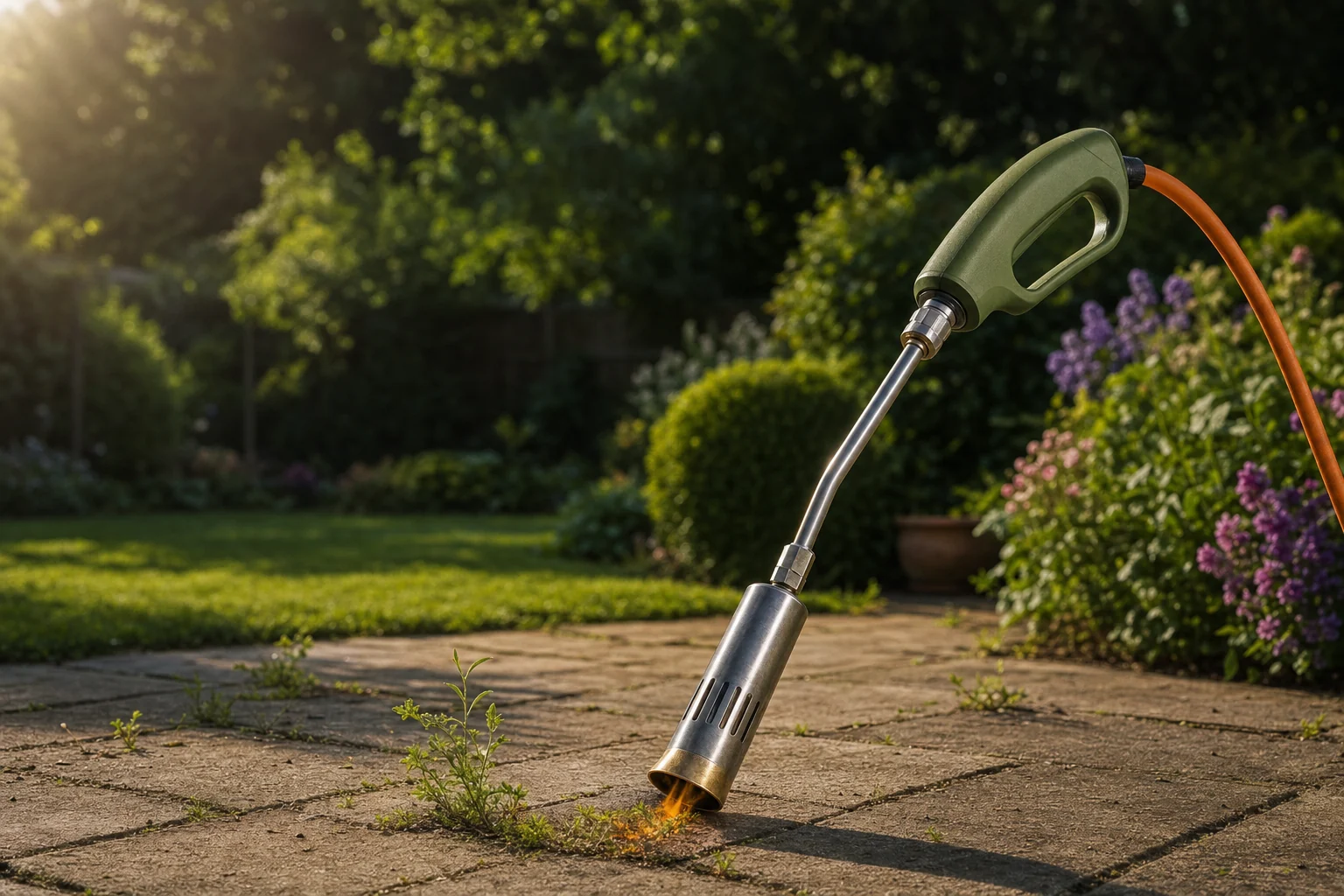
Thermal weeding is one of the simplest alternatives. A weed burner does not need to turn a dandelion into a tiny bonfire. In fact, that is the wrong target altogether. The useful bit happens when intense heat superheats the moisture inside the plant's cells. Those cells rupture, and the plant loses the ability to function. The leaves may still look green immediately afterwards, which can feel deeply unsatisfying if you were hoping for instant drama, but they should wilt and die back over the following days.
The important bit: cook, don't char
A brief pass of roughly one to two seconds is normally enough for small weeds. You are aiming for a thermal shock, not an incineration. The latter wastes fuel or electricity, increases the chance of damaged paving and is much more likely to start an argument with dry leaves nearby.
There are two very different tool families wearing the same "weed burner" label. Corded electric models are essentially long-handled hot-air guns. The electric weeders here run from a UK mains supply, draw 2,000W and produce hot air at up to 600°C or 650°C. They are controlled, comparatively quiet and a sensible fit for routine work around patios.
Gas models are proper open-flame propane torches. Their outputs are quoted in BTU and, in the more muscular examples, run from 800,000 BTU to 2,400,000 BTU. Flame temperatures vary significantly by model: the PyroScorc reaches 3,200°F, the QUANIE 1,200,000 BTU reaches 3,600°F, and the highest-output QUANIE exceeds 4,000°F (approximately 2,200°C). That is a different category of machine, and it deserves a different level of respect.
Thermal weeding works best on young, actively growing weeds. Established perennial weeds may need repeat treatment because heat damages top growth more readily than a deep, persistent root system.
Gas vs Electric: The Fundamental Choice Before You Buy
Before getting lost in nozzles, hoses and the frankly rather theatrical BTU figures, decide what sort of problem you are trying to solve. A small paved courtyard and a long gravel drive might both have weeds, but they do not need the same tool. One needs a steady hand and a reachable socket. The other may need mobility, speed and an increasingly sensible attitude to fire safety.
Electric hot-air weeders: the civilised option for regular jobs
Electric thermal weeders plug into a 230–240V, 50Hz UK supply and draw 2,000W. Their hot air reaches 600°C or 650°C, depending on the model. There is no open flame, which makes them feel much closer to a powerful heat gun than a blowtorch. That distinction matters on patios, around edging, beside timber features and wherever you would rather not introduce a naked flame into the conversation.
The practical limitation is the lead. The electric models covered here have cables from about 1.65m to 2m long. On a small terrace close to the house, that is manageable. On a driveway, it is almost certainly an extension-lead job. Use one suitable for outdoor work, keep connections dry and route it behind you rather than across the bit you are walking over. Tripping over a live cable whilst holding a 650°C tool is not a character-building garden moment.
Gas flame weeders: fast, mobile and far less forgiving
Propane weed burners attach to a gas cylinder and deliver an open flame through a torch head. The PyroScorc produces 800,000 BTU, the Flame King 340,000 BTU, and QUANIE models reach 1,200,000 BTU and 2,400,000 BTU. Those are extraordinary levels of heat for domestic path maintenance. They can clear wide gravel areas swiftly and let you work well beyond the reach of a mains socket, but speed is only an advantage if you can control it.
A gas burner also means managing a cylinder and hose. That is more kit to move around, but true cord-free mobility is a genuine benefit on a long drive, a large allotment path or a remote part of the garden. The PyroScorc has a 3m hose; the high-output QUANIE has a 3m hose, too. The Flame King comes assembled with a 1.8m hose. You need a clear, stable place for the cylinder and enough room to avoid dragging the hose across plants, furniture or the neighbour's carefully positioned solar lights.
| Consideration | Electric hot-air weeder | Gas propane torch |
|---|---|---|
| Heat delivery | Hot air at up to 600°C or 650°C | Open flame, with outputs from 340,000 BTU to 2,400,000 BTU |
| Mobility | Tethered to mains power; an extension lead is often needed outdoors | Mobile within the reach of the hose and propane cylinder |
| Best everyday setting | Patio slabs, paving joints and controlled work near the house | Large gravel areas, broad hardstanding and remote paths |
| Fire risk | Lower, but hot air and a hot nozzle still require care | Higher, because the tool uses a live flame |
| Secondary uses | Some models double as heat guns for practical household tasks | Some models are also used for ice melting and outdoor pest control |
Choose electric if control is your priority
For routine weed control around patios, paving and the immediate area outside the house, electric hot air is the calmer and easier route.
Choose gas if coverage is your priority
For a substantial gravel drive or a path well away from electricity, a propane torch has the reach and pace that a corded tool cannot match.
Neither is a wet-weather shortcut
Work in dry, calm conditions. Water, wind, loose debris and hot tools are an unhelpful combination, whichever technology you choose.
Electric Weed Burners Reviewed: Four Models Put to the Test
Electric weed burners are not glamorous. That is part of their charm. Plug one in, let it heat for around a minute, make a slow pass over the weeds and get on with the rest of the gardening. No cylinder to connect, no pilot flame, no sudden sense that you have accidentally become the groundskeeper at an industrial estate.
ToolTronix 2000W Electric Weed Killer Hot Air Burner
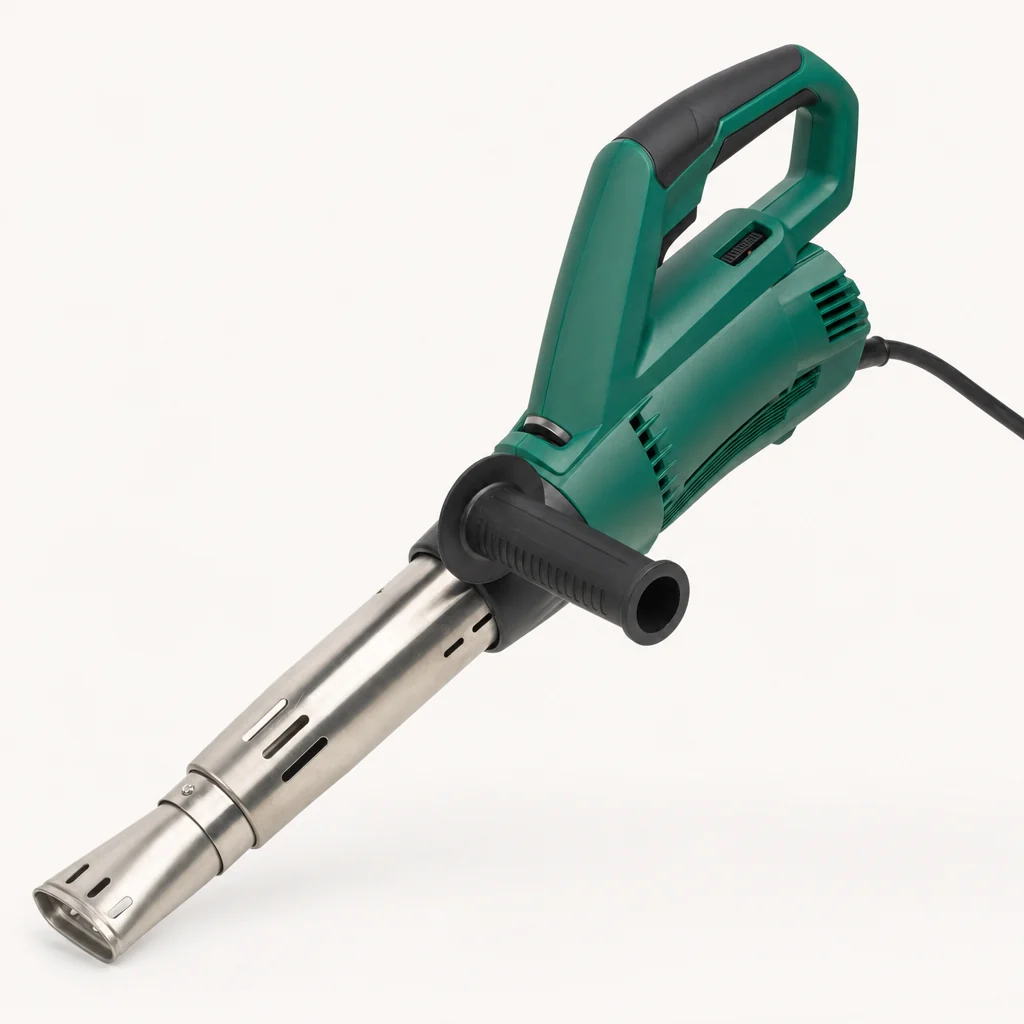
The ToolTronix is the electric model I would place first for a typical UK patio or modest drive. It runs at 230–240V and 50Hz, with 2,000W of power and two heat settings: 50°C and 600°C. That lower setting is useful when you want a gentler approach around patios and decking; the higher setting is for concrete, soil and the weeds that have become a little too pleased with themselves.
Its single cone-shaped nozzle directs the heat well, which is exactly what you want when aiming into paving joints rather than warming the general atmosphere. The handle detaches, turning the unit into a handheld heat gun for tight spaces and non-gardening jobs. It can be used for paint removal, soldering terminals, drying adhesives, defrosting icy steps and disinfection. That does make it a more useful bit of kit than a one-job garden gadget.
What works well
- Two heat settings give you more control than a single-temperature tool.
- Detachable handle adds useful heat-gun versatility.
- Cone nozzle focuses hot air neatly into cracks and joints.
Keep in mind
- The short cable is likely to need an outdoor extension lead on a drive.
- It still needs roughly a minute to heat up before work begins.
Draper Expert 230V Weed Burner
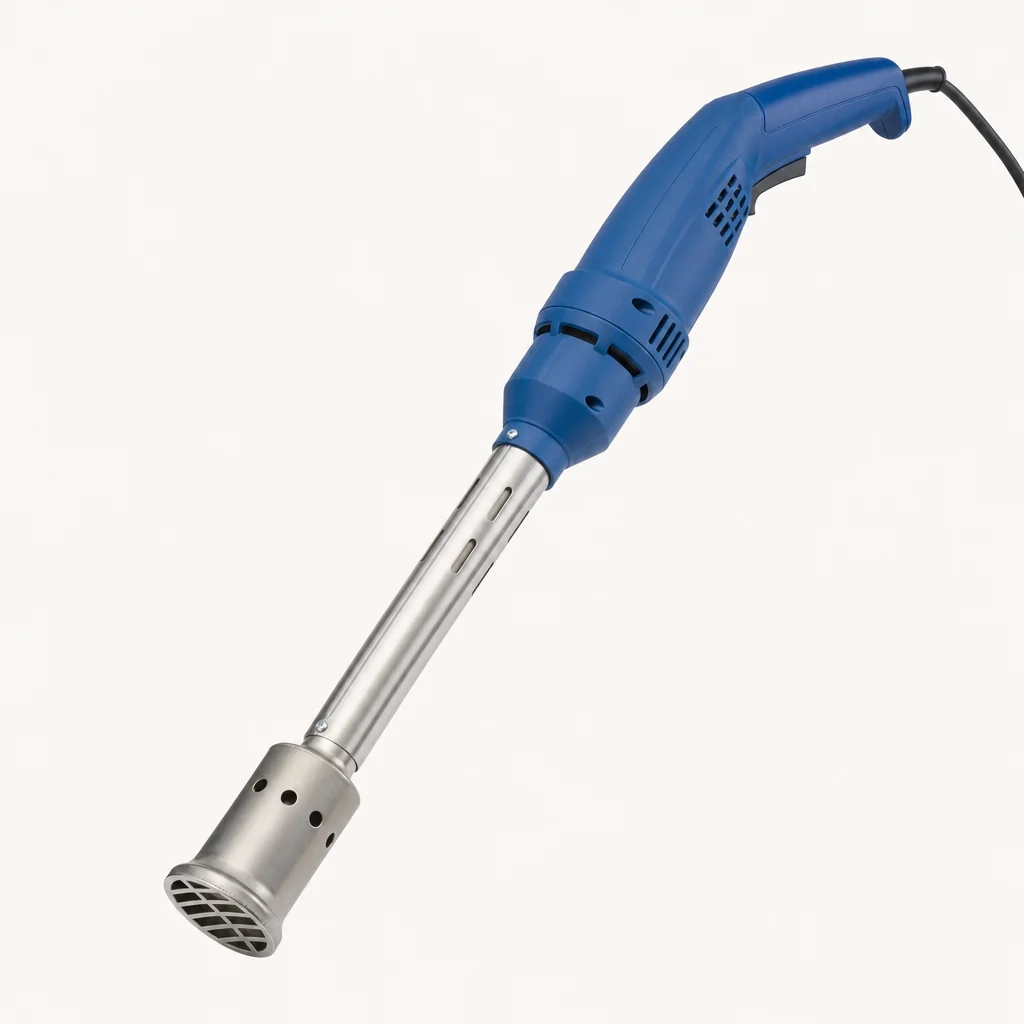
The Draper Expert 230V Weed Burner is very close in spirit to the ToolTronix: a straightforward electric solution for people who want to remove weeds rather than take up a new hobby involving propane connections. Its approximately 1kg working weight keeps it comfortable for a session around a patio, and its 1.7m cable offers a fraction more reach than the ToolTronix.
The standout feature is also one of the least flashy: a stand that keeps the hot nozzle off the ground when you rest the tool. It is genuinely useful. Every hot-air weeder needs a place to go when you pause to move a pot, answer the door or investigate why the dog has suddenly become extremely interested in the hedge. A proper stand prevents accidental scorch marks and avoids balancing a hot tool in a way that would make a health-and-safety officer quietly sit down.
Draper also provides a two-year parts warranty and one-year labour warranty. That is welcome reassurance for a tool with a heating element and mains connection, particularly if it will spend part of the year in the shed.
Electric Thermal Weeding Stick, 650°C
The orange 650°C thermal weeding stick is the sturdier, higher-temperature electric choice. It runs at 230V and 50Hz, draws 2,000W and has 60°C and 650°C settings. That additional 50°C at the top end is not a reason to linger over a weed for longer, but it does make it a capable option for more stubborn growth in hard paving joints.
The 2m cable is the longest in this electric group. It sounds like a tiny difference, and it is — until you are one slab short of where you need to reach. It also feels solid in use, which matters when you want to keep the nozzle steady and accurately positioned. For gardeners who want a more substantial electric tool for frequent hard-surface maintenance, this is the one that makes the strongest case.
Garden Gear 2000W Electric Weed Burner Hot Air Torch, 5-in-1
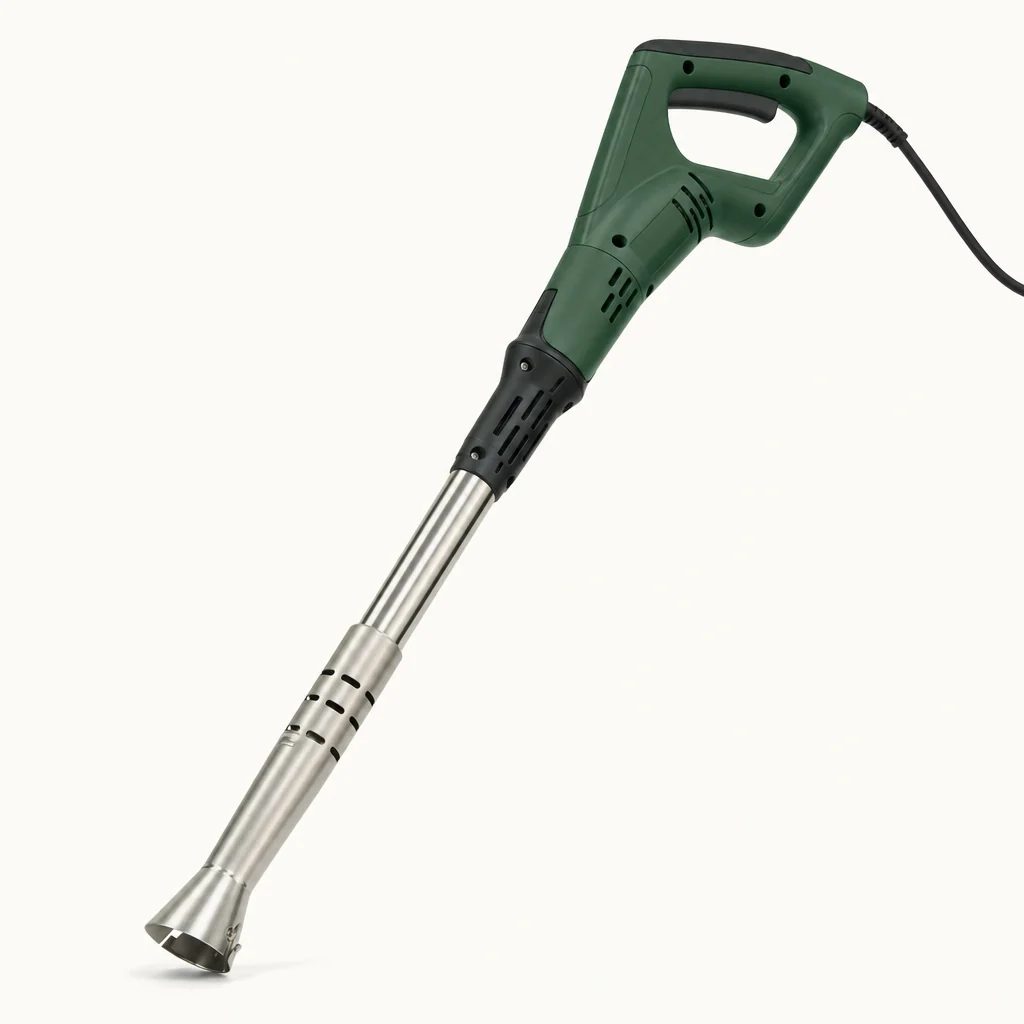
The Garden Gear 5-in-1 offers 2,000W of power, 60°C and 650°C settings, and a 1.8m cable. Its selling point is the collection of five attachments, giving it broader heat-gun duties beyond path weeds. That flexibility will appeal if you like tools that earn their storage space.
For pure weed control, though, the attachments are not as effective at concentrating the heat as a more focused cone arrangement. It will still deal with small weeds, particularly when you use a deliberate, slow pass, but it is better viewed as a multipurpose hot-air tool that also weeds rather than a dedicated thermal weeding specialist.
My electric pick
The ToolTronix is the strongest all-round choice for focused patio and paving work. Choose the 650°C thermal weeding stick if you want the longest cable of this group and a notably sturdy feel. The Draper earns its place on the shortlist for its sensible resting stand and warranty support.
Gas and Propane Flame Weeders Reviewed: Four Heavy-Hitters Compared
Gas weed burners are extremely effective, but they are not simply bigger electric weeders. A 2,400,000 BTU torch has vastly more heat available than anyone needs for a couple of weeds beside the bird table. These are tools for large, open hardstanding where the operator can keep clear of combustibles and treat the task with the same concentration they would give to any live-flame equipment.
PyroScorc Weed Burner Torch
The PyroScorc is the most approachable gas option in this group. It produces an 800,000 BTU flame at 3,200°F, attaches to standard propane tanks and reaches operating temperature in around 10 to 15 seconds. Its adjustable shaft changes from approximately 64cm to 94cm, and the 3m hose gives welcome space between operator and cylinder.
One-handed trigger operation makes it easier to regulate the job rather than leave the flame running whilst you reposition yourself. It is compatible with standard propane tanks, including smaller disposable cylinders and larger refillable tanks with standard threaded connections. The important technique remains exactly the same as with electric tools: pass the flame over the weed briefly, then move on. The cell damage does the work; you do not need to reduce every tuft of grass to ash.
QUANIE 2,400,000 BTU Weed Burner
The high-output QUANIE is the outright power champion. Its 2,400,000 BTU output and maximum temperature exceeding 4,000°F put it in a different league from the domestic-scale Flame King. It has an approximately 82cm torch, a 3m hose and a flame valve that adjusts from a pilot flame to full blast. The alloy-steel construction and brass nozzle are designed to resist bending, while the push-button turbo trigger provides ignition.
In practical terms, that capacity means extremely rapid weed treatment across broad open ground. It also means the margin for error gets very small. A hot, dry gravel drive in midsummer is not the moment for full output. Nor is a patio close to timber furniture, plastic edging, dry planting or a fence that has seen better decades. This is a serious tool for very large, clear areas and operators who are calm, experienced and happy to work methodically rather than theatrically.
Flame King 340,000 BTU Weed Burner
The Flame King is the modest gas choice, if a 340,000 BTU open flame can ever be described as modest without raising an eyebrow. Its lower output makes it the more controllable option for homeowners who want propane mobility without the intimidating heat levels of the largest QUANIE torches.
It arrives assembled with a 1.8m hose, an integrated piezo igniter and a safety lever valve intended to prevent accidental flame surges. It works with propane tanks from approximately 2.3kg to 45kg. With a 9kg tank, it offers more than 30 minutes of continuous runtime. Its steel construction is robust, and it is also intended for other outdoor thermal jobs including ice melting and pest control.
QUANIE 1,200,000 BTU Propane Torch
The 1,200,000 BTU QUANIE is a halfway-house only in the sense that it has half the output of its 2.4 million BTU sibling. It is still enormously powerful. It reaches up to 3,600°F, has a 3m hose with a CSA certification mark and uses a flint igniter. At full output it can turn weeds to ash in seconds, though that is not a technique I would recommend as standard practice around domestic paving.
Its appeal is obvious on broad, open gravel, where the operator needs speed and can maintain a safe exclusion zone. Its weakness is the same as every very high-output torch: it is easy to apply more heat than the job requires. If you are new to flame weeding, the more restrained Flame King or a hot-air electric model is a kinder place to start.
Head-to-Head: How All Eight Models Stack Up
There is no single "best" weed burner because the surface changes everything. An electric tool that feels perfectly capable on a paved terrace can feel slow on a long gravel drive. Conversely, a high-output propane torch may be magnificent on open gravel and wildly unsuitable near a dry border. The table below focuses on the details that make a real difference when choosing.
| Model | Type | Stated heat or output | Cable or hose | Useful distinguishing feature |
|---|---|---|---|---|
| ToolTronix 2000W | Electric hot air | 2,000W; 50°C / 600°C | About 1.65m cable | Detachable handle and focused cone nozzle |
| Draper Expert 230V | Electric hot air | 230V operation | 1.7m cable | Stand keeps hot nozzle off the ground; two-year parts warranty |
| Electric Thermal Weeding Stick | Electric hot air | 2,000W; 60°C / 650°C | 2m cable | Sturdy build and longest electric cable here |
| Garden Gear / Qdreclod 5-in-1 | Electric hot air | 2,000W; 60°C / 650°C | 1.8m cable | Five attachments for multipurpose use |
| PyroScorc | Gas flame | 800,000 BTU; 3,200°F | 3m hose | Adjustable shaft and one-handed trigger |
| QUANIE high-output | Gas flame | 2,400,000 BTU; over 4,000°F | 3m hose | Adjustable flame valve and turbo trigger |
| Flame King | Gas flame | 340,000 BTU | 1.8m hose | Piezo ignition and safety lever valve |
| QUANIE 1,200,000 BTU | Gas flame | 1,200,000 BTU; up to 3,600°F | 3m hose | Flint igniter and high-output flame |
Small patio gardener
Choose an electric tool. ToolTronix, Draper and the 650°C thermal stick all provide controlled heat for paving joints close to home.
Long gravel drive owner
Choose gas, but use it cautiously. PyroScorc offers serious reach without jumping straight to the highest outputs.
One tool, several jobs
ToolTronix and the Garden Gear/Qdreclod 5-in-1 make sense if you also want a heat gun for practical household tasks.
Surfaces, Scenarios and Which Technology Wins Where
Most thermal-weeding disappointment comes from using the right tool in the wrong place. Heat is wonderfully effective on weeds, but hard surfaces are not all equally tolerant. Before choosing, look at what is below the weed as carefully as the weed itself.
Block paving and tarmac driveways
Block paving generally responds well to both technologies. Weeds in the joints are easy targets, and the blocks can cope with a brief, moving pass. Gas burners are fast here, particularly on a large open drive, but an electric hot-air tool is easier to control around edges, drains and parked cars.
Tarmac deserves more caution. Very high flame temperatures can scorch it or contribute to surface damage, especially where it is already soft, aged or cracked. A 600°C or 650°C electric weeder is the safer option for tarmac, used briefly and kept moving. It may take a little longer, but replacing damaged tarmac is not an especially rewarding way to spend a Saturday.
Patio slabs and flagstones
For patio slabs, electric is the clear favourite. Hot air at 600°C or 650°C is ample for weeds in joints without introducing an open flame beside furniture, pot feet, timber structures and dry debris. This is particularly sensible with frost-weakened slabs or old flagstones, where a fierce flame could create rapid thermal expansion and unnecessary stress.
Gravel and loose-stone paths
Gravel is where gas models show their advantage. There is no tarmac surface to scorch, and an open, clear gravel area allows you to cover ground quickly. The PyroScorc's 800,000 BTU output is sufficient for this sort of work. The QUANIE models are faster still, but their power makes close control more demanding. Remove dry leaves, twigs and accumulated organic material first; gravel itself does not burn, but the things caught in it absolutely can.
For September maintenance, treat young weeds now whilst they are small and before they seed. Then sweep joints clean. Removing soil, moss and leaf litter makes every future thermal treatment quicker and safer.
Fine paving joints
A focused electric nozzle is easier to direct accurately and less likely to heat the surrounding surface unnecessarily.
Open gravel
Gas offers the best pace, provided the area has been cleared of dry combustible material and wind is calm.
Warm, dry tarmac
Choose electric and use the shortest effective pass. Very high-output gas flames are a poor match for vulnerable bitumen surfaces.
Safety First: The Non-Negotiable Rules for Using Weed Burners in the UK
A weed burner is one of those garden tools that rewards restraint. The job looks simple because it is simple, but it is still heat applied at a level most household gardening jobs never approach. The safe method is not complicated. It just needs to be followed every single time, including when you only want to deal with "that one annoying weed by the gate". Especially then.
Never treat dry conditions casually
Do not use a gas torch during a prolonged dry spell or when a UK Met Office Fire Risk warning is in place. Treat electric models with extreme caution in the same conditions. A high-output propane torch on a tinder-dry gravel drive is not efficient gardening; it is a genuinely dangerous fire risk.
Start with the weather. Choose a calm, dry day. Wind can push hot air or flame into borders, under fences and towards combustible debris. Rain creates a different set of problems, particularly with mains electricity. Avoid both. September often brings a useful mix of damp mornings and calmer afternoons, so wait for the surface to dry and work when the breeze has dropped.
Next, clear the treatment zone. Sweep away dry leaves, twigs, paper, mulch, spilled compost and grass clippings. Move pots, garden furniture and anything plastic. Look carefully at the base of fences, shed walls, hedges and climbers. A weed in a paving crack may be the only thing you intend to heat, but heat does not always stay politely where you put it.
Wear sturdy closed shoes and long trousers. Keep children and pets inside or well away from the work area. Have water immediately available, not somewhere in the shed behind three bags of compost and a folding chair. For a gas burner, make sure the propane cylinder is upright, stable and positioned so the hose cannot be snagged or pulled.
Use the contact-not-incineration method
Move at a slow walking pace and give each small weed a brief one-to-two-second pass. For larger weeds, warm the leaves methodically rather than holding the nozzle or flame on the crown. A good quick check is the thumbprint test: after the leaves have cooled, press one between finger and thumb. If it leaves a dark imprint, the cells have been damaged. It does not need to look burnt.
Do not immediately retreat the same weed simply because it remains green. Give the heat time to work. With annual weeds, top growth should collapse over the next few days. Perennials may regrow and need another pass, but that is still better handled as repeat light treatments than one prolonged blast.
Work only in suitable conditions
Skip windy days, wet weather and prolonged drought. A calm, dry surface is the sensible window for either hot air or flame.
Keep water ready
Have a hose, watering can or other immediate water source ready before starting. Do not rely on good intentions and a distant outdoor tap.
Allow the tool to cool safely
Electric nozzles remain hot after switching off. Rest them on their stand where supplied, or on a non-combustible surface away from feet and plants.
Check the area before leaving
Walk the route once more after finishing. Look for smouldering debris, warm dry matter or anything that has begun to singe.
For electric models, inspect the cable before use and ensure any extension lead and connection are suitable for outdoor conditions. Keep joins raised off wet ground where possible. For gas tools, inspect the hose and connections before lighting, use the ignition system as intended and turn the gas off completely when finished. Let the torch cool before storing it.
Finally, do not use thermal weeders near fuel, gas cylinders other than the one safely connected to the tool, dry thatch, compost heaps, sheds packed with timber, or vegetation that you cannot confidently keep clear. There are plenty of jobs in the garden where a little improvisation is harmless. Open-flame weeding is not one of them.
Getting Better Results Without Reaching for Chemicals
Thermal weeding works best as part of a routine rather than a once-a-year battle. The aim is to catch weeds when they are tiny, before roots strengthen and before seed heads turn one missed plant into a whole new paving-joint neighbourhood.
Right now, in early September, clear visible seedlings from paths and drive edges, then sweep thoroughly. That clean-up matters. Dust, leaf mould and moss collect in paving joints, creating the miniature seedbed that weeds need. Less debris means fewer places for seeds to lodge. It is not exciting work, but neither is repeatedly frying the same weed family every fortnight.
Come late autumn, keep fallen leaves off paths and gravel. Damp leaf litter feeds moss and makes joints hospitable. Next spring, start early. A quick thermal pass over tiny seedlings is faster, safer and more effective than tackling mature weeds after they have developed deep roots and a robust sense of entitlement.
GardenScout verdict
For most UK patios, paving joints and ordinary domestic paths, an electric hot-air weeder is the best place to start. The ToolTronix is the strongest all-rounder thanks to its two heat settings, focused nozzle and detachable heat-gun handle. The Draper is particularly appealing if its nozzle-resting stand and warranty support matter to you, whilst the 650°C thermal weeding stick brings a sturdy build and the longest cable of the electric group.
Choose gas only when you genuinely need its mobility and wide-area pace. The PyroScorc is the sensible entry point for larger open surfaces. Flame King offers a more manageable gas output for homeowners. The high-output QUANIE models are undeniably capable, but their immense heat is best reserved for very large, clear areas and users who understand that the safest pass is still a brief one.
Whichever route you take, remember the golden rule: heat the weed, do not set out to burn it. A calm day, a cleared surface, a short moving pass and a bucket of water nearby will do more for safe chemical-free weed control than any heroic blast of flame.