
How to Plant a Container Pond and Attract Wildlife
A complete guide to building a thriving wildlife pond in a tub — even if all you have is a corner of a patio, balcony or courtyard. No digging, no plumbing degree, and no half-acre lawn required.
I'll be honest with you: for years I assumed a wildlife pond was something you needed a proper garden for. A big spade, a rubber liner the size of a picnic blanket, and a weekend spent up to your knees in mud. Then I built my first container pond in an old glazed pot on a tiny paved courtyard, and within a fortnight I had pond skaters skating, a blackbird bathing, and — genuinely — a frog. In a pot. On a patio. That was the moment I stopped believing you needed acreage to bring water and life into a garden.
This guide is the article I wish I'd had back then. I'm going to walk you through exactly how to plant a container pond, which plants earn their place, how to make it irresistible to frogs, birds, bees and insects, and — because GardenScout is a review site at heart — I'll take you through the three ready-made "no dig" kits that make the whole job a great deal easier if you'd rather not improvise with a bucket. Whether you're going fully DIY or buying a purpose-built nature pool, everything here applies.
The beautiful thing about a container pond is that it's the single most effective wildlife feature you can add per square foot. Nothing else — not a bug hotel, not a wildflower patch, not a bird feeder — pulls in as much varied life as water does. And in a tub, it's achievable for practically everyone.
Why a Container Pond Is the Best Small-Garden Wildlife Feature
Water is the missing ingredient in most gardens. Birds need it to drink and bathe, insects need it to breed, and amphibians need it to complete their entire life cycle. A container pond delivers all of that in a footprint smaller than a doormat. Even the larger ready-made kits I'll cover below sit within roughly a 95cm square — that's the sort of space most of us waste on a wilting pot of geraniums.
There's a myth that ponds are high-maintenance. In my experience the opposite is true once they've settled. A balanced container pond largely looks after itself: the plants filter the water, the wildlife keeps pests in check, and your main job becomes topping it up in summer and fishing out the odd leaf in autumn. Compare that to a lawn that needs mowing every week.
A container pond is also brilliant for renters and anyone gardening on hard surfaces. There's no digging, so nothing permanent, and if you move house you can — in theory — take your whole ecosystem with you. Try doing that with a dug pond.
Choosing Your Container: DIY Tub vs Ready-Made Kit
You've essentially got two routes. The first is the classic DIY approach: repurpose a watertight vessel — a glazed ceramic pot with the drainage hole bunged, a half whisky barrel with a liner, a galvanised trough, or a big Belfast sink. The second is a purpose-built kit designed specifically for wildlife, which does a lot of the clever thinking for you.
The DIY route is cheaper and endlessly characterful, but it has pitfalls. Sheer-sided containers are death traps for wildlife — a hedgehog or fledgling bird that falls in can't climb out. You'll need to engineer your own ramp, your own shelf for marginal plants, and make sure whatever you use won't leach anything nasty (unglazed terracotta weeps water and rots; old oil drums are a no).
The kits solve exactly these problems, which is why they've become so popular for tiny gardens. Let me take you through the three I'd point people towards.
Aquagarden No Dig Nature Pool
This is the one I'd nudge most beginners towards for a proper little wildlife pond. Launched in 2024, it's a raised, above-ground pool built from wood-effect resin panels with a fibre-reinforced underlay, and it clicks together in under an hour with no tools. Crucially for wildlife, it comes with an integrated nature ladder so creatures can climb safely in and out, a bird landing beach for bathing, and a planting pocket for marginal plants.
It holds a genuinely useful 42 gallons (190 litres) and measures 37.4" wide by 37.4" long by 14" high, so it reads as a real pond rather than a novelty. The included fountain pump pushes 184 gallons per hour and ships with three fountain heads, and the whole thing is backed by a three year guarantee.
Blagdon Liberty Solar No Dig Nature Pool
The solar sibling of the Aquagarden system, and my pick if you can't easily run a cable outside or you simply want to avoid the electricity. It measures 95cm wide by 95cm deep by 35.5cm high — so effectively the same 37.4" square footprint — and, like its mains-powered cousin, uses wood-effect resin panels with a fibre-reinforced underlay that build up and fill in under an hour with no tools.
Its 2.2W solar floating pump produces around 180 litres per hour (roughly 47.5 gallons per hour) of water flow in full sun, and comes with five fountain heads to play with. You get the same wildlife-first thinking too: a wildlife ladder, a bird bathing beach, and a planting pocket, plus a three year guarantee. The trade-off, as with all solar features, is that the fountain only runs when the sun's out — but for a wildlife pond that's no bad thing, as still water suits amphibians best anyway.
Aquascape AquaGarden Mini Pond Kit (78325)
This is a different animal — a compact, tabletop-scale kit holding just 5–7 gallons in a lightweight, injection-moulded body with a rippled, textured finish. At 23.5" long by 23.5" wide by 10" high and weighing around 19 pounds, it's leaning more ornamental than the two nature pools above. It includes a plant and waterfall filter, an LED waterfall light, a water pump, grow media and decorative gravel, and the plant filter cleverly doubles as a spot for greenery and as biological filtration.
It's a well-established product with a large base of customer ratings, and it's genuinely lovely as a patio water feature. My caveat: at 5–7 gallons it's really more of an ornamental fountain-with-plants than a dedicated wildlife pond, and it leans towards supporting small fish and floating plants. For maximum wildlife value, I'd size up.
How the Three Kits Compare
Here's the head-to-head. The two Aquagarden/Blagdon nature pools are close cousins built on the same chassis, while the Aquascape sits in its own compact, ornamental niche.
| Feature | Aquagarden No Dig (Electric) | Blagdon Liberty Solar | Aquascape 78325 |
|---|---|---|---|
| Wildlife focus | Amphibians, birds, bees, insects; wildlife ladder | Wildlife ladder + bird bathing beach | Ornamental; small fish & floating plants |
| Capacity | 190 L / 42 gal | ~190 L | 5–7 gal |
| Power | Mains, 184 gal/hr pump | 2.2W solar, 180 L/hr in full sun | Electric (transformer for LED) |
| Fountain heads | Three | Five | Waterfall style |
| Material | Wood-effect resin panels | Wood-effect resin panels | Injection-moulded, textured |
| Assembly | Click-fit, under 1 hour | No tools, under 1 hour | Quick |
| Planting | Integrated planting pocket | Planting pocket + pool plants | Integrated plant filter |
| Guarantee | 3 years | 3 years | 25 year limited warranty |
If your priority is genuinely attracting frogs, newts, bathing birds and pollinators, the 190-litre nature pools are the better wildlife tool. The Aquascape mini kit is a charming decorative fountain that happens to hold a little water — lovely, but a different job.
Positioning Your Pond: Getting the Location Right
Before a single drop of water goes in, spend a day watching where the sun falls. Position matters more than almost anything else you'll do, and it's the one thing that's a pain to change later once your pond is full and heavy.
Partial sun is the sweet spot
Aim for roughly a half-day of sun. Full, all-day sun encourages algae and overheats a small volume of water fast; deep shade means marginal plants sulk and won't flower. Dappled light or morning sun with afternoon shade is ideal.
Away from overhanging trees
Falling leaves in autumn rot in the water and foul it. A little leaf fall is manageable in a container; a constant rain of it is not. Keep clear of deciduous canopies where you can.
Near cover, not marooned
Wildlife feels exposed crossing open paving. Site the pond beside a border, a log pile or a pot cluster so frogs and hedgehogs have a covered route to and from the water.
Mind the weight
190 litres of water weighs around 190kg once you add the container. On a balcony or roof terrace, check load limits and keep the pond over a load-bearing point, ideally near the wall rather than mid-span.
Pro Tip
Get your container into its final position before you fill it. Even the smaller Aquascape at 5–7 gallons becomes awkward to shift once wet, and a full 190-litre nature pool is essentially immovable. Level the ground first, too — a pond that sits at a visible tilt will nag at you forever.
Building the Pond: Step by Step
Whether you're using a kit or a repurposed tub, the sequence is broadly the same. Here's how I approach it.
1. Assemble or prepare the container
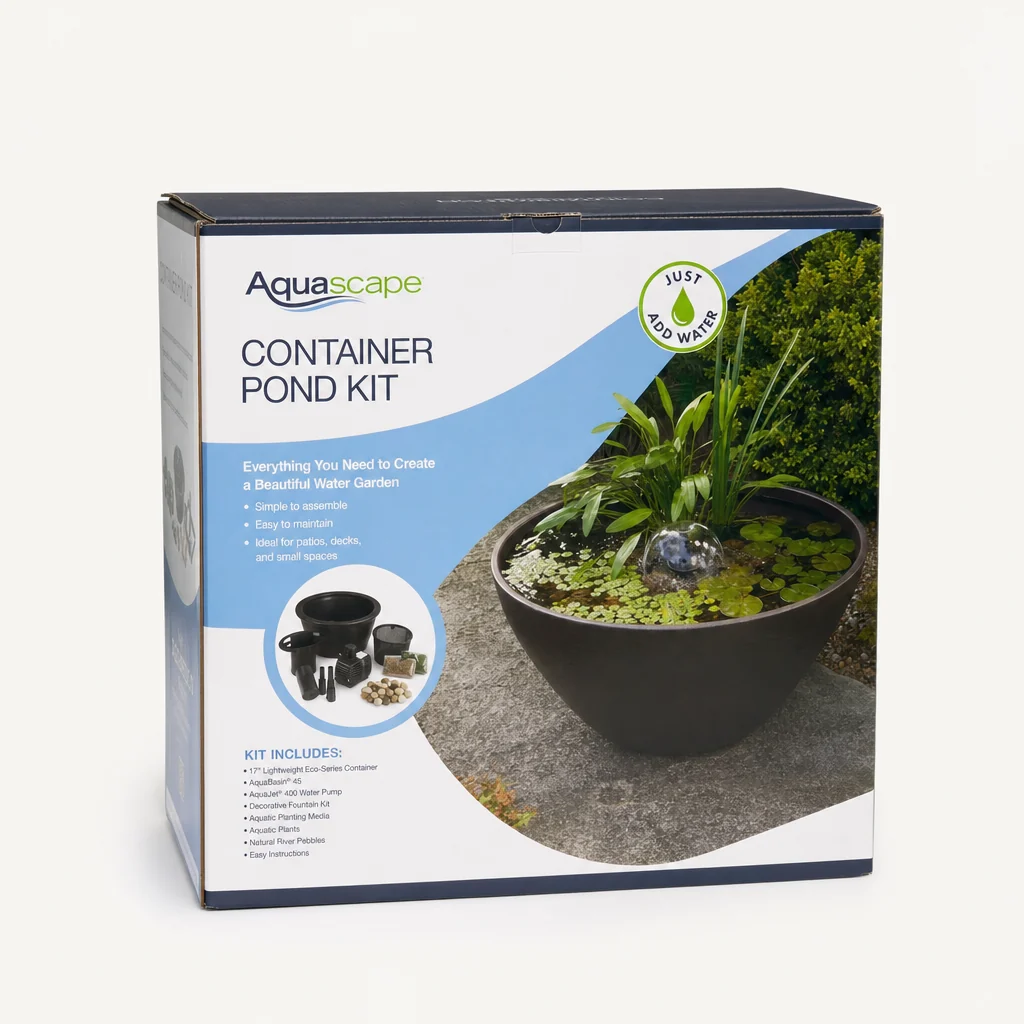
With the Aquagarden and Blagdon nature pools this is the easy bit — the resin panels click-fit together with no tools and the whole thing goes up in under an hour. If you're going DIY, this is where you seal any drainage holes, add a liner to a barrel or trough, and — most importantly — plan how wildlife will get in and out (more on that shortly).
2. Add a substrate layer
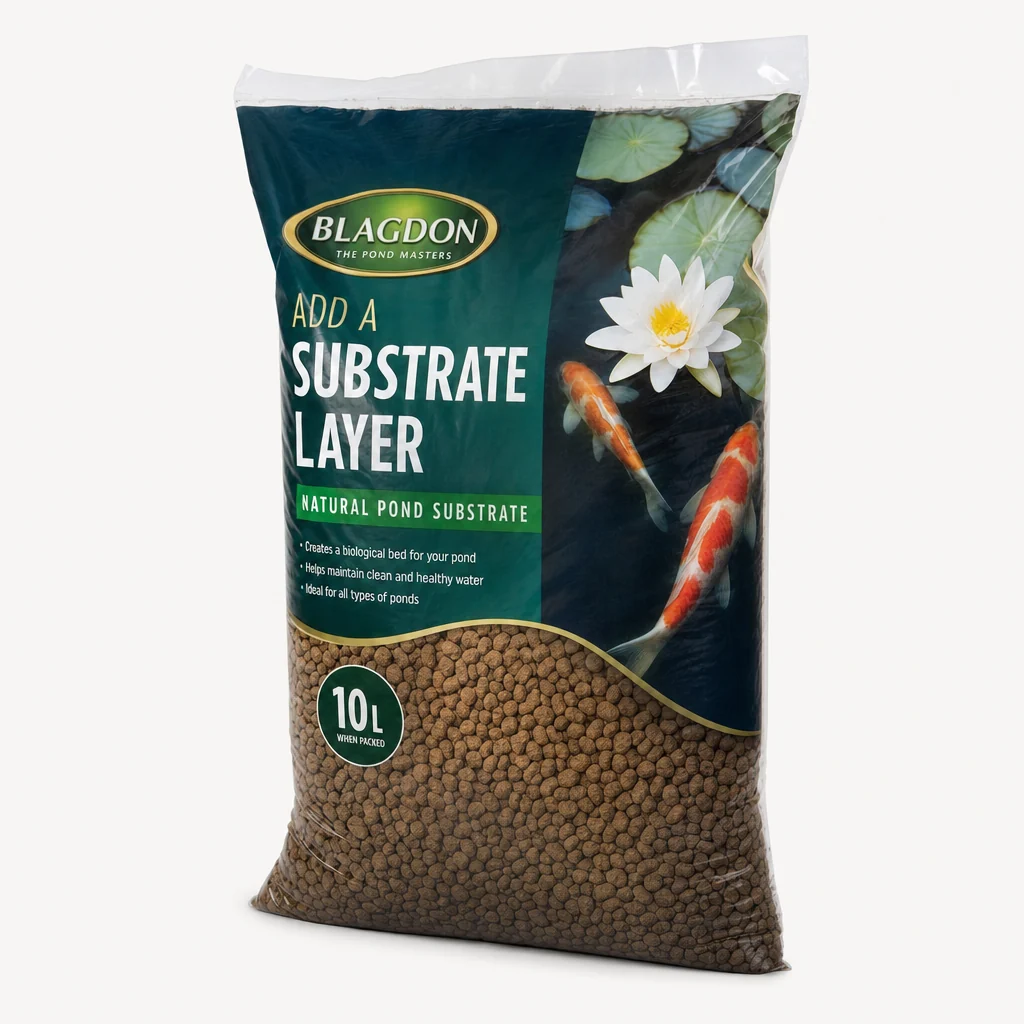
A thin layer of washed gravel or aquatic soil on the base gives beneficial bacteria somewhere to colonise and gives rooting plants a foothold. Avoid ordinary potting compost — it's full of nutrients that will turn your water into pea soup. If your kit came with grow media and gravel, as the Aquascape does, use it here.
3. Fill with the right water
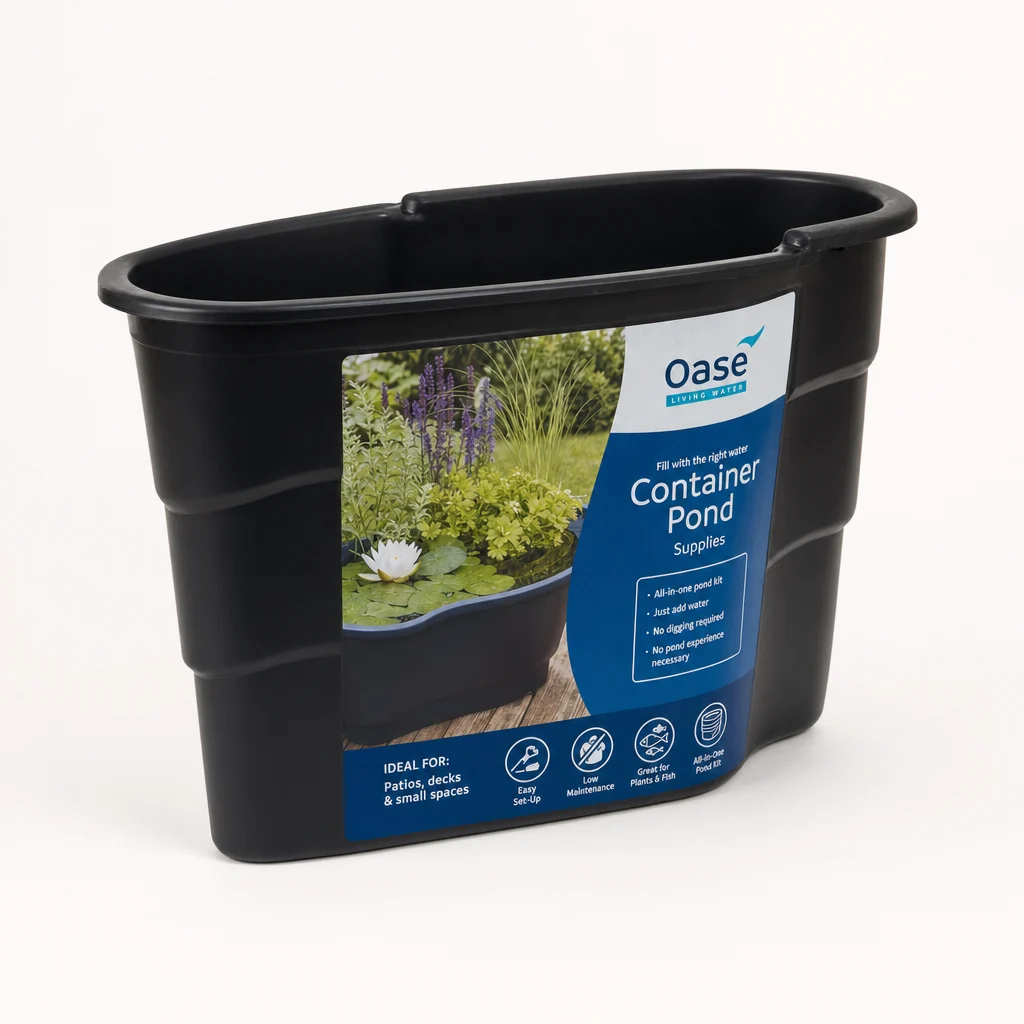
Rainwater from a butt is the gold standard — it's soft, low in nutrients and won't contain the chlorine that mains water does. If you must use tap water, fill the pond and then leave it to stand for a few days before adding plants and inviting wildlife, so the chlorine can gas off.
4. Position your plants
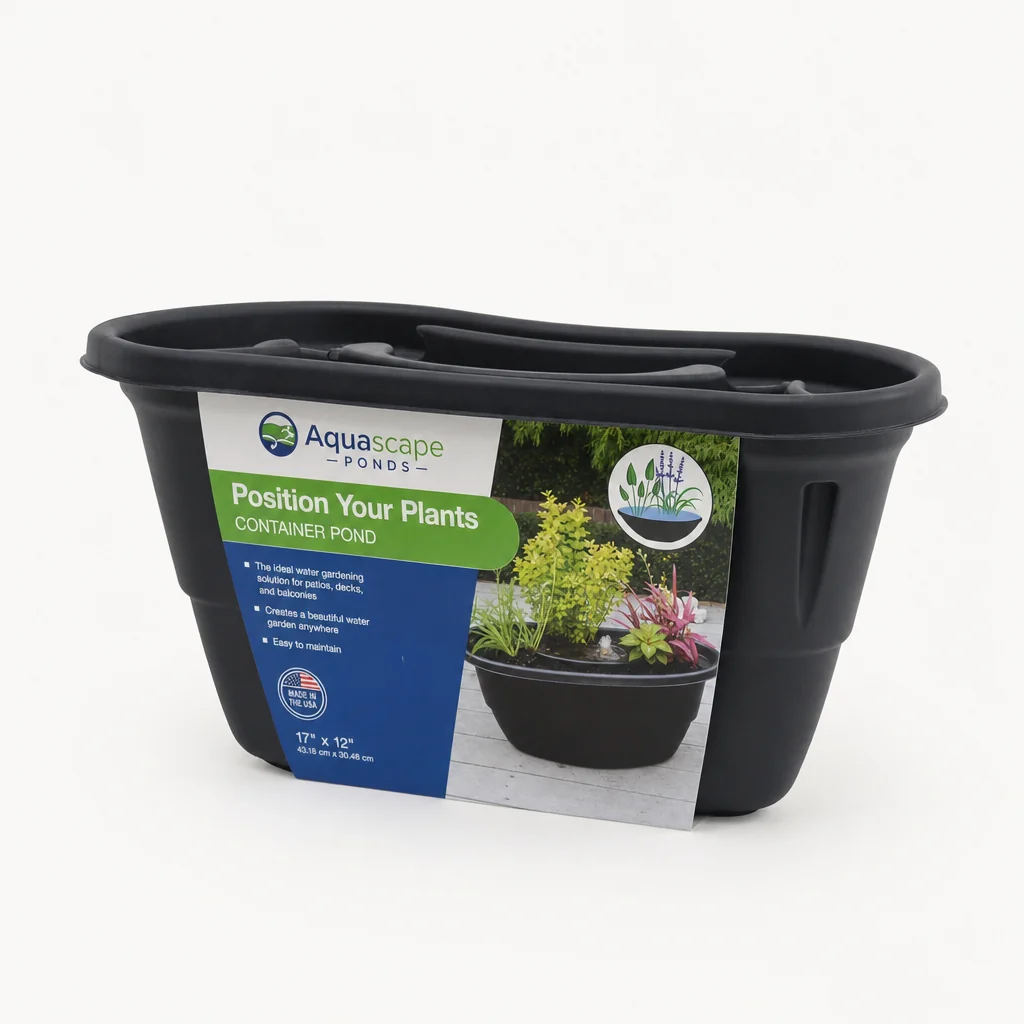
Set marginal plants into the planting pocket or on a shelf, deep-water plants lower down, and float your oxygenators and floaters on the surface. Don't overplant on day one — plants grow, and you can always add more.
5. Install the pump (optional)
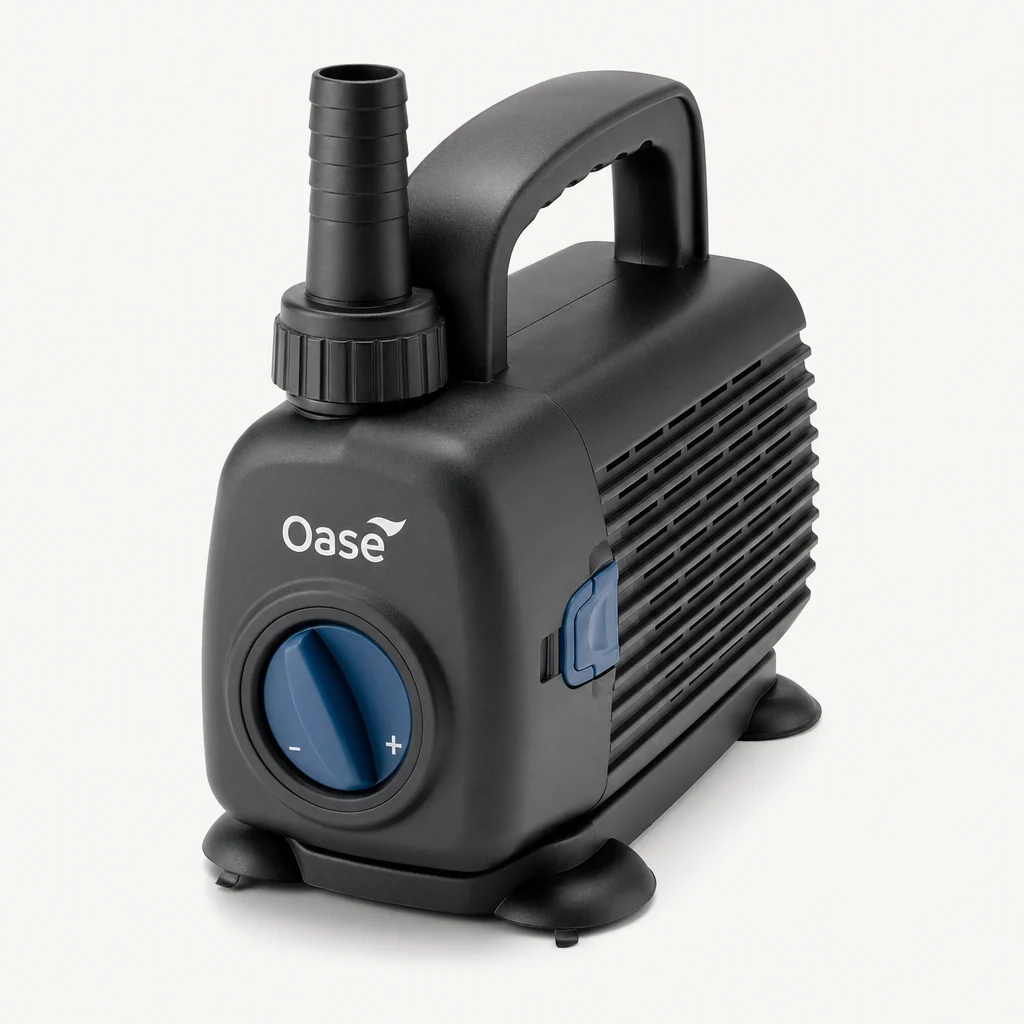
If your kit includes a fountain — the Aquagarden's 184 gal/hr mains pump or the Blagdon's 2.2W solar unit — set it now. For a pure wildlife pond you can run it gently or not at all, since amphibians prefer calm water; a fountain is more about aeration, sound and drawing bathing birds.
6. Add the wildlife access
This is the non-negotiable step. The nature pools include a built-in ladder and a bird landing beach; if you're going DIY, prop a plank, a stack of stones or a piece of log against the inside so anything that falls in can climb out.
Never introduce fish to a dedicated wildlife pond. Fish eat frog and newt tadpoles, insect larvae and virtually everything you're trying to attract. The nature pools are designed for creatures, not carp — keep them fish-free.
The Plant List: What to Grow and Where
Plants are what turn a tub of water into a living pond. They oxygenate, shade, filter and provide cover, and different plants do different jobs at different depths. Think in three zones. Here's my go-to planting palette for a container pond.
Oxygenators (the workhorses)
These live mostly submerged and are the engine room of your pond, pumping out oxygen and starving algae of nutrients. You want a decent bundle from the start.
Hornwort (Ceratophyllum demersum)
My favourite for containers — it floats freely with no need to plant it, grows fast, and is a superb oxygenator. Native and non-invasive in ponds.
Water starwort (Callitriche)
Forms soft green rosettes at the surface and provides cover for tadpoles and invertebrates.
Spiked water milfoil (Myriophyllum spicatum)
Feathery foliage that newts love to lay their eggs on. A brilliant native oxygenator.
Marginals (the planting-pocket stars)
These sit with their roots in shallow water and their leaves in the air — exactly what that integrated planting pocket is designed for. They give height, flowers for pollinators, and vital emergence points for dragonflies.
Marsh marigold (Caltha palustris)
Early golden-yellow flowers that are a lifeline for emerging bees in spring. Compact enough for a container.
Water forget-me-not (Myosotis scorpioides)
Sprawls prettily over the pond edge with dainty blue flowers, and frogs use its stems to climb out.
Lesser spearwort (Ranunculus flammula)
Slender and buttercup-flowered, well-behaved in a small pond where bigger marginals would swamp everything.
Brooklime (Veronica beccabunga)
A native creeper with blue flowers that softens the container's edge and shelters small creatures.
Floating & deep-water plants (shade and shelter)
Surface leaves shade the water, keeping it cool and suppressing algae, while giving pond skaters somewhere to loiter. In a small container, choose compact varieties — a standard water lily will bully everything else.
Dwarf water lily (Nymphaea 'Pygmaea Helvola')
A true miniature lily that suits a container's depth and flowers happily without taking over.
Frogbit (Hydrocharis morsus-ranae)
Free-floating native with pretty rounded leaves; easy to scoop back if it spreads too far.
Water soldier (Stratiotes aloides)
Spiky rosettes that rise and sink through the seasons; excellent cover, but keep it in check in a small pond.
Planting Ratio That Works
As a rough rule for a container this size: cover no more than about two-thirds of the surface with leaves so light still reaches the water, include at least one bundle of oxygenators per 20–30 litres, and always choose native or non-invasive species. Skip anything sold as "vigorous" for a pond this small — vigorous is code for "will eat your pond".
Attracting Wildlife: What Turns Up and How to Help It
Here's the exciting part. A newly planted container pond doesn't stay empty for long. In my experience the sequence goes something like this, and the built-in features of a good kit accelerate every stage.
The invertebrates arrive on their own — pond skaters can find new water within days, seemingly by magic. Birds are next, drawn by the sound of the fountain and the shallow bird landing beach that both nature pools provide; that gentle sloping edge is exactly what a blackbird or robin needs to bathe safely.
Amphibians are the prize, and the biggest test of patience. Frogs won't necessarily breed in year one, but a container pond with a proper wildlife ladder, plenty of marginal cover and a nearby log pile is a genuine invitation. The ladder isn't a gimmick — it's the difference between a frog living in your pond and a frog drowning in it.
The wildlife ladder
Both the Aquagarden and Blagdon pools include one. It lets frogs, newts and even a stranded bee climb out of a raised pool that would otherwise be a trap. If you're DIY-ing, replicate this without fail.
The bird landing beach
A shallow, gently shelving zone lets birds wade in to drink and bathe. It's the feature that turns a pond into a bird magnet within weeks.
Moving water for sound
The fountain's ripple and trickle carries surprisingly far and pulls birds in. Run it gently — the Blagdon's solar pump naturally does this, easing off as the sun dips.
Cover around the base
Stack a few logs or pots against the pond so amphibians have a damp, shady bolthole right beside the water. Bare paving is a barrier; cover is an invitation.
Resist the urge to "stock" your pond with frogspawn ferried from elsewhere — it can spread disease between ponds. Build it well, plant it right, and let wildlife find you. It will.
Living With a Container Pond: Maintenance Through the Seasons
A settled container pond is low-effort, but "low-effort" isn't "no-effort". Here's the rhythm across the year.
Spring is when everything wakes up. Thin out any oxygenators that have overwintered too enthusiastically, divide congested marginals in the planting pocket, and check the fountain pump is clear and running. This is peak amphibian activity, so tread carefully around the edges.
Summer means topping up. A small volume of water evaporates surprisingly fast in a heatwave — a 190-litre pool can drop noticeably in a week. Top up with rainwater if you can, little and often, so you don't shock the temperature. Keep an eye on algae; if the water greens up, it usually means too much light and too few plants, so add more floaters for shade.
Autumn is leaf season. Net off falling leaves or scoop them out weekly so they don't rot down and foul the water. Cut back dying marginal foliage, but leave some standing stems as overwintering habitat for insects.
Winter is mostly about leaving well alone. In a hard frost, a small container can freeze more readily than a big dug pond. Never smash the ice — that shockwave harms anything sheltering below. Instead, float something like a ball on the surface, or gently melt a breathing hole with a pan of warm water set on the ice. The three year guarantee on the nature pools covers the structure, but sensible winter care protects the life inside it.
The One-Bucket Rule
If you ever do a bigger clean-out, only ever remove a third of the water and plants at a time, and stand any removed material beside the pond for a day so creatures can crawl back in. A full strip-down effectively kills your ecosystem and starts you back at square one.
Pros and Cons of the Kit Approach
Ready-made nature pools aren't the only way to build a container pond, so let's be even-handed about where they win and where a DIY tub might serve you better.
Pros
- Wildlife access solved out of the box — ladder and bird beach included
- Genuinely quick: click-fit assembly in under an hour, no tools
- Integrated planting pocket takes the guesswork out of marginals
- A meaningful 190-litre volume in the nature pools — a real pond, not a puddle
- Solar option (Blagdon) needs no cable or mains outlet
- Three year guarantee on the nature pool structures
- No digging — perfect for patios, courtyards and rented gardens
Cons
- Kits cost more than repurposing a barrel or old sink
- The Aquascape mini (5–7 gal) is really ornamental, not a wildlife pond
- Solar fountains only run in decent sunlight
- Above-ground water can heat and freeze faster than a sunken pond
- Resin wood-effect finish won't be to every garden's taste
- Small volume means diligent summer topping-up
Who Should Build One — and Which Route to Take
Balcony & courtyard gardeners
The Blagdon Liberty Solar wins here — no cable to run, no digging, and a 95cm square footprint that fits a corner. Just check your weight limits.
Serious wildlife fans
Go for the 190-litre Aquagarden No Dig Nature Pool. The bigger volume and 184 gal/hr pump make the most stable, life-rich little ecosystem.
Patio decorators
If you mainly want a pretty water feature with plants and an LED-lit trickle, the compact Aquascape 78325 is charming and easy.
Thrifty DIYers
A repurposed half-barrel or Belfast sink with your own ramp and the plant list above costs least — you just have to solve the wildlife-access problem yourself.
My Overall Verdict & Rating
That rating reflects the nature-pool approach specifically, and the Aquagarden No Dig / Blagdon Liberty Solar pair in particular. They nail the two things that make or break a container pond for wildlife — safe access and a big enough volume to stay stable — and they do it in a footprint that fits practically anywhere.
The Bottom Line
A container pond is, pound for pound, the most rewarding thing you can add to a small garden. Nothing else brings so much life so quickly. If you want the easiest, most wildlife-ready route, one of the 190-litre no-dig nature pools — the mains Aquagarden or the solar Blagdon Liberty — will have you watching pond skaters within a fortnight and, with patience and a good log pile nearby, frogs within a season or two. The compact Aquascape 78325 is a delightful decorative fountain, but it's the smaller-scale, ornamental cousin of a true wildlife pond.
Whatever you choose, get the fundamentals right: partial sun, rainwater, a proper mix from all three plant zones, no fish, and — above everything — a way for creatures to climb safely in and out. Build that, and the wildlife will do the rest.
Frequently Asked Questions
Building a container pond was one of the best small changes I ever made to a garden, and I've never met anyone who regretted adding one. Start with the fundamentals in this guide, pick the route that suits your space and budget, and give it a season. The first time a frog surfaces in a pot on your patio, you'll understand exactly why water is the feature every small garden is missing.