
The Secateurs Professional Gardeners Actually Use
Bypass vs. anvil mechanics, and the durable picks worth resharpening season after season.
Ask any working gardener which tool they'd save from a burning shed, and most won't name a fancy cordless mower or a £200 spade. They'll name their secateurs. The humble pair of hand pruners is the tool that lives in a back pocket from March to November, used hundreds of times a day, and it's the one piece of kit where the gap between cheap and exceptional becomes glaringly obvious within about ten minutes of real work.
Over the years I've come to believe that buying secateurs is less about finding the "best" pair and more about understanding two things: the difference between bypass and anvil mechanics, and whether the tool you're buying can be taken apart, sharpened, and rebuilt rather than binned. Get those two ideas straight and you'll never waste money on disposable pruners again.
This guide walks through both — starting with the mechanics that actually matter, then moving onto the specific models that professionals reach for: the Swiss-made Felco range, Japan's hand-forged Niwaki GR Pro, and the German-engineered Wolf Garten anvil. Whether your hands are large or small, whether you prune roses or hack back brambles, there's a right answer here.
Bypass vs. Anvil: The Only Distinction That Really Matters
Before you spend a penny, you need to understand the fundamental fork in the road. Secateurs come in two mechanical flavours, and they cut in completely different ways. Picking the wrong one for the job is the single most common mistake I see — and it's the reason so many people think they "can't get a clean cut" when really they just bought the wrong type.
How Bypass Pruners Work
Bypass pruners have two sharp blades that glide past each other like a pair of scissors. This design allows for clean cuts, making them perfect for pruning live, green branches. The sharp blade cuts plant tissue smoothly, which helps the plant heal quickly and reduces the risk of disease.
As Georgina Taylor from Fiskars puts it: "Bypass cutting pruners have two sharpened blades that pass over each other in a scissor motion to produce a clean, precise, and healthy cut. These types of pruners are ideal for cutting delicate stems as the scissor-like action is less likely to cause bruising and damage."
That scissor action is why bypass is the default choice for the vast majority of garden work. When you're deadheading roses, taking softwood cuttings, or shaping a young shrub, you want that clean slice that leaves a crisp wound the plant can seal over quickly.
How Anvil Pruners Work
Anvil secateurs, with a single blade sharpened on two sides, work like a knife on a chopping board, slicing through stems and branches before stopping at a metal block. The blade meets an anvil much like a knife meets a cutting board. This design allows a lot of pressure to be applied to the material being cut, making it easy to cut through thicker branches and harder materials.
There's a clever bit of engineering here too: the anvil is made of a much softer metal than the hardened blade, which prevents wear on the blade when it hits the anvil. In other words, the design protects its own edge.
The Professional Rule of Thumb
Most keen gardeners use secateurs for all sorts of tasks and should really have both types in their back pockets. The old trade saying sums it up perfectly: "if it's green, go for bypass; if it's brown, engage the anvils."
Where Each Type Falls Down
Neither tool is a do-everything miracle. Bypass secateurs shouldn't be used for 'hacking back', tackling overhanging branches, trimming canes, or for long periods — the blades might get damaged, and your wrists will ache by the end of the day. Push a bypass pair through tough, woody material and you'll twist the blades out of alignment, after which clean cuts become impossible.
Anvil secateurs, on the other hand, aren't the best tool for cutting flowers or delicate pruning work, and they may crush soft tissue if they're not immaculately sharpened. That crushing is the giveaway — a slightly blunt anvil pruner will bruise a green stem rather than sever it cleanly.
Bypass = green and living
Roses, perennials, soft and semi-ripe stems, anything you want to heal cleanly.
Anvil = brown and dead
Woody stems, dead growth, thicker branches where raw cutting power matters most.
Anvil = simpler upkeep
With anvil secateurs there's the plus point of only needing to sharpen one blade.
Bypass = fussier upkeep
A common problem is over- or under-tightening them after sharpening both blades, which can result in poor-quality cuts.
Research on this topic is genuinely limited, but a University of Florida paper from March 2025 compared bypass pruners to anvil pruners when making removal cuts. Wound recovery was similar between the two, despite the study observing greater levels of injury in cuts made with bypass pruners — a useful reminder that the "clean cut" advantage isn't always as decisive as folklore suggests.
One Note on Handedness
Here's a quirk worth knowing before you buy. Either left-handed or right-handed gardeners can use anvil secateurs without any trouble. Bypass secateurs, however, come in separate right and left-handed models — so if you're left-handed and set on bypass, make sure you're buying the correct version, or the blade geometry will fight you all day.
The Felco F-2: The Global Benchmark
If there's one pair of secateurs that has earned the right to be called the industry standard, it's the Felco F-2 — usually just called the Model 2. This Swiss-made bypass pruner is the tool you'll find clipped to the belts of head gardeners, estate teams, and professionals the world over. It's the benchmark everything else gets measured against, and for good reason.
The handles are forged aluminium, which keeps the whole tool light at 240g whilst remaining stiff enough to transmit your full cutting force to the blade. The cutting blade itself is hardened steel, working against a riveted anvil blade designed for durability and stability. There's a sap groove machined into the blade to stop it sticking mid-cut, plus a wire cutting notch for those moments you need to nip through soft wire.
Where the F-2 really pulls ahead, though, is in the details that keep it cutting well for decades. It uses a micro-metric adjustment system for precise fine-tuning of the cutting head — so when you've sharpened the blade and the action feels slightly loose, you can dial it back to perfect tension. Cushioned shock absorbers give it a soft closing action that saves your wrist over a long day, and there's an adjustable closing lock for safe storage.
Why It's Worth Resharpening
The F-2 is built on a fully repairable design where all components are replaceable. Blade, spring, anvil, adjustment nut — every part can be swapped. A pair that's served you for fifteen years can be brought back to factory-fresh cutting performance with a few inexpensive spares and a sharpening stone. That's the whole philosophy behind buying once and buying well.
Pros
- The proven global professional benchmark
- Lightweight 240g forged aluminium body
- Micro-metric adjustment for perfect post-sharpening tension
- Every single part is replaceable
- Lifetime warranty and decades of real-world service
- Sap groove and wire notch add genuine practicality
Cons
- Sized for large hands — smaller hands will struggle
- Bypass only, so not for hacking back brown growth
- Comes in separate right and left-handed models to consider
- Requires occasional adjustment know-how to keep cutting sweetly
Felco Model 6 and Model 7: When the F-2 Doesn't Fit
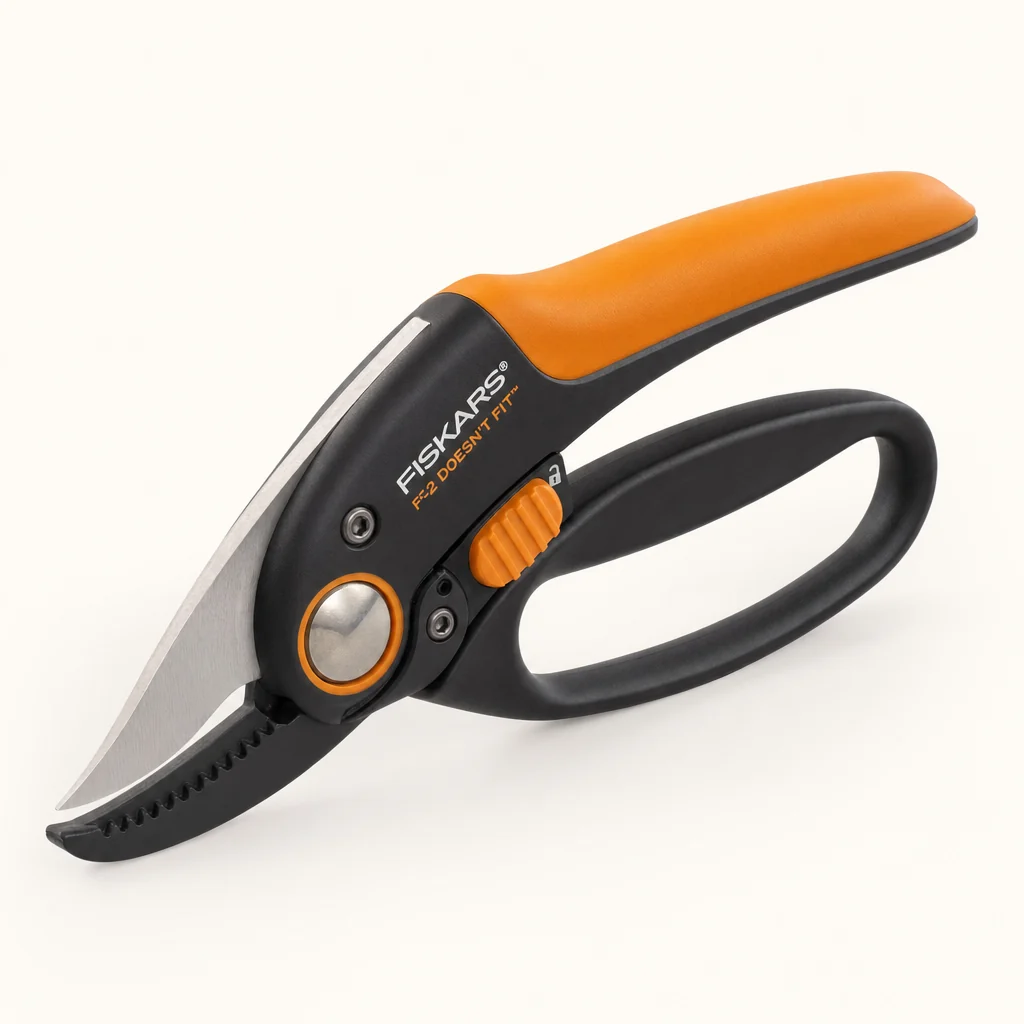
The F-2's one real weakness is that it's built for large hands. If you've ever picked up a pair and felt your fingers stretching to reach the far handle, you already know this matters enormously over a full day's pruning. Felco's answer is a properly thought-through range, and two siblings deserve special mention.
Felco Model 6 — The Compact Choice
The Model 6 is the F-2's smaller sibling: a compact Swiss bypass pruner aimed at medium and smaller hands. It's ergonomic and lightweight, carrying over the same Felco engineering quality and repairability but in a frame that genuinely fits a smaller grip. If the F-2 felt like too much tool, this is very often the answer — and it's the pair I'd hand to anyone who's been quietly putting up with oversized secateurs for years.
Felco Model 7 — Rotating Handle, Less Fatigue
The Model 7 is the premium ergonomic option, built around a rotating handle that reduces fatigue by up to 30%. For anyone doing serious volume — a full day of vineyard work, a long hedge, repetitive cutting — that rotating lower handle moves with your fingers as they close, dramatically cutting down the strain on your hand and wrist. It's a tool for people whose hands are genuinely paying the price for their work.
The lesson across the whole Felco range: fit matters more than badge. A perfectly engineered pair of secateurs that's too big for your hand will tire you out faster than a cheaper pair that fits. Try before you commit if you possibly can.
Felco Model 32: The Flagship Anvil
For all the talk of bypass dominance, there are days when only an anvil will do — and Felco's flagship anvil pick is the Model 32. It earned a BBC Gardeners' World "Best Buy" rating, which is no small endorsement, and it's the pair I reach for when there's a pile of brown, woody, dead growth to get through.
The Model 32 uses strong carbon steel and keeps things lightweight, which is unusual for an anvil pruner — these tools are often a touch heavier than their bypass cousins because they're built to apply real crushing pressure. Felco has managed to keep it nimble. The anvil mechanism means you're getting that knife-on-chopping-board action, putting maximum force behind the single hardened blade as it slices down onto the softer metal anvil.
The practical advantage for upkeep is real: because an anvil only has one blade that needs an edge, sharpening it is significantly simpler than fussing over a bypass pair. There's no agonising over tension after the fact — you sharpen the single blade, and you're done.
Pros
- BBC Gardeners' World Best Buy anvil
- Strong carbon steel blade with serious cutting power
- Lightweight for an anvil pruner
- Simpler sharpening — only one blade to maintain
- Felco build quality and parts support
Cons
- Not for delicate or floral work — can crush soft tissue
- Must be kept immaculately sharp to avoid bruising stems
- Carbon steel needs keeping dry to avoid surface rust
Niwaki GR Pro: The Japanese Favourite
If the Felco F-2 is the Western professional's default, the Niwaki GR Pro is its Eastern counterpart — and among professional UK gardeners it's become a genuine best-seller. These are Japanese, hand-forged from carbon steel, and they carry that slightly addictive quality you get from properly forged Japanese steel: an edge that takes and holds a serious bite.
What makes the GR Pro especially clever is that it comes as a properly considered family rather than a single tool. The standard GR Pro is offered in Small, Standard and Large sizes, so you can match the tool to your hand instead of forcing your hand to the tool. That alone solves the fit problem that dogs so many secateurs.
GR Pro (Standard / Small / Large)
Hand-forged carbon steel bypass, the best-seller among professional UK gardeners, in three hand sizes.
GR Pro Lightweight
A slender-bladed precision bypass for smaller or weaker hands. It sacrifices some raw strength in exchange for finesse and delicacy.
GR Pro S-Type
An angled-blade variant with pronounced shoulder handles, designed to give weaker or smaller hands full cutting power.
The carbon steel construction is the GR Pro's great strength and its one demand. Carbon steel sharpens to a keener edge than stainless and holds it beautifully, which is exactly why these are so beloved by people who cut all day. The trade-off is that carbon steel will rust if you leave it wet, so a quick wipe-down and the occasional drop of oil are part of the deal. For most professionals that's a small price for the cutting quality — and it's precisely the kind of tool that rewards being looked after and resharpened rather than replaced.
Choosing Your GR Pro
If you have average-to-large hands and want maximum cutting performance, the standard GR Pro in your size is the pick. Smaller or weaker hands chasing precision should look at the Lightweight; those who want full power without the reach should try the S-Type with its angled blade and pronounced shoulder handles.
Wolf Garten RS5000: The Accessible Professional Anvil
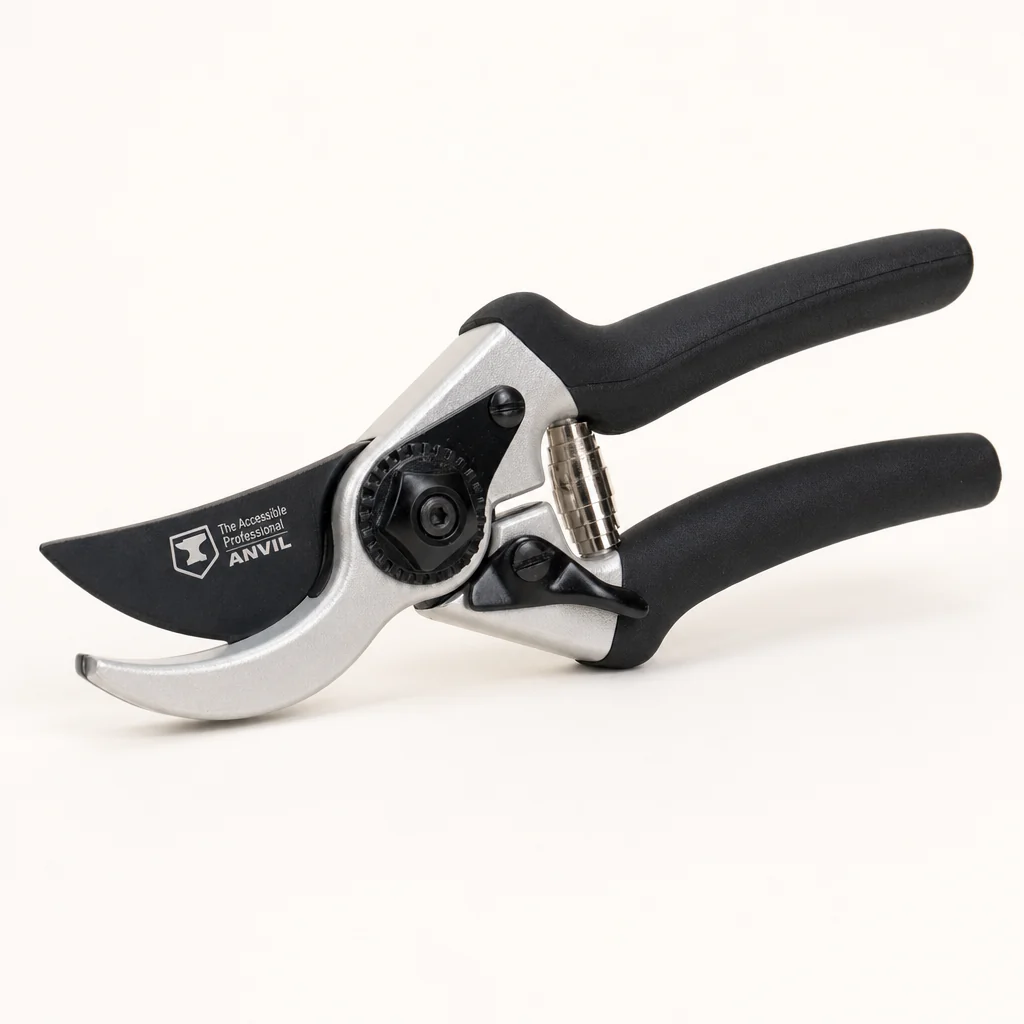
Not everyone needs — or wants to pay for — Swiss or Japanese forging. The Wolf Garten RS5000 Professional Anvil is the German-engineered option that brings genuine professional anvil performance to a broader audience. It sits in that sensible budget-professional tier: a proper working tool without the premium that the flagship names command.
As an anvil pruner, it follows the same mechanical logic as the Felco 32 — a single hardened blade driving down onto a softer metal anvil to power through brown, woody material. It's the kind of tool I'd happily recommend to a keen amateur who wants something tough and dependable for the rougher end of pruning without committing to the very top of the market.
Pros
- German engineering at an accessible price point
- Proper anvil power for tough, woody growth
- Great entry into the professional tier
- Simpler single-blade maintenance
Cons
- Anvil design isn't for delicate or green cutting
- Won't match the forged steel edge of the premium picks
- Best kept sharp to avoid crushing softer stems
Head to Head: How the Picks Compare
Here's the whole field side by side. Notice how the decisions cluster around three questions: bypass or anvil, large hands or small, and how much you value premium forged steel.
| Model | Type | Best For | Standout Trait |
|---|---|---|---|
| Felco F-2 | Bypass | Large-handed professionals | Global benchmark, fully repairable |
| Felco Model 6 | Bypass | Medium / smaller hands | Compact, lightweight, ergonomic |
| Felco Model 7 | Bypass | High-volume cutting | Rotating handle, up to 30% less fatigue |
| Felco Model 32 | Anvil | Woody, dead growth | Lightweight carbon steel, GW Best Buy |
| Niwaki GR Pro | Bypass | All-day pros wanting a keen edge | Hand-forged carbon steel, three sizes |
| Niwaki GR Pro Lightweight | Bypass | Smaller / weaker hands, fine work | Slender precision blade |
| Niwaki GR Pro S-Type | Bypass | Smaller hands needing full power | Angled blade, shoulder handles |
| Wolf Garten RS5000 | Anvil | Budget-conscious keen gardeners | German engineering, accessible price |
Maintenance Difficulty at a Glance
Since the resharpening angle is so central to buying well, here's a rough sense of how fiddly each design is to keep at its best — the longer the bar, the more demanding the upkeep.
Remember the maintenance asymmetry: anvil pruners only need one blade sharpened, whilst bypass pruners need both blades doing — and the trap with bypass is over- or under-tightening them afterwards, which quietly ruins your cut quality until you correct the tension.
Our Overall Rating
Taking the field as a whole — and weighting heavily towards the tools that justify their cost by lasting and being rebuildable — here's where this category lands for the serious gardener.
Who Should Buy What
The All-Day Professional
Large hands and constant cutting? The Felco F-2 is your benchmark. Smaller hands? Drop to the Model 6, or go Model 7 if fatigue is your enemy.
The Edge Obsessive
If you love a keen, hand-forged edge and don't mind a wipe of oil, the Niwaki GR Pro in your hand size is a joy to use.
Smaller or Weaker Hands
Look at the Felco 6, the Niwaki GR Pro Lightweight for finesse, or the GR Pro S-Type for full power in a smaller grip.
The Woody-Growth Wrangler
For brown, dead and tough material, an anvil wins. The Felco 32 is the flagship; the Wolf Garten RS5000 is the accessible alternative.
Frequently Asked Questions
The Verdict
Buy Well, Sharpen Often, Replace Never
The secateurs professionals actually use share one trait above all others: they're built to be taken apart, sharpened and rebuilt rather than thrown away. That's the whole game. The Felco F-2 remains the global benchmark for large-handed pros, with the Model 6 and Model 7 covering smaller hands and high-volume fatigue respectively. The Niwaki GR Pro answers with hand-forged Japanese carbon steel and a properly sized family of options, whilst the Felco 32 and Wolf Garten RS5000 cover the brown-growth, anvil end of the spectrum at flagship and accessible price tiers.
Get the mechanics right — bypass for green, anvil for brown — buy a pair that genuinely fits your hand, and choose a tool that can be resharpened for years. Do that, and your secateurs will be the one piece of kit you never need to think about replacing again.